

Shopping for school supplies, clothes, and technology doesn’t have to drain your bank account. Back to school sales offer significant savings opportunities, but only if you know when to shop and where to find the best deals.
Most families spend $600-$900 per child on back-to-school items each year. With strategic planning and smart timing, you can cut that cost by 40-60%. This guide shows you exactly when back to school sales start, which retailers offer the deepest discounts, and proven strategies to maximize your savings without compromising quality.
You’ll learn the month-by-month sales calendar, category-specific timing advice, how to leverage tax-free weekends, and insider tips for combining multiple savings strategies. Whether you’re shopping for kindergarten supplies or college dorm essentials, these insights will help you make confident purchasing decisions while staying within budget.
When Do Back to School Sales Start?
Back to school sales officially begin in mid-July at most major retailers. This timing allows families to shop 4-6 weeks before school starts in most regions.
However, the sales landscape follows a predictable pattern:
Mid-July: Retailers launch promotional campaigns with moderate discounts (10-25% off). Selection is excellent, but prices aren’t yet at their lowest.
Late July/Early August: Sales intensify as tax-free weekends approach. This period offers the best balance of selection and pricing for most categories.
Week Before School Starts: Retailers push aggressive promotions to clear inventory. Discounts increase, but popular items and sizes sell out.
Post-Labor Day: Clearance sales begin with 50-75% discounts on remaining inventory. Selection is limited, but prices hit rock bottom.
Why This Timeline Exists:
Retailers order back-to-school inventory months in advance. They need to clear this seasonal merchandise before fall product lines arrive. This creates a predictable discount curve that smart shoppers can exploit.
Early shoppers get the best selection. Patient shoppers get the best prices. Strategic shoppers use a combination approach: buy must-have items early (especially if they’re on sale), and wait for clearance prices on flexible purchases.
The School Calendar Connection:
Sales timing varies slightly by region based on school start dates. Southern states typically see earlier sales (mid-July) because schools start in early August. Northern states may see peak sales extend into mid-August.
National retailers follow the earliest school schedules, meaning their sales start in mid-July regardless of local school calendars. This benefits late-starting regions with extended sale periods.
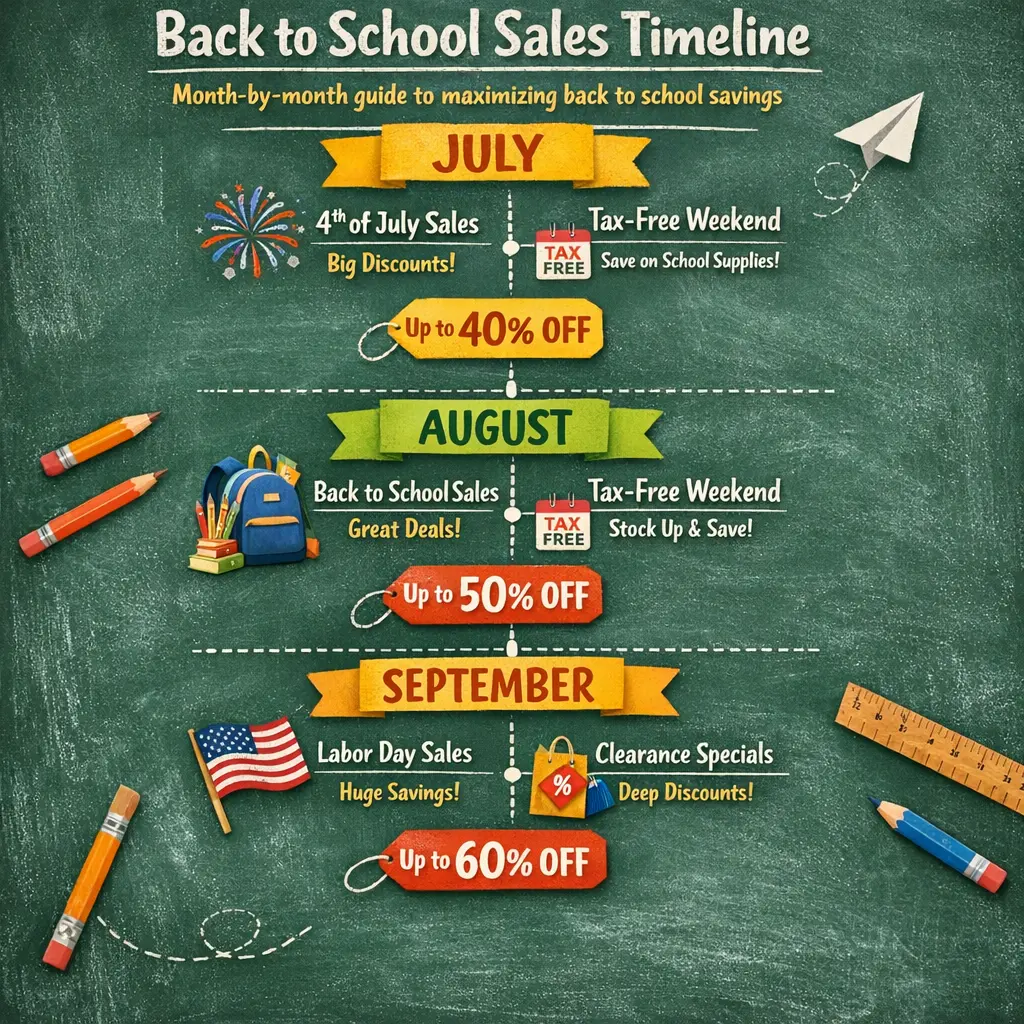
Back to School Sales Timeline: Month by Month
June: Pre-Season Planning
What Happens:
- Some retailers begin early promotions
- Teacher supply lists become available
- Prices remain at regular retail levels
What to Do:
- Collect supply lists from schools
- Take inventory of reusable items from last year
- Create your shopping list and budget
- Research tax-free weekend dates for your state
- Sign up for retailer email lists and apps
What to Buy:
- Nothing, unless you find exceptional clearance items from last year’s inventory
July: Sales Season Begins
Early July (Week 1-2):
- Sales launch with 10-25% discounts
- Full selection available
- Some retailers offer early bird specials
Mid-July (Week 3):
- Competitive pricing intensifies
- More retailers join the market
- Doorbusters and limited-time offers appear
- Good time for backpacks and lunchboxes
Late July (Week 4):
- Tax-free weekends approach (varies by state)
- Deepest discounts begin appearing
- Best week for balanced selection and pricing
What to Buy in July:
- Backpacks and lunch boxes (best selection)
- Specific clothing items (popular sizes/styles sell out)
- School supplies during loss-leader promotions
- Technology during tax-free weekends
August: Peak Sales Period
Early August (Week 1-2):
- Tax-free weekends in most participating states
- Maximum promotional activity
- Best time for big-ticket purchases
- Strong discounts across all categories
Mid-August (Week 3):
- Last-chance promotions before school starts
- Stock levels decrease on popular items
- Aggressive pricing on remaining inventory
- Good time for flexible purchases
Late August (Week 4):
- Final pre-school sales
- Limited selection
- Deep discounts on unpopular sizes/styles
What to Buy in August:
- Electronics and computers (tax-free weekend)
- Clothing (tax-free weekend)
- Remaining supply list items
- Dorm essentials for college students
September: Clearance Opportunities
Post-Labor Day (Week 1-2):
- Clearance sales begin
- 50-75% discounts common
- Very limited selection
- Best prices of the season
Mid-September:
- Final clearance before fall merchandise arrives
- Stock-up opportunity for next year
What to Buy in September:
- Items you can use throughout the year
- Next year’s supplies (if you have storage)
- Clearance clothing in larger sizes
- Non-perishable supplies in bulk
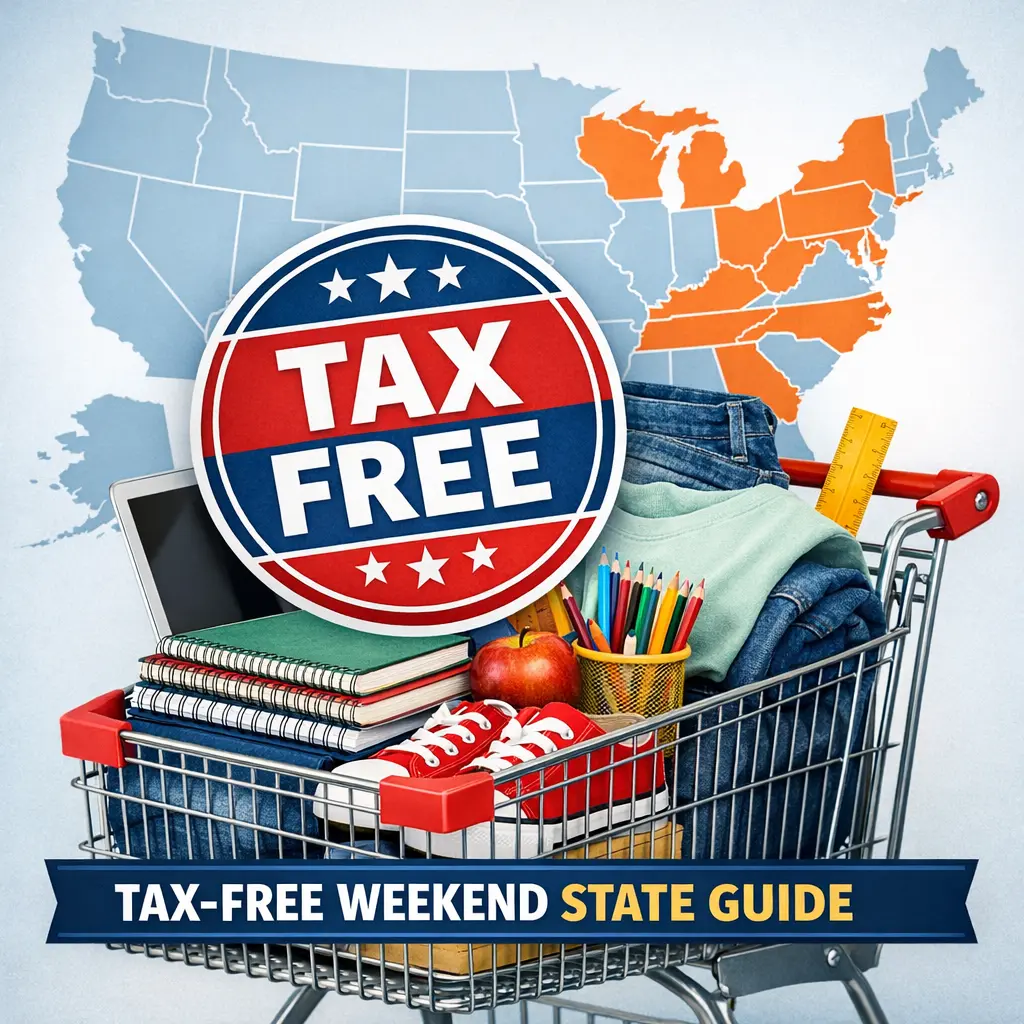
Tax-Free Weekends Explained
Tax-free weekends offer significant savings on back-to-school purchases by eliminating state and local sales taxes. Depending on your location, this can mean 4-9% savings on top of any sale prices.
What Are Tax-Free Weekends?
These are designated periods when state governments suspend sales tax on specific categories of merchandise. Most states that participate focus on:
- Clothing and footwear (usually under $100 per item)
- School supplies (usually under $50 per item)
- Computers and tablets (limits vary, typically $750-$1,500)
When Do They Occur?
Most tax-free weekends happen in late July or early August. Specific dates vary by state and change annually.
Which States Participate?
Approximately 16 states regularly offer tax-free weekends for back-to-school shopping. These include Alabama, Arkansas, Connecticut, Florida, Iowa, Maryland, Massachusetts, Mississippi, Missouri, New Mexico, Ohio, Oklahoma, South Carolina, Tennessee, Texas, and Virginia.
Rules vary significantly by state. Some states include computers; others don’t. Price limits differ. Duration may be a weekend or extend to a full week.
How to Maximize Tax-Free Weekend Savings
Strategy 1: Focus on Big-Ticket Items
Save the most money by purchasing expensive items during tax-free periods. A $100 clothing purchase saves $7-$9. A $1,000 laptop saves $70-$90.
Strategy 2: Combine with Sales
Retailers know shoppers flock to stores during tax-free weekends. Many offer additional promotions. Stack manufacturer coupons, store sales, and tax savings for maximum discounts.
Strategy 3: Plan Purchases Around Limits
Understand your state’s price limits. If computers under $1,000 are tax-free, buying a $999 laptop saves more than a $1,100 model.
Strategy 4: Buy for the Whole Year
If clothing qualifies, stock up on items your child will need throughout the school year, not just in September.
Common Restrictions:
- Limits apply per item, not per transaction
- Some categories exclude specific items (sports equipment, jewelry, accessories)
- Online purchases may qualify if the retailer has a physical presence in your state
- Layaway purchases usually qualify based on payment date
- Rentals and repairs typically don’t qualify
Online Shopping During Tax-Free Weekends:
Many retailers honor tax-free weekend exemptions for online orders. Verification requirements vary:
- Billing or shipping address in the participating state
- Purchase completed during the designated period
- Items must meet category and price requirements
Best Stores for Back to School Sales
Different retailers excel in different categories. Smart shoppers split their purchases across multiple stores to maximize savings.
Target
Strengths:
- Competitive pricing on school supplies
- Excellent selection of trendy backpacks and lunch items
- Strong clothing options
- Convenient one-stop shopping
Typical Discounts:
- School supplies: 20-30% during peak season
- Clothing: 15-40% with frequent promotions
- Electronics: Competitive with price matching
Money-Saving Tips:
- Use Target Circle app for additional 5-20% discounts
- Stack manufacturer coupons with Target coupons
- REDcard holders get automatic 5% discount
- Price match policy protects against lower prices elsewhere
- Free shipping on orders over $35
Best For:
Families who value convenience and brand selection. Target excels at balancing quality and price.
What to Avoid:
Electronics are rarely the cheapest option. Basic supplies sometimes cost more than dollar stores.
Walmart
Strengths:
- Lowest everyday prices on basic supplies
- Price matching policy
- Extensive online selection
- Convenient locations
Typical Discounts:
- School supplies: Already low-priced, with 10-25% sales
- Clothing: 20-40% during promotions
- Electronics: Competitive, especially during major sales
Money-Saving Tips:
- Walmart app shows in-store inventory
- Free pickup for online orders
- Savings Catcher compares prices after purchase
- Generic brands offer significant savings
- Price match competitors within 7 days
Best For:
Budget-conscious families who prioritize price over brand names. Excellent for bulk purchases.
What to Avoid:
Trendy items and brand-specific requests. Quality can vary on clothing.
Amazon
Strengths:
- Convenience of home delivery
- Extensive selection
- Prime member benefits
- Customer reviews aid decision-making
Typical Discounts:
- Varies widely by category and seller
- Subscribe & Save offers 5-15% on recurring purchases
- Prime Day (July) often includes back-to-school deals
Money-Saving Tips:
- Use price tracking tools (CamelCamelCamel)
- Subscribe & Save for items you’ll use all year
- Compare prices across multiple sellers
- Read reviews to avoid low-quality products
- Set up price alerts
Best For:
Busy families, rural shoppers, and those seeking specific brands or hard-to-find items.
What to Avoid:
Items you need to see in person (clothing sizes, backpack fit). Shipping delays during peak season.
Staples & Office Depot
Strengths:
- Specialty in office and school supplies
- Teacher rewards programs
- Bulk discounts
- Extensive technology selection
Typical Discounts:
- School supplies: 25-50% during peak season
- Loss leaders (1-cent deals on select items)
- Technology: Regular promotions and bundle deals
Money-Saving Tips:
- Sign up for rewards programs (5% back)
- Teacher discounts available with ID
- Price match guarantees
- Recycle programs offer coupons
- Buy in bulk for better per-unit pricing
Best For:
Teachers, homeschooling families, and bulk buyers. Excellent for specialty items like calculators and organizational supplies.
What to Avoid:
Clothing, backpacks, and non-office items. Limited selection compared to big-box stores.
Warehouse Clubs (Costco, Sam’s Club)
Strengths:
- Lowest per-unit prices on bulk items
- High-quality products
- Generous return policies
- Excellent for large families or teacher stockpiling
Typical Discounts:
- Everyday low prices beat sale prices elsewhere
- Additional coupons in monthly books
- Early-season promotions
Money-Saving Tips:
- Split bulk purchases with other families
- Stock up for the entire school year
- Compare per-unit pricing with sale prices at other stores
- Cash back credit cards (2-4% additional savings)
Best For:
Large families, teachers, homeschoolers, and those with storage space.
What to Avoid:
Small households may waste products. Limited selection of trendy items. Membership fees ($50-110/year) must justify savings.
Dollar Stores (Dollar Tree, Dollar General, Family Dollar)
Strengths:
- Unbeatable prices on basic supplies
- Convenient locations
- No need to wait for sales
Typical Items:
- Notebooks, pencils, crayons, glue, folders
- Basic organizational supplies
- Party supplies for classroom projects
Money-Saving Tips:
- Compare quality on critical items (some break easily)
- Perfect for supplies kids lose frequently
- Stock up for art projects and extras
Best For:
Basic supplies, backup items, and teachers on tight budgets.
What to Avoid:
Electronics, backpacks, and items requiring durability. Quality varies significantly.
What to Buy When: Category-Specific Timing
Not all back-to-school items follow the same discount schedule. Strategic timing by category maximizes savings.
School Supplies (Notebooks, Pens, Folders, Binders)
Best Time: Late July OR mid-September
Strategy:
Basic supplies see the deepest discounts during two periods:
- Loss-leader promotions (late July): Retailers offer 10-cent notebooks and similar deals to attract shoppers
- Clearance sales (mid-September): Remaining inventory gets marked down 50-75%
What to Buy in July:
Items on your child’s specific supply list that may sell out (certain colors, specific brands requested by teachers)
What to Buy in September:
Generic items you can use throughout the year (extra notebooks, pencils, paper)
Pro Tip:
Buy two years’ worth during September clearance if you have storage space. Prices won’t beat 75% off.
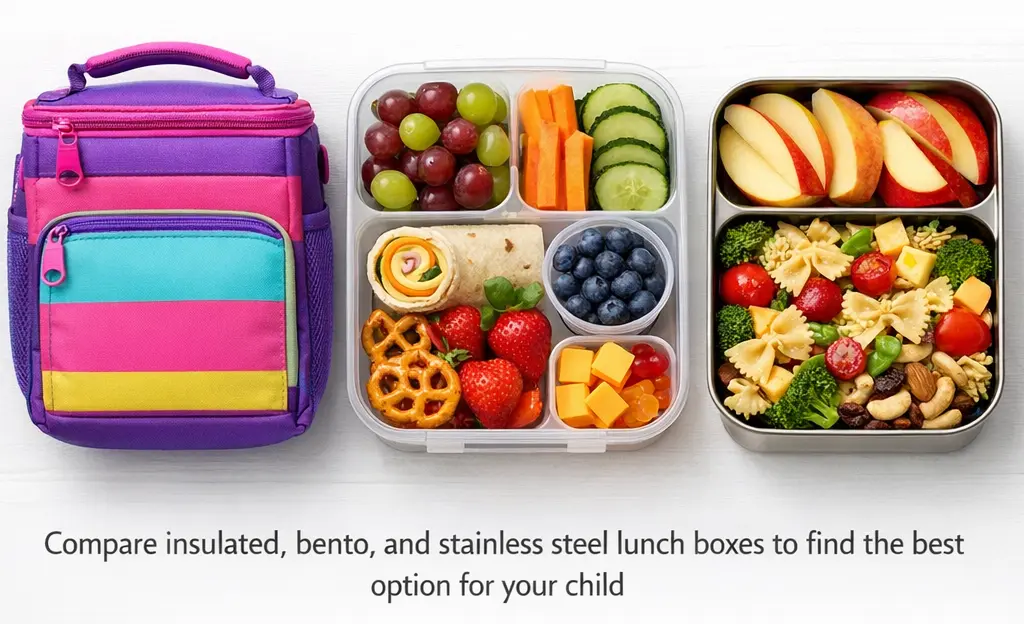
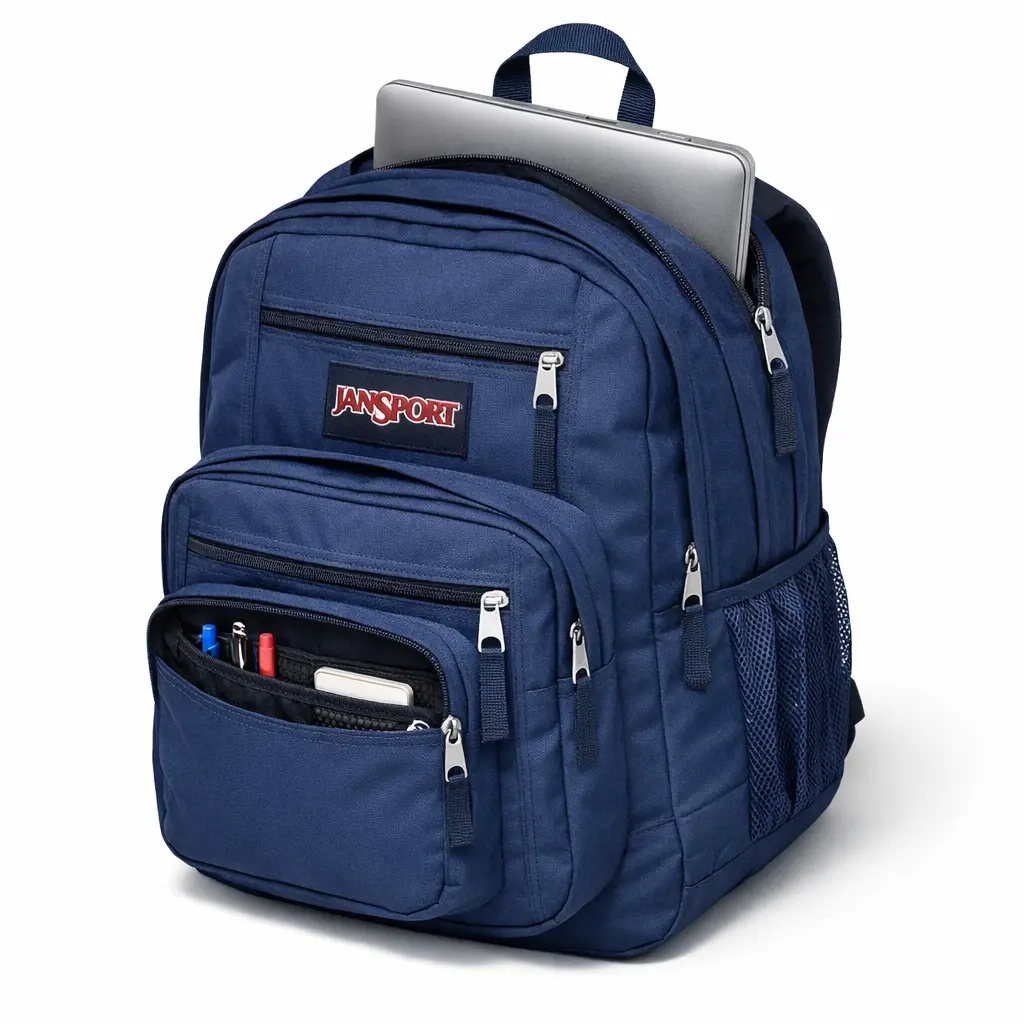
Backpacks and Lunch Boxes
Best Time: Mid-July
Strategy:
Popular styles, characters, and sizes sell out quickly. Prices rarely drop significantly because demand remains strong. Buy early for selection, not maximum discount.
What to Look For:
Quality construction (reinforced straps, quality zippers). A durable backpack lasting two years at $40 beats a $20 backpack failing by December.
Clearance Opportunity:
Post-Labor Day clearance offers deep discounts, but selection is limited to unpopular styles and sizes. Works well if your child is flexible or if you’re buying for next year in a larger size.
Clothing and Shoes
Best Time: Tax-free weekend OR post-Labor Day
Strategy:
Two approaches work:
Approach 1: Buy during tax-free weekend for best selection and tax savings (4-9%) plus typical sales (20-30%)
Approach 2: Wait for clearance (50-70% off) but accept limited selection
Recommended Split Strategy:
- Buy specific items (first-day outfit, shoes in correct size) during tax-free weekend
- Buy flexible items (basic tees, jeans, athletic wear) during clearance
Sizing Consideration:
Kids grow. Buying too early in larger sizes can backfire. Focus on current fit for expensive items; size up for clearance bargains.
Technology (Laptops, Tablets, Calculators)
Best Time: Amazon Prime Day (July) OR tax-free weekend OR Black Friday
Strategy:
Back-to-school sales on technology exist, but deeper discounts often appear during:
- Amazon Prime Day (mid-July)
- Tax-free weekend (late July/early August) for immediate needs
- Black Friday (November) for best prices if you can wait
Required vs. Optional:
If your child needs a laptop for day one of school, buy during tax-free weekend to combine tax savings with available sales. If it’s optional or can wait, Black Friday typically offers 20-40% better pricing.
Calculators:
Graphing calculators rarely go on significant sale (5-15% typical). Teacher requirements are specific, limiting substitution. Buy during tax-free weekend for maximum savings on these expensive items.
Dorm Essentials and College Supplies
Best Time: Late August
Strategy:
Retailers stock dorm items throughout summer, but best discounts appear in late August as college students leave for school.
What to Buy Early (July):
- Items requiring shipping to campus
- Specialty items with limited selection
- Coordinating bedding sets
What to Buy Late (Late August/September):
- Storage containers
- Basic organizational items
- Cleaning supplies
- Room décor
Alternative Strategy:
Buy once you arrive at college. Local stores near campuses often have competitive pricing and better selection than hometown retailers.
Art Supplies and Project Materials
Best Time: September clearance
Strategy:
Art supplies get used throughout the year. Stock up during clearance when prices drop 50-75%. These items don’t spoil and store easily.
How to Maximize Your Savings
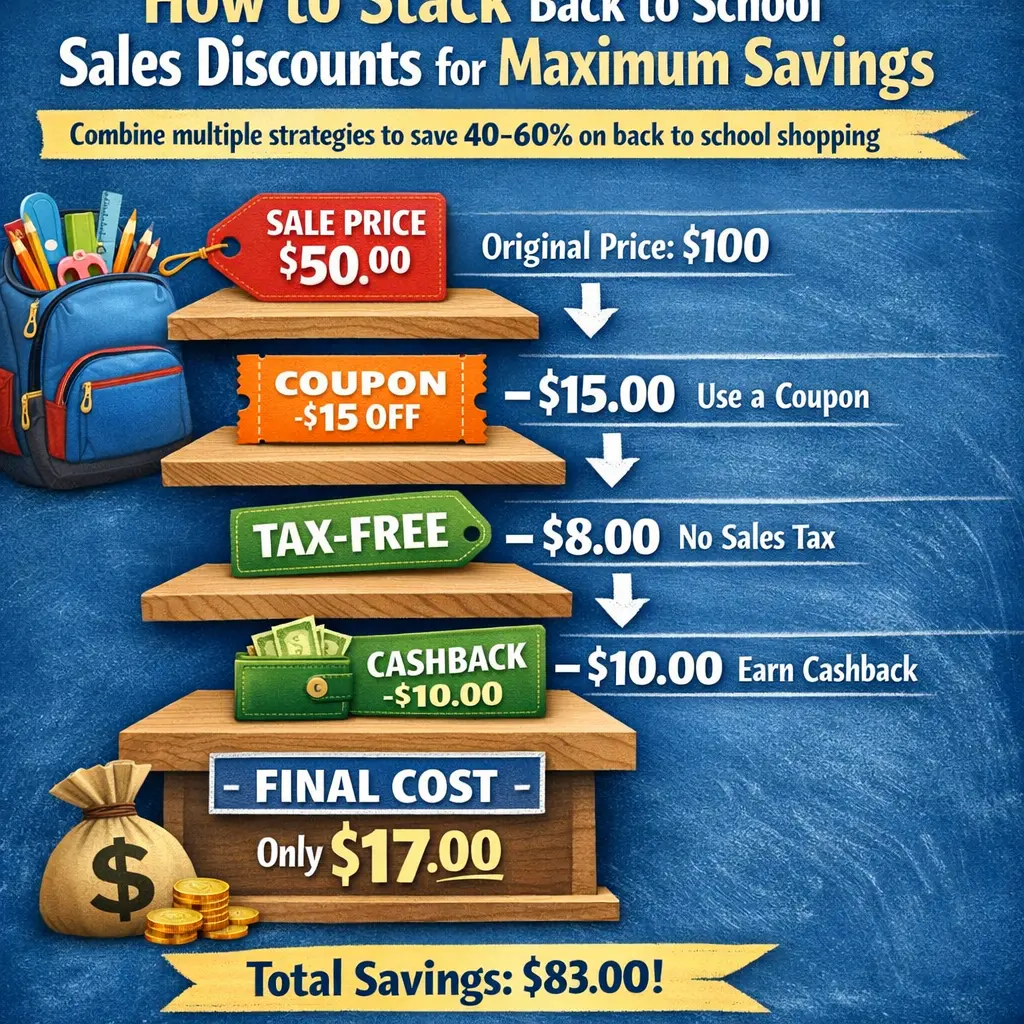
Combining multiple strategies multiplies savings beyond individual discounts.
Strategy 1: Stack Discounts
How It Works:
Layer multiple savings opportunities on a single purchase:
- Shop during a sale (20% off)
- Use a store coupon (additional $10 off)
- Apply manufacturer coupon ($5 off)
- Purchase on tax-free weekend (7% tax savings)
- Use cashback app (5% back)
- Pay with cashback credit card (2% back)
Real Example:
$100 backpack:
- Sale price: $80 (20% off)
- Store coupon: $70
- Tax-free: $70 (save $4.90 in tax)
- Cashback app: $66.50 (5% back = $3.50)
- Credit card: $65.17 (2% back = $1.33)
Total savings: $34.83 (35% off) by combining strategies
Strategy 2: Use Cashback Apps and Browser Extensions
Popular Tools:
- Rakuten: 1-10% cashback at major retailers
- Ibotta: Rebates on specific products
- Honey: Automatic coupon codes
- Capital One Shopping: Price comparison and coupons
How to Use:
Install browser extensions before shopping online. Activate app offers before in-store shopping. These tools find discounts you’d otherwise miss.
Pro Tip:
Compare multiple cashback apps. Rates vary by retailer and timing. One app might offer 5% while another offers 2% on the same day at the same store.
Strategy 3: Price Match Policies
How It Works:
Buy at your preferred store, then price match if you find a lower price elsewhere within the return window (typically 7-30 days).
Benefits:
- Shop early for selection
- Guarantee lowest price
- Avoid multiple shopping trips
- Maintain preferred retailer rewards
Major Retailers with Price Match:
- Target (matches 30+ retailers)
- Walmart (matches local competitors and major online retailers)
- Best Buy (matches major retailers including online)
- Staples (matches major competitors)
Process:
Save receipts. Monitor prices. Submit price match request (in-store or online) with proof of lower price. Receive difference as refund.
Strategy 4: Loyalty Programs and Store Credit Cards
Rewards Programs (Free):
- Target Circle: 1% earnings plus exclusive discounts
- Staples Rewards: 5% back
- CVS ExtraCare: Frequent coupons
- Office Depot Rewards: 2% back
Store Credit Cards (Use Cautiously):
- Target REDcard: 5% discount + free shipping
- Amazon Prime Card: 5% back for Prime members
Important:
Only use store credit cards if you pay balances in full monthly. Interest charges (15-25% APR) eliminate savings quickly.
Strategy 5: Buy Generic and Store Brands
Major Savings:
Generic brands typically cost 20-50% less than name brands with identical or similar quality.
Best Generic Purchases:
- Notebook paper (paper is paper)
- Pencils (basic writing instruments)
- Folders and binders
- Glue sticks
- Basic crayons and markers
When Brand Names Matter:
- Specific teacher requirements
- Specialty items (certain calculator brands)
- Durability concerns (cheap backpacks fail quickly)
Quality Test:
Buy generic first. If it fails or disappoints, upgrade to brand name. Most generic school supplies perform identically to name brands.
Strategy 6: Shop Your Home First
Often Overlooked:
Before buying anything, inventory what you already have:
- Leftover supplies from last year
- Partially used notebooks with blank pages
- Pens and pencils in junk drawers
- Folders and binders in good condition
- Clothing that still fits
Average Savings:
Families typically find $30-$75 worth of reusable supplies at home.
Organization Tip:
Designate a “school supply storage” location. Consolidate leftover items at year-end. Review before shopping.
Price Tracking and Planning Tools
Smart shopping requires information. These tools help you identify genuine deals and avoid inflated “sale” prices.
Price History Trackers
CamelCamelCamel (Amazon):
Shows price history graphs for any Amazon product. Reveals true lowest prices and typical sale prices. Set alerts for target prices.
Keepa (Amazon):
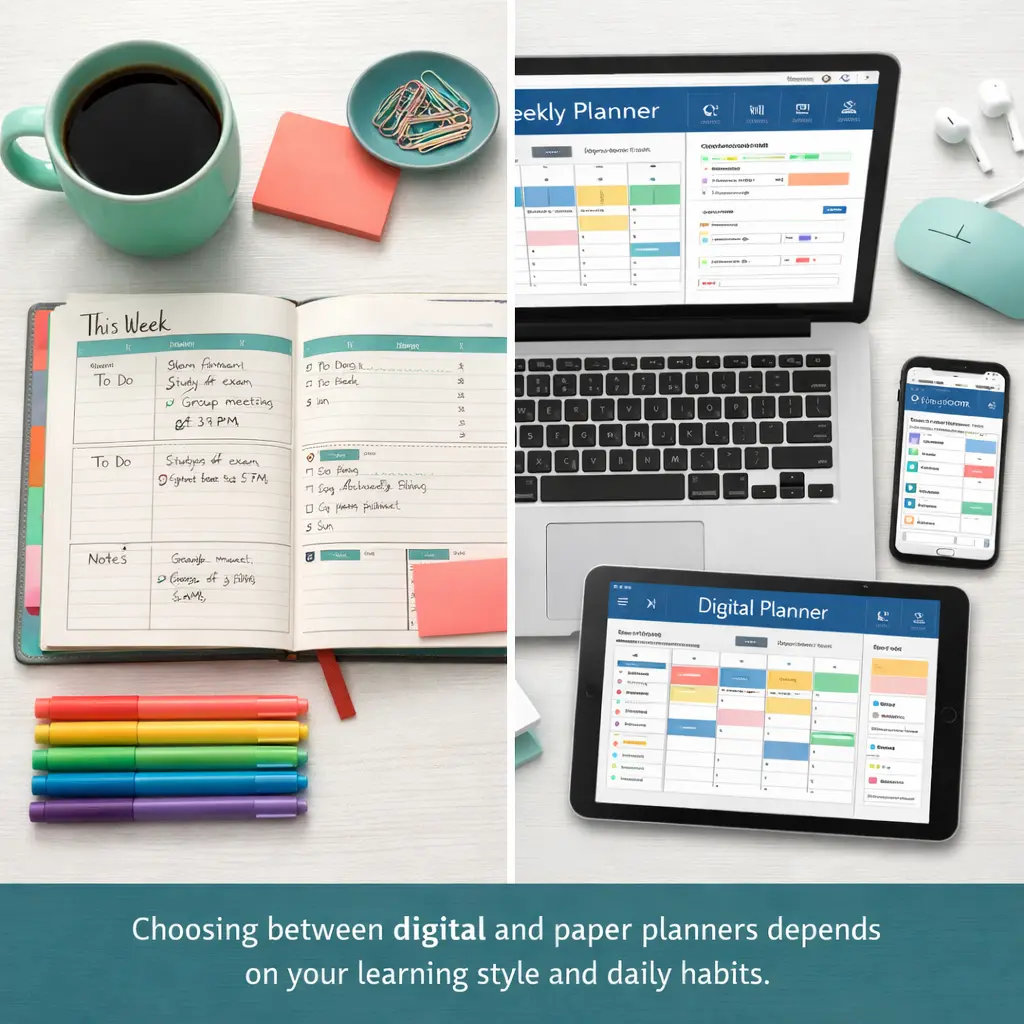
Similar to CamelCamelCamel with additional features like price drop notifications and historical data.
How to Use:
Before buying, check price history. If current “sale” price equals average price, wait. If it’s truly discounted, buy confidently.
Price Comparison Tools
Google Shopping:
Compares prices across retailers for identical products. Shows availability and shipping costs.
ShopSavvy:
Scan barcodes in-store to compare prices across online and local retailers instantly.
How to Use:
Found an item in-store? Scan or search it. If it’s significantly cheaper elsewhere, buy there or price match.
Budget Planning Spreadsheets
Create a Master Shopping List:
- Column 1: Item needed
- Column 2: Quantity
- Column 3: Estimated price
- Column 4: Priority (must-have vs. nice-to-have)
- Column 5: Best store for this item
- Column 6: Actual price paid
- Column 7: Variance from budget
Benefits:
- Stay organized across multiple shopping trips
- Track spending against budget
- Identify where you’re overspending
- Share list with family members to avoid duplicate purchases
Retailer Apps
Why Install:
- Exclusive app-only discounts
- Digital coupons
- In-store navigation
- Inventory checking
- Faster checkout
Top Apps:
- Target app (Cartwheel deals integrated)
- Walmart app (inventory checker)
- Amazon app (barcode scanner)
- Retailer-specific apps for stores you frequent
Deal Aggregators
Slickdeals:
Community-driven deal sharing. Users post exceptional sales. Upvoting surfaces the best deals.
Brad’s Deals:
Curated deals from expert deal hunters. Back-to-school sections during summer.
RetailMeNot:
Coupon codes and cashback offers. Browser extension applies codes automatically.
Common Mistakes to Avoid
These errors cost families hundreds of dollars annually. Recognition helps you avoid them.
Mistake 1: Waiting Until the Last Minute
The Problem:
Procrastinating until the week before school starts means:
- Popular items sold out
- Limited sizes and styles
- No time for price comparison
- Rushed decisions
- Higher prices (retailers know you’re desperate)
The Solution:
Start planning in July. Make purchases across multiple shopping trips during different sale periods.
Mistake 2: Buying Everything at Once
The Problem:
One massive shopping trip means:
- Missing category-specific sale timing
- Impulse purchases
- Budget overshooting
- Inability to comparison shop
The Solution:
Strategic phased purchasing:
- Week 1: Assess needs, plan budget
- Week 2-3: Buy items on deep discount
- Week 4: Tax-free weekend big-ticket purchases
- Week 5-6: Fill gaps, catch sales
- Post-Labor Day: Clearance extras
Mistake 3: Ignoring Your Child’s Input Completely
The Problem:
Dictating all purchases without child input leads to:
- Unused items (child refuses to use them)
- Wasted money on rejected items
- Potential social issues (child feels embarrassed by choices)
The Solution:
Balance input with boundaries:
- Let child choose within parameters (pick one of these three backpacks)
- Explain budget constraints
- Offer choices on lower-cost items
- Reserve parent veto for expensive purchases
Mistake 4: Falling for “Doorbuster” Trap
The Problem:
Extremely low-priced loss leaders are designed to get you in the store. You buy the 10-cent notebook but spend $50 on other items at regular price.
The Solution:
Buy the doorbuster. Leave immediately or stick rigidly to your list. Retailers count on impulse purchases subsidizing loss leaders.
Mistake 5: Buying Poor Quality to Save Money
The Problem:
The cheapest backpack tears by October. The $2 calculator breaks. You replace items mid-year at full price, spending more than buying quality initially.
The Solution:
Differentiate:
- Buy cheap: Items kids lose (individual pens, erasers)
- Buy quality: Items needing durability (backpacks, shoes, calculators)
Calculate cost-per-use. A $40 backpack lasting two years costs $20/year. A $15 backpack lasting three months costs $60/year.
Mistake 6: Ignoring Next Year
The Problem:
September clearance offers 75% discounts, but you’ve completed shopping. You miss the best prices.
The Solution:
Buy ahead during clearance:
- Next year’s supplies
- Larger clothing sizes
- Generic items you’ll need
Storage requirements are minimal. Savings are substantial.
Mistake 7: Not Reading Supply Lists Carefully
The Problem:
Teachers specify requirements for reasons. Buying wrong items means:
- Repurchasing correct items
- Wasted money
- Child can’t complete assignments
The Solution:
- Get official lists from school or teacher
- Note specific requirements (colors, sizes, brands)
- Ask teacher if substitutions are acceptable
- Keep lists when shopping
Mistake 8: Forgetting Hidden Costs
The Problem:
Budget covers supplies but forgets:
- School fees
- Activity costs
- Field trip money
- Lunch money or meal plans
- Sports equipment or uniforms
- School photos
- Fundraiser contributions
The Solution:
Add 15-20% buffer to your supply budget for these extras.
Shopping Checklist
Use this comprehensive checklist to ensure you don’t forget essential items.
Basic School Supplies
Writing Instruments:
- Pencils (#2 for tests)
- Pens (blue/black, sometimes red)
- Erasers
- Pencil sharpener
- Highlighters
- Colored pencils
- Markers (washable for younger kids)
- Crayons (if required)
Paper Products:
- Notebooks (composition, spiral, or as specified)
- Loose-leaf paper (wide or college-ruled)
- Graph paper (for math)
- Index cards
- Sticky notes
Organization:
- Folders (colors often specified)
- Binders (size specified)
- Dividers with tabs
- Pencil case or pouch
- Backpack
- Lunch box
Other Supplies:
- Scissors (safety or regular)
- Glue sticks
- Liquid glue
- Tape (clear or as specified)
- Ruler (standard and metric)
- Calculator (type specified by math teacher)
- Tissues
- Hand sanitizer
- Disinfecting wipes
Clothing
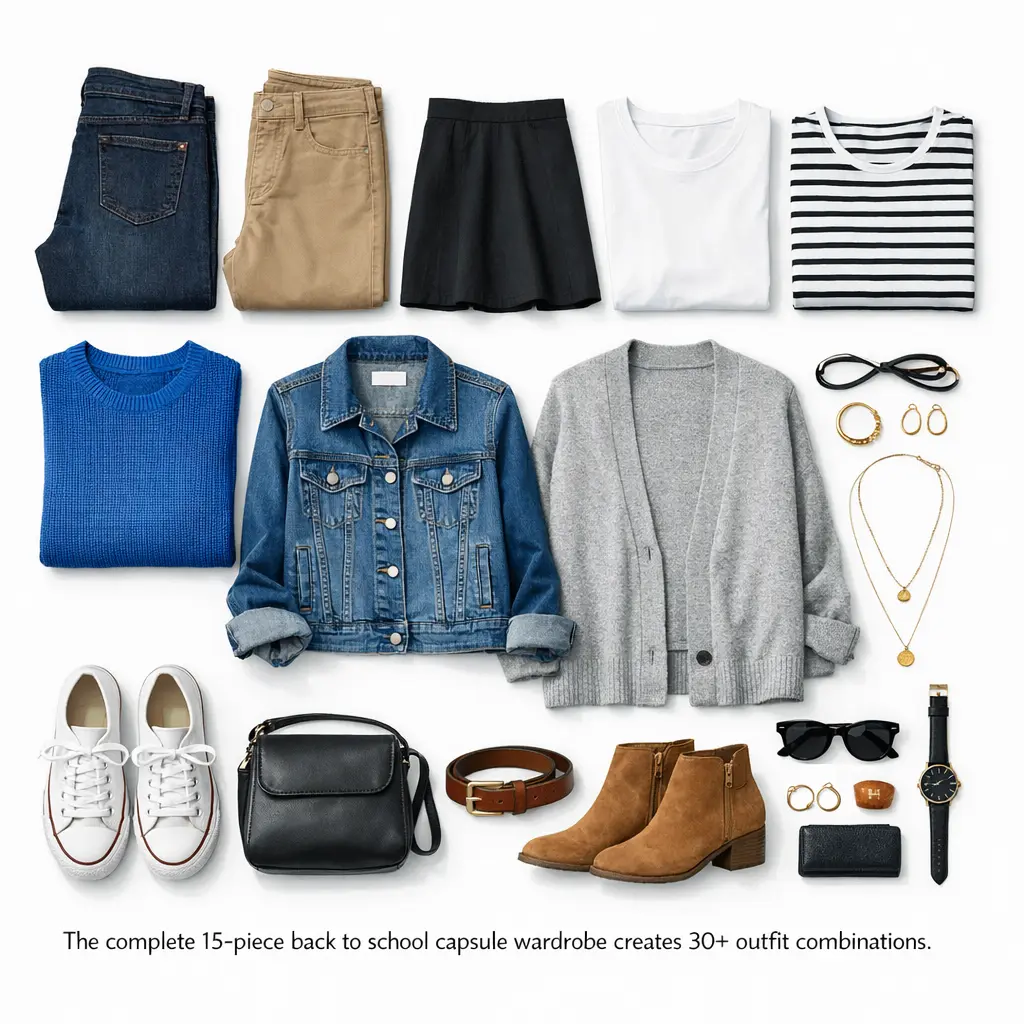
Everyday Wear:
- Shirts/tops (quantity based on laundry frequency)
- Pants/shorts/skirts
- Underwear
- Socks
- Shoes (everyday)
- Athletic shoes (for PE)
- Jacket/sweatshirt
- Belt (if needed)
Specialized:
- Uniform (if required)
- PE uniform
- Dress clothes (for presentations/special events)
Technology
- Laptop or tablet (if required)
- Laptop case or sleeve
- Chargers
- Headphones or earbuds
- Mouse (optional)
- USB drive (for file backup)
- Surge protector (for dorms)
Personal Items
- Water bottle
- Hand sanitizer
- Tissues
- Lip balm
- Feminine hygiene products
- Locker shelf or organizer
- Combination lock
- Gym bag
College Dorm Essentials
Bedding:
- Twin XL sheets (2 sets)
- Comforter or duvet
- Pillows
- Mattress pad/topper
- Bed risers (for storage underneath)
Bath:
- Towels (bath, hand, washcloth)
- Shower caddy
- Flip-flops for shower
- Toiletries
- Robe
Room Setup:
- Desk lamp
- Storage bins
- Hangers
- Laundry basket/hamper
- Laundry detergent
- Command hooks (walls)
- Power strip
- Fan (if no AC)
- Trash can
- Cleaning supplies
Budget Planning Framework
Strategic budgeting prevents overspending and reduces financial stress.
Average Costs by Grade Level
Elementary School (K-5):
- School supplies: $100-$150
- Clothing: $150-$250
- Shoes: $50-$100
- Backpack/lunch box: $40-$80
- Total: $340-$580
Middle School (6-8):
- School supplies: $120-$200
- Clothing: $200-$350
- Shoes: $75-$150
- Backpack: $40-$80
- Technology: $0-$300 (if calculator or device required)
- Total: $435-$1,080
High School (9-12):
- School supplies: $150-$250
- Clothing: $250-$400
- Shoes: $100-$200
- Backpack: $50-$100
- Technology: $100-$500 (calculator, possible laptop)
- Extracurriculars: $50-$300
- Total: $700-$1,750
College:
- Supplies: $200-$400
- Technology: $500-$1,500 (laptop often required)
- Clothing: $300-$600
- Dorm essentials: $400-$800
- Textbooks: $500-$1,200 (separate from back-to-school shopping)
- Total: $1,900-$4,500
Creating Your Budget
Step 1: Calculate Total Available Funds
Determine how much you can realistically spend without financial strain.
Step 2: Categorize by Priority
Must-Have (60% of budget):
- Items on official supply lists
- Required clothing (uniforms, PE clothes)
- Essential technology
- Backpack and lunch box
Should-Have (25% of budget):
- Additional clothing
- Organizational supplies beyond requirements
- Quality upgrades for frequently-used items
Nice-to-Have (10% of budget):
- Trendy items
- Extra supplies
- Room décor (college)
Buffer (5% of budget):
- Forgotten items
- Price variances
- Emergency replacements
Step 3: Allocate by Store
Based on the “Best Stores” section, assign categories to specific retailers:
- Basic supplies → Dollar stores or loss leaders
- Clothing → Tax-free weekend at preferred retailer
- Technology → Amazon Prime Day or tax-free weekend
- Bulk items → Warehouse club
Step 4: Track Spending
Use your spreadsheet to monitor actual spending against budget. Adjust remaining purchases if you overspend in one category.
Savings Strategies by Budget Level
Tight Budget (Under $300 per child):
- Focus on required items only
- Buy generic brands
- Shop clearance and dollar stores
- Accept hand-me-downs
- Buy used when appropriate (textbooks, calculators)
- Reuse last year’s backpack and clothing if possible
Moderate Budget ($300-$600 per child):
- Mix generic and name brands
- Strategic sale shopping
- Buy quality for durability items
- Some new clothing, some from last year
- One nice item (special backpack, outfit)
Flexible Budget ($600+ per child):
- Balance quality and value
- Don’t overspend unnecessarily (more isn’t better)
- Invest in durability
- Build wardrobe for whole year
- Consider next-year purchasing during clearance
Expert Money-Saving Tips
These insider strategies deliver additional savings beyond basic sale shopping.
Tip 1: Shop With Teachers
Teachers often receive exclusive discounts (10-25% at office supply stores). If you’re friendly with your child’s teacher, ask if they’d be willing to purchase items using their discount. Offer to compensate them for their time.
Tip 2: Organize a Supply Swap
Coordinate with other parents to swap unused supplies from previous years. One family’s extra folders become another’s needed items. Everyone saves money on perfectly good supplies that would otherwise sit unused.
Tip 3: Split Bulk Purchases
Warehouse club prices are excellent, but quantities may exceed what one family needs. Split costs and products with another family. Both get bulk pricing without waste or excess storage needs.
Tip 4: Use the “Rule of Three”
Never buy the first day you see an item unless it’s a documented historical low price. Check at least three retailers or wait three days. This cooling-off period prevents impulse purchases and often reveals better deals.
Tip 5: Buy Refurbished Technology
Manufacturer-refurbished laptops and tablets offer 20-40% savings with full warranties. Apple, Dell, HP, and other major brands sell certified refurbished units directly. Quality matches new products; only the box is different.
Tip 6: Negotiate
Some costs are negotiable:
- School fees (inquire about hardship waivers)
- Used textbook prices (make an offer)
- College dorm packages (unbundle and buy separately)
Many families don’t ask and therefore don’t receive available discounts.
Tip 7: Consider Total Cost of Ownership
A $100 graphing calculator seems expensive until you realize it will last through high school and potentially college—six years for $16/year. A $50 competitor breaks sophomore year and requires replacement at $50—three years for $33/year. The premium product costs less long-term.
Tip 8: Buy “Back to School” Items Year-Round
Retailers drastically mark up school supplies in summer. That same notebook costs $0.50 in November but $1.50 in August. Buy throughout the year when you see sales, then store them for September.
Tip 9: Check Resale and Thrift Stores
Gently used clothing, backpacks, and even supplies appear at thrift stores year-round. August donations from families whose kids outgrew items create excellent selection. Designer brands at 80-90% off retail are common.
Tip 10: Use Student Discounts Year-Round
Many retailers (Apple, Microsoft, clothing stores) offer student discounts with valid ID. These extend beyond back-to-school season. Your student status provides savings on technology, software, clothing, and entertainment throughout the year.
After Labor Day Clearance Strategy
The shopping season doesn’t end when school starts. September clearance sales offer the deepest discounts of the year.
What Goes on Clearance
Immediately After Labor Day:
- School supplies (50-75% off)
- Backpacks and lunch boxes (40-60% off)
- Summer clothing (60-80% off)
- Transitional clothing (30-50% off)
Mid-September:
- Final clearance before fall merchandise takes over
- Additional markdowns on remaining inventory
- “Last chance” pricing
What to Buy for This Year
Even though school has started, these purchases still make sense:
Supplies You’ll Need All Year:
- Notebook paper (kids go through reams)
- Pencils (constantly lost)
- Pens
- Folders (replacements for damaged ones)
- Binders
Clothing in Larger Sizes:
Kids grow. That shirt that’s slightly big in September fits perfectly by December. Buying clearance clothes in the next size up provides winter wardrobe at summer clearance prices.
Extras:
- Art supplies for projects
- Poster board
- Construction paper
- Markers for posters
What to Buy for Next Year
Strategic shoppers stock up during September clearance:
Definite Purchases:
- Basic supplies (paper, pencils, pens, folders)
- Generic items unchanged year-to-year
- Classroom supplies teachers request annually
Size-Up Purchases:
Buy clothing one or two sizes larger. This works best for:
- Basic tees and pants
- Jackets and sweatshirts
- Athletic wear
- Pajamas
Risky Purchases:
Avoid stockpiling:
- Trendy items (styles change)
- Shoes (fit is critical)
- Grade-specific supplies (requirements change)
- Character items (interests change)
How Deep Do Discounts Go?
Week 1 (Right After Labor Day):
- 30-50% off most items
- 50-75% off summer items
Week 2:
- 50-60% off school supplies
- 60-75% off remaining summer items
Week 3:
- 60-75% off school supplies
- 75-90% off summer clearance
Week 4:
- Final markdowns before new inventory
- 75-90% off everything remaining
- Very limited selection
Storage Considerations
Buying a year ahead requires storage space. Designate a closet, bins, or shelf area for next year’s supplies. Label clearly with grade/year and contents.
Climate-controlled storage prevents damage. Avoid garages or attics where temperature extremes might damage paper products or clothing.
The Math of Clearance Shopping
Example:
- 10 notebooks at regular price (September purchase): $20
- 10 notebooks during July sale (25% off): $15
- 10 notebooks during September clearance (75% off): $5
Buying for next year during clearance saves $15 compared to buying at regular time.
For a typical supply list, clearance shopping for next year saves $75-$150 with 30 minutes of shopping and minimal storage space.
FAQs
1. When do back to school sales start at major retailers?
Most major retailers including Target, Walmart, Staples, and Office Depot launch back to school sales in mid-July, typically around July 10-15. Sales run through early September, with peak discounts occurring during tax-free weekends (late July/early August depending on state) and immediately after Labor Day.
Early July offers the best selection but moderate discounts (10-25% off). Late July through early August provides the best balance of selection and pricing. Post-Labor Day clearance delivers the deepest discounts (50-75% off) but very limited selection on remaining inventory.
2. What is tax-free weekend and how much can I save?
Tax-free weekends are designated periods when participating states suspend sales tax on specific categories of back-to-school merchandise. Approximately 16 states offer these, typically in late July or early August.
Qualifying purchases usually include clothing and footwear under $100 per item, school supplies under $50 per item, and computers under $750-$1,500 (limits vary by state). You save the full amount of your state and local sales tax, typically 4-9% depending on location.
On a $500 back-to-school shopping trip in a state with 7% sales tax, you save $35. Combined with sale prices, this represents significant savings, especially on big-ticket items like computers and clothing.
3. Should I buy everything at once or spread out my shopping?
Spreading purchases across multiple shopping trips maximizes savings. Different categories see peak discounts at different times:
Buy in mid-July: Backpacks and lunch boxes (best selection before popular styles sell out), specific items on teacher lists that might have limited inventory.
Buy during tax-free weekend (late July/early August): Clothing, shoes, expensive electronics, big-ticket items where tax savings matter most.
Buy in late August: Remaining list items, opportunistic purchases during sales.
Buy post-Labor Day: Clearance items for immediate use and next year’s supplies.
This phased approach requires more trips but typically saves 30-50% compared to one rushed shopping trip the week before school starts.
4. Where can I find the best deals on school supplies?
The “best” store depends on what you’re buying:
Basic supplies (notebooks, pencils, folders): Dollar stores offer the lowest everyday prices. Office supply stores (Staples, Office Depot) offer the deepest sale prices with loss-leader promotions (penny deals).
Backpacks and lunch boxes: Target and Walmart provide the best selection and competitive pricing.
Clothing: Department stores during tax-free weekend, or clearance sections post-Labor Day.
Technology: Amazon Prime Day (July), tax-free weekend, or wait for Black Friday if you can.
Bulk items: Warehouse clubs (Costco, Sam’s Club) offer lowest per-unit pricing.
Strategic shoppers split purchases across retailers, buying each category where it’s cheapest rather than one-stop shopping at higher total cost.
5. How much should I budget for back to school shopping?
Average back-to-school costs vary by grade level:
Elementary (K-5): $340-$580 including supplies ($100-$150), clothing ($150-$250), shoes ($50-$100), and backpack/lunch box ($40-$80).
Middle School (6-8): $435-$1,080 including supplies ($120-$200), clothing ($200-$350), shoes ($75-$150), backpack ($40-$80), and possible technology ($0-$300).
High School (9-12): $700-$1,750 including supplies ($150-$250), clothing ($250-$400), shoes ($100-$200), backpack ($50-$100), technology ($100-$500), and extracurriculars ($50-$300).
College: $1,900-$4,500 including supplies ($200-$400), technology ($500-$1,500), clothing ($300-$600), and dorm essentials ($400-$800), excluding textbooks.
Add a 15-20% buffer for unexpected costs like school fees, field trips, and activity expenses. Strategic shopping using the techniques in this guide can reduce these costs by 40-60%.
6. Is it better to buy name brands or generic school supplies?
For most school supplies, generic brands perform identically to name brands at 20-50% lower cost. Paper is paper; folders are folders.
Buy generic for: Notebook paper, pencils (basic #2), folders, binders, glue sticks, basic crayons and markers, erasers, and rulers.
Consider name brands for: Items requiring durability (backpacks, calculators, certain markers/pens that perform better), specific teacher requirements (some teachers request particular brands), and items where quality differences matter (art supplies for serious projects).
Test strategy: Buy generic first. If it fails or disappoints, upgrade to name brand. Most families find 80% of generic supplies work perfectly fine, saving $30-$75 per child annually.
The exception is durability items. A quality backpack lasting two years at $40 costs less per year than a cheap backpack failing after three months at $15.
7. Can I use coupons during tax-free weekend?
Yes, in most states you can stack manufacturer coupons, store coupons, and other discounts with tax-free weekend savings. The tax exemption applies to the final purchase price after all discounts.
Example: A $100 jacket with a $20 coupon becomes $80 before tax. During tax-free weekend, you pay $80 total (no tax added). Outside tax-free weekend, you’d pay approximately $85.60 (with 7% tax), so you save $5.60 by shopping during the tax-free period even after applying the coupon.
This stacking potential makes tax-free weekend the optimal time for big-ticket purchases where you can combine multiple savings strategies: sales + coupons + tax savings + cashback apps + credit card rewards.
Always verify your specific state’s tax-free weekend rules, as some restrictions may apply to certain discount types.
8. Should I shop online or in-store for back to school items?
Both channels offer advantages. Strategic shoppers use both:
Shop in-store for: Clothing (fit verification), backpacks (comfort and size testing), shoes (proper fit critical), items needed immediately, and taking advantage of in-store-only doorbusters.
Shop online for: Price comparison, convenience, items you know fit/work, bulk purchases, heavy items (avoid carrying), accessing wider selection, and using price tracking tools.
Hybrid approach: Research online, buy in-store during tax-free weekend to avoid shipping costs and ensure tax exemption. Or buy in-store, then price match online discounts within the return window.
Many retailers now offer buy-online-pickup-in-store (BOPIS), combining online convenience with immediate availability and tax-free weekend qualification.
9. When is the absolute cheapest time to buy school supplies?
The absolute cheapest prices appear during post-Labor Day clearance sales in mid-September, when remaining inventory gets marked down 75-90% off.
However, this strategy has limitations: selection is very limited (mostly unpopular colors, sizes, and styles), school has already started (you’ve already purchased most items), and it only works for next year’s planning or supplemental purchases.
For immediate needs: The best value comes from shopping during tax-free weekend in late July/early August, combining tax savings with typical 20-40% sales and the ability to stack coupons.
For maximum savings: Buy basics at dollar stores year-round, catch loss-leader promotions in late July (penny notebooks), and stock up during September clearance for next year.
The strategic approach balances timing, price, and selection based on specific category needs rather than waiting for a single “cheapest” moment.
10. How can I avoid overspending on back to school shopping?
Implement these specific strategies:
Before shopping: Get official supply lists from school, inventory reusable items from last year, create a detailed budget by category, and make a prioritized shopping list distinguishing needs from wants.
While shopping: Use a list and stick to it, avoid impulse purchases in checkout lines, shop alone when possible (kids increase spending), use cash or debit rather than credit for budget accountability, and compare per-unit pricing rather than package prices.
Smart tactics: Buy only required items initially (add wants later if budget allows), choose generic brands for most supplies (save $30-$75), skip matching/coordinating sets (usually cost more), avoid character items that cost premium prices, and resist retailer upselling and add-on suggestions.
After shopping: Track spending against budget, save receipts to price match if you find lower prices, and review what you bought to learn for next year.
Families using these strategies typically reduce spending by 40-60% compared to unplanned, last-minute shopping trips.
Tags: back to school sales, when do back to school sales start, back to school deals, best back to school sales, tax free weekend, school supply sales, back to school shopping, back to school discounts, BTS sales, back-to-school promotions, school shopping sales, student discounts, back to school clearance, school supplies, teacher supplies, college dorm essentials, student laptops, backpacks, school clothes, notebooks and binders, calculators, dorm bedding, school shoes, when is the best time to buy school supplies, how to save money on back to school shopping, cheapest place to buy school supplies, back to school sales calendar, what stores have back to school sales, how much should I budget for back to school, where are the best back to school sales, how can I save money on school supplies, what is tax free weekend, when should I shop for back to school, are back to school sales worth it, best back to school deals, back to school sales 2024, back to school coupons, back to school promo codes




Leave a Reply