

Standing in front of your closet every morning wondering what to wear to school gets old fast. You know the feeling—plenty of clothes but nothing seems to work together. The good news is that you don’t need an endless wardrobe to look great. With the right school outfit ideas and a smart mix-and-match approach, you can create dozens of combinations from basic pieces you probably already own.
This guide provides 30 specific outfit formulas designed for real school settings. Each combination balances comfort, dress code requirements, and personal style. You’ll learn how to build a capsule wardrobe of essential pieces that work together seamlessly, saving you time, money, and morning stress.
Whether you’re in middle school, high school, or college, these practical outfit ideas will help you feel confident and put-together without overthinking your daily look.
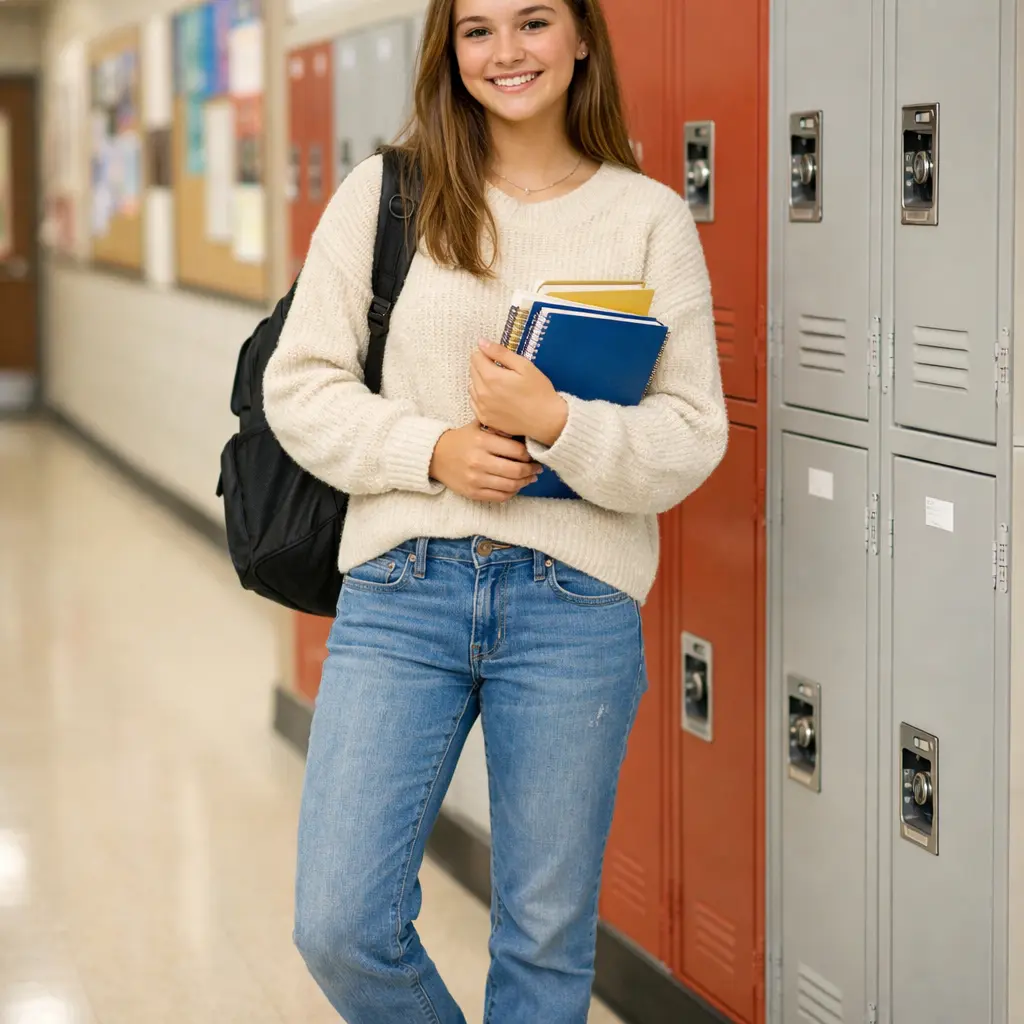
Essential Wardrobe Pieces for School Outfits
Before jumping into specific combinations, understand which core items create the most versatility. These wardrobe essentials form the foundation of all 30 school outfit ideas below.
Bottoms (Choose 4-5)
Jeans:
- Medium-wash skinny or straight-leg jeans
- Dark-wash jeans (dressier option)
- Light-wash or distressed jeans (casual weekend feel)
Other Bottoms:
- Black leggings or jeggings
- Casual khaki or black pants
- Denim or corduroy skirt
- Neutral-colored shorts (for warmer months)
Tops (Choose 6-8)
Basic Tees:
- White crew-neck t-shirt
- Black or gray basic tee
- Striped long-sleeve shirt
Elevated Tops:
- Simple button-up shirt (white, chambray, or plaid)
- Casual sweater (crew-neck or V-neck in neutral colors)
- Fitted turtleneck
- Graphic tee (choose versatile designs)
- Casual blouse or feminine top
Layering Pieces (Choose 3-4)
- Denim jacket
- Zip-up hoodie or pullover
- Cardigan (neutral color)
- Bomber or utility jacket
- Blazer (for dressier days)
Shoes (Choose 3-4 pairs)
- White or black sneakers
- Canvas shoes (like Converse or Vans)
- Ankle boots
- Ballet flats or loafers
Accessories
- Crossbody bag or backpack
- Simple jewelry (stud earrings, delicate necklace)
- Baseball cap or beanie
- Scarf (for colder months)
Professional Tip: Stick to a color palette of 3-4 neutral colors (black, white, gray, navy, tan) plus 1-2 accent colors you love. This ensures everything mixes easily.
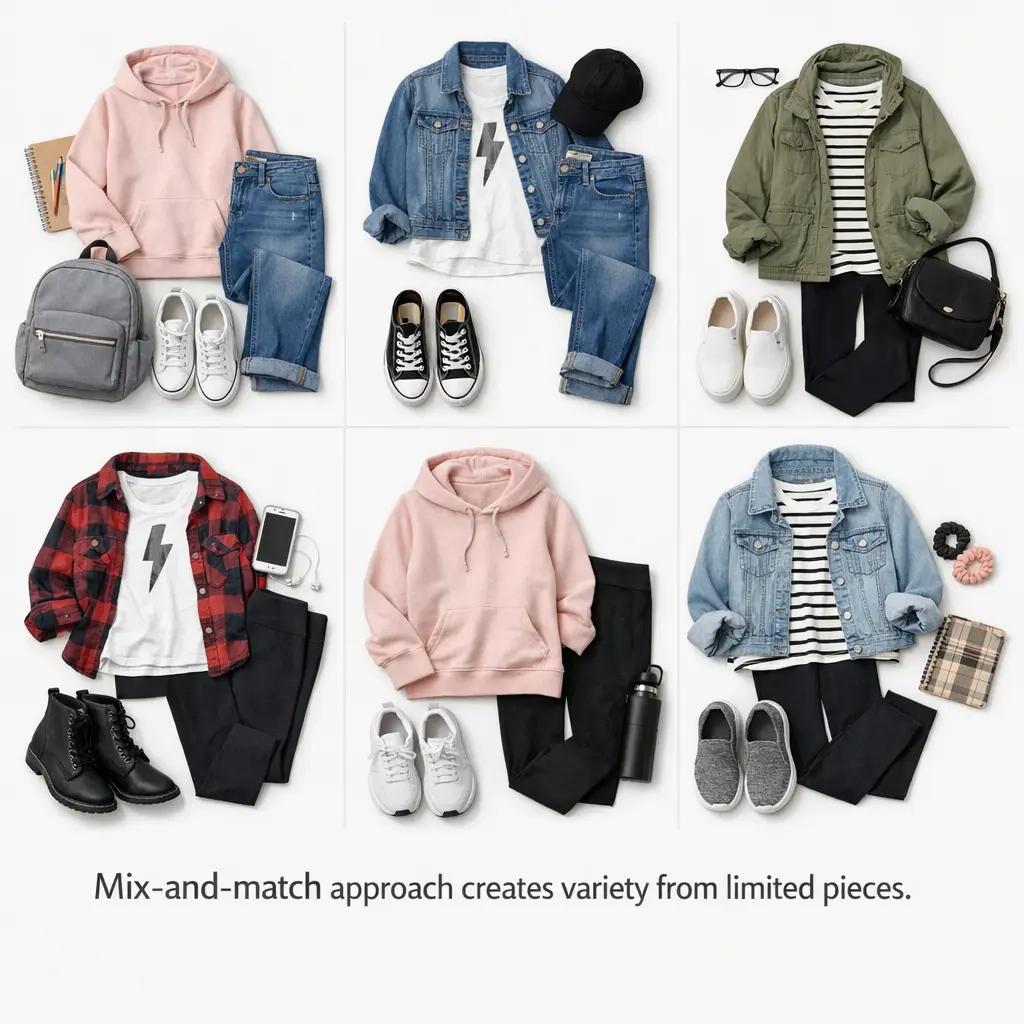
30 Mix-and-Match School Outfit Combinations
These school outfit ideas are organized by style vibe. Each formula lists specific pieces and explains why the combination works.
Casual Everyday Outfits (1-10)
These combinations work for typical school days when you want to look good without trying too hard.
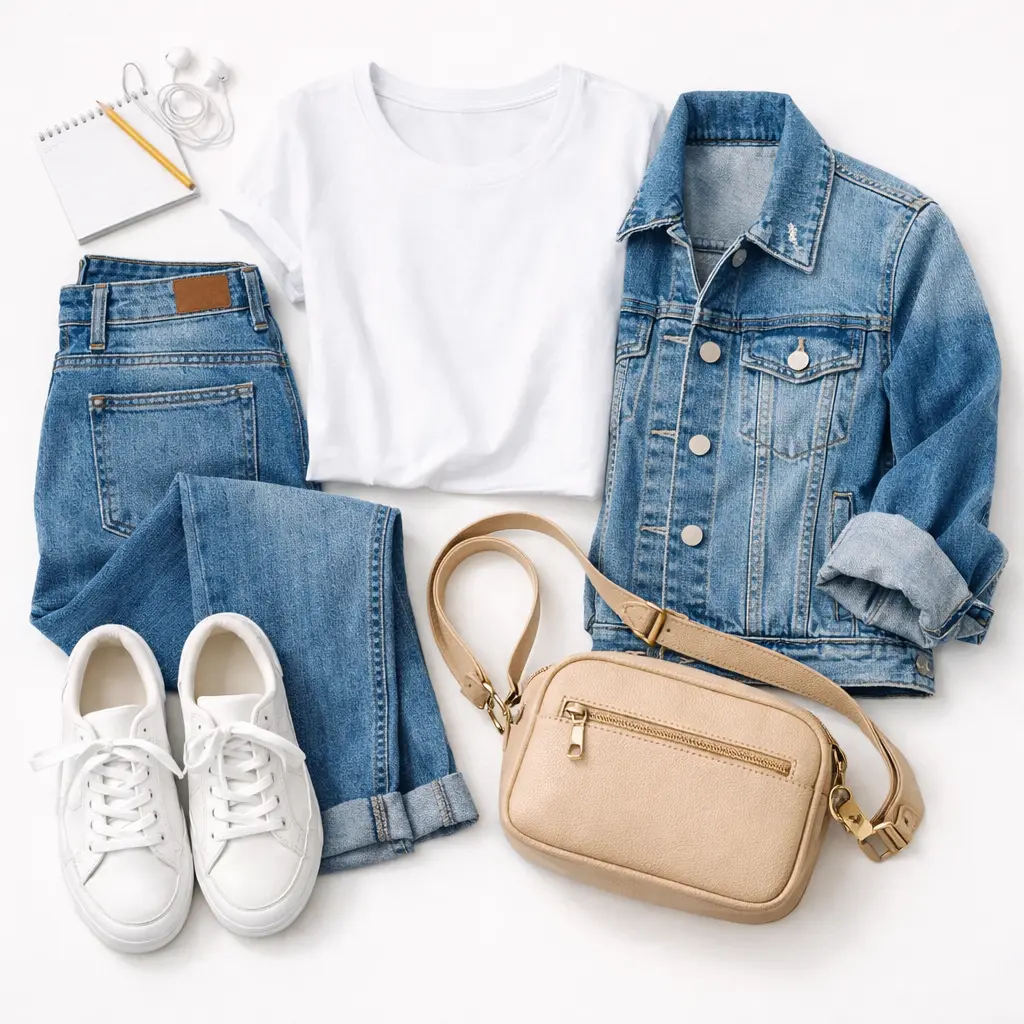
Outfit 1: Classic Jeans and Tee
- Medium-wash jeans
- White crew-neck t-shirt
- Denim jacket
- White sneakers
- Simple crossbody bag
Why it works: This timeless combination never fails. The denim-on-denim creates visual interest while staying effortlessly casual.
Outfit 2: Striped Shirt Style
- Black skinny jeans
- Black and white striped long-sleeve shirt
- Black canvas sneakers
- Small hoop earrings
Why it works: Stripes add pattern without overwhelming the look. All-black base creates a sleek foundation.
Outfit 3: Casual Sweater Look
- Light-wash jeans
- Gray crew-neck sweater
- White t-shirt layered underneath (peeking out at hem)
- White sneakers
- Beanie
Why it works: Layering the tee under the sweater adds dimension and keeps you comfortable if classrooms vary in temperature.
Outfit 4: Athleisure Vibe
- Black leggings
- Oversized graphic tee or school spirit shirt
- Zip-up hoodie (unzipped or tied around waist)
- Athletic sneakers
- Baseball cap
Why it works: Comfortable enough for active days while still looking intentional and put-together.
Outfit 5: Chambray and Denim
- Dark-wash jeans
- Chambray button-up shirt
- White sneakers
- Delicate necklace
Why it works: The chambray shirt dresses up basic jeans slightly. Rolling up sleeves adds a relaxed touch.
Outfit 6: Cozy Cardigan
- Medium-wash jeans
- Black fitted turtleneck or basic tee
- Tan or cream cardigan
- Ankle boots
- Tote bag
Why it works: The cardigan adds sophistication while maintaining comfort. Easy to remove if you get warm.
Outfit 7: Graphic Tee Statement
- Black or dark jeans
- Favorite graphic tee
- Denim jacket or bomber jacket
- Canvas sneakers
- Simple earrings
Why it works: Your graphic tee becomes the focal point while other pieces stay neutral and supportive.
Outfit 8: Monochrome Magic
- Black jeans
- Black basic tee
- Gray zip-up hoodie
- Black and white sneakers
- Silver jewelry
Why it works: Monochromatic looks always appear intentional and polished with minimal effort.
Outfit 9: Weekend Casual
- Light-wash distressed jeans
- Oversized white tee (half-tucked)
- White sneakers
- Crossbody bag
- Sunglasses on head
Why it works: The half-tuck defines your waist while keeping the look relaxed. Perfect for casual Fridays.
Outfit 10: Simple Button-Up
- Medium-wash jeans
- White button-up shirt (sleeves rolled)
- Converse or Vans
- Watch or bracelet
Why it works: A crisp button-up instantly elevates jeans without feeling overdressed for school.
Slightly Dressed-Up Looks (11-20)
Use these school outfit ideas for presentations, school photos, or days when you want to feel extra confident.
Outfit 11: Blazer Power
- Black skinny jeans
- White tee or blouse
- Neutral blazer
- Ankle boots or loafers
- Structured bag
Why it works: The blazer adds instant sophistication. Great for presentation days or college campus style.
Outfit 12: Sweater and Skirt
- Denim or corduroy skirt
- Fitted crew-neck sweater
- Tights (if needed for dress code or warmth)
- Ankle boots or ballet flats
- Simple necklace
Why it works: Feminine without being overly dressy. The sweater keeps it school-appropriate.
Outfit 13: Tucked-In Style
- High-waisted black pants
- Striped or solid button-up (fully tucked)
- Black belt
- Loafers or flats
- Minimal jewelry
Why it works: The full tuck and belt create a polished silhouette perfect for more formal school occasions.
Outfit 14: Layered Look
- Dark jeans
- White button-up shirt
- V-neck sweater layered over (collar showing)
- Ankle boots
- Watch
Why it works: This preppy combination looks put-together and works well in professional settings like internships or campus interviews.
Outfit 15: Smart Casual
- Khaki or neutral casual pants
- Simple blouse or nice tee
- Cardigan
- Ballet flats
- Stud earrings
Why it works: Comfortable enough for all-day wear but appropriate for parent-teacher conferences or school events.
Outfit 16: Turtleneck Chic
- Medium-wash jeans
- Black fitted turtleneck
- Statement earrings
- Ankle boots
- Structured bag
Why it works: Turtlenecks always look intentional. Add bold earrings since your neck is covered.
Outfit 17: Polished Denim
- Dark-wash skinny jeans
- Silk or satin blouse
- Denim jacket (optional)
- Pointed-toe flats
- Delicate jewelry
Why it works: The nicer fabric blouse elevates basic jeans. Perfect balance of casual and dressy.
Outfit 18: Monochrome Dressy
- Black pants
- Black blouse or nice top
- Tan or camel cardigan or blazer
- Black flats or loafers
- Gold jewelry
Why it works: The neutral color blocking creates a sophisticated look appropriate for any school setting.
Outfit 19: Feminine Touch
- Denim skirt
- White button-up or blouse
- Cardigan (tied over shoulders or worn normally)
- Ballet flats
- Simple necklace and bracelet
Why it works: Classic feminine styling that stays school-appropriate and comfortable.
Outfit 20: Smart Layers
- Black jeans
- Gray turtleneck
- Plaid blazer or structured jacket
- Ankle boots
- Minimal accessories
Why it works: The pattern in the blazer adds interest while the neutral base keeps it grounded.
Comfy Cozy Outfits (21-30)
These school outfit ideas prioritize comfort without sacrificing style—perfect for long days, exam weeks, or when you just need to feel cozy.
Outfit 21: Sweater Weather
- Black leggings
- Oversized knit sweater
- White sneakers or boots
- Beanie
- Crossbody bag
Why it works: Maximum comfort with intentional styling through the beanie and bag choice.
Outfit 22: Hoodie Style
- Medium-wash jeans
- Basic tee
- Favorite hoodie
- Sneakers
- Baseball cap
Why it works: The classic hoodie-and-jeans combo gets elevated with a clean cap and nice sneakers.
Outfit 23: Jogger Look
- Casual joggers (not gym sweats—choose nicer material)
- Fitted tee or tank
- Zip-up hoodie
- White sneakers
- Small earrings
Why it works: Athleisure-inspired but polished enough for school. Choose joggers in neutral colors.
Outfit 24: Oversized Comfort
- Bike shorts or leggings
- Oversized band tee or school shirt
- Cardigan (open)
- Sneakers or slides
- Scrunchie or hair clip
Why it works: The cardigan makes the oversized tee look intentional rather than just rolled-out-of-bed.
Outfit 25: Cozy Turtleneck
- Black leggings
- Chunky knit turtleneck sweater
- Ankle boots
- Scarf
- Tote bag
Why it works: Perfect for cold days. The boots dress up the leggings appropriately.
Outfit 26: Relaxed Denim
- Boyfriend or relaxed-fit jeans
- Oversized sweater (front-tucked on one side)
- White sneakers
- Simple jewelry
Why it works: The partial tuck adds shape to the oversized sweater, creating a balanced silhouette.
Outfit 27: Thermal Layers
- Medium-wash jeans
- Long-sleeve thermal or waffle-knit shirt
- Flannel shirt (open, as layer)
- Boots or sneakers
- Beanie
Why it works: The flannel over thermal creates visual interest and works perfectly for variable classroom temperatures.
Outfit 28: Casual Friday
- Comfortable joggers or soft pants
- Graphic or plain tee
- Denim jacket
- Slip-on sneakers
- Casual backpack
Why it works: Elevated comfort—you’re relaxed but still look like you made an effort.
Outfit 29: Sweater Dress Hack
- Leggings
- Long oversized sweater (worn as sweater dress)
- Knee-high boots or ankle boots
- Scarf
- Crossbody bag
Why it works: This creates a dress look with the comfort of leggings. Check dress code length requirements.
Outfit 30: Ultimate Comfort
- Black leggings
- Long tunic or oversized tee
- Longline cardigan
- Comfortable sneakers or boots
- Minimal accessories
Why it works: The longline cardigan creates structure and length, making leggings more school-appropriate.
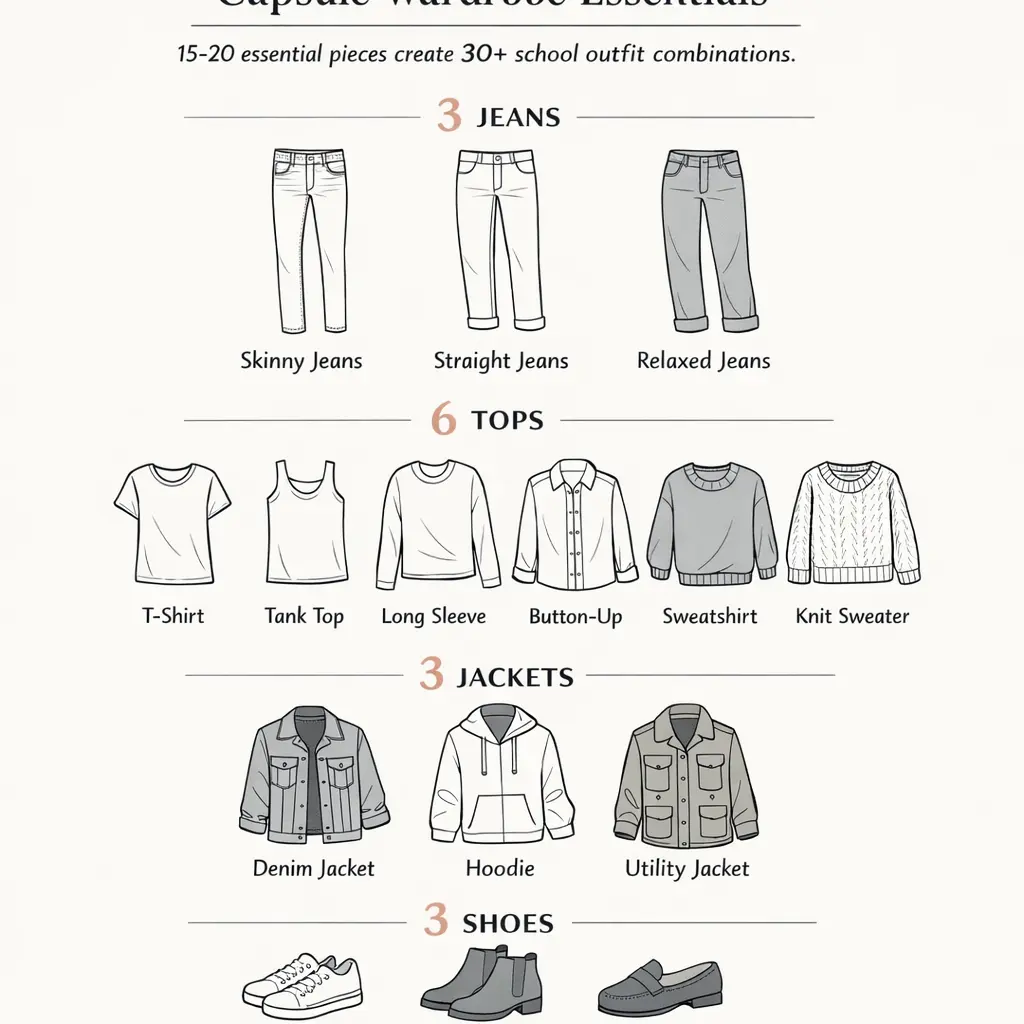
How to Build a School Capsule Wardrobe
A capsule wardrobe approach maximizes outfit variety while minimizing closet clutter and shopping costs. This method works perfectly for school outfit ideas because it emphasizes versatile pieces that mix effortlessly.
Step 1: Audit Your Current Wardrobe
Take everything out of your closet. Keep only items that:
- Fit well right now
- Are in good condition
- Make you feel confident
- Work with your school’s dress code
Be honest. Clothes you haven’t worn in six months probably won’t suddenly become favorites.
Step 2: Identify Gaps
Based on the essential pieces listed earlier, note what you’re missing. Do you have:
- At least 2-3 pairs of jeans in different washes?
- Several basic tops in neutral colors?
- 2-3 layering pieces?
- Comfortable shoes for all-day wear?
Step 3: Choose Your Color Palette
Select 3-4 neutral base colors (typically black, white, gray, navy, or tan) and 1-2 accent colors you love. This ensures everything works together.
For example:
- Base: Black, white, gray
- Accents: Burgundy, olive green
Step 4: Shop Strategically
When buying new pieces, ask:
- Does this work with at least three items I already own?
- Is this versatile enough to dress up and down?
- Does it fit my color palette?
- Will I wear this at least once per week?
Budget Allocation:
- 60% on versatile basics (jeans, neutral tops, essential shoes)
- 30% on layering pieces and outerwear
- 10% on trend pieces or accessories
Step 5: Plan Weekly Outfits
Each Sunday, choose five outfits for the week ahead. This:
- Eliminates morning decision fatigue
- Ensures you’re using all your clothes
- Helps you see what you actually need versus want
Common Mistake: Buying too many trend-focused pieces that don’t work with your existing wardrobe. Trendy items should accent your basics, not dominate your closet.
Professional Tip: Take photos of your favorite outfit combinations on your phone. Create an album you can reference on busy mornings.
Outfit Planning Strategies
Strategic planning transforms how you approach school outfit ideas and eliminates daily stress.
The 5-4-3-2-1 Method
Build a complete weekly wardrobe with:
- 5 tops
- 4 bottoms
- 3 layering pieces
- 2 pairs of shoes
- 1 bag
These items should create at least 10-15 different combinations.
The Uniform Approach
Choose one or two “uniform” formulas you love and repeat them with slight variations.
Example uniform: Jeans + basic tee + jacket + sneakers
Vary by changing:
- Jean wash and style
- Tee color and style
- Jacket type
- Sneaker color
This approach works well for people who prefer consistency and simplicity.
The Mix-and-Match Matrix
Create a simple chart:
| Bottoms | Top Option 1 | Top Option 2 | Top Option 3 |
|---|---|---|---|
| Blue jeans | White tee + denim jacket | Gray sweater | Striped shirt |
| Black jeans | Black tee + cardigan | Button-up | Turtleneck |
| Leggings | Oversized sweater | Long tee + hoodie | Tunic |
Each intersection creates a complete outfit. With 4 bottoms and 6 tops, you have 24 base combinations before adding layers and accessories.
The Two-Minute Rule
If an outfit takes more than two minutes to put together in the morning, it’s too complicated for a school day. Simplify your choices.
Seasonal Rotation
Every three months, rotate seasonal items:
- Store out-of-season pieces
- Bring current season to front of closet
- Transition pieces (like denim jackets) stay accessible year-round
Professional Tip: Lay out your outfit the night before, including accessories and shoes. This saves time and helps you realize if something needs washing or ironing.
Dress Code Navigation Tips
Dress codes vary widely between schools. These strategies help you express personal style within any restrictions.
Understanding Your Dress Code
Common dress code rules include:
- Shoulder coverage requirements (no spaghetti straps)
- Length requirements (shorts/skirts must reach fingertips)
- No visible midriffs
- No ripped jeans or specific restrictions on distressing
- Covered shoes (no flip-flops)
- No offensive graphics or language
Read your student handbook and note specific requirements for your school.
Working Within Restrictions
If shoulders must be covered:
- Layer cardigans over tank tops
- Choose crew-neck or scoop-neck tees
- Wear button-up shirts
- Use light jackets as part of your outfit design
If there are length requirements:
- Measure your inseam for shorts and skirts
- Choose midi-length skirts
- Wear leggings under shorter pieces (if allowed)
- Try cropped pants or full-length jeans
If midriffs must be covered:
- Choose longer tops or tunics
- Avoid crop tops entirely
- Do the “arm raise test”—if your shirt rises above your waistband when you raise your arms, choose something longer
Adding Personality Within Rules
Even strict dress codes allow for personal expression through:
- Accessories (jewelry, bags, scarves, hats if permitted)
- Shoe choices
- Hair styling
- Layering choices
- Color combinations
- Patterns and textures
Professional Tip: When in doubt, dress slightly more conservatively than required. Getting dress-coded interrupts your day and creates unnecessary stress.
Seasonal Outfit Adaptations
Smart layering allows your core wardrobe pieces to work year-round. These school outfit ideas adapt easily across seasons.
Fall Outfit Adjustments
Base outfit: Jeans + tee + sneakers
Add:
- Denim or utility jacket
- Light cardigan
- Ankle boots
- Scarf
- Long sleeves instead of short
Colors: Earth tones, burgundy, olive, mustard
Winter Outfit Adjustments
Base outfit: Same core pieces
Add:
- Heavy coat or puffer jacket (remove upon arrival)
- Chunky sweater instead of tee
- Thermal layer underneath
- Boots instead of sneakers
- Beanie and scarf
- Thicker pants or tights under skirts
Colors: Deep jewel tones, black, gray, navy
Spring Outfit Adjustments
Base outfit: Same core pieces
Add:
- Lighter jacket (jean jacket, bomber)
- Roll up sleeves and pant cuffs
- Switch to canvas sneakers
- Lighter fabrics
Colors: Pastels, brighter colors, white
Summer/End-of-Year Outfit Adjustments
Base outfit: Lighter variations
Add:
- Shorts (if allowed and weather appropriate)
- Short-sleeve versions of favorite pieces
- Sandals or slip-on shoes (if permitted)
- Lighter fabrics and looser fits
Colors: Bright colors, white, light denim
Common Mistake: Waiting until the season fully changes to adjust your wardrobe. Start transitioning two weeks before the weather shifts to avoid scrambling.
Professional Tip: Keep a light jacket or cardigan in your locker or backpack year-round for unpredictable classroom temperatures.
Common Style Mistakes to Avoid
Learning what doesn’t work saves you time and frustration when building school outfit ideas.
Mistake 1: Prioritizing Trends Over Versatility
The Problem: Buying trendy pieces that only work with one outfit.
The Solution: Buy trend items sparingly. Make sure they work with at least three existing pieces in your wardrobe.
Mistake 2: Ignoring Fit
The Problem: Clothes that are too tight, too loose, or the wrong length make you uncomfortable and look sloppy.
The Solution: Clothes should fit comfortably right now. Don’t buy items hoping you’ll lose/gain weight. Hem pants that drag. Tailor oversized items if needed.
Mistake 3: Over-Accessorizing
The Problem: Too many accessories compete for attention and look cluttered.
The Solution: Follow the “remove one thing” rule—put on your outfit with all accessories, then remove one item before leaving.
Mistake 4: Neglecting Shoes
The Problem: Great outfit ruined by dirty, worn-out, or inappropriate shoes.
The Solution: Keep shoes clean. Replace worn sneakers regularly. Match shoe formality to outfit formality.
Mistake 5: Uncomfortable Clothing Choices
The Problem: Choosing style over comfort leads to distraction and fidgeting all day.
The Solution: Test new outfits at home first. Walk, sit, and move in them. School days are long—comfort matters.
Mistake 6: Not Planning Ahead
The Problem: Morning panic when nothing seems to work together.
The Solution: Use Sunday evening to plan the week’s outfits. Lay out tomorrow’s outfit tonight.
Mistake 7: Comparing Yourself to Others
The Problem: Trying to copy someone else’s style when it doesn’t suit your personality, body type, or budget.
The Solution: Use others’ outfits as inspiration, but develop your own style based on what makes you feel confident.
Professional Tip: Take a photo of outfits you feel great in. When you’re stuck, reference these for inspiration rather than reinventing the wheel.
Budget-Friendly Shopping Tips
Looking great at school doesn’t require expensive clothing. These strategies maximize your budget.
Smart Shopping Practices
Buy Basics New, Trends Secondhand:
- Invest in quality jeans, basic tees, and shoes that you’ll wear constantly
- Buy trendy pieces secondhand since you’ll likely tire of them quickly
Shop End-of-Season Sales:
- Buy winter clothes in February-March
- Buy summer clothes in August-September
- Save 40-70% buying for next year
Calculate Cost-Per-Wear:
- $60 jeans worn 100 times = $0.60 per wear
- $20 trendy top worn 3 times = $6.67 per wear
This math helps prioritize versatile pieces over impulse buys.
Where to Shop on a Budget
Quality Budget Retailers:
- Target
- Old Navy
- H&M basics
- Uniqlo
- Amazon Essentials
Secondhand Options:
- Thrift stores (Goodwill, local shops)
- Online consignment (Poshmark, Depop, ThredUp)
- Clothing swaps with friends
Sale Shopping Strategy:
- Sign up for email alerts from favorite stores
- Use browser extensions that alert you to price drops
- Shop Black Friday/Cyber Monday for basics
- Check clearance sections first
Wardrobe Building Timeline
Don’t try to build a complete wardrobe at once. Spread purchases over several months:
Month 1: Buy 2 pairs of jeans and 3 basic tees
Month 2: Add 1 jacket and 1 pair of shoes
Month 3: Add 2-3 additional tops
Month 4: Add accessories and second pair of shoes
This approach prevents overwhelming costs and helps you learn what you actually need.
Care Extends Budget
Proper care makes clothes last longer:
- Follow washing instructions
- Air dry when possible (dryers wear out clothes faster)
- Treat stains immediately
- Store clothes properly (folded or hung appropriately)
- Repair minor issues (loose buttons, small holes) immediately
Professional Tip: Before buying anything, check your closet. You might already own something similar or have forgotten pieces that work perfectly.
13) COMPARISON TABLES
Outfit Style Comparison
| Style Category | Comfort Level | Dress Code Safety | Versatility | Best For |
|---|---|---|---|---|
| Casual Everyday | High | High | Very High | Daily wear, most school days |
| Dressed-Up Looks | Medium | Very High | Medium | Presentations, photos, formal events |
| Comfy Cozy | Very High | Medium | Medium | Long days, exam weeks, casual Fridays |
| Athleisure | Very High | Low-Medium | Medium | Athletic schedules, relaxed dress codes |
Wardrobe Investment Priority
| Item Category | Priority Level | Suggested Budget % | Why It Matters |
|---|---|---|---|
| Jeans (2-3 pairs) | Critical | 25% | Most-worn bottoms, foundation of many outfits |
| Basic Tops (5-6) | Critical | 20% | Maximum mix-and-match potential |
| Shoes (2-3 pairs) | High | 20% | Comfort essential, high visibility item |
| Layering Pieces (2-3) | High | 15% | Seasonal adaptability, style variation |
| Accessories | Medium | 10% | Personalization, outfit transformation |
| Trendy Items | Low | 10% | Quick style updates, low longevity |
Seasonal Outfit Formulas
| Season | Base Formula | Key Addition | Example Outfit |
|---|---|---|---|
| Fall | Jeans + Tee + Jacket | Light jacket, boots | Medium jeans + white tee + denim jacket + ankle boots |
| Winter | Jeans + Sweater | Heavy outerwear, layers | Dark jeans + chunky sweater + coat + boots + scarf |
| Spring | Jeans + Top + Light Layer | Lighter fabrics, cardigan | Light jeans + striped tee + cardigan + sneakers |
| Summer | Shorts/Skirt + Tee | Breathable fabrics | Denim skirt + basic tee + sandals + crossbody bag |
14) CHECKLISTS
Weekly Outfit Planning Checklist
□ Check weather forecast for the week
□ Note any special events (presentations, photos, field trips)
□ Select 5 complete outfits (top, bottom, shoes, layers)
□ Verify all pieces are clean and ready
□ Identify any gaps (need to do laundry, missing item)
□ Lay out Monday’s outfit completely
□ Take photos of planned outfits for reference
□ Pack bag with necessary accessories
New Clothing Purchase Checklist
□ Item works with at least 3 things I already own
□ Fits current body comfortably (no “goal size” buying)
□ Matches my color palette
□ Falls within dress code requirements
□ Comfortable enough for all-day wear
□ Fits my budget and cost-per-wear calculation
□ Fills an actual wardrobe gap (not duplicating existing pieces)
□ Can be dressed up AND down
□ Easy to care for/wash
Morning Outfit Success Checklist
□ Outfit planned night before
□ All pieces clean and ready
□ Shoes cleaned/prepared
□ Accessories selected
□ Bag packed
□ Weather-appropriate layers available
□ Comfort tested (can sit, move, bend comfortably)
□ Dress code compliant
□ Makes me feel confident
Seasonal Wardrobe Transition Checklist
□ Store out-of-season pieces properly
□ Bring current-season items to front of closet
□ Identify transition pieces that work year-round
□ Note damaged items that need replacing
□ Create shopping list for new season needs
□ Wash/clean all items before storing
□ Declutter items not worn last season
□ Plan 5 outfit combinations for new season
15) DECISION FRAMEWORKS
The “Is This Outfit Working?” Framework
Ask yourself these questions before leaving the house:
Comfort Check:
- Can I sit comfortably for hours?
- Can I walk quickly between classes without adjusting constantly?
- Are my shoes comfortable for all-day wear?
Confidence Check:
- Do I feel like myself in this outfit?
- Am I worried about any part of this outfit?
- Would I want to run into my crush wearing this?
Practical Check:
- Is this appropriate for today’s weather?
- Does this meet dress code requirements?
- Do I have any activities today requiring different clothing?
If you answer “no” to more than two questions, change your outfit.
The “Should I Buy This?” Framework
Before purchasing any clothing item:
Need Assessment (20 points):
- Fills wardrobe gap: 10 points
- Replaces worn-out item: 10 points
Versatility (30 points):
- Works with 5+ existing items: 15 points
- Can dress up and down: 10 points
- Works across seasons: 5 points
Quality & Value (30 points):
- Good cost-per-wear potential: 15 points
- Quality construction/materials: 10 points
- Fits perfectly right now: 5 points
Style Alignment (20 points):
- Matches color palette: 10 points
- Fits personal style: 5 points
- Appropriate for lifestyle: 5 points
Scoring:
- 80-100 points: Excellent purchase
- 60-79 points: Good purchase if budget allows
- 40-59 points: Reconsider or wait for sale
- Below 40 points: Don’t buy
The “Weekly Planning” Framework
Sunday Evening Process (15 minutes):
- Check Schedule (3 minutes)
- Note special events requiring specific attire
- Check weather forecast
- Identify busiest days (prioritize comfort)
- Select Outfits (10 minutes)
- Choose 5 complete combinations
- Verify all pieces are clean
- Photograph or write down choices
- Prepare (2 minutes)
- Lay out Monday’s outfit
- Note any needed shopping or laundry
This 15-minute investment saves 5-10 minutes every morning—45-50 minutes weekly.
FAQs
How many school outfits do I need?
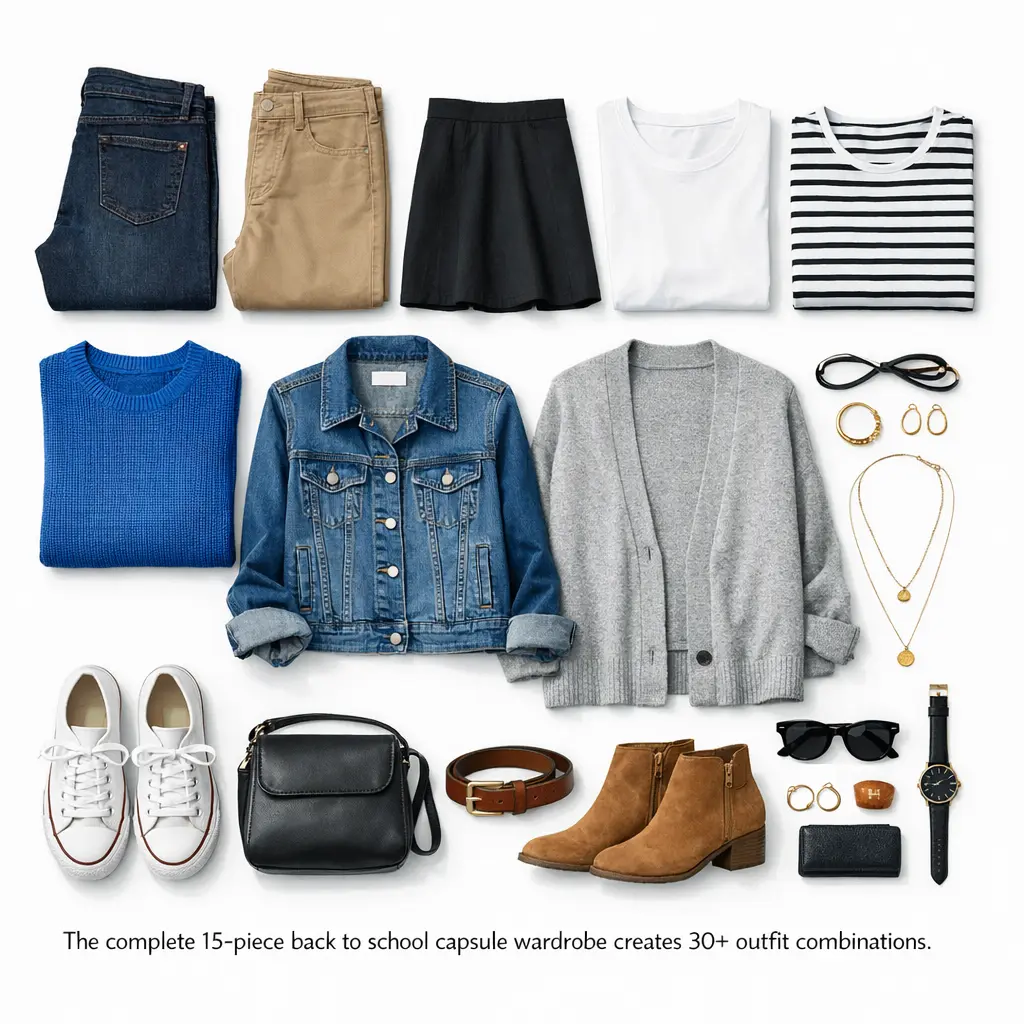
You need at least 7-10 complete outfits to avoid repeating the same look in one week. However, with a capsule wardrobe of 15-20 versatile pieces, you can create 30+ different combinations. Most students find that 2-3 pairs of jeans, 5-6 tops, 2-3 layering pieces, and 2-3 pairs of shoes provide plenty of variety without overcrowding their closet.
What should I wear to school to look cute but comfortable?
The most comfortable yet cute school outfit formula is well-fitted jeans paired with a basic tee or sweater, layered with a denim jacket or cardigan, and finished with clean sneakers or ankle boots. This combination allows movement, sits comfortably for long periods, and looks intentionally styled. Add simple accessories like stud earrings or a crossbody bag to personalize the look without sacrificing comfort.
How do I plan outfits for the whole week?
Plan outfits every Sunday evening by checking your schedule for special events and the weather forecast. Select five complete combinations including tops, bottoms, shoes, and layers. Take photos of each outfit or write them down in your phone. Verify all pieces are clean and ready. Lay out Monday’s outfit completely the night before. This planning process takes 15 minutes but saves significant morning time and stress throughout the week.
What are the essential pieces for a school wardrobe?
Essential school wardrobe pieces include: 2-3 pairs of jeans in different washes (medium, dark, light), 5-6 basic tops in neutral colors (white tee, black tee, sweaters, button-ups), 2-3 layering pieces (denim jacket, hoodie, cardigan), 2-3 pairs of comfortable shoes (white sneakers, boots, canvas shoes), one pair of black leggings, and basic accessories (backpack, simple jewelry). These 15-20 items create dozens of outfit combinations.
How can I look stylish at school on a budget?
Build a stylish school wardrobe on a budget by investing in quality basics (jeans, neutral tees, versatile shoes) and buying trendy pieces secondhand. Shop end-of-season sales for next year’s clothes, calculate cost-per-wear before purchasing, and focus on versatile pieces that work with multiple items you already own. Thrift stores, clothing swaps with friends, and budget retailers like Target or Old Navy offer affordable options. Prioritize fit and quality over quantity.
What should I not wear to school?
Avoid wearing anything that violates your school’s dress code, such as clothing with offensive graphics, excessively ripped jeans, visible midriffs, short shorts or skirts, spaghetti strap tops without coverage, or flip-flops if prohibited. Also skip clothing that’s uncomfortable for all-day wear, pajama-like items (even if comfortable), overly complicated outfits requiring constant adjustment, and extremely trendy pieces that might feel embarrassing in photos later. When uncertain, choose slightly more conservative options.
How do I make my school uniform look stylish?
If you wear a school uniform, personalize it through allowed accessories like watches, bracelets, necklaces, or earrings. Style your hair differently each day, choose fun socks if they’re visible, add a belt if permitted, or wear allowed outerwear like cardigans or blazers in flattering fits. Keep your uniform pieces well-fitted, clean, and pressed. Some schools allow shoe choice—select clean, stylish options that express personality while meeting requirements
What shoes should I wear to school?
The best shool shoes balance comfort, style, and dress code compliance. White or black sneakers work with almost every outfit and provide all-day comfort. Canvas shoes like Converse or Vans offer casual style versatility. Ankle boots add a dressier touch while remaining comfortable. Ballet flats or loafers work for more polished looks. Choose shoes you can walk in comfortably between classes, stand in during labs, and wear for 6-8 hours without pain.
How do I transition my wardrobe between seasons?
Transition your wardrobe between seasons by adjusting layers rather than replacing everything. In fall, add light jackets and switch to long sleeves. For winter, layer thermal shirts under outfits and add heavy coats, scarves, and boots. Spring requires lighter jackets and rolled sleeves. Summer means short-sleeve versions and breathable fabrics. Keep transition pieces like denim jackets and cardigans accessible year-round. Rotate seasonal items into storage every three months to keep your closet manageable.
Can I wear leggings to schoo
Whether you can wear leggings to school depends on your specific dress code. Many schools allow leggings when paired with a longer top or tunic that covers your bottom (typically mid-thigh length or longer). Some schools require leggings to be worn only under skirts or dresses. Check your student handbook for specific requirements. When wearing leggings as pants, choose thicker, non-see-through materials and pair with appropriate-length tops to ensure dress code compliance.
Tags: school outfit ideas, cute school outfits, school clothes ideas, back to school outfits, middle school outfit ideas, high school outfit ideas, college outfit ideas, school fashion ideas, outfit ideas for school, school outfits for girls, school outfits for teens, casual school outfits, comfy school outfits, capsule wardrobe, mix and match outfits, school dress code, wardrobe essentials, outfit formulas, student fashion, everyday outfits, comfortable school clothes, budget-friendly outfits, what to wear to school everyday, how to create school outfits, school outfit ideas with jeans, easy school outfits to put together, school outfits for different seasons, what should I wear to school, how to dress for school, what are good school outfits, how to plan school outfits, how many school outfits do I need, school style inspiration, trendy school outfits, modest school outfits, aesthetic school outfits, simple school outfits, affordable school fashion, school wardrobe essentials, everyday school style, fall school outfits, winter school outfits, spring school outfits, summer school outfits, layered school outfits, school outfit combinations, jeans and hoodie outfits, leggings school outfits, sneakers with school outfits, school outfit checklist, student wardrobe planning, first day of school outfits, school clothing essentials, school fashion trends, practical school outfits, stylish school looks, versatile school outfits, outfit planning for students, everyday casual fashion, comfortable student outfits, school wardrobe ideas, budget school wardrobe, mix and match wardrobe, school clothing guide, daily school outfit ideas, school outfit inspiration for girls, teen fashion ideas, campus outfit ideas, smart casual school outfits, minimalist school wardrobe, fashionable school clothes, clothing coordination for school, back to school fashion ideas, everyday student fashion, easy casual outfits for school, school wardrobe capsule, best outfits for school, practical everyday outfits, school outfit planning tips




Leave a Reply