
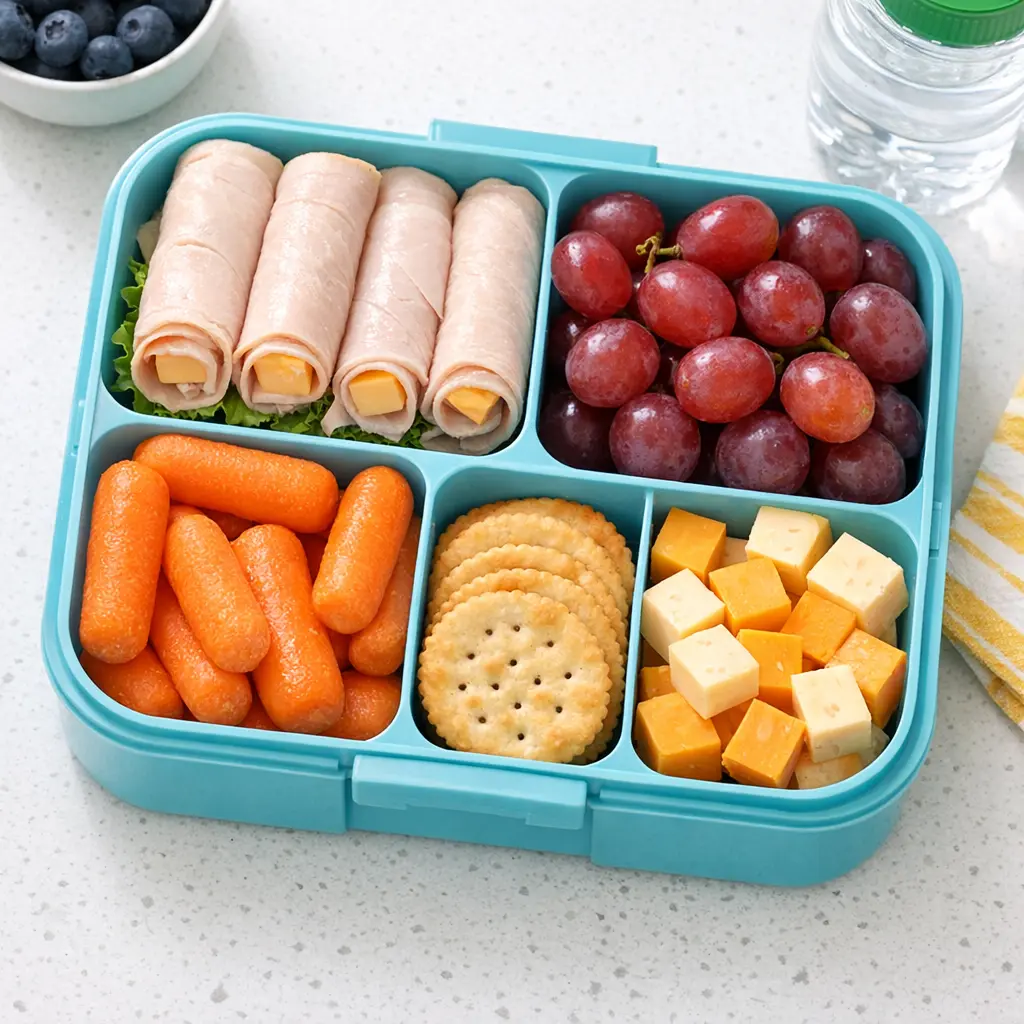
Morning time disappears fast. Between getting kids dressed, finding lost shoes, and managing breakfast, lunch packing often becomes a last-minute scramble.
Quick school lunch ideas solve this daily pressure point. A strict 5-minute limit forces efficiency while still providing nutritious meals children will eat.
The key is eliminating cooking from the morning routine. When you focus on assembly rather than preparation, even the most hectic morning becomes manageable.
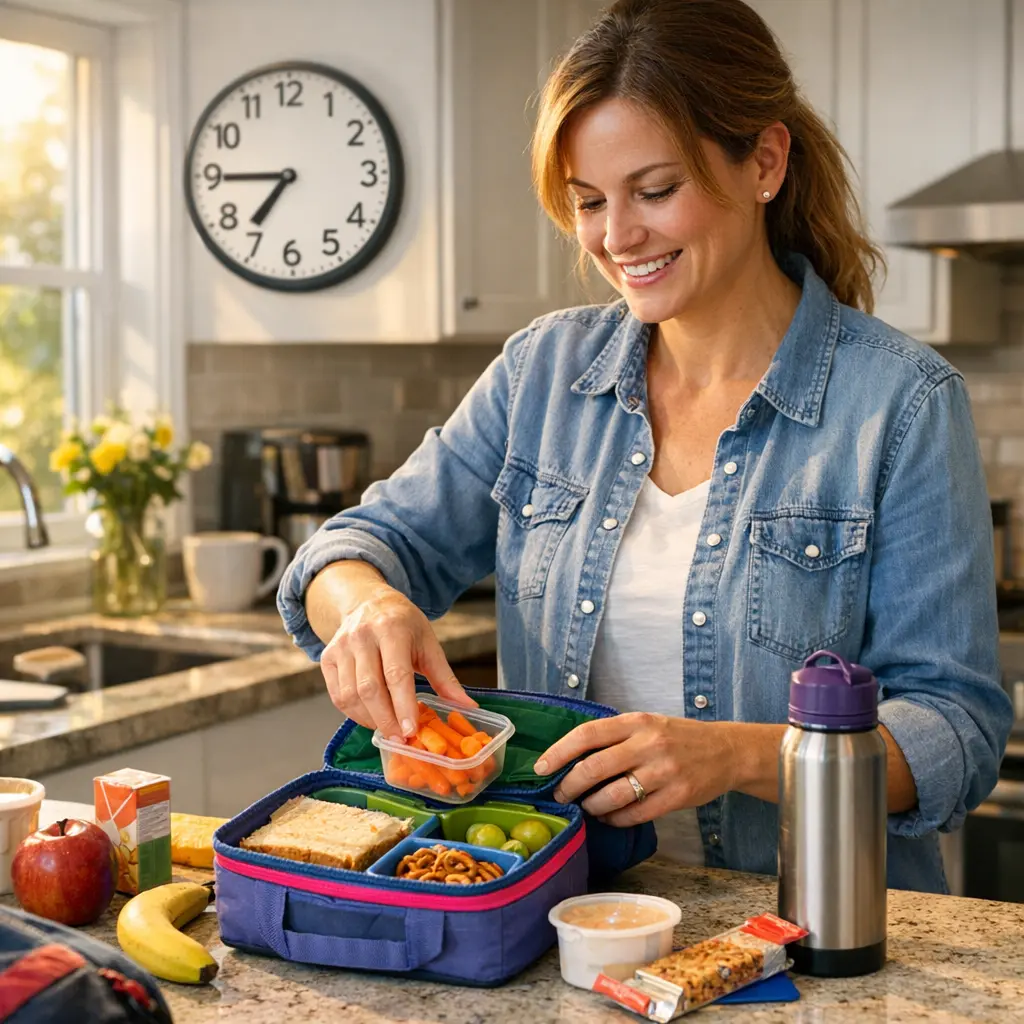
Benefits of 5-minute lunch strategies:
- Reduces morning stress and decision fatigue
- Maintains nutritional quality through smart ingredient choices
- Prevents expensive cafeteria purchases or skipped lunches
- Teaches children that healthy eating doesn’t require hours of preparation
- Creates consistent routine that simplifies weekday mornings
What makes a lunch truly “5 minutes or less”:
- No stovetop or oven cooking required
- Minimal knife work (or use pre-cut ingredients)
- Maximum 4-5 components to pack
- Grab-and-go items that need no assembly
- Use of leftovers that require only reheating
The 5-minute threshold matters because it’s realistic. Ten-minute recipes often stretch to 15 when you account for finding containers and cleaning up. Five minutes keeps the promise.
Most families discover that with basic Sunday preparation, weekday lunch packing becomes almost automatic.
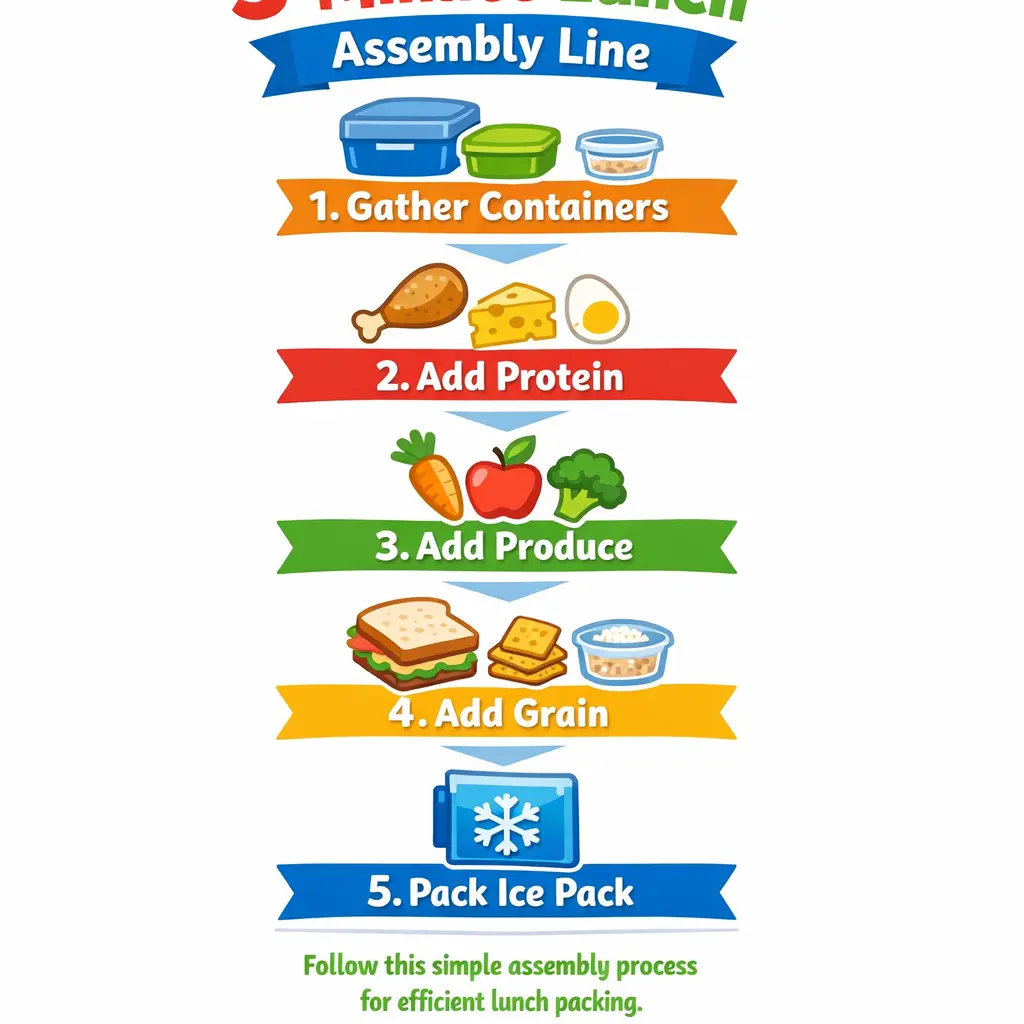
Essential Equipment for Fast Lunch Packing
The right containers make 5-minute packing possible.
Must-have items:
Insulated lunch box or bag — Maintains temperature for both hot and cold foods. Look for easy-to-clean interiors.
Ice packs (2-3 per lunch box) — Essential for food safety with perishable items like dairy, meat, and cut fruit. Freeze overnight.
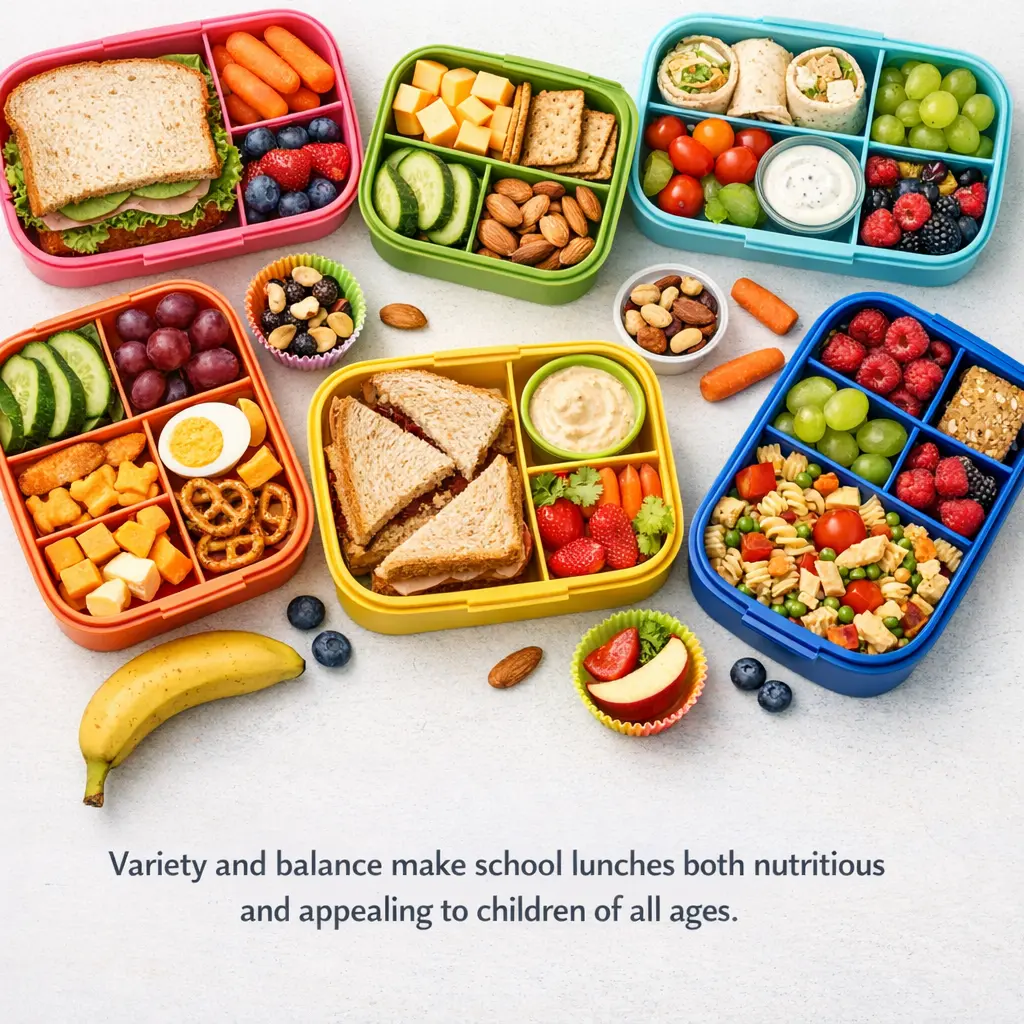
Bento-style containers — Compartments keep foods separated and make portion control simple. No need for multiple containers.
Thermos for hot foods — Choose wide-mouth styles for easier eating. Preheat with boiling water before adding hot food.
Reusable snack bags or small containers — Perfect for crackers, pretzels, and other dry items that crush easily.
Water bottle — Reduces packaging and ensures hydration.
Helpful additions:
Small ice pack sheets — Flexible designs fit around containers better than hard ice packs.
Silicone muffin cups — Create compartments in regular containers for different foods.
Leak-proof containers — Critical for yogurt, applesauce, and dips.
Common mistake: Buying complicated containers with too many pieces. Simple designs clean faster and children can open them independently.
Professional tip: Keep all lunch-packing supplies in one designated drawer or bin. Searching for containers adds unnecessary minutes.
Label containers with permanent marker on the bottom. Your items will return home more consistently.
Budget equipment works fine. You don’t need expensive specialty containers to pack fast, healthy lunches.
No-Cook Lunch Ideas (2-3 Minutes)
No-cook lunches are the fastest option when mornings run tight.
Turkey and Cheese Roll-Ups (2 minutes)
What you need:
- 3-4 slices deli turkey
- 2 cheese sticks or sliced cheese
- Optional: thin pickle spears
Assembly:
- Lay turkey slices flat
- Place cheese stick on edge
- Roll tightly
- Secure with toothpick if needed
Pack with: Baby carrots, grapes, pretzels
Substitutions: Ham, roast beef, or salami for turkey; cucumber strips instead of pickles for picky eaters
Time saver: Buy pre-sliced deli meat at the grocery store counter in exactly the portions you need.
Peanut Butter and Apple Sandwiches (3 minutes)
What you need:
- 1 apple, sliced into rounds
- 2-3 tablespoons peanut butter (or sunflower seed butter for nut-free)
- Optional: granola or mini chocolate chips
Assembly:
- Core apple and slice into 1/2-inch rounds
- Spread peanut butter on one slice
- Sprinkle with granola if using
- Top with second apple slice
Pack with: String cheese, whole grain crackers
Prevents: Browning by squeezing lemon juice on apple slices (adds 30 seconds)
Common mistake: Cutting apple slices too thin — they break when children bite into them.
Greek Yogurt Parfait (3 minutes)
What you need:
- 1 cup Greek yogurt (vanilla or plain)
- 1/4 cup granola
- 1/4 cup berries or sliced fruit
Assembly:
- Spoon half the yogurt into container
- Add half the granola and fruit
- Repeat layers
- Pack granola separately if child prefers crunch
Pack with: Cheese stick, whole grain crackers
Professional tip: Send granola in separate container to prevent sogginess. Children can mix at lunch.
Protein boost: Greek yogurt provides 15-20 grams of protein per cup.
Hummus and Veggie Box (3 minutes)
What you need:
- 1/3 cup hummus
- 1 cup cut vegetables (carrots, cucumbers, bell peppers, cherry tomatoes)
- 10-12 crackers or pita chips
Assembly:
- Place hummus in small container or compartment
- Arrange vegetables in sections
- Add crackers
Pack with: Grapes, cheese cube, granola bar
Substitutions: Ranch dressing or guacamole instead of hummus
Time saver: Buy pre-cut vegetable trays and portion throughout the week.
Cheese and Cracker Plate (2 minutes)
What you need:
- 1-2 ounces cheese (cubes, slices, or string cheese)
- 15-20 whole grain crackers
- 1/2 cup grapes or berries
- Optional: 5-6 pieces deli meat
Assembly:
- Place cheese in one compartment
- Add crackers (keep in separate container if worried about sogginess)
- Fill remaining sections with fruit and optional meat
Pack with: Baby carrots, small treat
Budget tip: Block cheese costs less than pre-sliced or string cheese. Cut into cubes on Sunday.
Bagel and Cream Cheese (2 minutes)
What you need:
- 1 mini bagel or half regular bagel
- 2 tablespoons cream cheese
- Optional: cucumber slices
Assembly:
- Spread cream cheese on bagel
- Add cucumber slices if using
- Wrap in parchment paper or place in container
Pack with: Baby carrots, apple slices, yogurt tube
Substitution: Use whole grain bread, English muffin, or rice cakes instead of bagel
Common mistake: Using cold cream cheese that tears the bagel. Let cream cheese sit out for 5 minutes while preparing other morning tasks.
Quick Assembly Lunches (3-4 Minutes)
Assembly lunches combine simple components that require no cooking.
DIY Lunchables (4 minutes)
What you need:
- 2 ounces sliced deli meat (turkey, ham)
- 1-2 ounces cheese slices or cubes
- 15-20 crackers
- Optional: cherry tomatoes, pickles
Assembly:
- Portion meat into one compartment
- Add cheese to second section
- Pack crackers separately or in third compartment
- Fill remaining space with vegetables or fruit
Pack with: Grapes, pretzels, small cookie
Cost comparison: Homemade versions cost 60-70% less than packaged versions.
Professional tip: Use cookie cutters to cut cheese into fun shapes. Takes 30 extra seconds but increases eating likelihood.
Pasta Salad Box (3 minutes)
What you need:
- 1 cup cooked pasta (from dinner leftovers)
- 1/4 cup cherry tomatoes, halved
- 1/4 cup cucumber, diced
- 2 tablespoons Italian dressing
- 1 tablespoon parmesan cheese
Assembly:
- Combine pasta and vegetables in container
- Drizzle with dressing
- Sprinkle cheese on top
Pack with: Breadstick, fruit cup, string cheese
Make-ahead: Prepare pasta salad Sunday night. Portions into 5 containers for the week. Stays fresh 4-5 days refrigerated.
Substitution: Add diced chicken, chickpeas, or cubed cheese for extra protein.
Quesadilla Triangles (4 minutes)
What you need:
- 1 flour tortilla
- 1/4 cup shredded cheese
- Optional: 2 tablespoons black beans or refried beans
Assembly:
- Sprinkle cheese on half of tortilla
- Add beans if using
- Fold in half
- Microwave 30-45 seconds until cheese melts
- Cut into triangles
- Let cool for 1 minute
Pack with: Salsa or sour cream in small container, apple slices, carrots
Time note: This is the upper edge of 5 minutes but worth it for variety.
Professional tip: Make 5 quesadillas Sunday night. Refrigerate and pack cold. Children can eat them at room temperature.
Breakfast Lunch (3 minutes)
What you need:
- 1 hard-boiled egg
- 1/2 cup berries
- 1 granola bar or muffin
- 1 yogurt tube or cup
Assembly:
- Peel egg and cut in half (or send whole for older children)
- Portion berries into container
- Add remaining items
Pack with: String cheese, pretzels
Why it works: Breakfast foods are familiar and comforting. Many children prefer them to traditional lunch items.
Make-ahead: Hard-boil a dozen eggs Sunday. They stay fresh for one week refrigerated.
Thermos Hot Lunch Ideas (4-5 Minutes)
Hot lunches require a quality thermos but minimal morning time.
Thermos prep technique:
- Fill thermos with boiling water while preparing food
- Let sit 3-5 minutes to preheat
- Dump water and immediately add hot food
- Seal tightly
This method keeps food above 140°F (safe temperature) until lunch.
Leftover Soup (4 minutes)
What you need:
- 1-1.5 cups leftover soup (chicken noodle, tomato, vegetable)
- Crackers or bread
Assembly:
- Preheat thermos with boiling water
- Heat soup in microwave until very hot (2-3 minutes)
- Pour into thermos
- Pack crackers separately
Pack with: Cheese stick, apple slices, cookie
Common mistake: Not heating soup hot enough. It should be steaming when it goes into the thermos.
Professional tip: Broth-based soups work better than cream-based, which can separate during storage.
Mac and Cheese (4 minutes)
What you need:
- 1 cup leftover mac and cheese
- 1 tablespoon milk
Assembly:
- Preheat thermos
- Add milk to mac and cheese
- Microwave until very hot (2 minutes), stirring halfway
- Transfer to thermos immediately
Pack with: Baby carrots, grapes, breadstick
Enhancement: Mix in frozen peas or diced ham before heating (adds protein and vegetables).
Leftover Pizza Slices (3 minutes)
What you need:
- 1-2 pizza slices from previous dinner
Assembly:
- Wrap pizza in aluminum foil
- Place in preheated thermos (if wide-mouth) OR
- Heat in microwave 45-60 seconds and pack in regular container with ice pack
Pack with: Carrot sticks, cucumber slices, fruit
Temperature note: Pizza is safe to eat cold, so ice pack method works if your child prefers it that way.
Chicken Nuggets (5 minutes)
What you need:
- 5-6 frozen chicken nuggets
- Ketchup or dipping sauce
Assembly:
- Microwave nuggets according to package directions (usually 2-3 minutes)
- Preheat thermos while cooking
- Transfer hot nuggets to thermos
- Pack sauce separately
Pack with: Cucumber slices, grapes, pretzels
Quality check: Nuggets should be steaming hot before going into thermos.
Sandwich Alternatives Under 5 Minutes
Many children tire of sandwiches. These alternatives provide variety.
Pinwheel Wraps (3 minutes)
What you need:
- 1 flour tortilla
- 2 tablespoons cream cheese or hummus
- 2-3 slices deli meat
- 1 slice cheese
- Lettuce or spinach leaves
Assembly:
- Spread cream cheese across entire tortilla
- Layer meat and cheese
- Add lettuce
- Roll tightly
- Slice into 1-inch rounds
Pack with: Cherry tomatoes, pretzels, grapes
Professional tip: Slice with a serrated knife for clean cuts that don’t squash the roll.
Pita Pocket Stuffers (3 minutes)
What you need:
- 1 whole wheat pita, cut in half
- 1/4 cup hummus or cream cheese
- 1/4 cup shredded lettuce
- 2 tablespoons shredded cheese
- 3-4 slices cucumber
Assembly:
- Spread hummus inside pita pocket
- Stuff with remaining ingredients
Pack with: Baby carrots, apple slices, yogurt
Substitution: Use deli meat instead of cheese for more protein.
Rice Cake Sandwiches (2 minutes)
What you need:
- 2 rice cakes
- 2 tablespoons peanut butter or sunflower seed butter
- 1 tablespoon jam or sliced banana
Assembly:
- Spread nut butter on one rice cake
- Add jam or banana slices
- Top with second rice cake
Pack with: String cheese, grapes, granola bar
Benefits: Gluten-free option that provides satisfying crunch.
Lettuce Wraps (4 minutes)
What you need:
- 2-3 large romaine or butter lettuce leaves
- 3 tablespoons hummus
- 1/4 cup shredded carrots
- 2 ounces deli turkey
- 1 tablespoon shredded cheese
Assembly:
- Lay lettuce leaves flat
- Spread hummus down center
- Add turkey, carrots, and cheese
- Roll and secure with toothpick
Pack with: Crackers, cherry tomatoes, berries
Common mistake: Using iceberg lettuce, which breaks easily. Romaine and butter lettuce hold up better.
Snack-Style Bento Boxes (3-5 Minutes)
Bento-style lunches combine multiple small portions. Perfect for picky eaters.
Rainbow Snack Box (4 minutes)
Components (fill each compartment):
- Red: Cherry tomatoes or strawberries
- Orange: Cheese cubes or mandarin oranges
- Yellow: Yellow bell pepper strips or pineapple
- Green: Cucumber slices or grapes
- Blue/Purple: Blueberries or purple grapes
- Protein: Hard-boiled egg or turkey roll-ups
- Grain: Whole grain crackers or pretzels
Assembly:
- Place one item in each compartment
- Include small container of dip if desired
Educational benefit: Children learn color recognition and variety.
Professional tip: Let children help plan which foods fill each color category. Increases eating likelihood.
Mediterranean Snack Plate (4 minutes)
What you need:
- 1/4 cup hummus
- 5-6 pita chips
- 5-6 cucumber slices
- 5-6 cherry tomatoes
- 10-12 olives (if child likes them)
- 1 ounce feta cheese cubes
Assembly:
- Place hummus in center or separate container
- Arrange remaining items in compartments around hummus
Pack with: Grapes, granola bar
Cultural exposure: Introduces children to different cuisine styles.
Breakfast Bento (3 minutes)
What you need:
- 1 mini muffin or slice of banana bread
- 1/4 cup berries
- 1 hard-boiled egg
- 5-6 cheese cubes
- Small handful granola
Assembly:
- Place muffin in largest compartment
- Fill remaining sections with other items
Pack with: Yogurt tube, juice box
Why it works: Familiar breakfast foods reduce lunch rejection.
Protein-Packed Quick Options
Protein sustains energy and concentration through afternoon classes.
Egg Salad on Crackers (4 minutes)
What you need:
- 2 hard-boiled eggs, chopped
- 1 tablespoon mayonnaise
- Salt and pepper
- 12-15 whole grain crackers
Assembly:
- Mash eggs with fork
- Mix in mayonnaise and seasoning
- Pack in container with crackers separate
Pack with: Baby carrots, grapes, cheese stick
Make-ahead: Egg salad keeps 3-4 days refrigerated.
Protein content: 12 grams per serving
Tuna Salad Cucumber Boats (4 minutes)
What you need:
- 1 pouch or small can tuna, drained
- 1 tablespoon mayonnaise
- 1 large cucumber
Assembly:
- Mix tuna with mayonnaise
- Cut cucumber in half lengthwise
- Scoop out seeds creating “boats”
- Fill with tuna salad
Pack with: Crackers, cherry tomatoes, apple slices
Alternative: Stuff into celery sticks instead of cucumber
Protein content: 20 grams per serving
Turkey and Cheese Kabobs (3 minutes)
What you need:
- 3 ounces deli turkey, cut into squares
- 1 ounce cheese, cubed
- 10-12 grapes
- 5-6 pretzel sticks or skewers
Assembly:
- Thread turkey, cheese, and grapes onto pretzel sticks
- Alternate for visual appeal
Pack with: Baby carrots, crackers
Safety note: Use pretzel sticks instead of wooden skewers for younger children.
Protein content: 15 grams per serving
Edamame Snack Box (3 minutes)
What you need:
- 1/2 cup cooked edamame (frozen, microwave 2 minutes)
- Light sprinkle of sea salt
- 1 cheese stick
- 10-12 whole grain crackers
Assembly:
- Cook edamame if using frozen
- Let cool slightly
- Portion into container
- Add cheese and crackers to other compartments
Pack with: Mandarin orange, granola bar
Protein content: 11 grams edamame + 6 grams cheese = 17 grams total
Allergy-Friendly Fast Lunches
Many schools have allergy restrictions. These options accommodate common allergens.
Nut-Free Options
Sunflower Seed Butter and Banana Roll-Ups (2 minutes)
- Spread sunflower seed butter on tortilla
- Place banana in center
- Roll and slice into rounds
- Pack with dairy-free yogurt and pretzels
Soy Butter and Apple Sandwiches (3 minutes)
- Use soy nut butter (tastes similar to peanut butter)
- Follow apple sandwich recipe from earlier
- Pack with dairy-free cheese alternative if needed
Dairy-Free Lunches
Hummus Veggie Wrap (3 minutes)
- Spread hummus on tortilla
- Add shredded carrots, cucumber, lettuce
- Roll tightly
- Pack with dairy-free crackers and fruit
Chicken and Rice Box (4 minutes)
- 1/2 cup leftover chicken (diced)
- 1/2 cup cooked rice
- Mix with 1 tablespoon teriyaki sauce
- Microwave 1 minute, pack in thermos
- Include steamed broccoli and fruit
Gluten-Free Lunches
Rice Cake Mini Pizzas (3 minutes)
- Spread marinara sauce on rice cakes
- Top with dairy-free cheese or regular cheese
- Microwave 20 seconds until cheese melts
- Pack with veggie sticks and fruit
Gluten-Free Pasta Salad (3 minutes)
- Use gluten-free pasta cooked previously
- Mix with diced vegetables
- Add Italian dressing
- Include protein like chickpeas or chicken
Egg-Free Options
Most lunch ideas in this guide are naturally egg-free. Focus on:
- Deli meat roll-ups
- Cheese and crackers
- Hummus boxes
- Quesadillas
- Pasta salad
Professional tip: Always read labels. Many processed foods contain hidden allergens.
Sunday Prep Strategies for Faster Weekday Packing
Spending 30-45 minutes on Sunday eliminates weekday decision-making.
Batch Prep Tasks (45 minutes total)
Hard-boil eggs (15 minutes active, 25 minutes total)
- Boil 12 eggs at once
- Cool and refrigerate in shells
- Stays fresh one week
Wash and portion produce (15 minutes)
- Wash grapes, berries, cherry tomatoes
- Portion into small containers or bags
- Cut carrots, cucumbers, bell peppers
- Store in airtight containers
Make grab-and-go snack packs (10 minutes)
- Portion crackers into 10-12 count bags
- Create trail mix portions
- Divide pretzels into servings
Prep proteins (10 minutes)
- Portion deli meat into 2-3 slice servings
- Cut cheese into cubes or use pre-portioned cheese sticks
- Cook extra chicken at dinner for week lunches
Assembly stations (5 minutes setup)
- Designate one shelf in refrigerator for lunch items
- Group items by category (proteins, produce, snacks)
- Place most-used items at eye level
Weekly Rotation Planning
Monday: Turkey and cheese roll-ups, veggie sticks, grapes, crackers
Tuesday: Hummus box with pita chips, cucumber, cheese stick, berries
Wednesday: Leftover dinner in thermos, breadstick, apple slices, yogurt
Thursday: DIY lunchable with crackers, meat, cheese, tomatoes, fruit
Friday: Pinwheel wraps, pretzels, carrots, special treat
Professional tip: Repeat the same schedule weekly. Eliminates decision fatigue and creates shopping consistency.
Container Organization
Label everything with child’s name using permanent marker on container bottom
Keep sets together — store containers nested inside lunch boxes when not in use
Designate a bin for all lunch supplies (ice packs, napkins, utensils)
Restock Sunday night — wash all containers and return to designated location
Common mistake: Waiting until containers run out to wash them. Wash nightly to prevent morning shortages.
Food Safety Tips for Packed Lunches
Proper storage prevents foodborne illness.
Temperature Safety
Danger zone: 40°F-140°F (bacteria multiply rapidly)
For cold lunches:
- Use 2-3 ice packs minimum
- Pre-chill lunch box in refrigerator if possible
- Pack lunch last before leaving house
- Keep lunch box in coolest location (not in hot car or by radiator)
For hot lunches:
- Preheat thermos with boiling water
- Heat food until steaming hot (165°F+)
- Fill thermos immediately after heating
- Seal tightly
Foods that need refrigeration:
- Deli meat
- Cheese
- Yogurt
- Milk
- Cut fruit (especially melon)
- Cooked pasta or rice
- Eggs
Shelf-stable options (safe at room temperature):
- Whole fruits (apples, oranges, bananas, grapes are fine for 4-5 hours)
- Crackers and bread
- Nut butters (until opened)
- Dried fruit
- Pretzels and chips
Storage Duration
How long lunch items stay safe:
| Food Item | Refrigerated | Packed Lunch (with ice pack) |
|---|---|---|
| Deli meat | 3-5 days | 4-5 hours |
| Hard cheese | 3-4 weeks | 4-5 hours |
| Yogurt | 7-10 days | 4-5 hours |
| Cut vegetables | 3-4 days | 4-5 hours |
| Hard-boiled eggs | 7 days | 4-5 hours |
| Cooked pasta | 3-5 days | 2-3 hours (needs ice pack) |
| Hummus | 5-7 days | 4-5 hours |
Professional tip: If lunch sits longer than 5 hours before eating, use extra ice packs or send shelf-stable items only.
Preventing Cross-Contamination
Keep raw and ready-to-eat foods separate — not relevant for school lunches but important during prep
Wash hands before packing lunches
Clean containers thoroughly — run through dishwasher or wash with hot soapy water
Replace worn containers — cracks and scratches harbor bacteria
Use separate cutting boards for produce and proteins during Sunday prep
Signs Lunch Has Gone Bad
Teach children to look for:
- Off or sour smell
- Warm temperature (foods that should be cold)
- Changed color or texture
- Visible mold
Important: If lunch seems unsafe, children should not eat it. Provide clear instructions to tell teacher and call home.
Common Mistakes to Avoid
Mistake 1: Packing Foods Your Child Won’t Eat
Why it happens: Adults focus on nutrition over preferences
Solution: Involve children in meal planning. Offer 2-3 choices within healthy parameters.
Reality check: Uneaten “healthy” lunch provides zero nutrition. Better to send something they’ll actually eat.
Mistake 2: Too Much Food
Why it happens: Fear child will be hungry
Problem: Creates waste and overwhelms picky eaters
Solution: Start with smaller portions. Children can always eat more at snack time.
Proper portions for elementary age:
- 1/2 to 1 sandwich or equivalent protein (2-3 ounces)
- 1/2 to 1 cup vegetables or fruit
- 1 dairy serving
- 1 small treat or extra snack
Mistake 3: Sending Only Snacks
Why it happens: “Snack lunches” are trendy and fast
Problem: Lacks sustained nutrition, leads to afternoon energy crash
Solution: Include substantial protein and whole grains, not just crackers and fruit
Balance example: Cheese and crackers (protein + grain) + vegetables + fruit + yogurt
Mistake 4: Forgetting Utensils
Why it happens: Rush packing
Problem: Children can’t eat certain foods
Solution: Keep disposable forks/spoons in lunch supply bin. Add to lunch box as default.
Professional tip: Send utensils for anything requiring scooping, even if fingers technically work.
Mistake 5: Soggy Sandwiches
Why it happens: Moisture from condiments and vegetables
Solutions:
- Pack condiments separately in small containers
- Use lettuce as barrier between wet ingredients and bread
- Toast bread slightly before making sandwich
- Pack sandwich ingredients separately for child to assemble
Mistake 6: Not Labeling Containers
Why it happens: Seems unnecessary
Reality: Containers go missing frequently at school
Solution: Label EVERYTHING with permanent marker, even items that seem obviously yours
Mistake 7: Buying New Instead of Washing
Why it happens: Too busy to wash dishes nightly
Problem: Wastes money and creates container accumulation
Solution: Make container washing part of after-dinner routine. Involves only 3-5 minutes.
Budget-Friendly Quick Lunch Ideas
Healthy lunches don’t require expensive ingredients.
Cost-Saving Strategies
Buy whole instead of pre-cut
- Block cheese vs. string cheese saves 40-50%
- Whole vegetables vs. pre-cut saves 60-70%
- Large yogurt containers vs. individual cups saves 50%
Use leftovers intentionally
- Cook extra at dinner specifically for next-day lunches
- Repurpose ingredients (taco meat becomes quesadilla filling)
- Freeze extra portions for future thermos lunches
Shop sales and stock up
- Buy shelf-stable items (crackers, granola bars, dried fruit) when on sale
- Freeze bread, cheese, and deli meat when prices drop
- Purchase store brands for basics
Seasonal produce
- Apples and oranges in fall/winter
- Berries in summer
- Grapes in late summer/fall
- Frozen vegetables work equally well for packed lunches
Budget Lunch Ideas Under $2
Lunch 1: PB&J Classic ($1.20)
- 2 slices bread ($0.20)
- Peanut butter ($0.30)
- Jelly ($0.15)
- Apple ($0.40)
- Baby carrots ($0.15)
Lunch 2: Cheese Quesadilla ($1.50)
- 1 tortilla ($0.25)
- 1/4 cup shredded cheese ($0.40)
- Salsa ($0.10)
- Orange slices ($0.50)
- Pretzels ($0.25)
Lunch 3: Yogurt and Crackers ($1.80)
- 1 cup yogurt (from large container) ($0.60)
- Granola ($0.30)
- Crackers ($0.30)
- Grapes ($0.40)
- String cheese ($0.20)
Lunch 4: Turkey Roll-Ups ($1.95)
- 3 slices turkey ($0.60)
- 1 cheese slice ($0.30)
- Crackers ($0.30)
- Banana ($0.25)
- Baby carrots ($0.15)
- Ranch dip ($0.35)
Bulk Prep Savings
Make your own “convenience foods”:
DIY Snack Packs — Buy large boxes of crackers and portion into reusable containers instead of buying individual packs (saves $3-4 per week)
Homemade Granola Bars — Make weekend batch for 75% less than store-bought
Cut Your Own Vegetables — 10 minutes Sunday prep saves $5-8 weekly
Portion Bulk Cheese — Cut block into cubes for 50% savings over pre-portioned
Professional tip: Calculate per-lunch cost to identify which convenience items are worth buying versus making.
What to Do When You Have Zero Minutes
Some mornings collapse completely.
Emergency Lunch Solutions (30 seconds)
Keep emergency shelf-stable lunch kit:
- Individually wrapped crackers
- Shelf-stable cheese or peanut butter crackers
- Juice boxes
- Applesauce pouches
- Granola bars
- Dried fruit packets
Store in designated bin. Grab entire kit on crisis mornings.
Costs: Approximately $3-4 per emergency lunch versus $5-8 cafeteria lunch
School Cafeteria Backup Plan
When to use: Mornings when packing lunch would make everyone late
Cost management: Load cafeteria account with funds in advance
Reality check: Occasional cafeteria lunch does not constitute parenting failure
Professional tip: Keep cafeteria menu posted on refrigerator. On tough mornings, check if there’s something your child likes.
Simplest Possible Packed Lunch (60 seconds)
- Peanut butter sandwich (30 seconds)
- Whole apple or banana (5 seconds)
- Granola bar (5 seconds)
- Juice box or water bottle (5 seconds)
- String cheese (5 seconds)
No container washing required if you use disposable bag
Nutrition: Covers protein, fruit, whole grains, and dairy
FAQs
How do I keep lunch cold until lunchtime without refrigeration?
Use 2-3 frozen ice packs in an insulated lunch box. Freeze ice packs overnight and place them around the food, not just underneath. Pre-chill the lunch box by storing it in the refrigerator before packing. Pack lunch immediately before leaving for school rather than the night before. Frozen juice boxes or water bottles also work as ice packs and thaw by lunchtime.
What if my child doesn’t eat the lunch I pack?
Start by asking why. Common reasons include lack of time, social distractions, unfamiliar foods, or portions too large. Simplify the lunch to 3-4 items your child has eaten successfully before. Include at least one “safe” favorite food every day. Ask your child what friends are eating for inspiration. Consider whether lunch period is long enough—some schools allow only 15-20 minutes. Send smaller portions and supplement with after-school snack.
How long does a packed lunch stay safe without refrigeration?
Perishable foods (meat, dairy, eggs, cooked foods) stay safe for 2 hours at room temperature or 4-5 hours with proper ice packs. This covers most school lunch periods. If your child’s lunch period falls more than 5 hours after packing, use additional ice packs or choose shelf-stable options like peanut butter sandwiches, whole fruits, crackers, and sealed applesauce pouches.
Can I pack hot food for school lunch?
Yes, with a quality insulated thermos. Preheat the thermos by filling with boiling water for 5 minutes while you heat the food. Heat food until steaming hot (165°F or higher). Immediately pour out the hot water and fill the thermos with your hot food. Seal tightly. This method keeps food above 140°F (the safe temperature) for 4-5 hours. Good options include soup, pasta, mac and cheese, chicken nuggets, and leftover casseroles.
What are good lunch ideas for picky eaters?
Focus on familiar foods and deconstructed meals. Instead of assembled sandwiches, pack bread, meat, and cheese separately. Create snack-style lunches with multiple small portions—crackers, cheese cubes, fruit, pretzels. Use cookie cutters to cut sandwiches or cheese into fun shapes. Include at least one food you know they’ll eat every day. Avoid introducing new foods in packed lunches; trial them at home first.
How do I prevent my child from trading lunch items?
Talk with your child about why you pack specific foods. Explain any allergy concerns (theirs or other children’s). Make the packed lunch appealing so they want to keep it. Include one small treat or favorite item. Some schools have trading policies you can reference. If trading continues, consider whether the packed items don’t appeal to your child and adjust accordingly.
What foods should I avoid packing in school lunches?
Avoid anything containing allergens if your school has restrictions (usually peanuts and tree nuts). Skip foods that spoil quickly without refrigeration like tuna salad if ice packs are insufficient. Don’t send foods requiring extensive utensils or multiple steps young children can’t manage independently. Avoid messy foods that frustrate kids (whole oranges for young children, crumbly foods without containers). Skip strong-smelling foods that embarrass children (certain fish, hard-boiled eggs for some kids).
How can I make school lunches more nutritious in 5 minutes?
Add vegetables to every lunch (baby carrots take 15 seconds to portion). Choose whole grain crackers and bread over white. Include protein in every lunch—cheese, meat, eggs, beans, or nut butter. Send water instead of juice. Add fruit rather than packaged sweets. Use Greek yogurt instead of regular for double the protein. Small additions create nutritional improvement without adding time.
Should I pack the same lunch every day or provide variety?
Most children tolerate repetition better than adults expect. A weekly rotation of 5 different lunches provides enough variety while simplifying shopping and prep. Many children prefer the same lunch repeatedly—if they eat it consistently, this is fine. Introduce variety gradually with one new item per week. Consistency reduces morning decisions and speeds packing.
What do I do if my child has multiple food allergies?
Focus on whole foods rather than processed items (fewer hidden allergens). Build lunches around safe proteins your child tolerates—sunflower seed butter, chicken, turkey, beans, or safe dairy alternatives. Use fruits and vegetables liberally as they’re naturally free from most allergens. Read every label carefully as ingredients change. Connect with your allergist for safe food lists. Join allergy parent groups for creative ideas. Many “allergy-friendly” recipes exist online from credible sources.
Tags: quick school lunch ideas, 5 minute school lunches, easy school lunch recipes, fast lunch ideas for kids, no cook school lunches, simple lunch box ideas, healthy quick lunches for school, school lunch prep ideas, last minute school lunch, quick and easy school lunches, speedy school lunch recipes, fast packed lunch ideas, quick lunch box recipes, rapid school lunch solutions, lunch packing, bento box, thermos meals, sandwich alternatives, lunchbox safety, food allergies, picky eaters, meal prep, protein options, dairy-free lunches, nut-free school lunch, budget lunches, leftover transformations, what can I pack for school lunch in 5 minutes, quick school lunch ideas no sandwich, healthy school lunches under 5 minutes, easy cold lunches for school, quick protein lunch ideas for kids, make ahead school lunch ideas for the week, what are quick school lunch ideas, how to make school lunch fast, what to pack when running late for school, how long does school lunch stay fresh, can you pack hot food for school lunch, what are healthy 5 minute lunches, best lunch boxes for kids, thermos for hot school lunch, ice packs for lunch boxes, reusable lunch containers



.png?ssl=1 "What Farmers Actually Need from Retailers As Profits Stall")

Leave a Reply