
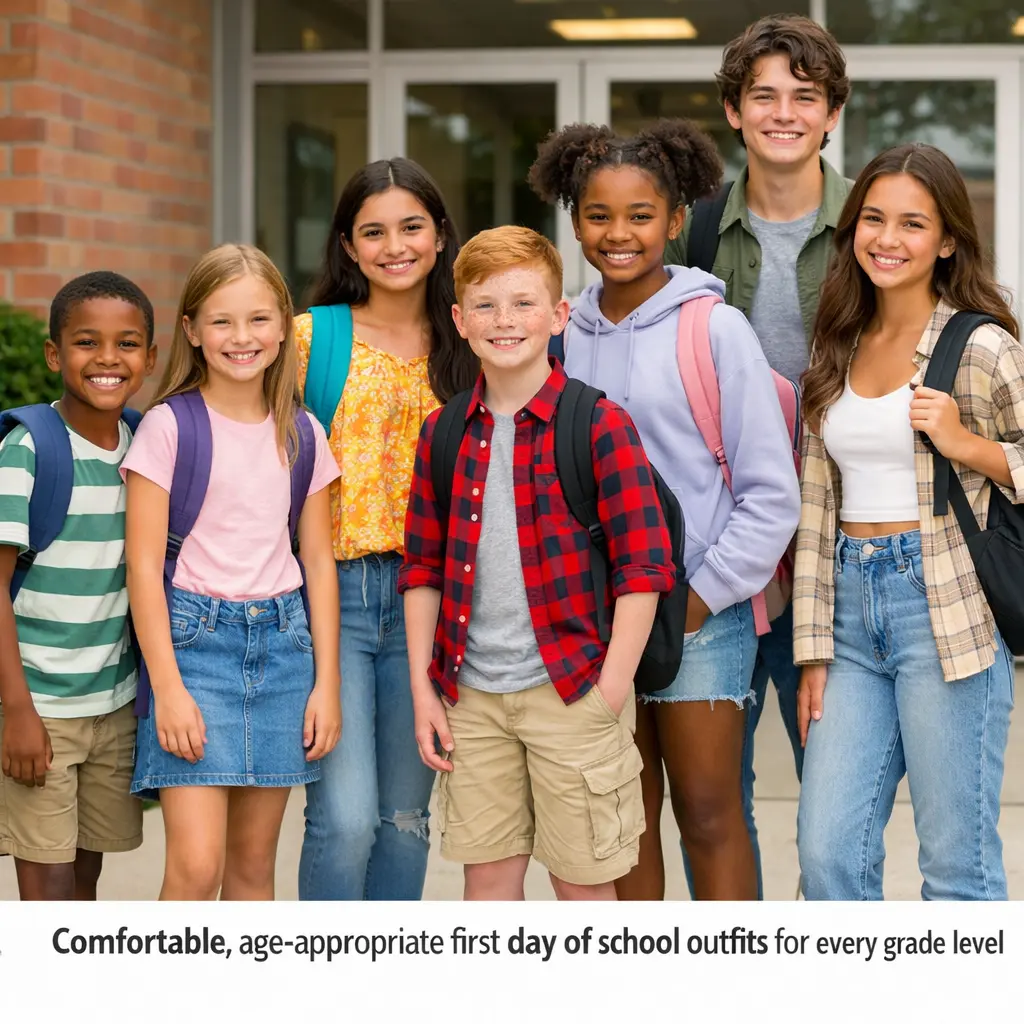
First Day of School Outfit Ideas for Every Grade
The first day of school creates a mix of excitement and nerves for both parents and students. Choosing the right outfit can ease some of that anxiety and help your child start the year feeling confident and comfortable. This guide provides practical first day of school outfit ideas for every grade level, from PreK through 12th grade, along with tips to avoid common mistakes and stay within budget.
Whether you’re dressing a kindergartener or helping a high schooler plan their look, you’ll find age-appropriate outfit combinations that prioritize comfort, follow dress codes, and build confidence. The goal is simple: help your child feel like the best version of themselves as they walk through those school doors.
Why the First Day Outfit Matters
The first day of school outfit serves multiple purposes beyond just covering the body. It affects how your child feels, how they present themselves, and how smoothly their morning goes.
Confidence Building
When children wear clothing they feel good in, their confidence shows. They stand taller, smile more easily, and engage more readily with classmates and teachers. This doesn’t mean expensive designer labels—it means comfortable clothes that fit well and reflect their personality.
Practical Comfort
School days involve sitting at desks, moving between classes, playing at recess, and navigating new environments. Uncomfortable clothing—tight waistbands, itchy fabrics, or pinching shoes—creates unnecessary distractions that interfere with learning and socializing.
Social Navigation
Fair or not, clothing provides social cues that help children navigate new peer groups. Age-appropriate clothing that fits current norms (without chasing extreme trends) helps kids blend in comfortably while still expressing their individuality.
Stress Reduction
Planning the outfit ahead eliminates a major source of morning-of stress. When you’ve already confirmed the outfit fits, passes dress code, and makes your child happy, you remove potential conflicts and rushing.
Professional Tip: Take a photo of your child in their planned outfit 2-3 days before school. This confirms everything fits, looks good together, and passes dress code—plus you’ll have a first-day memory captured.
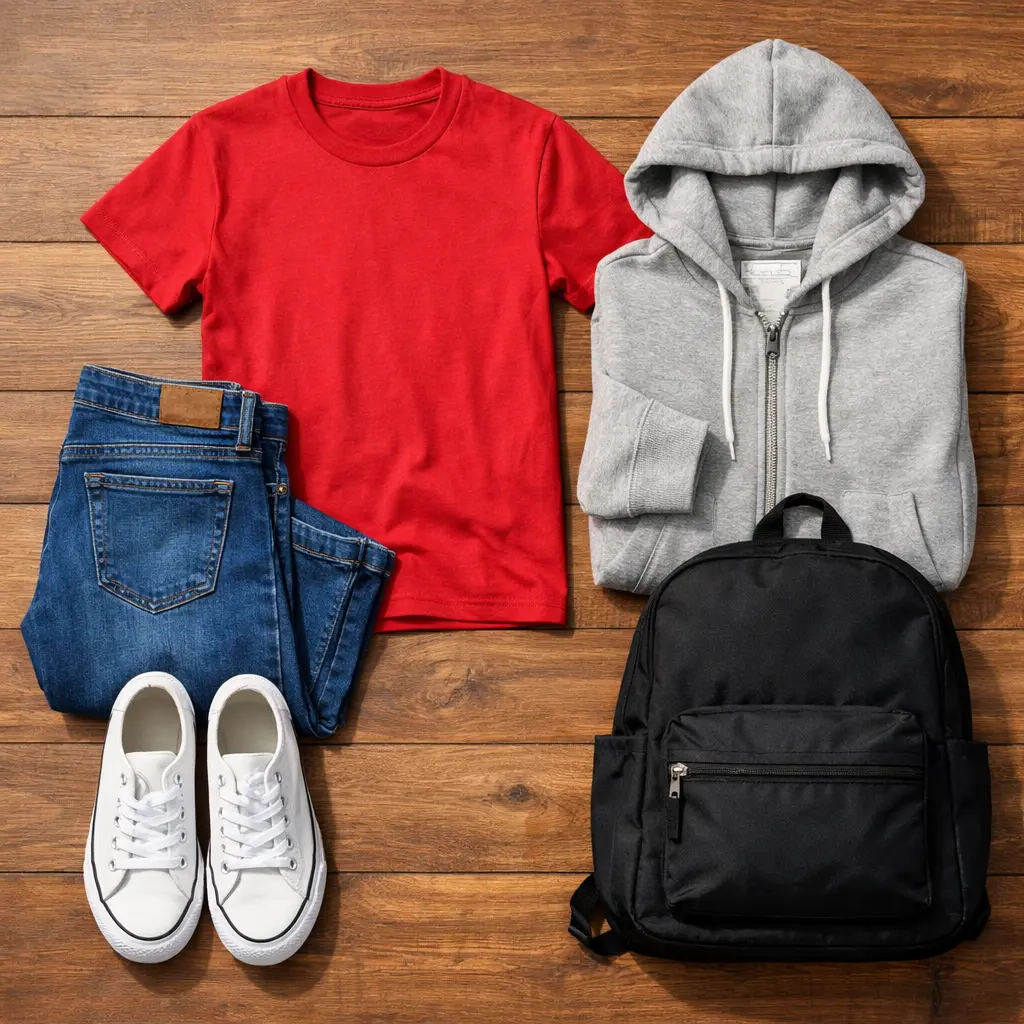
Universal First Day Outfit Principles
Before diving into grade-specific ideas, these principles apply across all age levels.
Comfort Above All
The first day often involves:
- Longer sitting periods than summer activities
- Walking between classes or buildings
- Playground or gym activities
- Potential temperature fluctuations
Choose soft fabrics, proper fit (not too tight or baggy), and shoes your child has worn before. Save brand-new shoes for the second or third day after they’re broken in.
Weather Adaptability
School buildings often have unpredictable temperatures. Layering allows your child to adjust throughout the day:
- Base layer: t-shirt or blouse
- Middle layer: button-down shirt or light sweater
- Outer layer: hoodie, cardigan, or jacket
This approach works for both warm early-fall starts and cooler late-August climates.
Dress Code Compliance
Review your school’s dress code policy before shopping. Common rules include:
- Shoulder strap width requirements
- Shorts/skirt length minimums
- Prohibited graphics or text
- Shoe requirements (especially for PE)
- Hat and accessory restrictions
The Personality Balance
The outfit should feel like your child, not a costume. If they normally wear graphic tees and jeans, don’t suddenly put them in button-downs and chinos unless they genuinely want that change. Authenticity builds confidence.
The Pre-Test
Have your child wear the planned outfit for 2-3 hours a few days before school. This reveals:
- Fit issues (too tight, rides up, falls down)
- Comfort problems (itchy tags, scratchy fabric)
- Mobility restrictions (can’t bend, sit, or move easily)
- Confidence concerns (they don’t feel like themselves)
Common Mistake: Choosing an outfit based on what looks good in pictures rather than what feels good to wear. Your child will live in this outfit for 6-8 hours—prioritize their comfort over photo aesthetics.
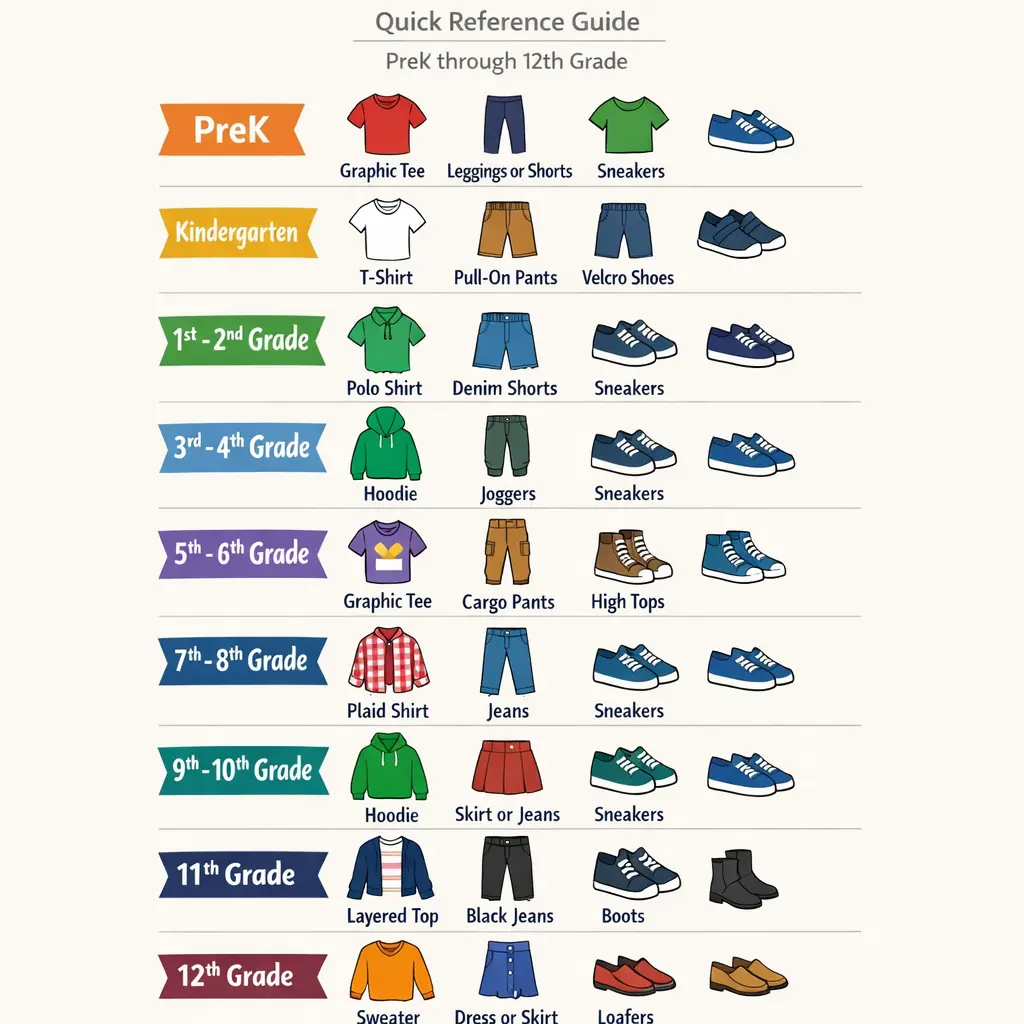
PreK and Kindergarten Outfit Ideas
Young children need outfits that handle spills, allow independent bathroom use, and survive active play.
Outfit Formula 1: Casual Comfort
- Top: Favorite character t-shirt or solid color tee
- Bottom: Elastic-waist shorts, leggings, or soft pants
- Shoes: Velcro sneakers (no laces to trip over)
- Layer: Zip-up hoodie
This combination allows easy bathroom independence and handles playground activities without restrictions.
Outfit Formula 2: Play Dress
- Dress: Knee-length cotton dress with built-in shorts
- Shoes: Mary Jane flats or sneakers
- Layer: Cardigan
- Bottom: Leggings underneath for modesty and warmth
Choose dresses that allow running, climbing, and sitting cross-legged on the floor without wardrobe malfunctions.
Outfit Formula 3: Sporty and Ready
- Top: Polo shirt or athletic-style tee
- Bottom: Athletic pants or joggers with elastic waist
- Shoes: Running sneakers
- Layer: Track jacket
Perfect for schools with active morning programs or outdoor time.
Special Considerations for This Age:
Bathroom Independence: Avoid complicated buttons, tight waistbands, or overalls. Children this age are building bathroom independence and need clothing they can manage alone.
Art and Mess: Finger painting, glue, snacks, and outdoor play create spills. Choose machine-washable fabrics and avoid anything you’d be upset to see stained.
Comfort for Floor Time: Many PreK and kindergarten classrooms use floor-sitting for circle time. Avoid scratchy fabrics and ensure bottoms are opaque when sitting.
Professional Tip: Pack a complete change of clothes in your child’s backpack on the first day. Accidents happen, and having backup clothes prevents stress for both your child and their teacher.
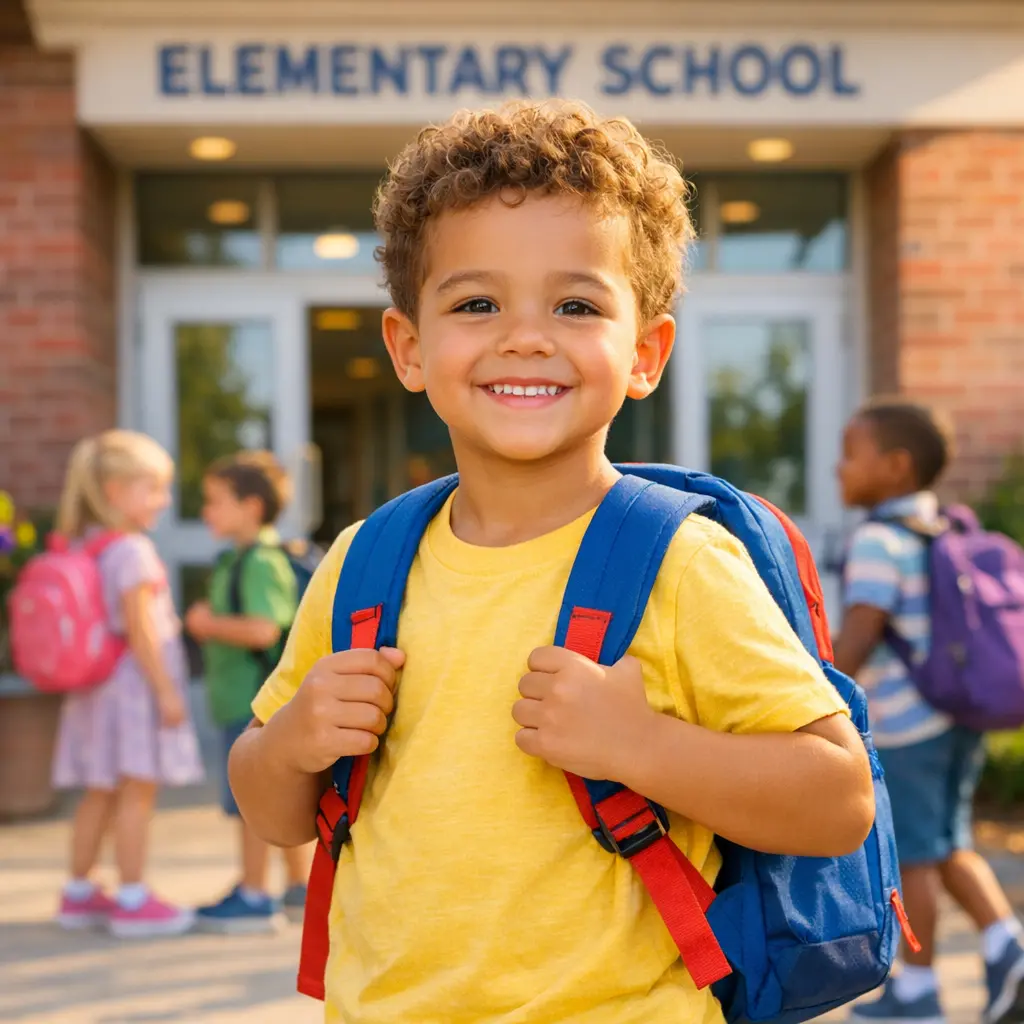
Elementary School Outfit Ideas (Grades 1-5)
Elementary students balance more structure than kindergarteners with the freedom to express growing personalities.
Outfit Formula 1: Classic Casual (All Elementary)
- Top: Graphic tee with favorite character, hobby, or sports team
- Bottom: Well-fitted jeans or denim shorts
- Shoes: Comfortable sneakers
- Layer: Zip-up hoodie or denim jacket
This timeless combination works for all elementary grades and allows personality expression through the graphic choice.
Outfit Formula 2: Sporty Style (Grades 3-5)
- Top: Athletic brand t-shirt or tank with built-in support
- Bottom: Athletic shorts or joggers
- Shoes: Running shoes
- Layer: Track jacket or sporty windbreaker
Perfect for kids who identify as athletes or prefer active clothing.
Outfit Formula 3: Preppy Casual (Grades 3-5)
- Top: Polo shirt or button-down shirt
- Bottom: Khakis, chinos, or denim
- Shoes: Boat shoes, loafers, or clean sneakers
- Layer: Quarter-zip pullover or cardigan
This slightly dressier option works well for students who prefer a polished look or attend schools with stricter dress expectations.
Outfit Formula 4: Comfortable Dress Option (All Elementary)
- Dress: T-shirt dress or casual sundress (knee-length)
- Bottom: Bike shorts or leggings underneath
- Shoes: Sneakers or comfortable sandals (if allowed)
- Layer: Cardigan or jean jacket
Choose dresses that allow playground activities and meet dress code length requirements.
Grade-Specific Adjustments:
Grades 1-2: Keep it simple with easy-to-manage clothing. Velcro shoes are still fine, though many transition to simple laces.
Grades 3-4: Children start expressing stronger preferences. Involve them more in outfit selection and respect their style leanings.
Grade 5: Pre-teen awareness kicks in. Some fifth-graders dress like younger elementary students; others mirror middle school styles. Follow your child’s comfort level rather than pushing them to “grow up.”
Common Mistake: Overdressing for elementary school. Unless attending a private school with formal dress codes, most elementary students wear casual, comfortable clothing. A child in a blazer when everyone else wears t-shirts will feel uncomfortable.
Professional Tip: For children who struggle with morning decisions, create a simple outfit formula they can repeat: “Any jeans + any t-shirt + sneakers.” This removes decision fatigue while ensuring appropriate clothing.
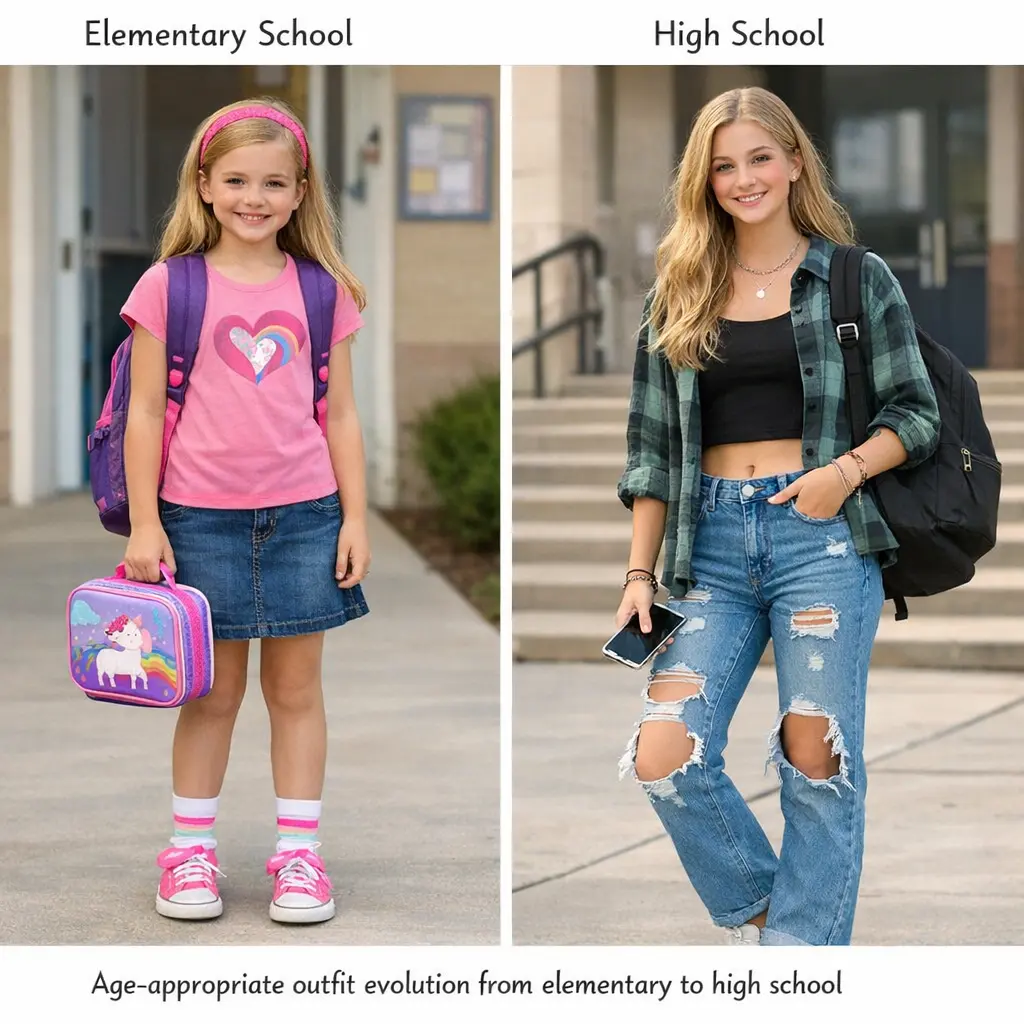
Middle School Outfit Ideas (Grades 6-8)
Middle school represents significant social development. Students become more aware of peer perceptions while navigating physical and emotional changes.
Outfit Formula 1: Casual Cool
- Top: Plain or minimally branded t-shirt
- Bottom: Dark jeans or joggers
- Shoes: Clean sneakers (popular brands matter more now)
- Layer: Zip-up hoodie or bomber jacket
This neutral outfit works across all middle school grades and most social groups.
Outfit Formula 2: Athleisure Style
- Top: Athletic brand t-shirt or performance tee
- Bottom: Athletic shorts or leggings
- Shoes: Running shoes or slides (if allowed)
- Layer: Athletic jacket or oversized hoodie
Popular and comfortable, though check dress code for legging and athletic wear policies.
Outfit Formula 3: Slightly Dressed Up
- Top: Button-down shirt or nice blouse
- Bottom: Jeans, chinos, or midi skirt
- Shoes: Loafers, ankle boots, or clean sneakers
- Layer: Cardigan or denim jacket
For students who prefer a more polished look or want to make a strong first impression.
Outfit Formula 4: Skater/Streetwear Style
- Top: Oversized band tee or skate brand shirt
- Bottom: Relaxed-fit jeans or cargo pants
- Shoes: Skate shoes or chunky sneakers
- Layer: Flannel shirt or oversized hoodie
Reflects a specific style preference common in middle school culture.
Middle School-Specific Considerations:
Brand Awareness: Middle schoolers become more aware of brands and labels. While you don’t need to buy expensive designer items, being completely brand-ignorant can create social challenges. Find affordable options from recognizable brands.
Fit Matters More: Baggy or too-tight clothing attracts unwanted attention. Aim for current fit standards—not skin-tight, but not swimming in fabric either.
Group Norms: If possible, have your middle schooler connect with friends before the first day to gauge what others plan to wear. This reduces anxiety about standing out.
Body Changes: Many middle schoolers experience growth spurts and body changes. Choose clothes that accommodate these changes comfortably without drawing attention.
Self-Expression vs. Fitting In: This age involves navigating the tension between expressing individuality and fitting in socially. The first day isn’t the best time for dramatic style experiments—save bold fashion statements for once they’ve established their social footing.
Common Mistake: Parents imposing their preferred style on middle schoolers. This age group needs increasing autonomy over clothing choices. Guide toward appropriate options, but let them make final selections within those boundaries.
Professional Tip: If your middle schooler feels anxious about their outfit choice, prepare a backup option. Knowing they can change if they feel uncomfortable provides emotional security.
High School Outfit Ideas (Grades 9-12)
High school students generally have established personal style and strong opinions about clothing. The first day outfit should reflect their authentic self while considering the fresh start opportunity.
Outfit Formula 1: Classic Casual
- Top: Solid color tee or simple graphic shirt
- Bottom: Well-fitted jeans
- Shoes: Clean sneakers or casual boots
- Layer: Denim jacket, flannel, or hoodie
This timeless approach works for all grades and style preferences.
Outfit Formula 2: Streetwear/Urban
- Top: Oversized graphic tee or hoodie
- Bottom: Relaxed or straight-leg jeans, cargo pants
- Shoes: Jordan sneakers, Vans, or other popular brands
- Accessories: Baseball cap, simple chain, or minimal jewelry
Reflects current youth fashion trends while remaining school-appropriate.
Outfit Formula 3: Preppy/Polished
- Top: Polo shirt, button-down, or blouse
- Bottom: Chinos, straight-leg jeans, or midi skirt
- Shoes: Loafers, boat shoes, or ankle boots
- Layer: Sweater, cardigan, or blazer
For students who prefer a more refined aesthetic or plan to engage in leadership activities.
Outfit Formula 4: Athleisure
- Top: Performance tee or tank
- Bottom: Athletic leggings, joggers, or athletic shorts
- Shoes: Running shoes
- Layer: Athletic zip-up or hoodie
Check dress code—some high schools restrict athletic wear to gym class.
Outfit Formula 5: Alternative/Artistic
- Top: Band tee, vintage find, or unique thrifted piece
- Bottom: Black jeans, colored denim, or patterned pants
- Shoes: Doc Martens, Converse, or unique sneakers
- Accessories: Layered jewelry, belt, or distinctive bag
For students whose personal style leans alternative or artistic.
Outfit Formula 6: Feminine/Trendy
- Top: Crop top (if allowed), fitted tee, or trendy blouse
- Bottom: High-waisted jeans, midi skirt, or wide-leg pants
- Shoes: Platform sneakers, boots, or trendy sandals
- Accessories: Layered necklaces, statement earrings, or belt bag
Reflects current fashion trends while remaining age-appropriate.
High School-Specific Considerations:
Personal Style Is Established: Most high schoolers know what they like. Unless addressing clear dress code violations, trust their judgment.
The Fresh Start Opportunity: Particularly for freshmen or students changing schools, the first day allows reinvention. Support style evolution while ensuring they feel genuinely comfortable.
Grade-Level Differences: Freshmen often dress more carefully, wanting to make good impressions. Seniors typically prioritize comfort and personal preference over impression management.
Dress Code Enforcement: High schools often enforce dress codes more strictly than middle schools, particularly regarding shoulders, midriffs, and shorts/skirt length. Review policies carefully.
Photo Day Considerations: Some schools hold picture day on the first day or within the first week. Consider whether the chosen outfit works for photos they’ll see all year.
Common Mistake: Parents trying to prevent appropriate style evolution. If your high schooler wants to shift from preppy to streetwear or vice versa, and their choices are school-appropriate, support that growth.
Professional Tip: High schoolers benefit from planning multiple first-week outfits simultaneously. This prevents outfit-repeating anxiety and ensures smooth mornings throughout the adjustment period.
Dress Code Navigation Tips
School dress codes exist to minimize distractions and maintain appropriate learning environments, but they vary significantly between schools.
Understanding Your Dress Code
Public Schools: Typically have basic guidelines around:
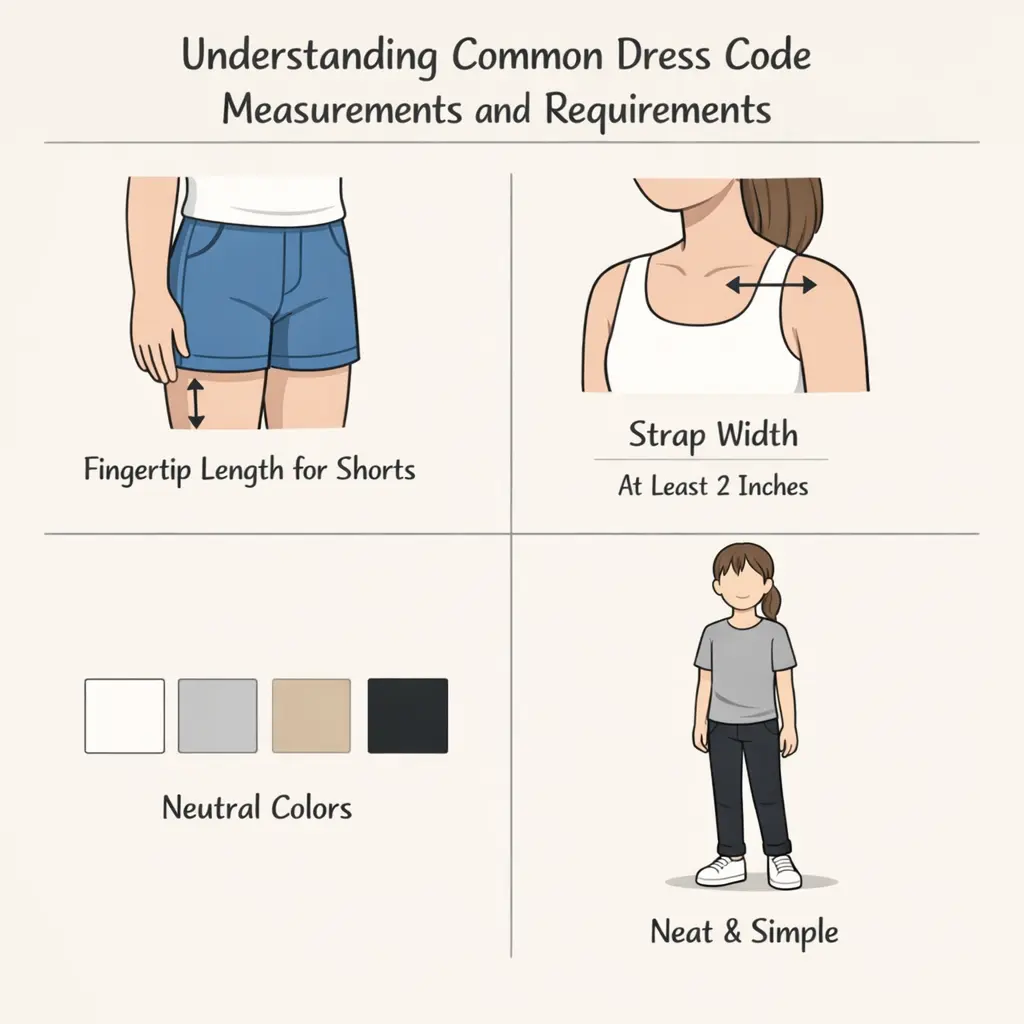
- Shoulder strap width (often “three fingers” or “two inches”)
- Shorts and skirt length (fingertip length or mid-thigh)
- Prohibited images (violence, drugs, alcohol, profanity)
- Undergarment coverage
- Shoe safety (closed-toe for certain activities)
Private Schools: Often more detailed, potentially including:
- Specific color requirements
- Collar requirements
- Fabric restrictions
- Hem length specifications
- Specific shoe styles
Uniform Schools: Provide exact specifications but may allow personalization through:
- Shoe choices within color guidelines
- Accessories
- Hairstyle
- Outerwear choices
Common Dress Code Pitfalls
Shoulder Strap Width: Tank tops and spaghetti straps frequently violate dress codes. When in doubt, choose t-shirt sleeves or add a cardigan/jacket layer.
Shorts and Skirt Length: The “fingertip test” (standing straight with arms at sides, hem at or below fingertips) is common. Measure before the first day.
Ripped Jeans: Many schools prohibit rips above mid-thigh. Check your school’s specific policy.
Leggings and Athletic Wear: Some schools allow leggings only when paired with long tops covering the backside. Others prohibit them entirely except for PE.
Midriffs and Crop Tops: Even if skin doesn’t show when standing, raising hands or sitting can reveal skin. Test outfit mobility before the first day.
Professional Tip: When outfit is borderline, bring a backup layer. A cardigan, button-down shirt, or longer shorts in the backpack provides quick fixes without calling parents.
What to Do If Dress-Coded
If your child gets dress-coded on the first day:
- Stay calm: It’s not a moral failing, just a clothing miscalculation
- Use backup clothing if available
- Contact parents only if no backup exists
- Learn the specific rule to avoid repeating
- Don’t argue with administrators on the first day
Budget-Friendly Shopping Strategies
The first day outfit doesn’t require expensive shopping sprees. Smart strategies maximize impact while minimizing cost.
Shop Your Closet First
Before buying anything new:
- Try on everything from last year
- Check fit, condition, and current appropriateness
- Identify gaps (need jeans but have plenty of shirts)
- Create outfit combinations from existing pieces
The Capsule Approach
Instead of buying complete outfits, invest in versatile basics that mix and match:
Basic Tops (3-5):
- 2-3 solid t-shirts in neutral colors
- 1-2 graphic tees or patterned tops
Basic Bottoms (2-3):
- 1-2 pairs of jeans
- 1 pair khakis, athletic pants, or skirt
Layering Pieces (2-3):
- 1 hoodie or zip-up jacket
- 1 cardigan or button-down
Shoes (1-2 pairs):
- Everyday sneakers
- Backup shoes (athletic shoes or casual flats)
This creates numerous outfit combinations from minimal pieces.
Best Budget-Friendly Stores
- Target: Good balance of quality, style, and price
- Old Navy: Frequent sales, wide size ranges
- H&M: Trendy options at low prices
- Walmart: Basic essentials at lowest prices
- Thrift stores: Unique finds, brand names at fraction of cost
- Consignment shops: Gently used, current styles
Timing Your Shopping
- Late July/Early August: Widest selection, full prices
- Mid-August: Sales begin, selection still good
- Late August: Deep discounts, picked-over inventory
- September: Clearance prices, limited sizes
What to Buy New vs. Used
Buy New:
- Underwear and socks
- Shoes (if buying used, ensure minimal wear)
- Basic tees (inexpensive new)
Consider Used:
- Jeans and pants
- Jackets and hoodies
- Name-brand items
- Specialty pieces worn occasionally
Professional Tip: For growing children, buy basics slightly larger and use the first day for perfectly fitted pieces. Kids grow quickly—that “perfect fit” may not fit in two months.
Common First Day Outfit Mistakes
Avoiding these common errors saves stress and ensures a smooth first day.
Mistake 1: Brand New, Untested Clothing
The Problem: New clothes may have unexpected fit issues, scratchy tags, uncomfortable fabric, or need breaking in (especially shoes).
The Solution: Buy at least one week before school. Wash everything, remove tags, and have your child wear the outfit for a few hours to test comfort.
Mistake 2: Choosing Style Over Comfort
The Problem: Uncomfortable clothing creates distraction all day—tight waistbands, pinching shoes, itchy fabrics, or restrictive cuts.
The Solution: Prioritize how clothing feels, not just how it looks. If your child can’t sit, bend, or move comfortably, choose something else.
Mistake 3: Ignoring Weather
The Problem: Heavy jeans in 95-degree heat or shorts in unseasonably cool weather creates physical discomfort.
The Solution: Check the forecast the day before. Use layering to adapt to temperature changes throughout the day.
Mistake 4: Overdressing or Underdressing
The Problem: Standing out too much—either too formal or too casual—creates unnecessary social stress.
The Solution: When possible, check with other parents or returning students to gauge typical first-day clothing levels at your school.
Mistake 5: Waiting Until the Night Before
The Problem: Last-minute outfit planning leads to missing items, ill-fitting clothes, or unavailable sizes in stores.
The Solution: Finalize the outfit at least 2-3 days before school starts. This allows time for adjustments, washing, or emergency shopping if needed.
Mistake 6: Not Involving Your Child
The Problem: Forcing outfit choices creates resistance and may result in clothing your child refuses to wear or feels uncomfortable in.
The Solution: Provide age-appropriate guidance and boundaries, but let your child make selections within those parameters.
Mistake 7: Choosing Clothes That Require Constant Adjustment
The Problem: Falling straps, riding-up shorts, or slipping waistbands require constant attention and adjustment.
The Solution: Test outfit mobility—sit, stand, reach up, bend over. If constant adjustment is needed, choose different clothing.
Professional Tip: Take a photo of your child in their planned outfit a few days before school. This gives you both a chance to see how everything looks together and make changes if needed.
Building Confidence Through Clothing Choices
The right outfit supports emotional readiness for the first day, not just physical appropriateness.
The Psychology of First Day Clothing
Clothing affects mood and confidence through several mechanisms:
Enclothed Cognition: Research shows that what we wear influences how we think and feel. Comfortable, liked clothing creates positive self-perception.
Social Belonging: Appropriate clothing helps children feel they belong, reducing anxiety about standing out negatively.
Self-Expression: Clothing that reflects personality allows authentic self-presentation, building genuine confidence.
Control and Autonomy: Choosing their outfit gives children a sense of control during a time of uncertainty and change.
Confidence-Building Strategies
Let Them Lead (Age-Appropriately)
- PreK-K: Offer two pre-approved choices
- Elementary: Provide guidelines but let them select within boundaries
- Middle School: Guide toward appropriate options but respect their final choice
- High School: Support their decisions unless clear dress code violations exist
Focus on Feeling, Not Just Looking
Ask: “How do you feel in this outfit?” instead of “How do you look?”
Feeling comfortable, confident, and like themselves matters more than external appearance.
Validate Their Concerns
If your child expresses worry about an outfit:
- Listen without dismissing
- Explore specific concerns
- Problem-solve together
- Keep backup options available
Practice Positive Self-Talk
Help your child develop positive clothing thoughts:
- “I feel comfortable in this.”
- “This outfit is so me.”
- “I can move around easily in these clothes.”
The “Compliment Test”
If your child receives a compliment on their outfit, how will they feel? If they’d feel embarrassed or like they’re pretending to be someone they’re not, reconsider the outfit choice.
When Your Child Lacks Confidence
Strategy 1: Start with Comfort Items
Build the outfit around one piece they absolutely love—a favorite shirt, comfortable jeans, or beloved shoes.
Strategy 2: Try the Outfit Early
Wearing the outfit casually before the first day reduces newness anxiety.
Strategy 3: Create an Inspiration Board
Collect images of outfits your child likes. Identify common elements and recreate with items you own or can afford.
Strategy 4: Validate Their Feelings
Acknowledge that outfit choices feel important—because they are. Their feelings aren’t silly or superficial.
Professional Tip: If your child struggles with body image, avoid mirrors the morning of the first day if possible. Help them dress, confirm everything fits and feels good, then focus on how they feel rather than how they look.
What should I avoid wearing on the first day of school?
Avoid brand new shoes that aren’t broken in, clothing that requires constant adjustment, overly complicated outfits with many pieces, anything that violates dress code, and uncomfortable fabrics. Also skip outfits that don’t feel authentic to your child’s personality—the first day isn’t the time to experiment with drastically different styles. Save delicate or dry-clean-only items for special occasions, not regular school days.
Should my child dress up for the first day of school?
This depends on your school culture and your child’s preference. Most public schools operate casually, where “dressing up” means clean, well-fitted casual clothes rather than formal wear. Private schools may have different expectations. The goal is looking put-together and feeling confident without being uncomfortably overdressed compared to peers. When in doubt, choose neat casual over formal.
How early should I plan the first day of school outfit?
Start planning 1-2 weeks before school begins. This timeline allows you to shop for missing pieces, wash new clothes, test the outfit for comfort, and make adjustments if needed. Finalize the complete outfit 2-3 days before the first day and try it on one more time to confirm everything fits and feels good. Avoid last-minute planning the night before, which creates unnecessary stress.
Can my child wear athletic clothes on the first day of school?
This depends on your school’s dress code. Many schools allow athletic wear like joggers, athletic shorts, and performance tees as regular clothing. However, some schools restrict athletic wear to PE class only or require athletic bottoms to be paired with non-athletic tops. Check your specific school’s policy. If allowed, athletic wear provides excellent comfort and mobility for active students.
What if my child changes their mind about their outfit the morning of the first day?
Stay calm and have a backup plan ready. If time allows and the alternative outfit is appropriate, let them change—feeling confident matters more than the specific clothes. If the desired alternative creates dress code issues or isn’t clean/available, gently remind them why you planned ahead and offer small modifications (different shoes, adding or removing a layer). Having a pre-approved backup outfit prepared prevents this scenario from creating major stress.
How can I get my child to wear something other than their favorite outfit every day?
Create multiple outfits using the same loved item. If they love a specific t-shirt, pair it with different bottoms and layers throughout the week. Build a wardrobe of similar items—if they love one pair of joggers, buy 2-3 pairs in different colors. Frame variety as “keeping their favorite items lasting longer” by rotating rather than wearing the same clothes constantly. Involve them in creating outfit combinations they feel good about.
What should boys wear on the first day of high school?
Popular first day outfits for high school boys include well-fitted jeans or joggers with a solid-color or minimal graphic t-shirt, clean sneakers, and a hoodie or flannel for layering. The specific style depends on personal preference—streetwear enthusiasts might choose branded athletic wear, while preppy students might prefer polo shirts and chinos. Comfort and confidence matter most. Avoid overly baggy or tight clothing and ensure everything is clean and in good condition.
What should girls wear on the first day of middle school?
Popular first day outfits for middle school girls include jeans or athletic leggings (if allowed) with a casual top that meets dress code requirements, comfortable sneakers or sandals (if permitted), and a hoodie or cardigan for layering. Many middle schoolers prefer athleisure styles or simple jeans-and-tee combinations. The outfit should feel age-appropriate while allowing movement for navigating between classes and carrying backpacks. Check dress code policies for shoulder strap, length, and legging requirements.
How do I know if an outfit is appropriate for my child’s age?
Age-appropriate clothing allows comfortable movement for typical activities at that grade level, doesn’t draw excessive attention from peers or adults, follows developmental norms (young children need bathroom-independence clothing, teens want style expression), and matches your child’s emotional maturity and comfort level. When unsure, observe what similar-age children wear at community events or check school photos from previous years. Trust your instinctment—if an outfit feels too young or too mature, it probably is.
Should siblings wear coordinating outfits on the first day of school?
This depends entirely on the children’s preferences. Some siblings enjoy coordinating colors or themes, while others strongly prefer individual expression. Forced matching outfits can create resentment, especially among older children who want independence. For family photos, coordinating color schemes (all wearing blues, for example) creates cohesion without requiring identical outfits. Never prioritize photo aesthetics over children’s comfort and autonomy regarding their own clothing choices.


Leave a Reply