

Introduction
Watching your child approach kindergarten age brings excitement mixed with questions. Will they be ready? Do they know enough? Should you wait another year?
Kindergarten readiness is about more than knowing the alphabet. It covers how your child learns, plays with others, manages their emotions, and takes care of basic needs. Understanding what kindergarten truly requires helps you prepare your child and make confident decisions about timing.
This guide gives you a complete kindergarten readiness checklist, assessment tools, preparation activities, and decision frameworks. You’ll learn what skills matter most, how to evaluate your child’s development, and practical steps to build readiness at home.
What Is Kindergarten Readiness?
Kindergarten readiness describes whether a child has developed the skills needed to participate successfully in kindergarten activities and benefit from kindergarten instruction.
Ready children can follow classroom routines, interact appropriately with peers and teachers, handle basic self-care tasks, focus on learning activities for short periods, and demonstrate emerging academic skills.
Readiness is not about perfection. Kindergarten teachers expect students to enter with varied skill levels. The goal is having enough foundational abilities to learn, adjust to the school environment, and grow throughout the year.
Development happens at different rates for every child. A child who is “not ready” in August might be completely ready by January. This is why understanding your specific child matters more than comparing them to peers.
Why Kindergarten Readiness Matters
Starting kindergarten at the right developmental time affects your child’s confidence, academic progress, and long-term attitude toward school.
Children who enter kindergarten when truly ready typically:
- Adjust to classroom routines more easily
- Experience less frustration with learning tasks
- Build positive relationships with peers
- Develop confidence as learners
- Show fewer behavioral challenges
- Maintain enthusiasm for school
Children who start before they’re developmentally ready may:
- Struggle to keep up with classroom pace
- Experience repeated frustration
- Compare themselves negatively to peers
- Develop behavioral issues from inability to meet expectations
- Form negative associations with school and learning
The confidence factor: Early struggles can create a pattern where children see themselves as “bad at school.” Children who start ready tend to see themselves as capable learners.
Academic foundations: Skills learned in kindergarten form the foundation for all later learning. Children who grasp these concepts well have advantages throughout elementary school.
Social positioning: Being among the youngest or oldest in a class can affect social dynamics, peer relationships, and leadership opportunities throughout school years.
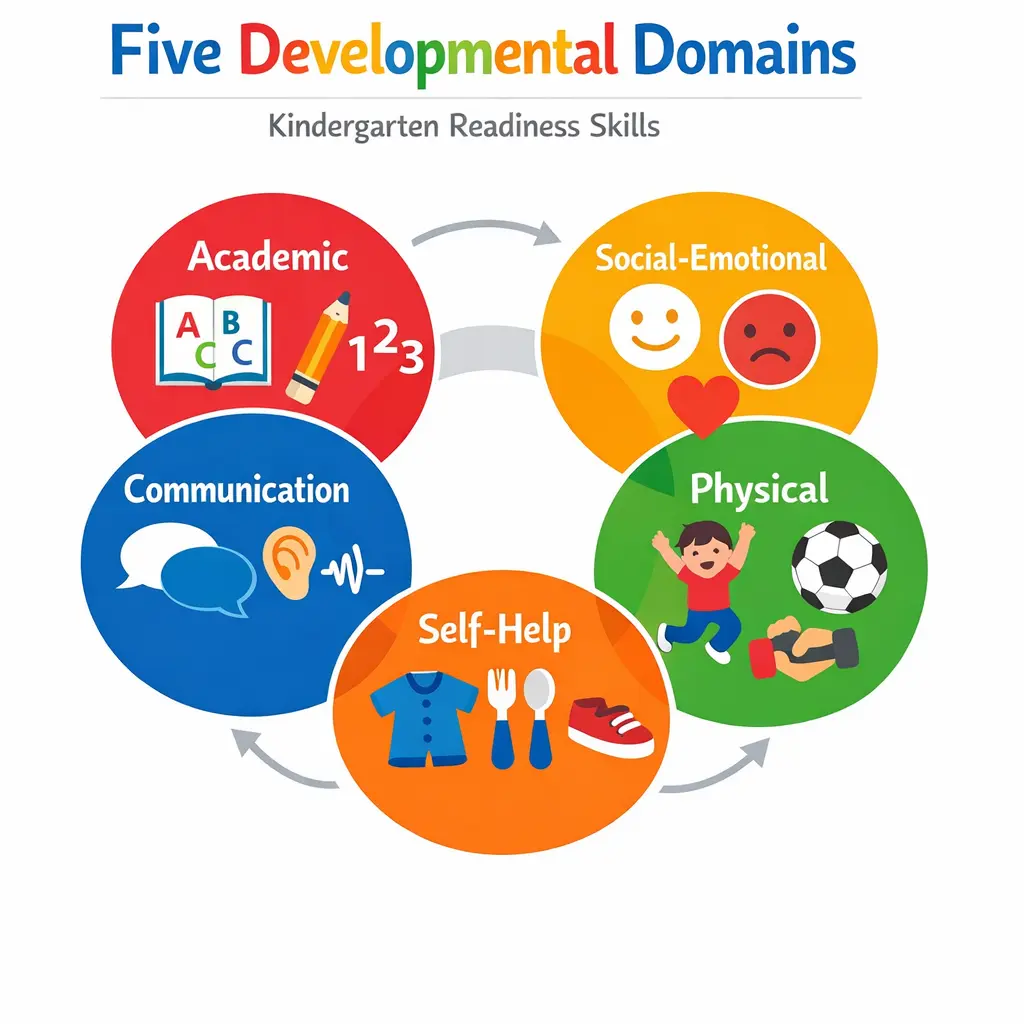
The Five Developmental Domains of Kindergarten Readiness
Kindergarten readiness spans five areas of development. Strength in all five areas indicates readiness. Significant struggles in multiple areas suggest your child might benefit from more time.
Academic Skills
Academic readiness means having pre-literacy and pre-math foundations that prepare children for formal instruction.
Pre-literacy skills:
- Recognizes most uppercase and lowercase letters
- Knows letter sounds for common letters
- Understands that print carries meaning
- Can identify their written name
- Holds books correctly and turns pages
- Recognizes rhyming words
- Can segment words into syllables (clapping out parts)
Pre-math skills:
- Counts to 20 or higher
- Recognizes written numbers 1-10
- Understands one-to-one correspondence (one object = one count)
- Sorts objects by color, size, or shape
- Recognizes basic shapes (circle, square, triangle)
- Understands concepts like more/less, bigger/smaller
- Can create and extend simple patterns
Cognitive skills:
- Focuses on an activity for 10-15 minutes
- Follows 2-3 step directions
- Remembers and follows classroom routines
- Asks questions to learn
- Solves simple problems
- Understands cause and effect
- Categorizes and compares objects
Important note: Children do NOT need to read, write, or do math when they start kindergarten. Teachers expect to teach these skills. What matters is having the foundation to learn them.
Social-Emotional Skills
Social-emotional readiness often predicts kindergarten success better than academic skills.
Emotional regulation:
- Can calm down after feeling upset
- Expresses feelings with words instead of hitting or screaming
- Handles transitions between activities
- Manages disappointment (not getting first choice, losing a game)
- Separates from parents without extreme distress
Social skills:
- Plays cooperatively with other children
- Takes turns and shares materials
- Shows interest in making friends
- Participates in group activities
- Shows empathy when others are hurt or sad
- Resolves simple conflicts with words
- Follows rules in games and activities
Classroom behavior:
- Follows classroom rules and routines
- Listens when others are speaking
- Waits for their turn to talk
- Respects others’ personal space
- Keeps hands to themselves
- Asks permission before using others’ belongings
Self-awareness:
- Shows confidence trying new activities
- Can identify their own feelings
- Knows what they like and dislike
- Can complete tasks independently
- Demonstrates age-appropriate independence
Common challenge: Many academically advanced children struggle with social-emotional skills. A child who reads fluently but cannot handle frustration or play cooperatively may not be ready for kindergarten’s social demands.
Physical Development
Physical skills affect everything from writing letters to playing at recess to staying safe.
Fine motor skills:
- Holds pencil or crayon with proper grip (not fist)
- Cuts along a line with scissors
- Draws basic shapes (circle, square, cross)
- Colors mostly within lines
- Uses glue sticks and tape appropriately
- Strings beads or laces cards
- Builds with small blocks or manipulates small objects
- Can zip, button, and snap clothing
Gross motor skills:
- Runs, jumps, and hops on one foot
- Catches and throws a ball
- Climbs playground equipment safely
- Balances on one foot for several seconds
- Pedals a tricycle or bicycle
- Walks up and down stairs alternating feet
- Can stop and start movement on command
Body awareness:
- Understands personal space
- Navigates classroom without bumping into furniture or people
- Can line up and walk in a line
- Follows movement directions (Simon Says, freeze dance)
Physical stamina:
- Can participate in activities through a 2-3 hour period
- Doesn’t need frequent naps (most kindergartens don’t have nap time)
- Has energy for active play during recess
Why these matter: Fine motor skills are needed for writing, art projects, and manipulating learning materials. Gross motor skills affect safety, recess participation, and following physical directions during activities.
Communication and Language
Strong communication skills help children express needs, follow directions, and participate in learning activities.
Expressive language:
- Speaks in complete sentences (5-6 words)
- Can be understood by adults outside the family
- Asks questions using who, what, where, when, why
- Tells simple stories about experiences
- Describes objects, events, or feelings
- Uses appropriate volume for different situations
Receptive language:
- Understands multi-step directions
- Comprehends questions and responds appropriately
- Understands prepositions (on, under, beside, between)
- Follows classroom instructions
- Understands basic time concepts (before, after, later, yesterday)
Conversation skills:
- Takes turns in conversation
- Stays on topic
- Makes eye contact when speaking and listening
- Asks for clarification when confused
- Answers questions about a story or activity
Speech clarity:
- Pronounces most sounds correctly (some minor errors are normal)
- Can be understood by unfamiliar adults
- Uses age-appropriate grammar (some errors are normal)
Warning signs: Significant speech delays, inability to follow simple directions, or extreme difficulty being understood by others warrant evaluation by a speech-language pathologist before kindergarten.
Self-Help and Adaptive Skills
Independence in daily tasks reduces frustration and helps children participate fully in school routines.
Bathroom skills:
- Uses toilet independently
- Wipes properly and washes hands
- Asks to use bathroom when needed
- Can manage clothing (buttons, zippers, snaps)
- Has very few accidents (occasional accidents happen, but frequent accidents suggest delay)
Eating skills:
- Opens lunch containers and packages
- Uses fork and spoon appropriately
- Drinks from cup or bottle without significant spills
- Knows and can communicate food allergies
- Can eat lunch in 20-30 minute period
Dressing skills:
- Puts on and takes off coat
- Manages shoes (Velcro or slip-on; tying comes later)
- Can put backpack on and off
- Handles zippers, buttons, and snaps
Organization and routines:
- Follows morning routines with minimal help
- Can find and put away belongings
- Cleans up toys and materials
- Follows multi-step routines (put coat in cubby, sit on carpet)
- Knows home address and phone number (or is learning it)
Health and safety:
- Understands basic safety rules
- Knows not to leave with strangers
- Recognizes trusted adults at school
- Can communicate if they feel sick or hurt
- Knows parents’ names (first and last)
Kindergarten Readiness Checklist: 50 Skills to Assess
Use this checklist to evaluate your child’s readiness. Children do NOT need to master all 50 skills—this is a comprehensive assessment tool. Most children ready for kindergarten can do 35-45 of these skills.
Academic Skills (10 items)
□ Recognizes and names most letters (uppercase and lowercase)
□ Knows sounds for common letters
□ Counts to 20
□ Recognizes written numbers 1-10
□ Sorts objects by color, size, or shape
□ Recognizes basic shapes (circle, square, triangle, rectangle)
□ Understands concepts like more/less, bigger/smaller
□ Identifies some colors by name
□ Identifies their written name
□ Can focus on an activity for 10-15 minutes
Social-Emotional Skills (12 items)
□ Separates from parents without extreme distress
□ Plays cooperatively with other children
□ Takes turns and shares
□ Follows simple rules in games
□ Expresses feelings with words
□ Can calm down after being upset
□ Shows interest in making friends
□ Participates in group activities
□ Handles transitions between activities
□ Manages disappointment appropriately
□ Shows confidence trying new things
□ Demonstrates empathy toward others
Physical Development (10 items)
□ Holds pencil with proper grip (not fist)
□ Cuts along a line with scissors
□ Draws basic shapes (circle, cross)
□ Runs, jumps, and hops on one foot
□ Catches and throws a ball
□ Climbs playground equipment safely
□ Uses glue and tape appropriately
□ Can zip, button, and snap clothing
□ Has stamina for 2-3 hours of activities
□ Navigates space without frequently bumping into things
Communication and Language (8 items)
□ Speaks in complete sentences (5-6 words)
□ Can be understood by adults outside family
□ Follows 2-3 step directions
□ Asks and answers questions
□ Tells simple stories about experiences
□ Takes turns in conversation
□ Understands prepositions (on, under, beside)
□ Uses appropriate volume for different situations
Self-Help and Adaptive Skills (10 items)
□ Uses toilet independently
□ Washes hands properly
□ Manages clothing (buttons, zippers)
□ Opens lunch containers
□ Puts on and takes off coat
□ Manages shoes independently
□ Follows morning routines with minimal help
□ Can find and put away belongings
□ Knows parents’ full names
□ Knows home address or is learning it
Scoring guide:
- 40-50 skills: Child demonstrates strong readiness across all domains
- 30-39 skills: Child shows readiness with some areas to strengthen
- 20-29 skills: Child may benefit from additional preparation time
- Below 20 skills: Consider delaying entry or seeking professional evaluation
Remember: This checklist is a guide, not a diagnosis. Discuss results with your child’s pediatrician, preschool teacher, or school district.
Age Requirements and Cutoff Dates by State
Every state sets an age requirement for kindergarten enrollment. Children must turn 5 by a specific cutoff date to enroll that school year.
Common cutoff date patterns:
September 1 cutoff (most common):
Child must turn 5 by September 1 to start kindergarten that fall. A child with a September 15 birthday would wait until the following year.
October 1 cutoff:
Allows children with September birthdays to enroll.
August 1 cutoff:
More restrictive; children with late summer birthdays wait another year.
December 31 cutoff:
Least restrictive; allows fall-born children to enroll.
State-specific requirements vary. Check your state’s department of education website for exact cutoff dates. Some states allow districts to set their own cutoffs within certain parameters.
Kindergarten is mandatory in most states, but the age when school attendance becomes mandatory varies. Some states require attendance starting at age 5, while others don’t mandate attendance until age 6 or 7.
Age range in kindergarten classrooms:
Because of cutoff dates, kindergarten classes can have children whose ages differ by nearly 12 months. A child born the day after the cutoff date will be almost a full year older than a child born on the cutoff date. This age difference affects developmental readiness.
Waiver and early entry options:
Some states allow early entry for children who miss the cutoff by a few weeks if they pass readiness assessments. Policies vary significantly by state and district.
Action step: Contact your local school district enrollment office to confirm your state’s cutoff date and learn about any waiver or early entry options.
How to Assess Your Child’s Readiness at Home
You can evaluate kindergarten readiness through observation and simple activities at home.
Observe daily routines:
Watch how your child handles everyday situations:
- Can they follow your two-step directions? (“Get your shoes and put them by the door”)
- How do they handle frustration when something doesn’t work?
- Can they play independently for 15-20 minutes?
- Do they clean up toys when asked?
- How do they interact with children at the park or playgroup?
Create kindergarten-like situations:
- Circle time simulation: Gather stuffed animals and have your child sit for a short “class.” Read a story and ask questions. Can they sit still and participate?
- Following directions: Give 2-3 step instructions and see if they can complete them without reminders.
- Practice transitions: Set a timer and have your child switch activities when it goes off. Can they stop one activity and start another without distress?
Academic skill checks:
- Letter recognition: Point to letters in books or on signs and ask your child to name them
- Counting: Count toys, stairs, or snacks together
- Writing: Observe how they hold crayons and whether they can draw basic shapes
- Problem-solving: Present simple puzzles or challenges and watch their approach
Social skill observation:
Schedule playdates or visit playgrounds to observe:
- Does your child initiate play with others?
- How do they handle sharing and turn-taking?
- Can they join a group already playing?
- Do they resolve conflicts or need constant adult intervention?
Use structure and routine:
Establish kindergarten-like routines at home:
- Morning routine with multiple steps
- Designated “learning time” where they work on an activity independently
- Clean-up time after play
- Sitting at a table for meals and activities
Document observations:
Keep notes about skills you observe over several weeks. Development isn’t linear—bad days happen. Look for overall patterns rather than single instances.
Get outside perspective:
Ask your child’s preschool teacher for feedback. They see your child in a group setting and can compare development to age peers.
Formal Kindergarten Screening and Assessment
Most school districts offer kindergarten screening programs to assess readiness.
What is kindergarten screening?
Screening is a brief evaluation that checks developmental skills in children entering kindergarten. It typically lasts 20-45 minutes and assesses academic, social-emotional, communication, and physical skills.
When does screening happen?
- Spring before kindergarten: Many districts screen in April or May for fall enrollment
- Late summer: Some districts offer August screenings
- Rolling basis: Some districts screen throughout the year
What does screening include?
Academic assessment:
- Letter and number recognition
- Shapes and colors
- Counting and one-to-one correspondence
- Pre-writing skills (drawing shapes, holding pencil)
Language and communication:
- Following directions
- Answering questions
- Describing pictures or telling stories
- Speech clarity
Social-emotional observation:
- Separating from parent
- Interacting with screener
- Following instructions
- Attention span and focus
Physical skills:
- Fine motor tasks (cutting, drawing, manipulating small objects)
- Gross motor observation (if included)
Vision and hearing:
- Basic vision screening
- Basic hearing screening
What happens after screening?
Results are shared with parents, usually within a few weeks. The screening may indicate:
- Child is ready for kindergarten
- Child would benefit from additional support in specific areas
- Child may benefit from pre-kindergarten program
- Child should be referred for further evaluation
Screening is not an IQ test or entrance exam. It’s a tool to help schools understand your child’s needs and plan appropriate support.
Can my child fail kindergarten screening?
In most states, screening results cannot prevent enrollment if your child meets age requirements. Screening identifies support needs, not eligibility.
What if results suggest my child isn’t ready?
Discuss options with the school:
- Would your child benefit from waiting a year?
- Are there summer preparation programs?
- What support services will be available if your child starts?
- Should you seek independent evaluation?
Independent evaluations:
If you have concerns about your child’s development, you can request evaluation by:
- Your pediatrician
- Developmental pediatrician
- Educational psychologist
- Speech-language pathologist
- Occupational therapist
Insurance or early intervention programs may cover evaluations for children showing developmental delays.
Summer Birthdays and the Age Dilemma
Children with summer birthdays near the cutoff date present unique readiness challenges.
Why summer birthdays are tricky:
A child born in August who makes a September 1 cutoff will be among the youngest in their grade. They’ll start kindergarten having just turned 5, while classmates born in September or October of the previous year will already be turning 6.
The age gap effect:
- Developmentally: 12 months represents 20% of a five-year-old’s life—a significant difference
- Academically: Older children often grasp concepts more quickly initially
- Socially: Older children may be more emotionally mature
- Physically: Size and coordination differences can affect sports and playground activities
Research on summer birthdays:
Studies show mixed results:
- Children who are youngest in their grade may face initial academic challenges
- The gap typically narrows by third grade
- Some research suggests youngest children have higher rates of ADHD diagnosis (possibly due to relative immaturity being mistaken for disorder)
- Other research finds no long-term academic differences
Long-term perspective:
By high school, research shows no consistent advantage for oldest vs. youngest in class. Individual development matters more than relative age.
Athletic considerations:
In competitive sports, age cutoffs can affect opportunities. Older children may have advantages in strength, coordination, and size that influence team selection and playing time.
When to enroll your summer birthday child:
Enroll on time if your child:
- Meets most readiness benchmarks
- Has preschool experience
- Is emotionally mature for their age
- Shows confidence and independence
- Has average to above-average size for age
Consider waiting if your child:
- Struggles with multiple readiness areas
- Is small for their age
- Shows emotional immaturity
- Has developmental delays
- Lacks preschool experience
- You have strong concerns about readiness
Talk to experts:
- Your child’s pediatrician
- Preschool teachers
- Kindergarten teachers (many are willing to discuss hypothetically)
- School counselors
Trust your parental instinct. You know your child better than anyone else.
Should You Redshirt Your Child? Decision Framework
“Redshirting” means delaying kindergarten entry by one year even though your child meets age requirements. The term comes from college athletics, where athletes practice for a year before competing.
Reasons parents consider redshirting:
- Child has summer birthday near cutoff
- Child seems emotionally or socially immature
- Child is small or developmentally delayed in some areas
- Parents want to give their child competitive advantage
- Sibling had difficulty being youngest in class
- Child lacks preschool experience
Potential benefits of redshirting:
- Child enters kindergarten developmentally ready
- Increased confidence from being able to meet expectations
- Possible academic advantages in early grades
- Reduced frustration and behavioral issues
- Additional year for skill development
- Child may be larger and more coordinated for activities
Potential drawbacks of redshirting:
- Child may become bored with another year of preschool
- Family must arrange another year of childcare
- Additional preschool costs
- Child might feel stigmatized if peers move on
- May create overconfidence or entitlement
- Advantages typically diminish by middle school
- Child graduates high school at 19 instead of 18
Who benefits most from redshirting:
Research suggests boys with summer birthdays, particularly those with developmental delays or emotional immaturity, may benefit most from an extra year.
Children who are already meeting or exceeding readiness benchmarks typically don’t benefit from waiting.
Socioeconomic considerations:
Redshirting is more common among higher-income families who can afford an additional year of preschool and have access to quality programs. This can widen achievement gaps when higher-income children start kindergarten older and more prepared.
Decision framework questions:
Ask yourself:
- Does my child meet most readiness benchmarks?
If yes → probably ready to start
If no → consider waiting - Is my concern about specific developmental delays or general “young for grade” worry?
Specific delays → address with professional support
General worry → may not justify waiting - Can my child benefit from another year of growth, or will they be bored repeating preschool?
Will benefit from growth → consider waiting
Will be bored and frustrated → start on time - Am I considering redshirting to give my child competitive advantage, or because they have genuine readiness concerns?
Competitive advantage → not recommended reason
Genuine concerns → valid reason to consider - What do professionals who work with my child recommend?
Consensus among teachers/pediatrician → strong indicator
Mixed opinions → trust your judgment - What is my child’s temperament and resilience?
Adaptable and resilient → likely will adjust to kindergarten
Anxious and sensitive → may benefit from more time
Alternative to redshirting:
Consider transitional kindergarten (TK) programs if available. TK provides an extra year of preparation in a school setting designed for children who need more time.
Final consideration:
Kindergarten is not as academically rigorous as it once was in terms of formal instruction. Many kindergarten programs focus heavily on play-based learning and social-emotional development. A child who is socially and emotionally ready can catch up on academic skills.
Gender Differences in Kindergarten Readiness
Research shows boys and girls often develop kindergarten readiness skills on different timelines.
General developmental patterns:
Girls typically develop earlier in:
- Fine motor skills (holding pencils, cutting with scissors)
- Language and communication
- Self-regulation and impulse control
- Ability to sit still and focus
- Following directions and classroom routines
Boys typically develop earlier in:
- Gross motor skills (running, throwing, climbing)
- Spatial reasoning
- Risk-taking and physical confidence
These are general patterns, not rules. Individual children vary widely regardless of gender.
Why the difference matters:
Traditional kindergarten expectations favor skills that girls typically develop earlier. This can make boys appear “less ready” even when their development is completely normal for their gender.
Boys are:
- More likely to be held back from kindergarten (redshirted)
- More likely to be identified as having behavioral issues in early grades
- More likely to be referred for ADHD evaluation
- Represented more heavily in special education in early elementary
Much of this is because typical male developmental patterns don’t align with kindergarten expectations, not because boys have more developmental problems.
Supporting boys’ readiness:
- Focus on activities that build fine motor skills (playdough, lacing cards, cutting practice)
- Provide regular movement breaks
- Use active learning methods (learning letters while jumping or moving)
- Set realistic expectations for sitting still (boys may need shorter periods)
- Build in physical activity before learning tasks
Supporting girls’ readiness:
- Encourage risk-taking and physical activity
- Build spatial skills through puzzles and building toys
- Encourage persistence when tasks are challenging
- Develop problem-solving independence
Don’t use gender as the only factor in readiness decisions. Assess your specific child’s abilities across all developmental domains.
Warning Signs Your Child May Need More Time
Certain red flags suggest your child might struggle in kindergarten and could benefit from additional time or support.
Significant speech or language delays:
- Difficulty being understood by unfamiliar adults
- Cannot follow simple 2-step directions
- Vocabulary significantly below age level
- Cannot answer simple questions about experiences
Extreme separation anxiety:
- Cannot separate from parent without severe, prolonged distress
- Has never spent time away from parent with other caregivers
- Shows panic or extreme fear about new situations
Very limited attention span:
- Cannot focus on any activity for even 5 minutes
- Constantly in motion with inability to pause
- Cannot sit for a short story or meal
Severe social difficulties:
- No interest in playing with other children
- Extreme aggression (frequent hitting, biting beyond toddler phase)
- Cannot share or take turns even with support
- No awareness of others’ feelings or responses
Significant delays in self-help skills:
- Frequent bathroom accidents
- Cannot manage any clothing independently
- Cannot feed self with utensil
- No ability to follow simple routines
Extreme behavioral dysregulation:
- Frequent, severe tantrums that last long periods
- Inability to calm down even with adult support
- Destructive behavior toward people or property
- No emerging impulse control
Substantial motor delays:
- Cannot walk up stairs
- Cannot hold any writing tool
- Cannot manipulate any small objects
- Cannot run or jump
Lack of progress over time:
- Skills aren’t developing even with exposure and practice
- Child seems “stuck” at younger developmental level across multiple areas
- Significant gaps between your child and same-age peers are widening
If you observe multiple red flags, consult your pediatrician. These signs may indicate:
- Developmental delay requiring early intervention services
- Speech and language disorder
- Sensory processing issues
- Autism spectrum disorder
- Attention-deficit/hyperactivity disorder
- Vision or hearing problems
- Other developmental or medical issues
Early identification and intervention improve outcomes. Most developmental challenges respond well to appropriate therapy and support.
When to Seek Professional Evaluation
Professional evaluation helps identify specific developmental needs and create support plans.
When to seek evaluation:
Speech and language concerns:
- Child is difficult to understand
- Very limited vocabulary for age
- Cannot follow simple directions
- Doesn’t use sentences by age 3-4
Contact: Speech-language pathologist (SLP)
Motor skill concerns:
- Significant delays in fine motor skills (holding utensils, drawing)
- Gross motor delays (running, jumping, climbing)
- Unusual movement patterns
- Poor coordination
Contact: Occupational therapist (OT) or physical therapist (PT)
Behavioral and emotional concerns:
- Extreme difficulty with transitions and changes
- Severe, frequent tantrums beyond toddler years
- No interest in social interaction
- Repetitive behaviors or intense restricted interests
- Extreme anxiety or fearfulness
- Aggressive behavior that isn’t improving
Contact: Developmental pediatrician, child psychologist, or psychiatrist
Learning and cognitive concerns:
- Difficulty learning concepts that peers grasp easily
- No progress despite practice and teaching
- Trouble with memory or problem-solving
- Difficulty understanding cause and effect
Contact: Educational psychologist or developmental pediatrician
Vision concerns:
- Squinting or sitting very close to books/screens
- Eye turning in or out
- Difficulty tracking objects
- Frequent headaches
Contact: Pediatric ophthalmologist or optometrist
Hearing concerns:
- Doesn’t respond when called
- Frequently asks “what?”
- Speech sounds are unclear
- Turns up volume excessively
Contact: Audiologist
How to access evaluation:
Through your pediatrician:
Start with your child’s doctor, who can:
- Conduct developmental screening
- Refer to specialists
- Rule out medical causes
- Provide documentation for school services
Through your school district:
Contact your local school district’s special education department and request evaluation. Under federal law (IDEA), school districts must evaluate children suspected of having disabilities that affect learning.
Evaluation through schools is free and can result in Individualized Education Program (IEP) services if your child qualifies.
Through early intervention (ages 0-3):
If your child is under 3, contact your state’s early intervention program. Services are typically free or low-cost.
Private evaluation:
You can pay for private evaluation through:
- Developmental clinics at children’s hospitals
- University clinics
- Private practice specialists
Private evaluations may be covered by health insurance depending on your plan and the concern being evaluated.
What to expect from evaluation:
- Detailed developmental history questions
- Observation of your child in various activities
- Standardized testing appropriate to concerns
- Written report with findings and recommendations
- Discussion of results and next steps
Evaluation results help:
- Identify specific areas of delay
- Rule out or diagnose developmental disorders
- Create targeted intervention plans
- Qualify for special education services
- Make informed decisions about kindergarten timing
- Understand your child’s unique learning profile
Remember: Seeking evaluation doesn’t mean something is “wrong” with your child. It means you’re being proactive about understanding and supporting their development.
How to Prepare Your Child for Kindergarten at Home
You can build kindergarten readiness through everyday activities and intentional practice.
Academic Skill Building
Pre-literacy activities:
Read together daily:
- Read at least 15-20 minutes every day
- Point to words as you read
- Ask questions about the story
- Let your child “read” familiar books to you
- Visit the library regularly and let your child choose books
Letter recognition games:
- Sing the alphabet song
- Point out letters on signs, packaging, and books
- Do alphabet puzzles
- Create letters with playdough or pipe cleaners
- Play “letter hunt” around the house
- Practice writing letters in sand or shaving cream
Phonics foundations:
- Emphasize the first sound of words (“B-B-Ball”)
- Play rhyming games
- Clap out syllables in words
- Sing songs with repetitive sounds
- Read rhyming books (Dr. Seuss, etc.)
Pre-math activities:
Counting practice:
- Count everything: toys, stairs, snacks, buttons
- Count backward from 10
- Skip count by 2s and 5s
- Practice one-to-one correspondence (put one cup for each person)
Number recognition:
- Point out numbers on signs, houses, and clocks
- Number matching games
- Simple board games with dice
- Number puzzles
- Write numbers in sand or with chalk
Math concepts:
- Sort toys by color, size, or type
- Create and extend patterns (red, blue, red, blue)
- Compare sizes (bigger, smaller, tallest, shortest)
- Practice shapes (find circles in your house)
- Measure ingredients while cooking
- Talk about time concepts (before, after, yesterday, tomorrow)
Cognitive skill development:
- Do age-appropriate puzzles (15-30 pieces)
- Play memory games
- Follow treasure hunts with 3-4 clues
- Build with blocks following a pattern
- Play sorting and categorizing games
- Ask open-ended questions that require thinking (“Why do you think…?” “What might happen if…?”)
Social-Emotional Skill Building
Practice separation:
- Arrange playdates where you leave for short periods
- Use childcare or preschool programs
- Leave child with trusted relatives
- Talk positively about separations
- Always return when promised to build trust
Teach emotional regulation:
- Name feelings when you see them (“You look frustrated”)
- Provide calming strategies (deep breaths, counting to 10, quiet corner)
- Read books about feelings
- Validate emotions while teaching appropriate responses
- Model your own emotional regulation
Build social skills:
- Arrange regular playdates
- Visit playgrounds and encourage interaction with other children
- Enroll in group activities (library story time, sports, classes)
- Teach sharing and turn-taking through games
- Role-play social situations (“What do you say when you want a turn?”)
- Praise kind and cooperative behavior
Practice following directions:
- Give 2-3 step directions (“Put your shoes on, get your backpack, and come to the car”)
- Play games that require following rules
- Use “Simon Says”
- Create routines that have multiple steps
Build independence and confidence:
- Let your child make age-appropriate choices
- Encourage trying new things
- Praise effort, not just success
- Let them struggle briefly before helping
- Give responsibilities (set the table, water plants)
Physical Skill Development
Fine motor activities:
- Playdough (rolling, cutting, molding)
- Cutting practice (start with straight lines, progress to curved)
- Tracing and coloring
- Lacing cards or beads
- Building with small blocks or LEGOs
- Picking up small objects with tweezers
- Painting and drawing
- Using clothespins
- Buttoning and zipping practice boards
Proper pencil grip:
Use short, thick crayons or pencil grips to encourage correct grip. Model proper grip and gently correct fist grips.
Gross motor activities:
- Playground time (climbing, swinging, sliding)
- Ball games (throwing, catching, kicking)
- Jumping (hopscotch, jump rope)
- Dancing and movement games
- Obstacle courses
- Balance activities (balance beam, standing on one foot)
- Riding tricycle or bicycle
Aim for at least 60 minutes of active play daily.
Communication and Language Skills
Build vocabulary:
- Use rich, descriptive language in conversation
- Explain new words when you encounter them
- Play word games (“I spy something that is…”)
- Read books with varied vocabulary
- Expand on your child’s statements (Child: “Big truck!” You: “Yes, that’s an enormous dump truck!”)
Practice conversation:
- Have meals together and talk about the day
- Ask open-ended questions
- Give your child time to respond
- Practice taking turns talking
- Teach polite interruption (“Excuse me”)
Improve speech clarity:
- Model correct pronunciation without criticizing
- Encourage your child to repeat unclear words
- Face your child when speaking
- Minimize background noise during conversation
- Limit screen time (screens don’t provide language interaction)
Self-Help and Independence Skills
Bathroom independence:
- Practice all steps: using toilet, wiping, flushing, washing hands
- Transition from pull-ups to underwear
- Practice at home before expecting it at school
- Teach your child to communicate bathroom needs
- Practice managing clothing (pants with elastic waistbands are easiest)
Dressing skills:
- Choose clothing that’s easy to manage
- Practice with fasteners (buttons, zippers, snaps)
- Teach putting on coats, shoes, and backpacks
- Let your child dress themselves, even if it’s slow
- Make it a game (“Can you put your shirt on before the timer goes off?”)
Organization:
- Create simple morning and bedtime routines
- Use picture charts for multi-step routines
- Have designated places for belongings
- Practice cleaning up toys
- Use timers to signal transitions
Teach important information:
- Full name (first and last)
- Parents’ full names
- Home address
- Phone number
- How to ask for help
- Safety rules (stranger danger, staying with trusted adults)
Month-by-Month Preparation Timeline
Use this timeline if your child will start kindergarten in August or September.
12 Months Before (Previous August/September)
- Begin reading together daily (if you haven’t already)
- Establish consistent routines
- Provide regular opportunities to play with other children
- Focus on general development through play
9-10 Months Before (November/December)
- Research kindergarten programs and school districts
- Understand enrollment deadlines and requirements
- Begin informal observation of readiness skills
- Continue building skills through everyday activities
6-8 Months Before (January-March)
- Schedule kindergarten screening with your school district (if offered in spring)
- Complete any required documentation or health forms
- If concerns exist, schedule evaluation with pediatrician
- Increase focus on areas where your child needs growth
- Begin talking positively about kindergarten
4-5 Months Before (April/May)
- Attend kindergarten orientation or information sessions
- Tour the school if possible
- Meet kindergarten teachers (if school allows)
- Register for kindergarten
- Make final decision about enrollment or waiting
- Create summer preparation plan
Summer Before Kindergarten (June-August)
June:
- Maintain learning through play (avoid “summer slide”)
- Visit the school and playground when possible
- Read books about starting kindergarten
- Practice school routines (wake time, getting dressed, eating breakfast)
July:
- Schedule any required health checkups and immunizations
- Practice backpack routine
- Do kindergarten readiness activities 15-20 minutes daily
- Build stamina (longer periods of structured activity)
- Practice sitting at a table for activities
August (2-3 weeks before start):
- Begin school-year sleep schedule
- Practice morning routine
- Shop for school supplies together
- Visit school again
- Meet the teacher at “meet and greet” events
- Talk about what kindergarten will be like
- Read the class list if provided and arrange playdates with classmates
- Prepare and practice lunch routine if packing lunch
Final Week:
- Lay out first-day outfit
- Pack and practice with backpack
- Review bus or car rider procedures
- Talk about who will pick them up and when
- Reassure about fears
- Express excitement and confidence
Activities to Build Kindergarten Readiness Skills
These activities target multiple developmental areas simultaneously.
Multi-Skill Building Activities
Cooking together:
- Skills: Math (measuring, counting), following directions, sequencing, fine motor, reading (recipes)
- Activities: Measure ingredients, count items, follow recipe steps, stir, pour, roll dough
Art projects:
- Skills: Fine motor, creativity, following directions, color recognition
- Activities: Cutting and gluing, painting, drawing, creating patterns, sculpture with clay or playdough
Board games:
- Skills: Turn-taking, counting, following rules, social skills, patience
- Games: Candy Land, Chutes and Ladders, Hi-Ho Cherry-O, simple card games
Building toys:
- Skills: Fine motor, spatial reasoning, problem-solving, creativity, following patterns
- Toys: LEGOs, blocks, magnetic tiles, K’NEX
Dramatic play:
- Skills: Social skills, language, creativity, emotional understanding, problem-solving
- Activities: Play house, store, restaurant, doctor, school, or with toy figures
Outdoor exploration:
- Skills: Gross motor, science concepts, observation, language
- Activities: Nature walks, collecting leaves or rocks, identifying plants and animals, observing weather
Puzzles:
- Skills: Problem-solving, spatial reasoning, fine motor, persistence
- Types: Jigsaw puzzles (15-50 pieces), shape puzzles, pattern matching
Music and movement:
- Skills: Listening, following directions, rhythm, gross motor, memory
- Activities: Freeze dance, musical instruments, singing songs with motions, movement to music
Targeted Skill Activities
For children who need letter recognition help:
- Alphabet books
- Letter magnets on refrigerator
- Alphabet puzzles
- Find-the-letter scavenger hunts
- Form letters with bodies or objects
- Alphabet apps and games (limited screen time)
For children who need number help:
- Number songs and books
- Counting toys and food
- Dice games
- Play store with toy money
- Number hopscotch
- Counting apps (limited screen time)
For children who need fine motor help:
- Playdough play daily
- Cutting practice (graduated difficulty)
- Bead stringing
- Sticker activities
- Tracing worksheets
- Coloring in coloring books
- Using tongs or tweezers to pick up small objects
For children who need social-emotional help:
- Books about feelings and friendship
- Role-playing social situations
- Calm-down strategies practice
- Regular playdates with structured and free play
- Team games and activities
- Mindfulness or yoga for kids
For children who need language help:
- Increase conversation time (put away phones during interactions)
- Ask open-ended questions
- Expand on their sentences
- Describe what you’re doing throughout the day
- Sing songs and nursery rhymes
- Tell stories about your day
What Kindergarten Teachers Expect on Day One
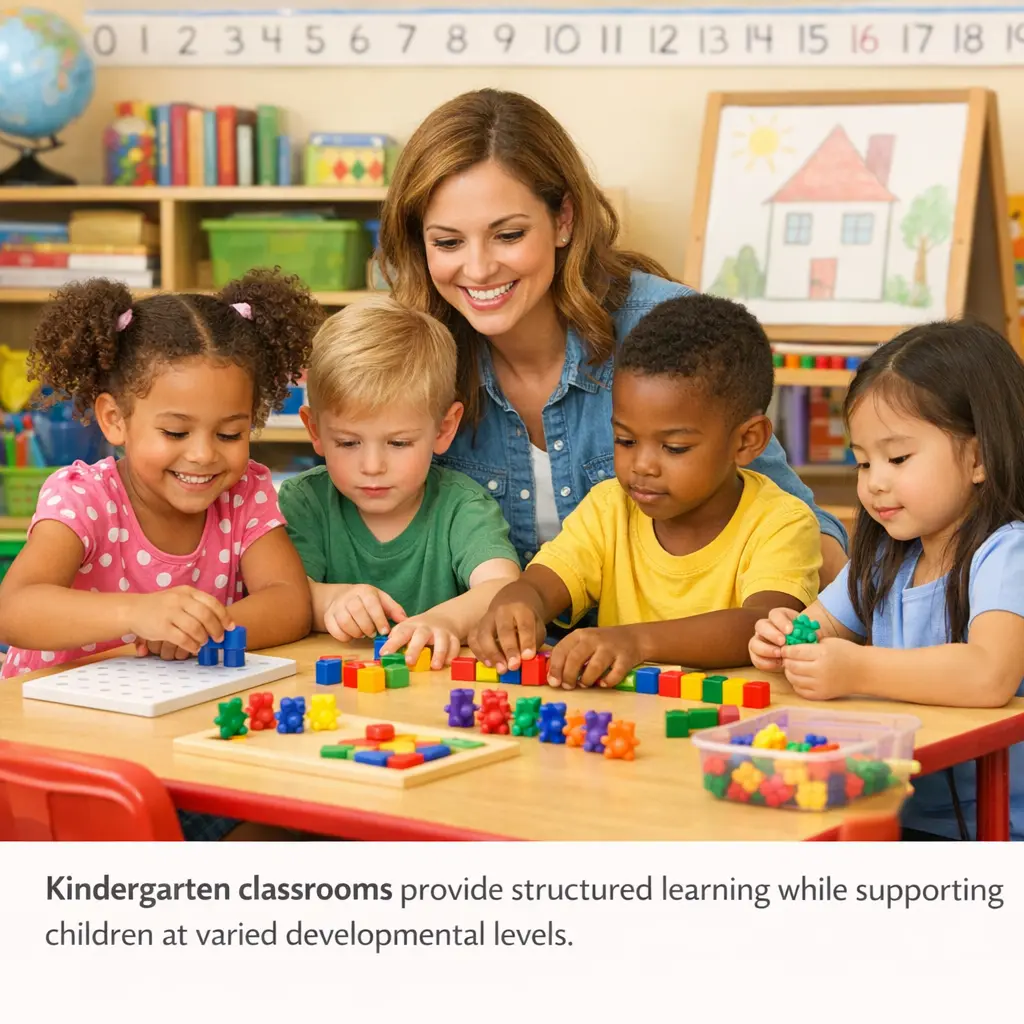
Understanding realistic teacher expectations helps reduce parent anxiety.
What teachers DO expect:
Basic self-care:
- Uses bathroom independently
- Can open lunch items with some practice
- Puts on and takes off coat
- Asks for help when needed
Emerging social skills:
- Attempts to share and take turns (not perfectly)
- Shows interest in other children
- Can sit briefly with a group
- Follows simple classroom rules with reminders
Beginning academic awareness:
- Recognizes some letters (not all)
- Shows interest in books
- Can count a few objects
- Knows some colors and shapes
Basic communication:
- Can express needs with words
- Understands simple directions
- Can answer basic questions
Ability to separate:
- Can say goodbye to parent without prolonged distress
- Will engage with teacher and activities after parent leaves
What teachers DON’T expect:
Teachers do NOT expect your child to:
- Read
- Write sentences or paragraphs
- Know all letters and sounds
- Do math problems
- Sit perfectly still for extended periods
- Share and take turns perfectly every time
- Handle all emotions without any outbursts
- Have perfect handwriting
- Know all colors, shapes, and numbers
- Follow complex multi-step directions independently
- Never need reminders about rules
First weeks are for assessment and adjustment:
Teachers spend the first weeks:
- Learning each child’s skill level
- Establishing routines and expectations
- Building classroom community
- Assessing where each child needs support
They expect wide variation in abilities and are trained to differentiate instruction for diverse learners.
How teachers support children who aren’t fully ready:
- Provide extra support and practice
- Use visual schedules and reminders
- Offer modified activities
- Work with special education staff if needed
- Communicate with parents about progress
- Give more time and patience
- Focus on growth, not just current level
Red flags teachers watch for:
Teachers pay attention to children who:
- Cannot separate from parents after several weeks
- Show no progress in learning routines
- Have extreme behavioral difficulties
- Cannot focus on any activity
- Don’t engage with peers at all
- Have significant speech or motor delays
- Show regression in skills
If teachers identify concerns, they’ll communicate with parents and may recommend evaluation or support services.
Special Circumstances: IEPs, Developmental Delays, and Gifted Children
Not all children follow typical developmental paths. Special circumstances require additional consideration.
Children with IEPs or Developmental Delays
What is an IEP?
An Individualized Education Program (IEP) is a legal document that outlines special education services for children with disabilities that affect learning.
IEPs in kindergarten:
If your child has an IEP from early intervention or preschool, it will transition to kindergarten. The school will:
- Hold a transition meeting before kindergarten
- Assess your child’s needs in the kindergarten setting
- Update the IEP for kindergarten goals
- Provide required services and accommodations
Should my child with delays start kindergarten on time?
This depends on:
- The nature and severity of delays
- Whether delays affect school readiness skills
- Your child’s progress with intervention
- Recommendations from therapists and educators
- Whether services will be better in kindergarten than current placement
Many children with mild delays thrive in kindergarten with appropriate support services. Kindergarten provides:
- Access to special education services
- Peer models for learning
- Structured learning environment
- Related services (speech therapy, occupational therapy, etc.)
Discuss with your IEP team whether kindergarten or another year of preschool with services would better support your child’s development.
What if my child doesn’t have an IEP but I suspect delays?
Request evaluation from your school district as soon as possible. Evaluations can take several months, so don’t wait until summer before kindergarten.
Gifted Children
Can gifted children be unready for kindergarten?
Yes. Giftedness doesn’t guarantee readiness in all areas. A child might read fluently but struggle with:
- Social-emotional maturity
- Fine motor skills
- Following directions and classroom routines
- Emotional regulation
- Playing cooperatively with peers
Common concerns with gifted children:
Asynchronous development:
Gifted children often show advanced cognitive skills but age-appropriate (or delayed) social-emotional skills. A child who reads chapter books might have typical 5-year-old emotional regulation.
Boredom and behavioral issues:
Gifted children who aren’t challenged may show:
- Disruptive behavior
- Refusal to participate in activities
- Perfectionism and frustration
- Difficulty with tasks they find too easy
Social challenges:
Gifted children may struggle to relate to age peers, preferring adults or older children. This can affect kindergarten adjustment.
Decisions for gifted children:
Should you start early?
Early entry is rarely recommended even for gifted children. Social-emotional readiness matters more than academic advancement.
Should you delay?
Delaying can lead to boredom and disengagement. Gifted children who are emotionally ready should typically start on time.
What’s the best approach?
Start on time and advocate for:
- Differentiated instruction
- Enrichment activities
- Flexible grouping
- Acceleration in specific subjects (rather than whole-grade acceleration)
- Gifted programming if available
Communicate with the teacher about your child’s abilities and needs. Good teachers will provide appropriate challenges.
English Language Learners
Are different readiness standards needed for children learning English?
Schools should assess readiness in a child’s home language, not just English. A child may be completely ready in their home language but appear “behind” if assessed only in English.
What to expect:
- Most kindergartens have ESL (English as a Second Language) support
- Social immersion helps children acquire English quickly
- Academic concepts often transfer between languages
- Home language should be maintained alongside English learning
Supporting bilingual kindergarten readiness:
- Build readiness skills in home language
- Expose child to English through books, songs, and conversation
- Communicate with school about language support services
- Maintain home language (bilingualism is an advantage, not a problem)
The First Weeks of Kindergarten: What to Expect
The transition to kindergarten is significant. Understanding typical adjustment patterns reduces anxiety.
Typical First Week Patterns
Day 1-2:
- Excitement and curiosity dominate
- Most children are on “best behavior”
- Some separation difficulty, but novelty helps
- Exhaustion at end of day
Days 3-5:
- Reality sets in (“I have to do this every day?”)
- More resistance to morning routine
- Increased tiredness
- Some children show behavioral regression at home
Week 2:
- Adjustment difficulties may peak
- Tears at drop-off may increase (after initial excitement wore off)
- More complaints about school
- Testing boundaries at home
- Exhaustion continues
Weeks 3-4:
- Most children begin adjusting to routines
- Drop-off becomes easier
- More positive reports about school
- Energy levels start to stabilize
6-8 weeks:
- Most children fully adjusted to kindergarten
- Routines are established
- Friendships forming
- Confidence increasing
This timeline is general. Some children adjust in days; others need months. Both are normal.
Common Adjustment Challenges
Separation difficulty:
- Tears at drop-off
- Clinginess at home
- Regression in independence
- Morning resistance
What helps:
- Consistent, brief goodbye routine
- Reassurance that you’ll return
- Transitional object from home (photo, small toy)
- Connection with teacher
- Avoiding prolonged departures
Exhaustion:
- Falling asleep early
- Crankiness after school
- Meltdowns over minor issues
- Increased need for quiet time
What helps:
- Earlier bedtime
- Calm after-school routine
- Limit after-school activities initially
- Nutritious snacks immediately after school
- Patience with emotions
Behavioral regression:
- Baby talk
- Accidents after being potty trained
- Increased tantrums
- Needing more help with self-care
What helps:
- Understanding this is temporary
- Providing extra comfort and attention
- Not punishing regression
- Maintaining consistent expectations gently
Social difficulties:
- No friends yet
- Conflicts with peers
- Difficulty finding play partners
- Feeling left out
What helps:
- Patience (friendships take time)
- Playdates with classmates
- Social skills coaching at home
- Communication with teacher
Academic frustration:
- Difficulty with writing or cutting
- Struggling with letter recognition
- Feeling “behind” peers
- Reluctance to try
What helps:
- Perspective (kindergarten is for learning these skills)
- Practice at home without pressure
- Praise effort, not just results
- Communication with teacher about concerns
Supporting Successful Adjustment
At home:
Maintain routines:
- Consistent bedtime and wake time
- Organized morning routine
- Predictable after-school pattern
Provide emotional support:
- Listen to feelings without dismissing
- Validate difficulties (“Kindergarten is a big change”)
- Reassure about their capabilities
- Give extra affection and one-on-one time
Practice kindergarten skills:
- Review letters and numbers
- Practice writing name
- Read together daily
- Work on areas of difficulty without pressure
Limit additional stressors:
- Avoid major family changes during first months if possible
- Limit after-school activities initially
- Maintain consistent expectations at home
- Preserve family time
Communication with school:
Build relationship with teacher:
- Attend back-to-school events
- Respond to teacher communications
- Share relevant information about your child
- Ask questions when you have concerns
When to reach out:
- Your child is extremely distressed about school
- Behavioral regression continues beyond first month
- Your child reports concerning incidents
- Academic struggles are causing significant frustration
- Social problems are persistent
How to communicate effectively:
- Email or call at appropriate times (not during class)
- Be specific about concerns
- Ask what you can do at home to help
- Share what’s working at home
- Follow up on teacher suggestions
Partnership approach:
Parents and teachers working together achieve the best outcomes. Teachers want your child to succeed and appreciate parent involvement.
Common Kindergarten Adjustment Challenges
Beyond typical first-weeks adjustment, some children face ongoing challenges.
Persistent Separation Anxiety
Signs:
- Intense distress at drop-off lasting beyond first month
- Physical symptoms (stomachaches, headaches)
- Extreme clinginess at home
- Sleep difficulties
- Regression in development
When it’s a problem:
Separation anxiety becomes concerning when it:
- Doesn’t improve after 6-8 weeks
- Intensifies over time
- Prevents school attendance
- Affects functioning at home
- Includes physical symptoms
What helps:
- Consistent goodbye routine (brief, warm, definitive)
- No sneaking away
- Transitional object from home
- Connection with a specific adult at school
- Gradual exposure (stay briefly at first if school allows)
- Professional support if severe (child therapist)
Academic Struggles
Signs your child may need additional support:
- No progress in letter recognition after several weeks
- Extreme frustration with writing or drawing
- Cannot remember routines even with practice
- Significantly behind all peers in multiple areas
- Avoidance of learning activities
What to do:
- Talk with teacher about observations
- Request assessment if struggles persist
- Provide extra support at home
- Consider professional evaluation (educational psychologist, learning specialist)
- Explore whether services like Response to Intervention (RTI) are available
Remember: Kindergarten is the beginning of learning these skills. Most children enter not knowing everything and learn throughout the year.
Social Difficulties
Common social challenges:
- Difficulty making friends
- Frequent conflicts with peers
- Isolation or exclusion
- Aggressive behavior
- Inability to read social cues
Supporting social development:
- Arrange playdates with one classmate at a time
- Practice social scenarios at home
- Read books about friendship and feelings
- Coach specific skills (“When you want to play, you can ask, ‘Can I join?'”)
- Communicate with teacher about social dynamics
- Consider social skills group if needed
Behavioral Issues
Types of behavioral challenges:
- Difficulty following directions
- Impulsive behavior
- Aggression (hitting, biting)
- Defiance
- Inability to sit still or focus
When to be concerned:
Behavior becomes a problem when it:
- Occurs much more frequently than peers
- Doesn’t improve with teacher intervention
- Results in injury to self or others
- Prevents learning
- Affects peer relationships
- Occurs across multiple settings (home and school)
Steps to take:
- Meet with teacher to understand specific behaviors
- Establish consistent expectations at home
- Create behavior plan with teacher
- Rule out medical causes (vision, hearing, sleep issues)
- Consider evaluation for ADHD, sensory issues, or other conditions
- Access school support services (counselor, behavior specialist)
When to Consider Retention or Transition Programs
Retention (repeating kindergarten) is sometimes recommended when:
- Child is significantly behind peers across multiple areas
- Developmental age doesn’t match chronological age
- Child would benefit from additional time before first grade
- Intensive intervention hasn’t led to adequate progress
Transitional programs:
Some schools offer transitional first grade or “young fives” programs for children who need more time between kindergarten and first grade.
Retention decisions should involve:
- Teacher observations and recommendations
- Assessment data
- Parent input
- Child’s social-emotional response to being retained
- Whether another year will truly help or just delay problems
Retention is most successful when:
- Child is young for their grade
- Delays are developmental (will improve with time)
- Child won’t be stigmatized socially
- Different instruction or support will be provided
Retention is less helpful when:
- Learning disabilities or other diagnosed conditions exist (these need intervention, not just time)
- Child is already age-appropriate or old for grade
- Same instruction will simply be repeated
- Social-emotional impact will be negative
Resources for Parents
Books About Starting Kindergarten (to read with your child)
- The Kissing Hand by Audrey Penn
- First Day Jitters by Julie Danneberg
- Kindergarten, Here I Come! by D.J. Steinberg
- Miss Bindergarten Gets Ready for Kindergarten by Joseph Slate
- Will I Have a Friend? by Miriam Cohen
- The Night Before Kindergarten by Natasha Wing
Books for Parents
- The Montessori Toddler by Simone Davies (preparation activities)
- How to Talk So Kids Will Listen by Adele Faber and Elaine Mazlish (communication)
- The Whole-Brain Child by Daniel J. Siegel (development and emotions)
- Raising An Emotionally Intelligent Child by John Gottman (social-emotional skills)
Online Resources
Government and educational organizations:
- U.S. Department of Education (ed.gov) – kindergarten resources
- National Association for the Education of Young Children (naeyc.org) – developmental information
- PBS Parents (pbs.org/parents) – activities and advice
- Your state’s Department of Education website – specific requirements and resources
Child development:
- Centers for Disease Control and Prevention (cdc.gov/ncbddd/childdevelopment) – developmental milestones
- American Academy of Pediatrics (healthychildren.org) – health and development
- Zero to Three (zerotothree.org) – early childhood development
Professional Support
Where to find help:
Developmental concerns:
- Your pediatrician
- Developmental pediatrician
- Child psychologist
- Educational psychologist
Speech and language:
- Speech-language pathologist (SLP)
- Through school district or private practice
Motor skills:
- Occupational therapist (OT) for fine motor
- Physical therapist (PT) for gross motor
Behavioral and emotional:
- Child psychologist or psychiatrist
- Licensed clinical social worker (LCSW)
- Marriage and family therapist specializing in children
Learning difficulties:
- Educational psychologist
- Learning specialist
- School district special education department
Early intervention:
If your child is under 5, contact your state’s early intervention program for evaluation and services.
Finding Quality Preschool Programs
If your child needs another year before kindergarten:
What to look for:
- Licensed and accredited programs
- Qualified teachers (early childhood education degrees)
- Low child-to-teacher ratios
- Play-based learning
- Social-emotional focus
- Communication with parents
- Safe, engaging environment
Types of programs:
- Public pre-K (often free)
- Head Start (for eligible families)
- Private preschools
- Religious preschools
- Montessori programs
- Reggio Emilia programs
- Cooperative preschools
Visit programs and ask:
- What is your educational philosophy?
- What does a typical day look like?
- How do you handle behavior issues?
- What is your approach to learning (play-based vs. academic)?
- What is the teacher-child ratio?
- How do you communicate with parents?
- What are your health and safety policies?
Frequently Asked Questions
1. What is the most important skill for kindergarten readiness?
The most important skill is social-emotional readiness—specifically, the ability to separate from parents, follow directions, manage emotions, and interact with peers. A child who can regulate their emotions and follow classroom routines will be able to learn academic skills. A child who cannot manage the social and emotional demands of kindergarten will struggle regardless of academic abilities.
Teachers consistently report that social-emotional skills predict kindergarten success better than knowing letters or numbers. Focus on helping your child develop emotional regulation, social skills, and independence.
2. Should I hold my summer birthday child back from kindergarten?
This depends on your individual child’s development, not just their birth date. Assess your child across all readiness domains using the checklist in this article.
Consider these factors:
Does your child meet most readiness benchmarks?
Is your child emotionally mature for their age?
What do teachers and your pediatrician recommend?
Will your child benefit from another year of growth, or will they be bored?
If your child is developmentally ready, being young for their grade typically doesn’t cause long-term problems. If your child shows significant delays in multiple areas, another year might help. Make the decision based on your specific child, not general advice about summer birthdays.
3. My child doesn’t know all their letters yet. Are they behind?
No. Children are not expected to know all letters when they start kindergarten. Kindergarten teaches letter recognition, letter sounds, and beginning reading skills. What matters is that your child shows interest in letters, recognizes some letters (especially those in their name), and has pre-literacy skills like understanding that print carries meaning.
If your child knows 10-15 letters and is progressing, they’re fine. Continue practicing through play and reading together, but don’t stress about mastering the entire alphabet before kindergarten starts.
4. How can I tell if my child’s behavior is normal or a sign of a developmental problem?
Consider these questions:
Is the behavior typical for your child’s age? (Research developmental milestones for your child’s age)
Is it occurring much more frequently or intensely than in peers?
Is it affecting your child’s functioning at home, in social situations, or in learning?
Has it persisted despite your attempts to address it?
Is it getting worse over time instead of better?
Does it occur across multiple settings and with multiple people?
If you answered yes to multiple questions, discuss concerns with your pediatrician. Trust your parental instinct—if something feels wrong, seek professional input. Early evaluation and intervention improve outcomes.
5. What if my child cries every day at kindergarten drop-off?
Some crying at drop-off is normal during the first few weeks of kindergarten. It becomes concerning if:
It continues beyond 6-8 weeks
It’s getting worse instead of better
Your child is distressed the entire school day (ask the teacher)
It’s accompanied by physical symptoms or sleep problems
It’s affecting your child’s functioning at home
For normal adjustment crying, maintain a brief, warm, consistent goodbye routine. Don’t sneak away or prolong departures. Most children stop crying within minutes after parents leave. Check with the teacher about how your child does after you’re gone.
If crying persists or worsens, talk with your child’s teacher and pediatrician. Some children need additional support for separation anxiety.
6. Is it better for my child to be the oldest or youngest in their kindergarten class?
Research shows mixed results. Being oldest in class may provide initial academic and social advantages, but these typically disappear by third grade. Being youngest may present early challenges but doesn’t predict long-term problems.
What matters more than relative age is:
Individual developmental readiness
Quality of instruction and support
Your child’s temperament and resilience
Social-emotional maturity
Don’t make enrollment decisions solely based on whether your child will be young or old for their grade. Focus on whether your specific child is developmentally ready.
7. Should my child attend preschool before kindergarten?
Preschool is not required for kindergarten readiness, but it can be beneficial. Preschool helps children:
Develop social skills with peers
Practice following directions in a group setting
Experience separation from parents
Build pre-academic skills through play
Adjust to structured routines
Children without preschool experience can be completely ready for kindergarten if they:
Have regular interaction with other children
Practice kindergarten readiness skills at home
Have opportunities for structured activities
Develop independence and self-help skills
If preschool isn’t financially feasible or available, focus on providing social opportunities (playdates, library programs, park visits) and practicing readiness skills at home.
8. What should I do if the kindergarten teacher says my child isn’t keeping up?
First, gather specific information:
What exactly is your child struggling with?
How significant is the gap compared to peers?
What has the teacher tried?
What can you do at home to support your child?
Then take these steps:
Provide extra support and practice at home in problem areas
Ask if the school offers intervention services (Response to Intervention/RTI)
Request assessment if struggles are significant or persist
Consider whether your child needs professional evaluation
Maintain communication with the teacher about progress
Remember that kindergarten has the entire year for children to develop skills. Struggles in September don’t predict failure. Most children make tremendous growth throughout kindergarten with appropriate support.
9. How much time should I spend on kindergarten preparation activities?
Quality matters more than quantity. Aim for:
15-30 minutes of focused learning activities daily (letters, numbers, writing, cutting)
Daily reading together (15-20 minutes minimum)
Regular unstructured play time (crucial for development)
Opportunities for social interaction several times per week
Physical activity daily (at least 60 minutes)
Don’t overschedule or pressure your child. Learning through play, daily routines, and natural interactions is just as valuable as formal activities. Kindergarten preparation should feel fun and engaging, not like a chore or source of stress.
10. What if my child has special needs? How does that affect kindergarten readiness?
Children with special needs can be ready for kindergarten with appropriate support. Consider:
If your child has an IEP: Work with your IEP team to plan transition to kindergarten. Discuss whether kindergarten or another year of preschool with services would better meet your child’s needs. Kindergarten may provide better access to services and peer models.
If your child doesn’t have an IEP but you suspect delays: Request evaluation from your school district as soon as possible. Don’t wait until summer before kindergarten.
Key factors in the decision:
Will kindergarten services support your child’s needs better than current placement?
Is your child making progress with intervention?
What do therapists and special educators recommend?
How significant are the delays?
Will your child benefit from peer models in kindergarten?
Children with special needs often thrive in kindergarten with proper support, services, and accommodations. The goal is the right placement with appropriate services, not whether your child matches “typical” readiness.
COMPARISON TABLES
Developmental Readiness by Age
| Age | Academic Skills | Social-Emotional Skills | Physical Skills | Self-Help Skills |
|---|---|---|---|---|
| 3 years | Recognizes some colors; Counts to 3-5; Scribbles and draws circles | Plays alongside others; Shares with prompting; Shows range of emotions | Pedals tricycle; Climbs well; Stacks 9-10 blocks | Feeds self; May be potty training; Pulls pants up/down |
| 4 years | Knows some letters; Counts to 10+; Draws person with 2-4 body parts | Plays cooperatively; Prefers playing with others; Shows empathy | Hops on one foot; Catches bounced ball; Uses scissors | Uses toilet independently; Dresses with help; Pours from pitcher |
| 5 years | Recognizes most letters; Counts to 20+; Writes some letters and name | Follows rules; Wants to please friends; Shares and takes turns | Swings and climbs; Stands on one foot 10 seconds; Uses fork and spoon well | Completely toilet independent; Dresses independently; Knows address/phone |
| 6 years | Reads simple words; Writes letters and numbers; Understands time concepts | Plays complex games; Has strong friendships; Understands feelings | Skips; Ties shoes; Good balance and coordination | Fully independent in self-care; Manages belongings; Follows multi-step routines |
Note: These are general patterns. Individual children develop at different rates.
Kindergarten vs. Preschool: What’s Different?
| Aspect | Preschool (Age 3-4) | Pre-K (Age 4-5) | Kindergarten (Age 5-6) |
|---|---|---|---|
| Schedule | 2-3 hours, 2-5 days/week | 3-6 hours, 3-5 days/week | Full school day (6-7 hours), 5 days/week |
| Structure | Mostly play-based; Flexible routines | Mix of play and structured learning | More structured; Specific learning times |
| Academic Focus | Minimal; Exploration and play | Introduction to letters, numbers, concepts | Formal instruction in reading and math |
| Independence Expected | High teacher support; Group assistance | Growing independence; Some self-management | Expected to follow routines, manage belongings |
| Social Expectations | Learning to share; Parallel play normal | Cooperative play; Turn-taking expected | Playing by rules; Resolving simple conflicts independently |
| Homework | None | Rare; Occasional practice | May have simple homework or reading |
| Parent Communication | Daily reports; Informal updates | Regular reports; Parent-teacher conferences | Formal report cards; Scheduled conferences |
| Class Size | 8-15 students | 12-20 students | 18-25 students (varies by state) |
| Bathroom | Teachers assist | Mostly independent with support available | Fully independent expected |
| Nap/Rest Time | Usually included | Depends on program | Typically none (quiet time at most) |
Signs of Readiness vs. Signs to Wait
| Area | Ready to Start | Consider Waiting |
|---|---|---|
| Age | Meets cutoff with several months to spare; Average to older for grade | Just makes cutoff; Will be youngest in class AND shows developmental delays |
| Separation | Can separate from parents with brief upset that resolves quickly | Cannot separate without extreme, prolonged distress after practice |
| Social Skills | Plays cooperatively with peers most of the time; Shares and takes turns with reminders | No interest in playing with other children; Cannot share or take turns even with support |
| Emotional Regulation | Can calm down after upset with some support; Uses words to express feelings often | Frequent, intense tantrums; Cannot calm down even with adult support; No emotional control |
| Following Directions | Follows 2-3 step directions; Needs occasional reminders | Cannot follow simple 1-step directions even with practice |
| Attention Span | Can focus on activities for 10-15 minutes; Completes age-appropriate tasks | Cannot focus on any activity for more than 2-3 minutes; Never completes activities |
| Academic Skills | Recognizes some letters and numbers; Shows interest in learning | No letter or number recognition AND no interest in learning despite exposure |
| Communication | Speaks in complete sentences; Can be understood by unfamiliar adults | Very limited speech; Cannot be understood; Significant language delays |
| Physical Skills | Can hold pencil, use scissors, run, jump, climb appropriately | Significant delays in both fine and gross motor skills |
| Self-Care | Uses bathroom independently; Dresses self; Manages clothing | Frequent bathroom accidents; Cannot manage any self-care; Needs extensive help with all tasks |
| Overall Development | Meeting most milestones across areas; Delays in 1-2 specific skills | Significant delays across multiple developmental domains; Far behind age peers |
State Kindergarten Age Cutoff Dates (Sample States)
| State | Age Cutoff Date | Mandatory Attendance Age | Notes |
|---|---|---|---|
| California | September 1 | 6 years | Transitional Kindergarten available for some summer birthdays |
| Texas | September 1 | 6 years | Districts may vary slightly |
| New York | December 1 | 6 years | More flexible; allows fall birthdays |
| Florida | September 1 | 6 years | VPK (voluntary pre-K) widely available |
| Illinois | September 1 | 6 years (for first grade) | Kindergarten not mandatory |
| Pennsylvania | September 1 | 8 years | Kindergarten not mandatory; districts vary |
| Ohio | September 30 | 6 years | Public preschool options available |
| Georgia | September 1 | 6 years | Free pre-K for 4-year-olds |
| North Carolina | August 31 | 7 years | Kindergarten not mandatory |
| Indiana | August 1 | 7 years | Earlier cutoff than most states |
Check your specific state’s Department of Education website for current requirements, as these can change.




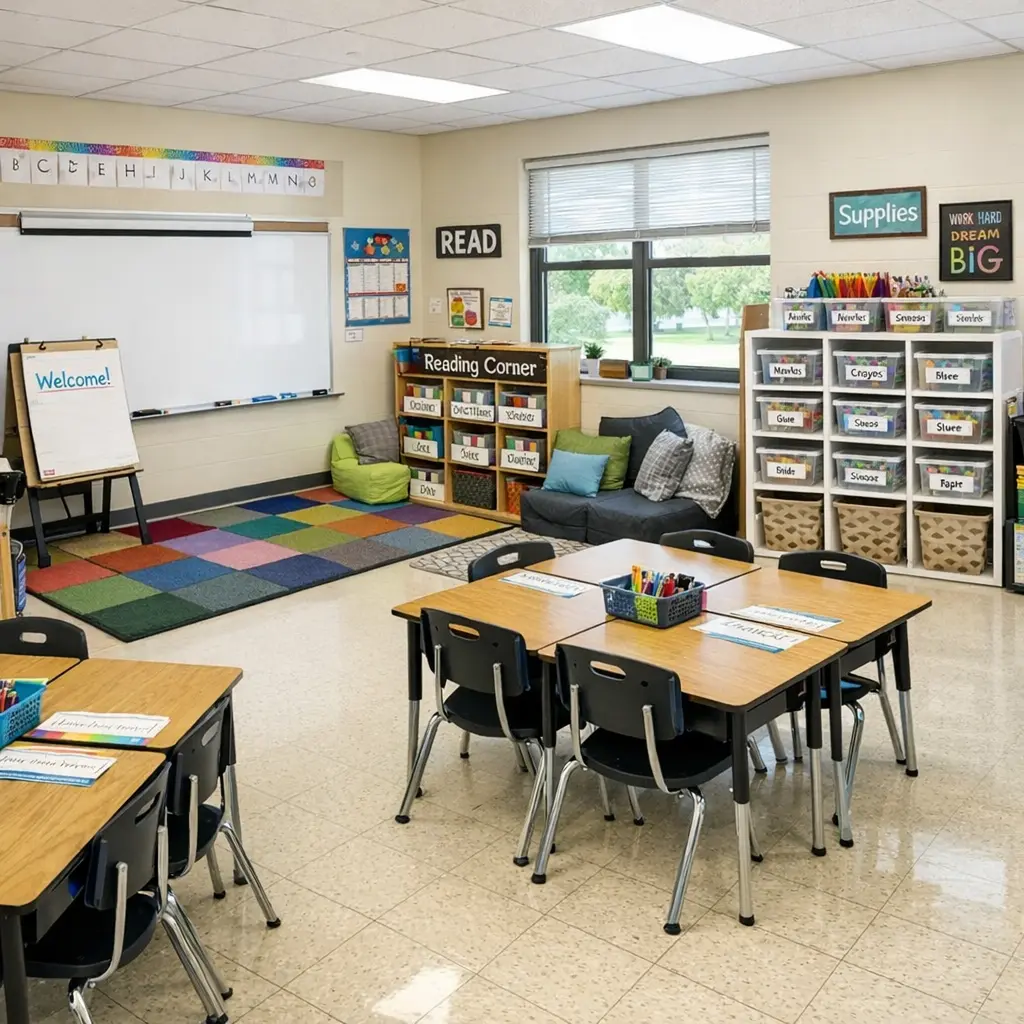


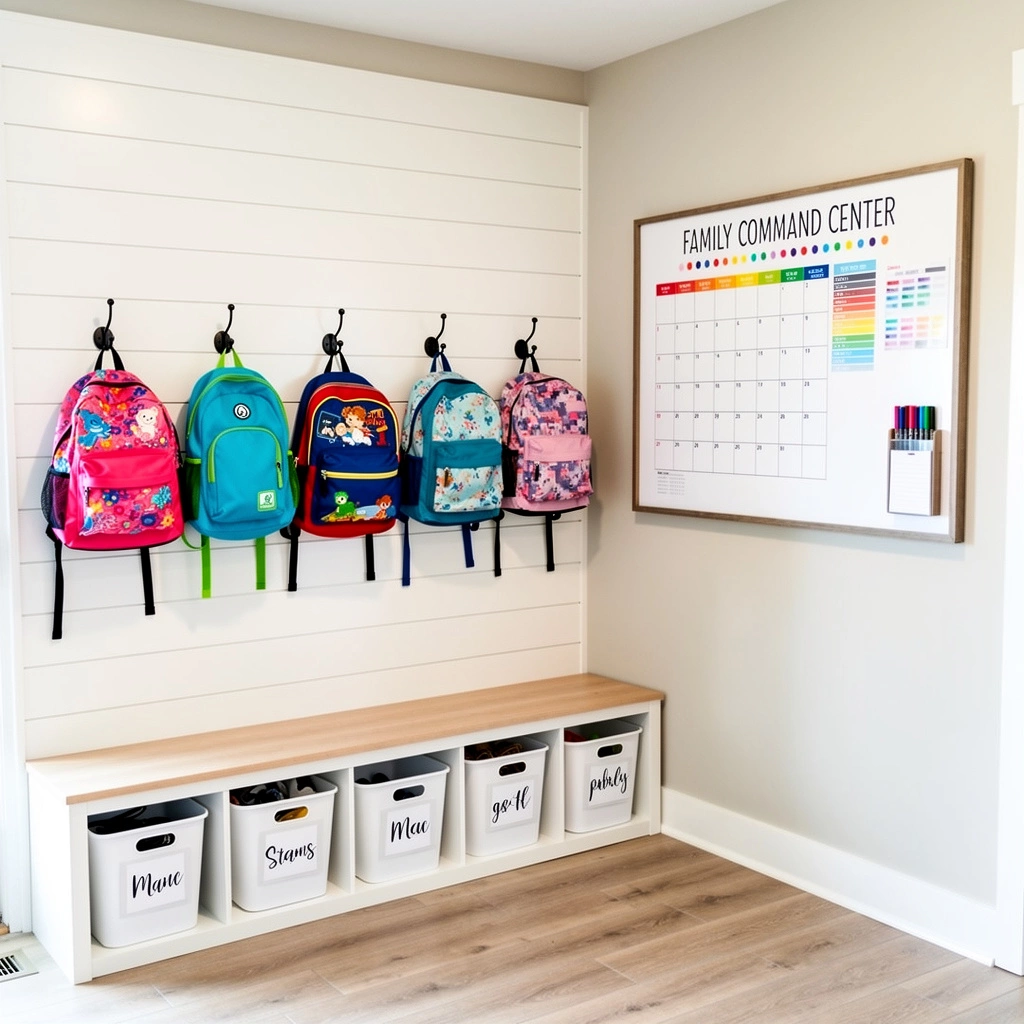
Leave a Reply