

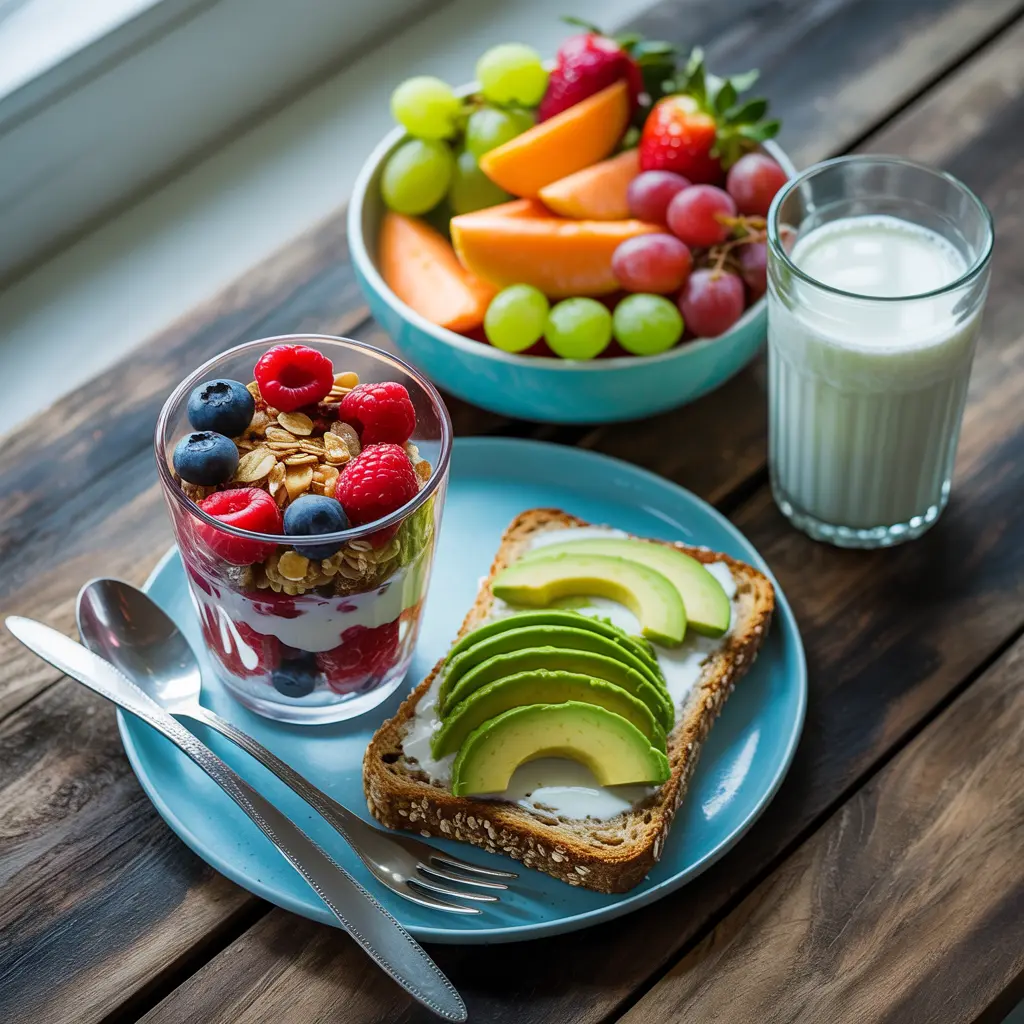
School mornings present a universal challenge: getting nutritious food into children before the bus arrives. Many families skip breakfast entirely, with studies showing approximately 20-30% of school-age children regularly miss this meal. The consequences affect classroom attention, test performance, and overall development.
This guide provides practical school breakfast ideas that take five minutes or less to prepare. You’ll find recipes that balance nutrition with reality—no complicated techniques, expensive ingredients, or meals that children refuse to eat. Each suggestion includes preparation tips, ingredient substitutions, and strategies for the pickiest eaters.
What you’ll learn: Quick breakfast formulas that provide sustained energy, make-ahead techniques that save morning time, budget-friendly ingredient swaps, and solutions for common dietary restrictions. These strategies work for kindergartners through high school students, single-parent households, and families managing multiple food allergies.

Why School Breakfast Matters for Learning
The hours between waking and lunch represent the most cognitively demanding period of a child’s day. Breakfast directly impacts:
Cognitive Performance
Children who eat breakfast show improved memory, attention span, and problem-solving abilities compared to those who skip it. The brain uses approximately 20% of the body’s energy despite representing only 2% of body weight.
Behavior and Mood
Low blood sugar triggers irritability, anxiety, and reduced frustration tolerance. A balanced breakfast stabilizes mood and improves social interactions.
Physical Growth
Children need consistent nutrient intake for bone development, muscle growth, and immune function. Skipping breakfast means missing 25-30% of daily nutrition opportunities.
Academic Achievement
Research from school breakfast programs shows students who eat breakfast demonstrate better grades, higher test scores, and improved attendance.
Common Mistake: Relying on sugary cereals or pastries that cause energy crashes within 90 minutes. The solution combines slow-digesting carbohydrates with protein and healthy fats.
Professional Tip: If your child genuinely cannot eat immediately after waking, pack a breakfast to eat during the commute or within the first hour of school. Most schools permit this, especially for younger children.
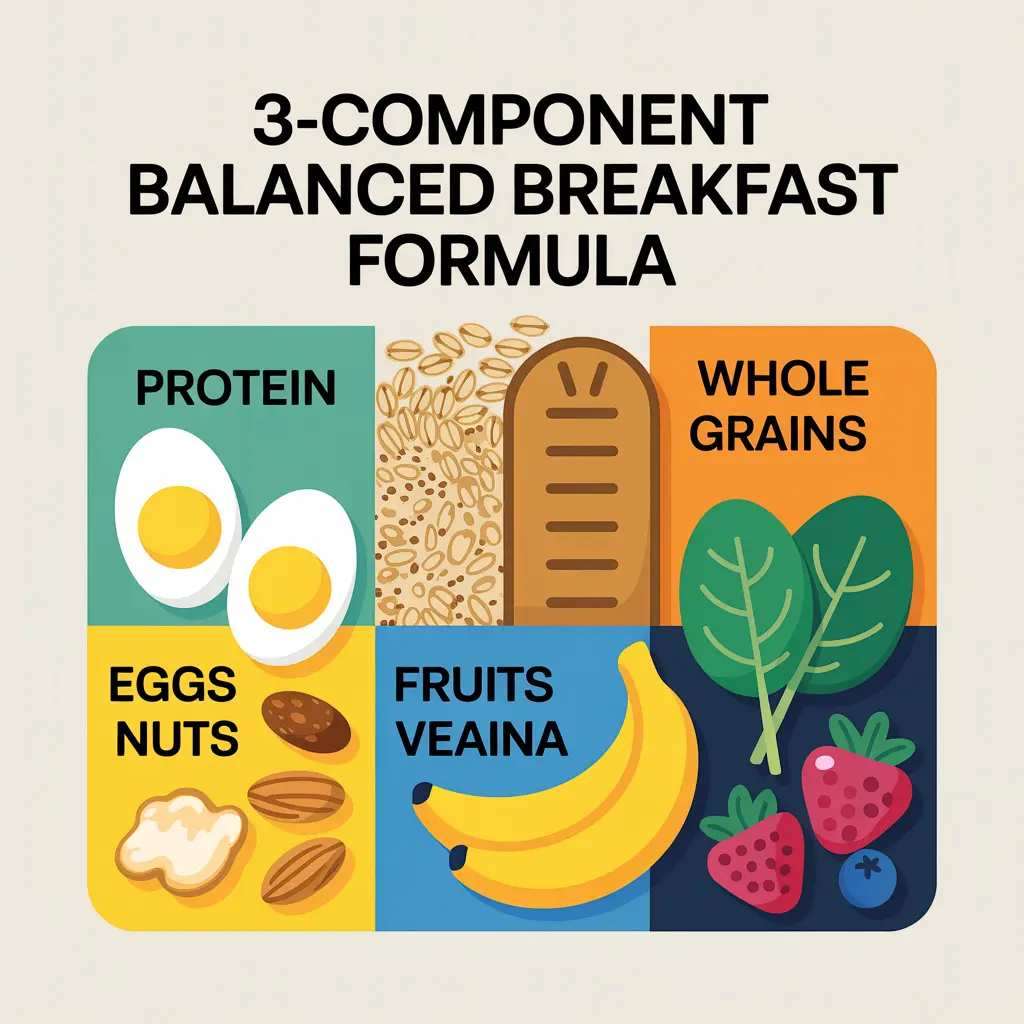
The 3-Component Formula for Balanced Breakfast
Every effective school breakfast includes three elements:
Component 1: Protein (15-20 grams)
Why it matters: Protein slows digestion, stabilizes blood sugar, and provides amino acids for growth and neurotransmitter production.
Best sources:
- Eggs (6-7 grams per egg)
- Greek yogurt (15-20 grams per cup)
- Cottage cheese (14 grams per half cup)
- Peanut or almond butter (7-8 grams per 2 tablespoons)
- Milk (8 grams per cup)
- Turkey or chicken sausage (10-14 grams per link)
- Beans (7-8 grams per half cup)
Component 2: Whole Grains (15-30 grams carbohydrates)
Why it matters: Complex carbohydrates provide glucose for brain function while fiber prevents rapid blood sugar spikes.
Best sources:
- Oatmeal (whole oats, not instant packets)
- Whole wheat bread or English muffins
- Whole grain waffles or pancakes
- Quinoa or brown rice
- Whole grain cereals with 3+ grams fiber per serving
Component 3: Fruits or Vegetables (1-2 servings)
Why it matters: Produce provides vitamins, minerals, antioxidants, and additional fiber that processed foods lack.
Best sources:
- Berries (fresh or frozen)
- Bananas
- Apples
- Spinach or kale (in smoothies)
- Tomatoes (with eggs)
- Bell peppers
- Avocado
Example combinations:
- Scrambled eggs + whole wheat toast + strawberries
- Greek yogurt + granola + blueberries
- Peanut butter + whole grain waffle + banana slices
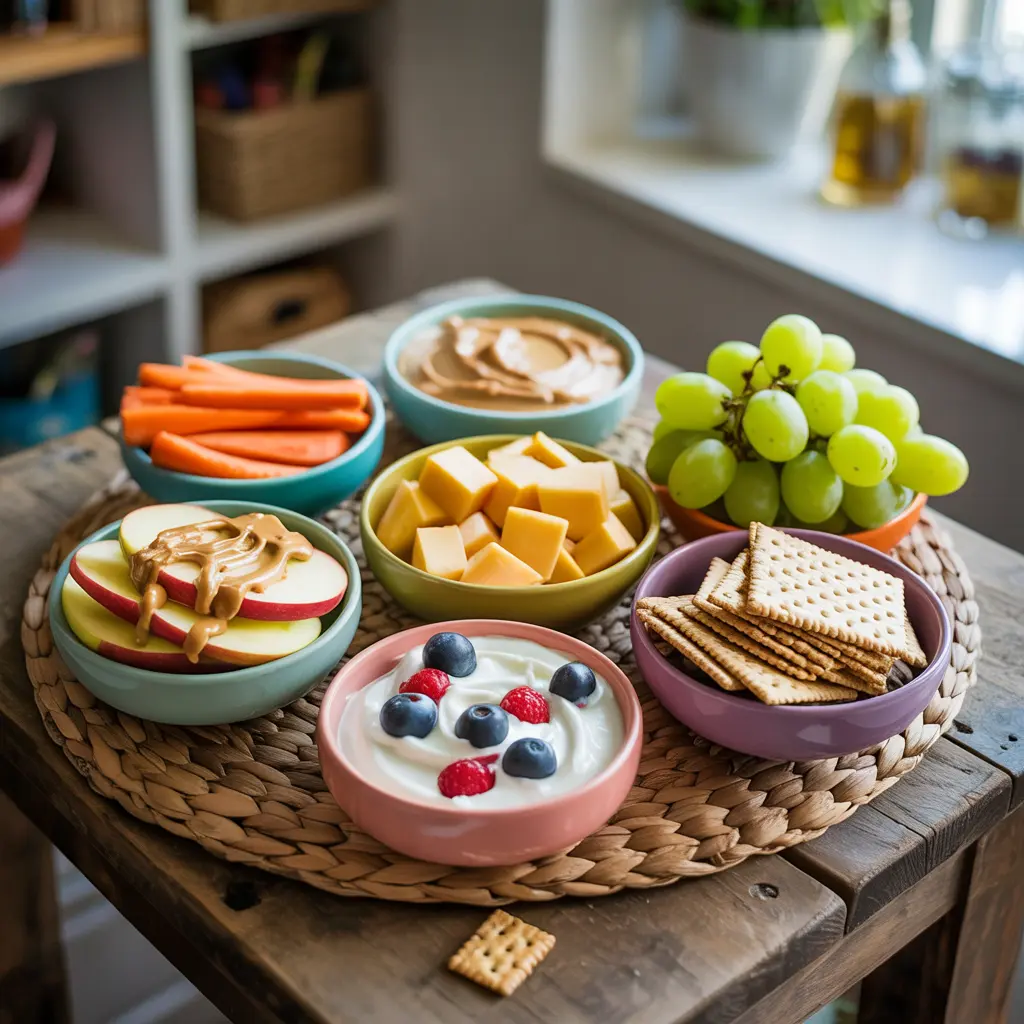
- Cheese + whole grain crackers + apple slices
Quick Summary: Think of breakfast as a mini-meal with the same balance you’d expect at dinner—protein, starch, and vegetables—just in morning-friendly formats.
5-Minute School Breakfast Ideas
Protein-Powered Options
Scrambled Egg Wrap
- Scramble 2 eggs in microwave (90 seconds)
- Place in whole wheat tortilla
- Add shredded cheese
- Roll and serve with cherry tomatoes
Preparation time: 3 minutes
Protein: 18 grams
Cost per serving: $0.75
Greek Yogurt Parfait
- Layer Greek yogurt in a cup
- Add granola and fresh berries
- Drizzle with honey
Preparation time: 2 minutes
Protein: 20 grams
Cost per serving: $1.25
Peanut Butter Banana Roll
- Spread peanut butter on whole wheat tortilla
- Place banana in center
- Roll and slice into pinwheels
Preparation time: 2 minutes
Protein: 10 grams
Cost per serving: $0.50
Cottage Cheese Bowl
- Scoop cottage cheese into bowl
- Top with pineapple chunks and sliced almonds
- Sprinkle with cinnamon
Preparation time: 1 minute
Protein: 16 grams
Cost per serving: $1.00
Professional Tip: Scramble eggs in the microwave by whisking in a microwave-safe mug, cooking for 45 seconds, stirring, then cooking another 30-45 seconds. This eliminates pan cleanup.
Whole Grain Favorites
Instant Oatmeal Enhancement
- Prepare plain instant oats (not flavored packets)
- Stir in chia seeds and cinnamon
- Top with apple slices and walnuts
- Add milk for extra protein
Preparation time: 3 minutes
Fiber: 6 grams
Cost per serving: $0.60
Whole Grain Waffle Stack
- Toast frozen whole grain waffles
- Spread with almond butter
- Layer with banana slices
- Serve with milk
Preparation time: 3 minutes
Fiber: 5 grams
Cost per serving: $0.85
English Muffin Pizza
- Split whole wheat English muffin
- Spread tomato sauce
- Add mozzarella cheese
- Microwave 30 seconds
Preparation time: 2 minutes
Benefit: Savory option for kids who dislike sweet breakfast
Cost per serving: $0.70
Fruit and Veggie Boosters
Berry Smoothie Bowl
- Blend frozen berries with yogurt and milk
- Pour into bowl (thicker than drinkable smoothie)
- Top with granola and coconut flakes
- Add chia seeds
Preparation time: 4 minutes
Vitamin C: 85% daily value
Cost per serving: $1.50
Avocado Toast
- Toast whole grain bread
- Mash avocado with pinch of salt
- Top with sliced hard-boiled egg
- Add cherry tomatoes
Preparation time: 3 minutes (if egg pre-cooked)
Healthy fats: 15 grams
Cost per serving: $1.25
Apple Sandwiches
- Slice apple into rounds
- Spread with sunflower seed butter
- Sprinkle with granola
- Stack as “sandwiches”
Preparation time: 3 minutes
Nut-free: Yes
Cost per serving: $0.65
Common Mistake: Offering only fruit without protein or fat. This causes rapid blood sugar rise and crash. Always pair fruit with protein or healthy fats.
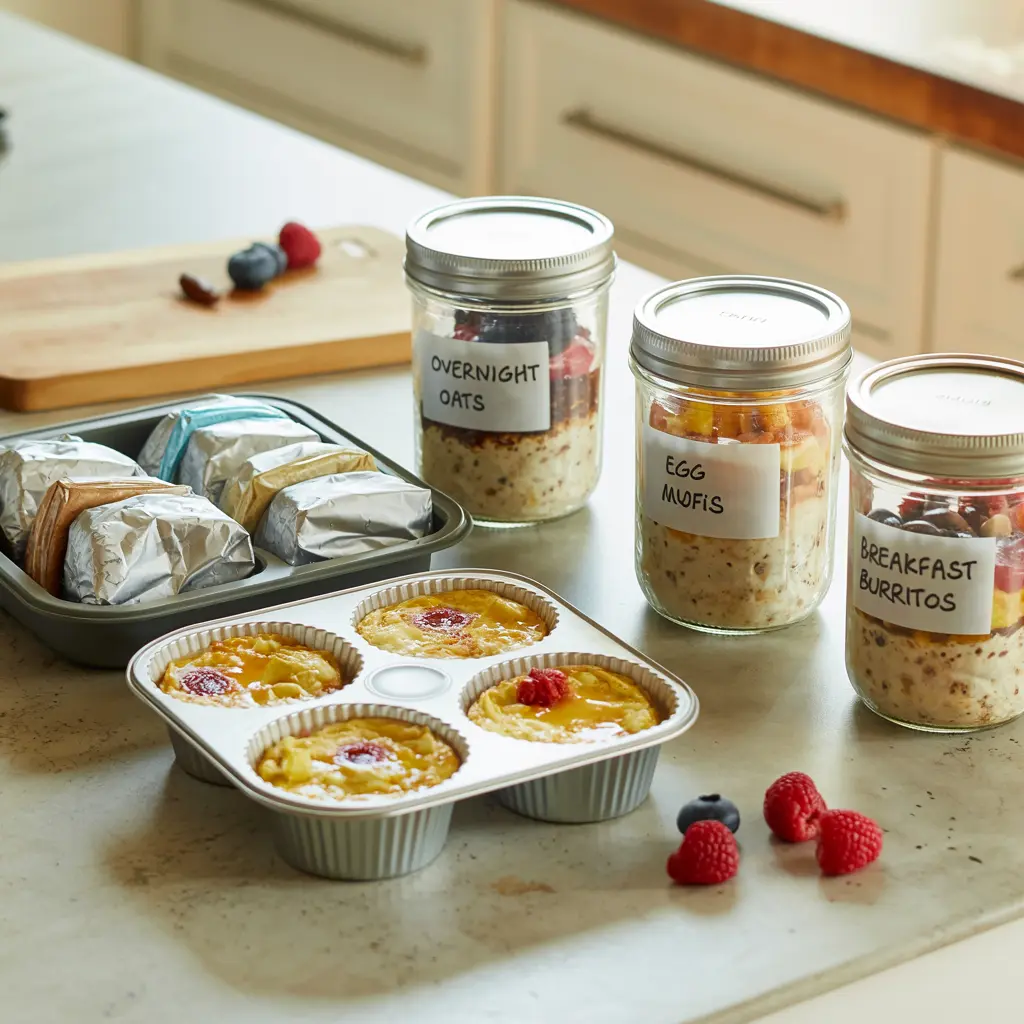
Make-Ahead Breakfast Recipes
Sunday Prep Strategies
Investing 60-90 minutes on Sunday eliminates morning breakfast decisions for the entire week.
Overnight Oats (5 servings)
Ingredients:
- 2.5 cups rolled oats
- 2.5 cups milk (dairy or non-dairy)
- 1.25 cups Greek yogurt
- 2 tablespoons maple syrup
- 1 teaspoon vanilla extract
Instructions:
- Divide oats into 5 mason jars
- Add equal portions of milk and yogurt to each jar
- Add maple syrup and vanilla
- Refrigerate overnight
- In morning, add fresh fruit and nuts
Storage: 5 days refrigerated
Morning prep time: 30 seconds
Cost per serving: $0.90
Customization options:
- Chocolate: Add cocoa powder and chocolate chips
- Apple cinnamon: Add diced apples and cinnamon
- Peanut butter: Swirl in 1 tablespoon peanut butter per jar
- Tropical: Add coconut flakes and mango
Egg Muffin Cups (12 servings)
Ingredients:
- 10 eggs
- 1/4 cup milk
- 1 cup shredded cheese
- 1 cup diced vegetables (bell peppers, spinach, tomatoes)
- 1/2 cup cooked breakfast sausage (optional)
Instructions:
- Preheat oven to 350°F
- Grease muffin tin
- Whisk eggs and milk
- Divide vegetables and meat among cups
- Pour egg mixture over fillings
- Bake 20-25 minutes until set
- Cool and refrigerate
Storage: 5 days refrigerated, 3 months frozen
Morning prep time: 30 seconds microwave
Cost per serving: $0.60
Banana Oat Muffins (12 servings)
Ingredients:
- 3 ripe bananas, mashed
- 2 eggs
- 1/3 cup honey or maple syrup
- 1 teaspoon vanilla extract
- 2 cups rolled oats (blended into flour)
- 1 teaspoon baking soda
- 1/2 teaspoon cinnamon
- 1/2 cup chocolate chips (optional)
Instructions:
- Preheat oven to 350°F
- Mix wet ingredients
- Blend oats into flour consistency
- Combine wet and dry ingredients
- Fill muffin cups
- Bake 15-18 minutes
Storage: 3 days room temperature, 7 days refrigerated, 3 months frozen
Morning prep time: Grab and go
Cost per serving: $0.40
Professional Tip: Freeze breakfast items in individual portions. Remove one the night before to thaw in refrigerator, or microwave from frozen for 60-90 seconds.
Freezer-Friendly Options
Breakfast Burritos (8 servings)
Ingredients:
- 8 whole wheat tortillas
- 12 scrambled eggs
- 2 cups cooked black beans
- 1 cup shredded cheese
- 1 cup salsa
- Optional: cooked potatoes, peppers
Assembly:
- Place filling in center of tortilla
- Fold in sides, roll tightly
- Wrap individually in foil
- Freeze in gallon freezer bag
Reheating: Remove foil, wrap in paper towel, microwave 90 seconds, flip, microwave 60 seconds
Storage: 3 months frozen
Cost per serving: $1.10
Freezer Pancakes
Instructions:
- Make double batch of whole grain pancakes
- Cool completely on wire rack
- Place parchment paper between each pancake
- Store in freezer bags
Reheating: Toast directly from frozen for crispy edges, or microwave 30-60 seconds
Storage: 3 months frozen
Cost per serving: $0.35
Action Steps:
- Choose one make-ahead recipe to try this Sunday
- Start with smallest batch to test family acceptance
- Label containers with contents and date
- Keep reheating instructions on freezer bag
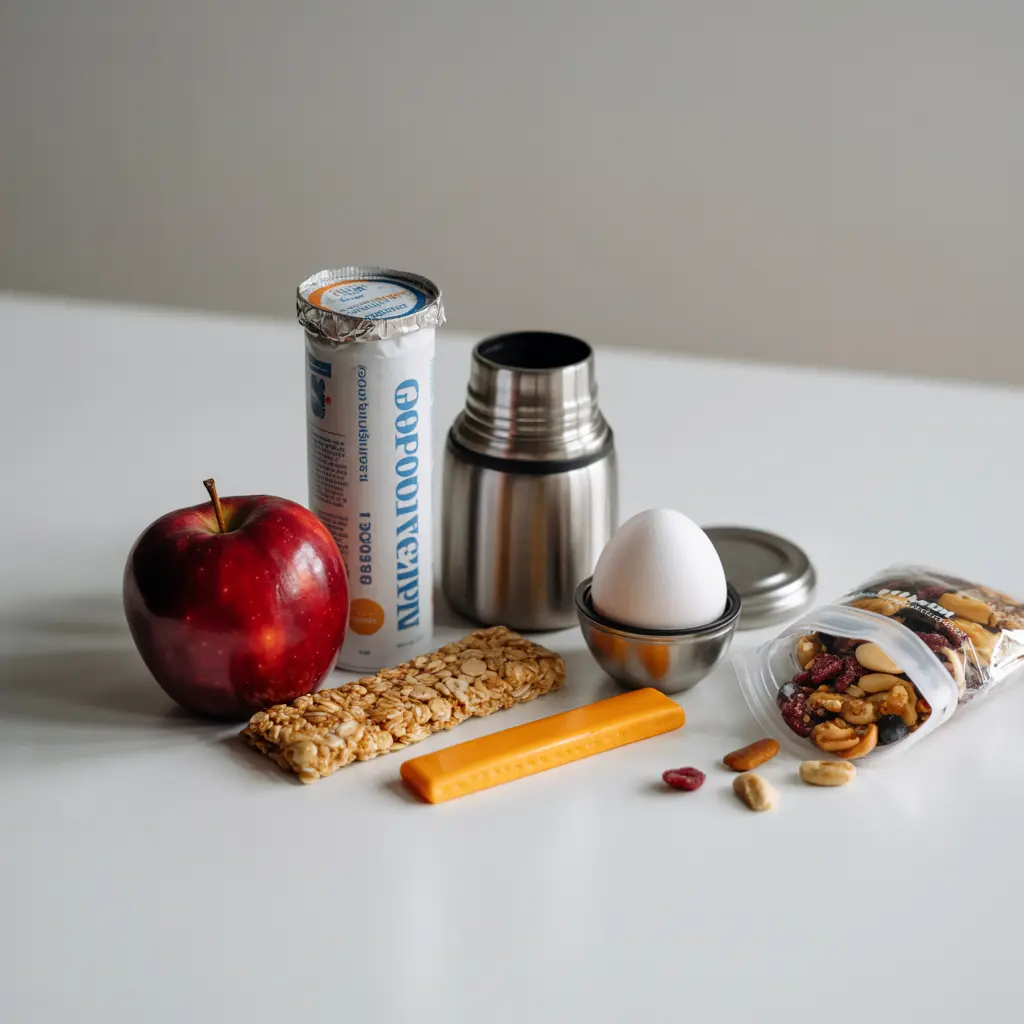
Grab-and-Go Portable Breakfasts
Not every breakfast happens at the kitchen table. These options travel well and maintain food safety.
No-Refrigeration-Needed Options
Trail Mix Breakfast
- Whole grain cereal (Cheerios, Chex)
- Dried fruit (raisins, cranberries)
- Nuts or seeds
- Mini chocolate chips
Package in small containers or bags. Pair with shelf-stable milk box.
Peanut Butter Crackers
- Whole grain crackers
- Peanut or almond butter packets
- Fresh apple or dried fruit
Muffins and Fruit
- Homemade muffins (store 3 days room temperature)
- Banana, apple, or orange
Requires Insulated Lunch Box
Yogurt Tube and Granola
- Freeze yogurt tubes overnight
- Pack with granola bar
- By morning snack time, yogurt is thawed but still cold
Hard-Boiled Eggs and Cheese
- Pre-peeled hard-boiled eggs
- String cheese
- Whole grain crackers
- Cherry tomatoes
Smoothie in Thermos
- Blend smoothie
- Pour into insulated thermos
- Stays cold for 4-6 hours
Temperature Safety:
- Keep cold foods below 40°F
- Use frozen ice pack in insulated bag
- Consume within 2-3 hours if unrefrigerated
Quick Summary: Portable breakfasts work best when they don’t require utensils, stay fresh without refrigeration, or travel in quality insulated containers with ice packs.
Solutions for Picky Eaters
Picky eating affects approximately 25-35% of children. These strategies increase breakfast acceptance.
Presentation Techniques
Make Food Fun
- Cut sandwiches with cookie cutters
- Arrange fruit as smiley faces
- Use colorful plates and bowls
- Create “breakfast boards” with variety
Rename Foods
- “Super strength oatmeal” instead of “oatmeal”
- “Dinosaur eggs” instead of “hard-boiled eggs”
- “Rainbow fruit salad” emphasizes color
Involve Children in Preparation
Children eat foods they help create. Age-appropriate tasks:
- Ages 3-5: Washing fruit, stirring ingredients, pouring measured items
- Ages 6-8: Cracking eggs, spreading toppings, operating toaster
- Ages 9-12: Using microwave, simple cooking with supervision
- Ages 13+: Independent breakfast preparation
The “One Bite Rule”
Require one taste of new foods without pressure to finish. Research shows children need 10-15 exposures before accepting new flavors.
Implementation:
- Introduce one new food alongside familiar favorites
- Praise trying, never force eating
- Reintroduce the same food weekly
- Accept that some foods will never be favorites
Texture Modifications
Many picky eaters have texture sensitivities.
Solutions:
- Smoothie everything: Blend vegetables, fruits, protein powder, oats
- Change cooking methods: Some kids prefer scrambled over fried eggs
- Adjust consistency: Thicker or thinner oatmeal, crunchy vs. soft toast
- Hide vegetables: Shred zucchini into muffins, blend spinach into smoothies
Limited Menu Approach
Offer 3-4 reliable breakfast options in rotation rather than forcing variety. This reduces morning power struggles while ensuring nutrition.
Professional Tip: If your child will only eat one breakfast food, focus on making that option as nutritious as possible rather than fighting for variety. A child who eats peanut butter toast every morning gets adequate nutrition if paired with fruit and milk.
Common Mistake: Becoming a “short-order cook” making different meals for each family member. Offer two options maximum: “Would you like eggs or oatmeal?”
Allergy-Friendly Breakfast Alternatives
Nut-Free Options
Critical for schools with nut-free policies.
Nut Butter Alternatives:
- Sunflower seed butter (SunButter)
- Soy nut butter
- Pea butter (made from yellow peas)
- Tahini (sesame seed paste)
Nut-Free Recipes:
Sunflower Seed Butter Overnight Oats
- 1/2 cup oats
- 1/2 cup milk
- 1 tablespoon sunflower seed butter
- 1 teaspoon honey
- Banana slices
Nut-Free Energy Balls
- 1 cup oats
- 1/2 cup sunflower seed butter
- 1/3 cup honey
- 1/4 cup mini chocolate chips
- Roll into balls, refrigerate
Dairy-Free Choices
Milk Alternatives:
- Soy milk (highest protein: 7-8 grams per cup)
- Oat milk (creamy texture, 3-4 grams protein)
- Pea milk (8 grams protein)
- Almond milk (low protein: 1 gram; fortify with other sources)
Important: Choose fortified versions with calcium and vitamin D comparable to cow’s milk.
Dairy-Free Recipes:
Tofu Scramble
- Crumble firm tofu
- Sauté with vegetables
- Season with turmeric for yellow color
- Serve in tortilla
Coconut Yogurt Parfait
- Coconut-based yogurt
- Granola (check for butter)
- Fresh berries
Gluten-Free Ideas
Grain Alternatives:
- Gluten-free oats (certified)
- Rice cakes or rice cereal
- Quinoa (porridge-style with cinnamon and fruit)
- Buckwheat pancakes
Gluten-Free Recipes:
Potato Hash Brown Cups
- Shred potatoes
- Press into greased muffin tins
- Bake until crispy (400°F, 25 minutes)
- Fill with scrambled eggs
Rice Cake Breakfast
- Brown rice cakes
- Mashed avocado
- Sliced hard-boiled egg
- Cherry tomatoes
Egg-Free Recipes
Egg Substitutes in Baking:
- 1 egg = 1 tablespoon ground flaxseed + 3 tablespoons water
- 1 egg = 1/4 cup applesauce
- 1 egg = 1/4 cup mashed banana
Egg-Free Breakfast:
Chia Seed Pudding
- 3 tablespoons chia seeds
- 1 cup milk (any type)
- 1 tablespoon maple syrup
- Mix and refrigerate overnight
- Top with fruit
Quick Summary: Every major allergen has safe, nutritious alternatives. Read labels carefully and communicate with school administrators about allergy policies.
Budget-Friendly Breakfast Planning
Nutritious breakfast doesn’t require expensive ingredients.
Cost-Saving Strategies
Buy in Bulk:
- Oats (10 pounds for $8-12)
- Eggs (5 dozen for $8-15)
- Frozen fruit (3-pound bags for $5-8)
- Whole grain bread (freeze extra loaves)
Seasonal Produce:
- Buy fruits and vegetables in season
- Freeze extras for smoothies
- Bananas remain affordable year-round
Generic Brands:
- Store-brand oats, yogurt, and cheese match name-brand nutrition
- Compare ingredient lists, not marketing
- Average savings: 25-40%
Reduce Waste:
- Use overripe bananas in muffins or smoothies
- Stale bread becomes French toast
- Vegetable scraps flavor scrambled eggs
Breakfast Cost Comparison
| Breakfast Option | Cost per Serving |
|---|---|
| Sugary cereal + milk | $0.75 |
| Homemade oatmeal | $0.35 |
| Scrambled eggs + toast | $0.60 |
| Greek yogurt parfait | $1.25 |
| Fast food breakfast sandwich | $3.50 |
| Overnight oats | $0.90 |
| Homemade muffin | $0.40 |
| Avocado toast | $1.25 |
Most Budget-Friendly Options:
- Oatmeal with banana and peanut butter
- Scrambled eggs with toast
- Whole grain cereal with milk and banana
- Peanut butter toast with apple slices
- Homemade muffins
Professional Tip: Make one batch of muffins weekly. At $0.40 per serving, a family of four eats breakfast for $1.60 compared to $14 for fast food.
Age-Specific Portion Guidelines
Portion needs vary significantly by age and activity level.
Ages 5-8 (Elementary School)
Typical needs: 1,200-1,600 calories daily
Breakfast target: 300-400 calories
Sample portions:
- 1 egg or 1/2 cup yogurt
- 1 slice whole grain toast or 1/2 cup oatmeal
- 1/2 cup fruit
- 1/2 cup milk
Example breakfast: Small scrambled egg, half a waffle with berries, glass of milk
Ages 9-13 (Middle School)
Typical needs: 1,600-2,200 calories daily
Breakfast target: 400-550 calories
Sample portions:
- 2 eggs or 1 cup yogurt
- 2 slices toast or 1 cup oatmeal
- 1 cup fruit
- 1 cup milk
Example breakfast: Two-egg omelet, whole grain English muffin, orange slices, milk
Ages 14-18 (High School)
Typical needs: 2,000-3,200 calories daily (higher for athletes)
Breakfast target: 500-700 calories
Sample portions:
- 2-3 eggs or 1.5 cups yogurt
- 2-3 slices toast or 1.5 cups oatmeal
- 1-2 cups fruit
- 1-2 cups milk
Example breakfast: Three-egg breakfast burrito, fruit salad, large glass of milk
Professional Tip: Active teenagers, especially athletes, need significantly more food. They may require a “second breakfast” mid-morning or an extra-large portion before school.
Common Mistake: Giving teenagers the same portions as younger children. Growth spurts and activity dramatically increase calorie needs.
Common Breakfast Mistakes to Avoid
Mistake 1: All Carbohydrates, No Protein
Problem: Bowl of cereal with juice or pastry with milk causes blood sugar spike and crash.
Solution: Add protein to every breakfast. Even adding a hard-boiled egg to cereal improves satiety.
Mistake 2: Relying on “Breakfast Cookies” and Bars
Problem: Most commercial breakfast bars contain as much sugar as candy bars despite health marketing.
Solution: Read labels. Choose options with 5+ grams protein, 3+ grams fiber, less than 8 grams sugar.
Mistake 3: Drinking Breakfast
Problem: Smoothies alone don’t provide chewing satisfaction and digest quickly.
Solution: Make smoothies thick enough to eat with a spoon, or pair with whole grain toast.
Mistake 4: Fighting Morning Appetite Issues
Problem: Forcing breakfast on children who feel nauseous in the morning creates negative associations.
Solution: Pack portable breakfast to eat 30-60 minutes after waking when appetite returns.
Mistake 5: Identical Breakfast Every Day
Problem: Even favorite foods become boring, leading to breakfast refusal.
Solution: Rotate 5-7 options. “Taco Tuesday” works for breakfast too—create theme days.
Mistake 6: Skipping Breakfast as Punishment
Problem: Using food as discipline creates unhealthy relationships with eating.
Solution: Separate behavior consequences from nutritional needs. Breakfast is non-negotiable.
Mistake 7: Too Much Choice
Problem: Offering unlimited options leads to decision fatigue and longer prep time.
Solution: Give two choices: “Eggs or oatmeal today?”
Quick Summary: The perfect breakfast balances nutrition with family reality. Simple, consistent routines beat complicated recipes that create stress.
Weekly Meal Prep Blueprint
Sunday Preparation (90 minutes)
9:00 AM – Batch cook proteins (20 minutes)
- Hard-boil 1 dozen eggs
- Make egg muffin cups
- Cook breakfast sausage links
9:20 AM – Prepare overnight oats (10 minutes)
- Assemble 5 jars with base ingredients
- Label with flavor variations
9:30 AM – Bake muffins (15 minutes active, 30 minutes baking)
- Mix batter
- Bake while doing other tasks
10:00 AM – Prep grab-and-go options (15 minutes)
- Portion trail mix into containers
- Wash and cut fruit for the week
- Make energy balls
10:15 AM – Freeze breakfast burritos (20 minutes)
- Assemble 8 burritos
- Wrap individually
- Label with reheating instructions
10:35 AM – Clean and organize (15 minutes)
- Wash dishes
- Organize refrigerator with week’s breakfasts
- Update grocery list for next week
Daily 5-Minute Routine
Night before:
- Set breakfast items on counter
- Thaw frozen item if needed
- Prepare coffee maker
Morning:
- Assemble or reheat
- Plate with fresh fruit
- Pour beverages
Sample Weekly Menu
Monday: Overnight oats (grab from fridge)
Tuesday: Scrambled eggs + toast (5 minutes)
Wednesday: Greek yogurt parfait (2 minutes)
Thursday: Breakfast burrito from freezer (microwave)
Friday: Whole grain waffles with peanut butter (3 minutes)
Saturday: Pancakes (family breakfast, 20 minutes)
Sunday: Egg muffin cups + fruit (reheat 1 minute)
Professional Tip: Dedicate specific shelves or bins to breakfast items so family members can self-serve age-appropriate options.
13) COMPARISON TABLES
Quick Breakfast Options Compared
| Recipe | Prep Time | Protein (g) | Fiber (g) | Cost | Allergen Notes |
|---|---|---|---|---|---|
| Scrambled eggs + toast | 5 min | 15 | 3 | $0.60 | Contains: eggs, gluten, dairy (if butter) |
| Greek yogurt parfait | 2 min | 20 | 4 | $1.25 | Contains: dairy |
| Overnight oats | 30 sec* | 12 | 6 | $0.90 | Can be dairy-free |
| Peanut butter toast | 2 min | 10 | 5 | $0.45 | Contains: peanuts, gluten |
| Breakfast burrito | 90 sec** | 18 | 6 | $1.10 | Contains: eggs, gluten, dairy |
| Smoothie bowl | 4 min | 15 | 5 | $1.50 | Can be dairy-free |
| Egg muffin cups | 30 sec** | 12 | 1 | $0.60 | Contains: eggs, dairy |
*Prep the night before
**Reheating time for pre-made items
Milk Alternative Comparison
| Milk Type | Protein (g/cup) | Calcium (mg) | Calories | Best For |
|---|---|---|---|---|
| Cow’s milk (whole) | 8 | 300 | 150 | Standard choice, highest natural protein |
| Soy milk | 7-8 | 300* | 110 | Dairy allergy, highest protein alternative |
| Oat milk | 3-4 | 350* | 120 | Creamy texture, nut-free |
| Almond milk | 1 | 450* | 30-60 | Low-calorie, mild flavor |
| Pea milk | 8 | 450* | 70 | High protein, allergen-friendly |
| Coconut milk | 0-1 | 460* | 80 | Distinct flavor, low protein |
*Fortified versions
Breakfast Protein Sources
| Protein Source | Amount | Protein (g) | Prep Time | Vegetarian |
|---|---|---|---|---|
| Large egg | 1 egg | 6-7 | 3-5 min | Yes |
| Greek yogurt | 1 cup | 15-20 | 0 min | Yes |
| Cottage cheese | 1/2 cup | 14 | 0 min | Yes |
| Peanut butter | 2 tbsp | 8 | 0 min | Yes |
| Turkey sausage | 2 links | 14 | 5 min | No |
| Black beans | 1/2 cup | 7-8 | 0 min* | Yes |
| Tofu | 1/2 cup | 10 | 5 min | Yes |
| Protein powder | 1 scoop | 15-25 | 0 min | Varies |
*Pre-cooked canned beans
14) CHECKLISTS
Sunday Meal Prep Checklist
Shopping:
- 2 dozen eggs
- Greek yogurt (32 oz container)
- Rolled oats (large canister)
- Whole grain bread (2 loaves, freeze one)
- Peanut or almond butter
- 5 different fruits
- 3 different vegetables
- Cheese (shredded and sliced)
- Milk or milk alternative
- Breakfast meat (optional)
- Whole wheat tortillas
- Granola or cereal
Cooking Tasks:
- Hard-boil 12 eggs
- Bake 12 muffins
- Prepare 5 overnight oat jars
- Make 12 egg muffin cups
- Assemble 8 breakfast burritos
- Cook breakfast sausage or bacon
- Wash and portion fruit
Storage:
- Label all containers with contents and date
- Freeze items for later in week
- Organize fridge by day of week
- Prepare grab-and-go station
Weekday Morning Checklist
Night Before (5 minutes):
- Choose tomorrow’s breakfast
- Move frozen item to fridge if needed
- Set out non-perishable ingredients
- Prepare coffee maker
- Check breakfast supplies
Morning (5 minutes or less):
- Retrieve refrigerated items
- Reheat or assemble
- Add fresh fruit
- Pour beverage
- Clean as you go
Picky Eater Strategy Checklist
- Offer same food 10-15 times before declaring “won’t eat it”
- Include at least one familiar food at every meal
- Involve child in meal planning
- Let child help with age-appropriate preparation
- Keep portions small to avoid overwhelm
- Praise trying new foods without pressure
- Avoid food rewards or punishment
- Model eating the foods you want child to eat
- Create positive, low-pressure meal environment
- Consider texture, temperature, and presentation preferences
Allergy-Safe Kitchen Checklist
- Read every ingredient label
- Check for cross-contamination warnings
- Maintain separate utensils for allergen-free foods
- Communicate with school about policies
- Teach child to recognize safe foods
- Pack emergency medication if prescribed
- Create allergy action plan
- Notify teachers and school nurse
- Provide safe alternative for classroom celebrations
15) DECISION FRAMEWORKS
Choosing the Right Breakfast Framework
Use this decision tree when planning breakfast:
Question 1: How much time do you have?
- Less than 2 minutes: Grab-and-go options (yogurt, fruit, granola bar, pre-made items)
- 2-5 minutes: Simple assembly (toast, eggs, oatmeal, smoothies)
- 5-10 minutes: Cooked options (pancakes, omelets, French toast)
- Weekend/relaxed: Family breakfast, try new recipes
Question 2: What dietary restrictions apply?
- None: Full range of options
- Nut allergy: Use seed butters, avoid granola with nuts
- Dairy allergy: Plant-based milk, dairy-free yogurt
- Gluten intolerance: Rice, quinoa, certified GF oats, GF bread
- Egg allergy: Focus on oats, smoothies, toast with toppings
- Multiple allergies: Consult registered dietitian
Question 3: What’s your budget?
- Tight budget ($0.30-0.60/serving): Oatmeal, eggs, toast, peanut butter, bananas
- Moderate ($0.60-1.25): Add yogurt, variety of fruits, whole grain waffles
- Flexible ($1.25+): Greek yogurt, specialty items, organic options
Question 4: What’s the child’s age?
- 5-8 years: Smaller portions, fun presentations, familiar foods
- 9-13 years: Moderate portions, involve in preparation
- 14-18 years: Larger portions, independence, fuel for activities
Question 5: Does the child have morning appetite?
- Yes: Full breakfast at home
- No: Portable breakfast to eat at school or during commute
Make-Ahead vs. Morning-Of Framework
Choose make-ahead when:
- You have demanding mornings (multiple children, long commute)
- Children leave at different times
- You can dedicate weekend prep time
- You want to reduce daily decisions
Choose morning-of when:
- You have only 1-2 people
- You enjoy morning cooking routine
- You prefer fresh-cooked foods
- Children participate in preparation
Hybrid approach: Prepare components (hard-boiled eggs, washed fruit, cooked grains) but assemble fresh each morning.
16) FAQS
1. What if my child refuses to eat breakfast?
Never force eating, as this creates negative associations.
Try these approaches:
Start small: One bite of banana or a few sips of milk
Delay breakfast: Pack portable option to eat 30-60 minutes after waking
Identify the barrier: Too tired? Nausea? Texture issues? Not hungry?
Make it drinkable: Smoothies feel less overwhelming than solid food
Remove distractions: Turn off TV, put away devices during meals
Check dinner timing: Late, large dinners reduce morning appetite
Some children genuinely cannot eat immediately upon waking. Focus on getting nutrition within the first 2 hours of the day rather than immediately.
2. How can I make breakfast cheaper?
The most affordable nutritious breakfasts use basic ingredients:
Buy in bulk: Oats, eggs, and frozen fruit offer best value
Choose seasonal produce: Bananas remain affordable year-round
Make from scratch: Homemade muffins cost 60% less than bakery versions
Use generic brands: Identical nutrition at 25-40% lower cost
Reduce waste: Overripe bananas become muffins or smoothies
Skip prepared foods: Instant oatmeal packets cost 3x more than bulk oats
A nutritious breakfast costs $0.35-1.50 per serving when made at home, compared to $3-6 for fast food or $2-4 for convenience products.
3. What breakfast foods can kids eat in the car?
For safety, choose foods that don’t require utensils and won’t cause choking:
Safe car breakfast options:
Muffins (homemade or store-bought)
Granola bars
String cheese with crackers
Yogurt tubes (frozen overnight)
Banana or apple slices
Whole grain waffles (no syrup)
Trail mix (for children over 4 without choking risk)
Breakfast cookies or energy balls
Avoid in car:
Foods requiring spoons (yogurt cups, cereal bowls)
Sticky or messy items
Hard foods like whole carrots or apples for young children
Hot items that could spill
Always supervise young children eating in car seats and avoid foods on the choking hazard list for their age.
4. How much protein should kids get at breakfast?
Protein needs vary by age:
Ages 5-8: 10-15 grams per breakfast
Ages 9-13: 15-20 grams per breakfast
Ages 14-18: 20-30 grams per breakfast
Protein helps children feel full longer and stabilizes blood sugar for better focus. Good sources include eggs (6-7g each), Greek yogurt (15-20g per cup), peanut butter (8g per 2 tablespoons), and milk (8g per cup).
If breakfast lacks protein, children often experience mid-morning hunger, energy crashes, and difficulty concentrating.
5. Can kids eat the same breakfast every day?
Yes, if it meets nutritional needs. Many children prefer routine and eat better when offered familiar foods.
If your child happily eats the same breakfast daily, ensure it includes:
Protein source
Whole grain
Fruit or vegetable
Example: A child who eats peanut butter toast with banana and milk every morning gets complete nutrition. No need to force variety if the routine works.
The concern arises when the repeated breakfast lacks nutritional balance (like sugary cereal alone) or when monotony leads to breakfast refusal.
6. What are healthy alternatives to sugary cereal?
Replace high-sugar cereals with these options:
Better cereal choices:
Plain Cheerios with fresh berries
Shredded Wheat with banana
Plain Chex with nuts and dried fruit
Puffed rice with cinnamon and sliced almonds
Non-cereal alternatives:
Oatmeal with fruit and nuts
Whole grain toast with almond butter
Greek yogurt parfait
Scrambled eggs with whole grain toast
Smoothie with oats blended in
Reading labels: Choose cereals with less than 8 grams sugar per serving and at least 3 grams fiber. Avoid those listing sugar in the first three ingredients.
7. How do I handle food allergies at school?
Managing school food allergies requires communication and preparation:
Before school starts:
Meet with school nurse and teacher
Provide written allergy action plan from doctor
Supply emergency medication (EpiPen if prescribed)
Discuss classroom policies (nut-free tables, birthday treats)
Daily breakfast planning:
Read all labels for allergen warnings
Pack safe alternatives for classroom activities
Use dedicated allergen-free containers
Teach child to recognize safe foods
Never assume food is safe without verification
School communication:
Notify all staff who interact with child
Update information if allergies change
Provide safe snack alternatives for the classroom
Participate in school allergy awareness programs
8. What’s the fastest possible healthy breakfast?
The fastest nutritious breakfast takes under 2 minutes:
90-second options:
Greek yogurt with granola and berries (assembly only)
Peanut butter on whole grain crackers with banana
String cheese, whole grain crackers, and apple slices
Hard-boiled egg (pre-cooked), toast, cherry tomatoes
Trail mix with dried fruit and nuts plus milk box
Yogurt tube (frozen) with granola bar
Leftover whole grain waffle with almond butter
The key: Prepare components ahead. Hard-boil eggs on Sunday, portion trail mix into containers, keep cut fruit in the refrigerator.
Even grab-and-go breakfast should include protein, whole grain, and fruit for balanced nutrition.
9. Should I give my child breakfast before or after getting dressed?
This depends on your child’s tendencies:
Breakfast first when:
Child is messy eater (spills likely)
Morning appetite is strongest immediately after waking
Getting dressed is quick and simple
You have time buffer before leaving
Dress first when:
Child dawdles over meals
Appetite improves after moving around
Clothing might get stained
You’re rushing to leave on time
Hybrid approach: Partially dress (no nice clothes yet), eat breakfast, finish dressing and brush teeth. This protects school clothes while ensuring the child eats.
For chronic spills, keep a smock or old t-shirt specifically for breakfast time.
10. How can I get my teenager to eat breakfast?
Teenagers often skip breakfast due to late sleep, early schedules, or body image concerns. Try these strategies:
Make it convenient:
Stock grab-and-go options teenagers can eat between snooze alarms
Allow breakfast in the car
Prepare smoothies they can drink quickly
Keep breakfast burritos in freezer (microwave 2 minutes)
Address the real barriers:
“Not enough time”: Provide 2-minute options
“Not hungry”: Encourage eating within first 2 hours of waking
“Trying to lose weight”: Explain breakfast supports healthy metabolism
“Nothing sounds good”: Let them choose preferred options
Give autonomy:
Let teenagers shop for breakfast preferences
Teach them to prepare own breakfast
Stock ingredients for their favorite options
Respect their choices within nutritious parameters
Important: Never skip breakfast to sleep longer. Set earlier alarm if needed. Adequate nutrition matters more than 10 extra minutes of sleep.






Leave a Reply