

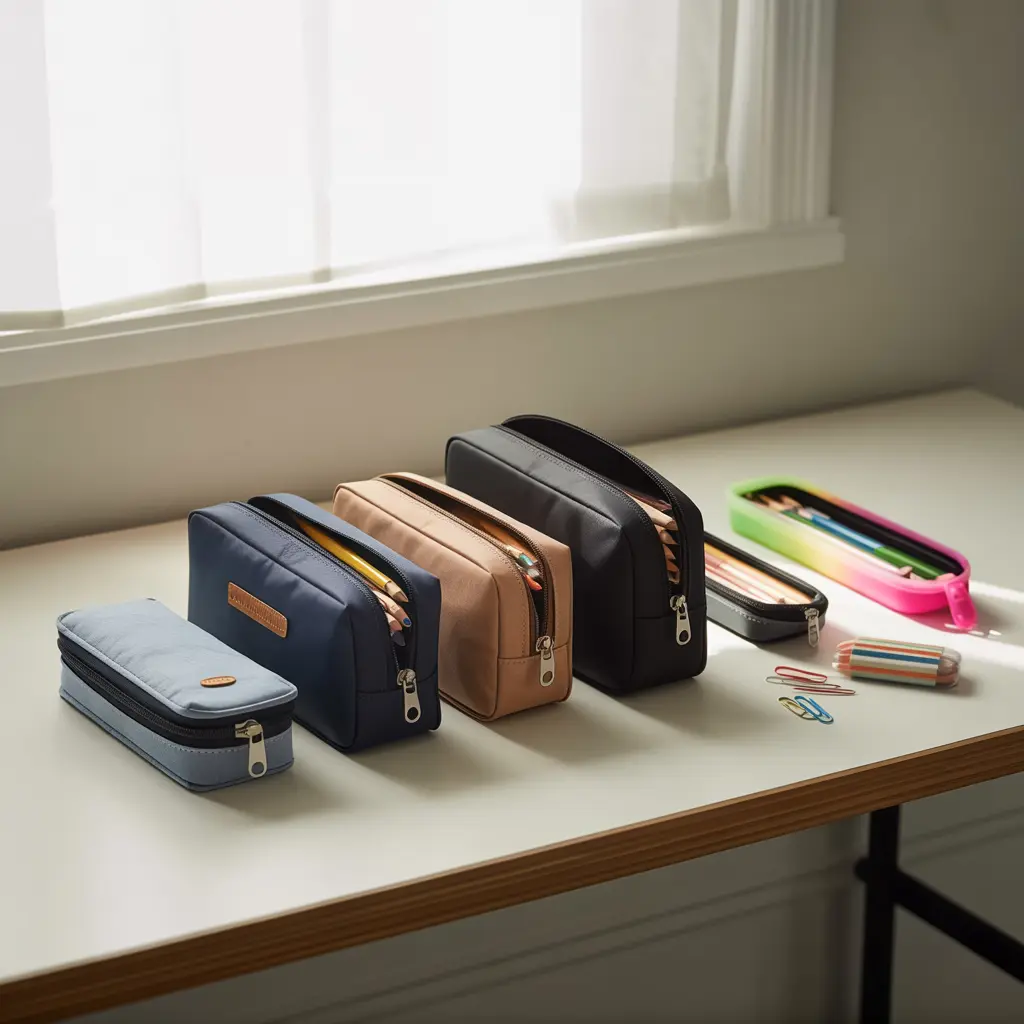
Choosing the best pencil cases for school makes a bigger difference than most people realize. A good pencil case keeps supplies organized, protects materials from damage, and makes homework time smoother. The wrong one breaks within weeks, creates backpack clutter, and leads to lost supplies.
This guide reviews the top pencil cases across all price ranges and student ages. You’ll learn which features matter most, which materials last longest, and exactly what to buy for your specific needs. Whether you’re shopping for a kindergartener or a college student, these recommendations will help you choose a pencil case that survives the entire school year.
Understanding Pencil Case Basics
Pencil cases serve three main purposes: protecting supplies from damage, organizing materials for quick access, and keeping backpacks tidy. A well-designed pencil case should accomplish all three without adding unnecessary bulk or weight.
What Makes a Quality Pencil Case
Quality pencil cases share specific characteristics. The zipper operates smoothly after hundreds of open-close cycles. The material resists water, preventing damage from drink spills common in school bags. Seams stay intact even when the case gets stuffed beyond recommended capacity. The size matches the student’s actual supply needs rather than marketing claims.
Benefits of quality construction:
- Lasts full school year or longer
- Protects expensive art supplies and specialty pens
- Reduces replacement costs
- Maintains professional appearance
- Prevents supply loss
Limitations:
- Higher upfront cost ($10-25 vs. $3-5)
- May take time to find perfect size match
- Some premium materials require special cleaning
Common mistake: Buying the cheapest option available and replacing it three times per year, spending more overall than investing in quality upfront.
Professional tip: Test the zipper in-store by opening and closing it 10-15 times. If it catches or sticks when new, it will fail quickly with daily student use.
Types of Pencil Cases
Zipper Pouches
Single-compartment cases with one main zipper. Best for elementary students with basic supply needs.
Multi-Compartment Cases
Cases with separate sections for different supply types. Ideal for middle and high school students managing multiple classes.
Roll-Up Cases
Fabric cases with individual pencil slots that roll closed. Popular with artists and students using specialty pens.
Hard Shell Cases
Rigid protective cases. Best for students carrying expensive art supplies or fragile materials.
Expandable Cases
Cases with adjustable capacity. Good for students whose supply needs vary by semester or project.
Quick summary: Elementary students succeed with simple zipper pouches. Middle schoolers need compartments for organization. High school and college students benefit from expandable or multi-compartment designs.
How to Choose the Right Pencil Case
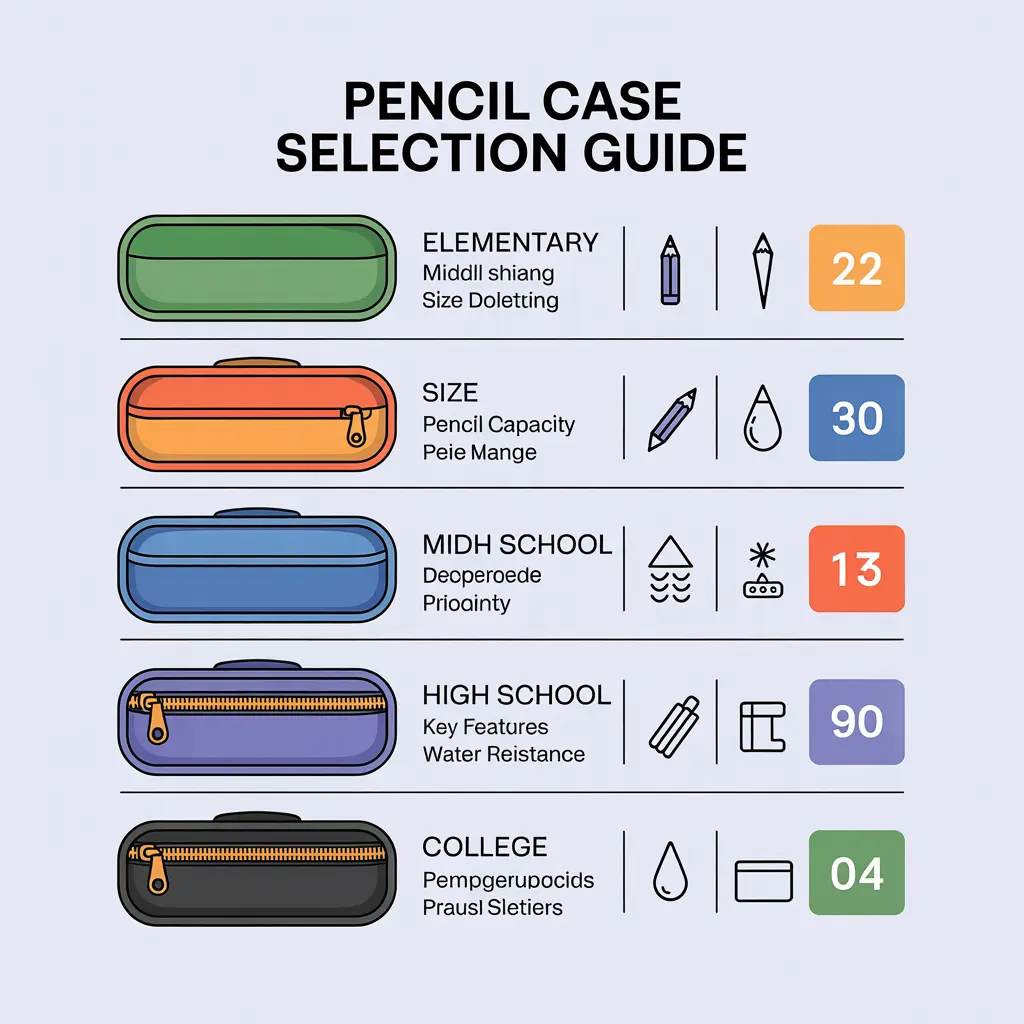
The right pencil case depends on four factors: student age, supply quantity, organization style, and budget.
Match Capacity to Grade Level
Elementary students (K-5) typically carry 8-12 pencils, 2-3 erasers, one sharpener, a ruler, and colored pencils for specific projects. A case measuring 8-9 inches long and 3-4 inches wide handles these needs.
Middle school students (6-8) add highlighters, multiple pen colors, geometry tools, and correction supplies. Look for cases 9-10 inches long with at least one divider.
High school students (9-12) often carry 15-25 writing instruments, multiple highlighters, sticky notes, and small tools. Cases should measure 9-11 inches with 2-3 compartments.
College students need portable organization for note-taking essentials, often preferring compact cases that fit in smaller bags alongside laptops and tablets.
Evaluate Material Durability
Polyester: Most common material. Durable, affordable, machine-washable. Look for 600D (denier) polyester or higher for school use.
Canvas: Natural, durable, and washable. Slightly heavier than polyester but very long-lasting. Ideal for students rough on supplies.
Silicone: Waterproof and easy to clean. Popular for younger students prone to spills. Can become sticky or attract lint over time.
Nylon: Lightweight and water-resistant. Good for students minimizing backpack weight. Less durable than polyester or canvas.
Professional tip: Check the denier rating on polyester and nylon cases. 600D minimum for daily school use; 900D or higher for maximum durability.
Consider Organization Features
Internal compartments separate pencils from erasers, preventing eraser dust from spreading throughout the case. Look for at least one divider in cases for grades 6 and up.
Elastic loops secure individual pens and pencils, preventing them from rolling around and breaking leads. Essential for students carrying mechanical pencils or specialty pens.
Mesh pockets provide quick-view storage for small items like erasers, sharpeners, and paper clips. Particularly useful in larger cases.
External pockets offer quick access to frequently used items without opening the main compartment.
Common mistake: Choosing a case with too many compartments, creating complexity that overwhelms younger students or goes unused by older ones.
Set a Realistic Budget
Budget pencil cases ($3-7) work for elementary students with basic needs and parents willing to replace them mid-year. Expect 4-6 months of use.
Mid-range cases ($8-15) offer the best value for most students. Quality materials and construction typically last a full school year with proper care.
Premium cases ($16-30) provide multi-year durability and advanced features. Worth considering for high school and college students, or families buying for multiple children over several years.
Benefits of investing in quality:
- Fewer replacements reduce long-term costs
- Better organization supports academic success
- Durable materials protect expensive supplies
- Professional appearance matters for older students
Action steps:
- Count your student’s current supplies
- Measure their current pencil case if they have one
- Read reviews focusing on zipper durability
- Check if the material is machine-washable
- Verify dimensions fit in their backpack’s front pocket
Best Pencil Cases for School – Elementary
Elementary students need simple, durable pencil cases that survive drops, spills, and daily rough handling. The best options balance fun designs with practical features.
Top Features for Elementary Students
Easy-open zippers matter more than you might think. Young students struggle with small zipper pulls or stiff mechanisms. Look for larger pulls or tab-style openers.
Visual organization helps students quickly identify their supplies. Clear windows or bright interior colors make it easier to spot needed items.
Compact size prevents overpacking. Elementary students don’t need large cases and will fill extra space with unnecessary items that add backpack weight.
Example: A kindergarten student with a large pencil case often fills it with toys, making it too heavy and creating distractions. A properly sized case holds exactly what they need for class.
Benefits:
- Builds independent organization skills
- Reduces morning preparation time
- Prevents supply loss
- Develops responsibility
Limitations:
- Must be replaced as needs grow
- Limited capacity for special projects
- May not work for art-focused students
Professional tip: Choose pencil cases in your child’s favorite color or character, but prioritize function over design. A beloved pencil case that breaks in three weeks creates disappointment.
Recommended Elementary Pencil Cases
Standard Zipper Pouch Style
Simple rectangular cases with one main compartment work best for grades K-2. Look for reinforced corners and quality zippers. Dimensions around 8″ x 4″ x 2″ provide adequate space without encouraging overpacking.
Dual-Compartment Style
Cases with one divider help grades 3-5 separate pencils from crayons or markers. The division introduces organization concepts without overwhelming complexity.
Clear Window Style
Cases with transparent panels let students quickly see contents without opening the case. Particularly helpful for students who struggle with organization or have attention challenges.
Common mistake: Buying middle-school-sized cases for elementary students “to grow into.” Oversized cases become cluttered and disorganized, defeating the purpose of having a pencil case.
Best Pencil Cases for Middle School
Middle school students juggle multiple classes, each with different supply requirements. The best pencil cases for school at this level provide organization that supports their increasingly complex schedules.
Features Middle Schoolers Need
Multiple compartments separate supplies by type or class. At minimum, look for cases with 2-3 distinct sections.
Expandable capacity accommodates varying needs. Some days require only basic writing tools; others need geometry supplies or art materials.
Durable construction survives locker stuffing, backpack cramming, and the general chaos of middle school hallways.
Example: A middle school student carrying one oversized pencil case for all classes often can’t find needed supplies quickly between periods. A well-organized case with compartments lets them grab the right highlighter or ruler in seconds.
Benefits:
- Supports multi-class organization
- Reduces between-period stress
- Protects more expensive supplies
- Encourages responsibility
Limitations:
- Larger size takes more backpack space
- More compartments require more organization effort
- Higher price point than elementary options
Professional tip: Middle schoolers benefit from cases with different colored compartments or linings. Assign each color to a subject (blue for math tools, red for language arts supplies) to speed up finding materials.
Top Middle School Pencil Case Styles
Triple-Compartment Cases
Cases with three separate zippered sections allow organization by subject or supply type. Main compartment for everyday items, secondary for specialty supplies, third for backup materials.
Expandable Accordion Style
Cases that unfold to reveal multiple pockets work well for students who like to see all supplies at once. Less ideal for small lockers or crowded backpacks.
Convertible Cases
Cases that function as both pencil storage and portable desk organizers help students who do homework in multiple locations.
Quick summary: Middle school students need cases measuring 9-10 inches long with at least two compartments. Prioritize zipper quality and water-resistant materials to handle the increased wear and tear of this age group.
Best Pencil Cases for High School
High school students need pencil cases that balance capacity, organization, and appearance. The best options look mature while providing serious organizational capability.
What High Schoolers Actually Need
Professional appearance matters to teenagers. Skip cartoon characters and bright elementary colors in favor of solid colors, subtle patterns, or sleek designs.
Serious capacity for 20-30+ writing instruments plus accessories. High schoolers often carry multiple highlighter colors, various pen types, and specialty tools.
Tech-friendly features like phone pockets or small sections for earbuds help centralize portable items. Some students prefer cases that function as combined tech-and-supply organizers.
Example: A high school student preparing for college visits carries a professional-looking pencil case to campus tours and interviews. The mature appearance contributes to their overall presentation.
Benefits:
- Supports complex organization needs
- Professional appearance builds confidence
- Larger capacity reduces refill frequency
- Better quality lasts through graduation
Limitations:
- Higher price point ($15-30 typical)
- Larger size may not fit in smaller purses or bags
- More compartments to organize
Common mistake: High schoolers choosing trendy designs that don’t provide adequate organization or durability. Style matters, but function must come first.
Recommended High School Pencil Cases
Multi-Layer Cases
Cases with 2-3 separate zippered layers provide maximum organization. Top layer for daily supplies, middle for specialty items, bottom for backup materials.
Professional Portfolio Style
Slim cases resembling small portfolios or clutches appeal to students wanting sophisticated organization. Often include card slots and small pockets beyond pencil storage.
Standing Cases
Cases that unzip to stand upright on desks provide easy access during use. Popular with students who have long study sessions or extensive note-taking.
Professional tip: High school students benefit from slightly oversized capacity. Having space for 30 pencils when you carry 20 means the case never looks messy or overstuffed, and you have room for project-specific supplies.
Best Pencil Cases for College Students
College students have different pencil case needs than younger students. Portability, minimal bulk, and adult aesthetics drive purchase decisions.
College-Specific Considerations
Compact design fits easily in backpacks already full of laptops, textbooks, and notebooks. College students value space efficiency.
Minimal essential capacity suits students who’ve streamlined supplies to 10-15 most-used items. Many college students carry only 2-3 pens, a highlighter, a pencil, and an eraser.
Professional style appropriate for internships, job interviews, and professional presentations. The pencil case becomes part of their professional toolkit.
Example: A college student heading to an internship interview carries a slim leather pencil case in their professional bag. It holds essential writing tools without adding bulk or appearing juvenile.
Benefits:
- Professional appearance in career settings
- Streamlined organization
- Compact size for commuter students
- Multi-year durability
Limitations:
- Limited capacity for art or design majors
- Higher quality often means higher price
- May need separate case for major-specific supplies
Top College Pencil Case Options
Slim Professional Cases
Leather or faux-leather cases measuring 7-8 inches long with minimal bulk. Often include card slots and small pockets for USB drives or memory cards.
Tech Integration Cases
Cases designed to hold both writing supplies and tech essentials (charging cables, earbuds, adapters). Increasingly popular for digital-first students.
Minimalist Pouches
Simple, high-quality fabric pouches holding 8-12 items. Appeal to students embracing minimal-carry philosophy.
Quick summary: College students should prioritize quality over capacity. A well-made case holding exactly what you need beats a large case half-empty or creating unnecessary bulk.
Budget-Friendly Pencil Case Options
Quality pencil cases don’t require premium prices. Several budget options provide excellent value for students with basic needs.
Finding Value in Budget Cases
Budget cases (under $8) can serve elementary students well for one school year. Look for reinforced stitching, decent zipper quality, and simple designs.
Benefits of budget options:
- Low risk if lost or damaged
- Easy to replace mid-year if needed
- Good for testing size/style preferences
- Multiple cases for different purposes
Limitations:
- Shorter lifespan (4-8 months typical)
- Basic materials and construction
- Fewer organizational features
- May need replacement before school year ends
Professional tip: Buy budget cases in multipacks during back-to-school sales. Having a backup case ready when the first one wears out prevents emergency purchases at full price.
Best Budget Pencil Case Features
Simple construction reduces failure points. Cases with one zipper and minimal compartments have fewer elements that can break.
Standard materials like basic polyester provide adequate durability for the price point. Avoid novelty materials that sacrifice function for appearance.
Appropriate sizing matters more than features. A properly sized budget case outperforms an oversized premium case for many students.
Common mistake: Buying the absolute cheapest option available. Spending $5 instead of $3 often doubles lifespan, providing better value overall.
Recommended Budget Strategies
Buy during sales: Back-to-school sales in July-August offer cases at 40-60% off regular prices.
Choose multipacks: Three basic cases for $12 provides backups and better per-case value than single purchases.
Prioritize zipper quality: Even in budget cases, test the zipper. A quality closure on basic materials beats premium fabric with a failing zipper.
Action steps:
- Set budget limit before shopping
- Test zippers on every case you consider
- Check dimension to ensure proper fit
- Buy backup case if budget allows
- Keep receipt for returns if quality disappoints
Premium Pencil Cases Worth the Investment
Premium pencil cases ($16-30+) justify their cost through superior materials, multi-year durability, and advanced features. Understanding when premium makes sense helps avoid overspending.
When Premium Makes Sense
High school and college students who’ll use the same case for 2-4 years see clear value in premium construction and materials.
Art students and hobbyists protecting expensive supplies need quality cases that prevent breakage and damage.
Students hard on supplies who’ve destroyed multiple budget cases in one year ultimately save money with premium durability.
Example: An art student carrying $200 worth of specialty markers and pencils invests $25 in a premium case with individual slots and hard-shell protection. The case prevents broken tips and crushed barrels, protecting their investment.
Benefits:
- Multi-year durability (2-5 years typical)
- Advanced organization features
- Premium materials and construction
- Better protection for expensive supplies
- Professional appearance
Limitations:
- Higher upfront cost
- May include features some students don’t need
- Loss or theft more impactful
Premium Features That Matter
YKK zippers represent the quality standard for zipper durability. Cases featuring these closures typically last 2-3 times longer than generic zippers.
900D+ polyester or genuine leather provides serious durability that handles years of daily use.
Reinforced corners and edges prevent the wear-through common in standard cases.
Interior organization systems with elastic loops, mesh pockets, and adjustable dividers adapt to changing needs.
Professional tip: Premium cases should feel noticeably heavier and more substantial than budget options. If a “premium” case feels flimsy, it’s overpriced rather than high-quality.
Best Premium Pencil Case Types
Leather or Faux-Leather Cases
Professional appearance with multi-year durability. Best for college students and young professionals.
Artist-Grade Cases
Cases with individual slots for 30-50+ pencils plus separate compartments for accessories. Essential for art students.
Modular Systems
Cases with removable pouches and customizable organization. Adapt from high school through college and beyond.
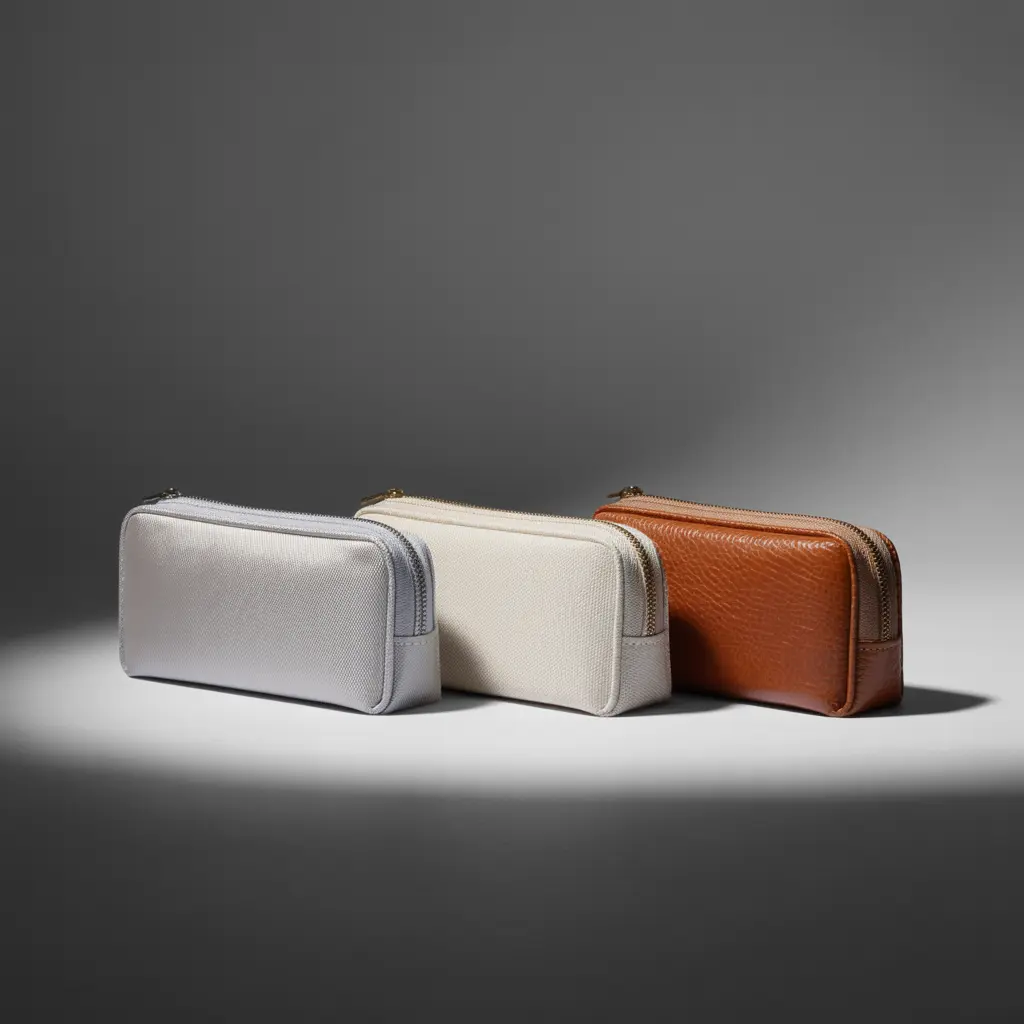
Pencil Case Materials Compared
Understanding materials helps predict durability, maintenance needs, and appropriate use cases.
Polyester (Most Common)
Characteristics:
Water-resistant, machine-washable, affordable, available in all colors and patterns.
Durability:
600D polyester: 1 school year typical
900D polyester: 2-3 school years
1200D polyester: 3-5 school years
Best for: General school use across all ages. Sweet spot for durability and price.
Maintenance: Machine wash cold, air dry. Spot-clean as needed.
Price range: $5-20 depending on denier rating
Canvas
Characteristics:
Natural cotton fabric, durable, develops character with age, heavier than polyester.
Durability:
Quality canvas: 2-4 school years with proper care
Best for: Students who prefer natural materials or want a classic look.
Maintenance: Hand wash or gentle machine wash. Air dry to prevent shrinkage.
Price range: $8-25
Professional tip: Canvas cases often require break-in period. Stiff when new, they soften with use while maintaining structural integrity.
Silicone
Characteristics:
Completely waterproof, flexible, easy to clean, slightly sticky texture.
Durability:
1-2 school years (can become permanently stained or attract lint)
Best for: Elementary students prone to spills, or students carrying liquid supplies like correction fluid.
Maintenance: Wipe clean with damp cloth. Avoid machine washing.
Price range: $6-15
Nylon
Characteristics:
Lightweight, water-resistant, thin and flexible, wide color range.
Durability:
Standard nylon: 6-12 months
Ripstop nylon: 1-2 years
Best for: Students minimizing backpack weight, or needing ultra-compact cases.
Maintenance: Hand wash or gentle machine wash. Dries quickly.
Price range: $4-12
Leather and Faux-Leather
Characteristics:
Professional appearance, develops patina, premium feel, heavier than synthetic options.
Durability:
Genuine leather: 5-10+ years
Quality faux-leather: 2-4 years
Budget faux-leather: 1-2 years
Best for: College students, young professionals, anyone wanting long-term investment piece.
Maintenance: Wipe clean with slightly damp cloth. Use leather conditioner periodically on genuine leather.
Price range: $15-50+
Quick summary: For most students, 600D+ polyester or quality canvas provides the best balance of durability, maintenance, and price. Choose silicone for younger students who spill frequently, leather for college and professional use.
Common Pencil Case Mistakes to Avoid
Learning from common mistakes saves money and frustration.
Buying Too Large
The problem: Oversized pencil cases encourage overpacking. Students fill available space whether needed or not, adding unnecessary weight and creating clutter.
The solution: Count current supplies and choose a case that holds exactly what’s needed plus 20% growth capacity.
Example: A middle school student with 12 pencils doesn’t need a case holding 40. The extra space fills with broken pencils, dried-out pens, and random items that make finding needed supplies difficult.
Ignoring Zipper Quality
The problem: Zipper failure causes 70-80% of pencil case replacements. Even premium materials can’t function with a broken closure.
The solution: Test the zipper extensively before purchase. It should glide smoothly without catching, snagging, or requiring excessive force.
Professional tip: Zippers that catch when the case is new will fail quickly with daily student use. Don’t buy cases with problematic zippers regardless of other features.
Choosing Style Over Function
The problem: Trendy designs often sacrifice practical features for appearance. Cases shaped like animals, food, or other novelties rarely provide good organization.
The solution: Let students choose color or pattern, but insist on functional design with quality construction.
Skipping Water Resistance
The problem: School bags get wet from rain, drink spills, and other liquid exposure. Non-water-resistant cases allow moisture to damage supplies.
The solution: Choose water-resistant materials for main pencil case. Save non-resistant materials for at-home organization only.
Not Planning for Growth
The problem: Elementary students’ needs change significantly year to year. A perfect kindergarten case won’t work in third grade.
The solution: Accept that pencil cases are consumable items for younger students. Plan to replace or upgrade every 1-2 years as needs evolve.
Organization Tips for Your Pencil Case
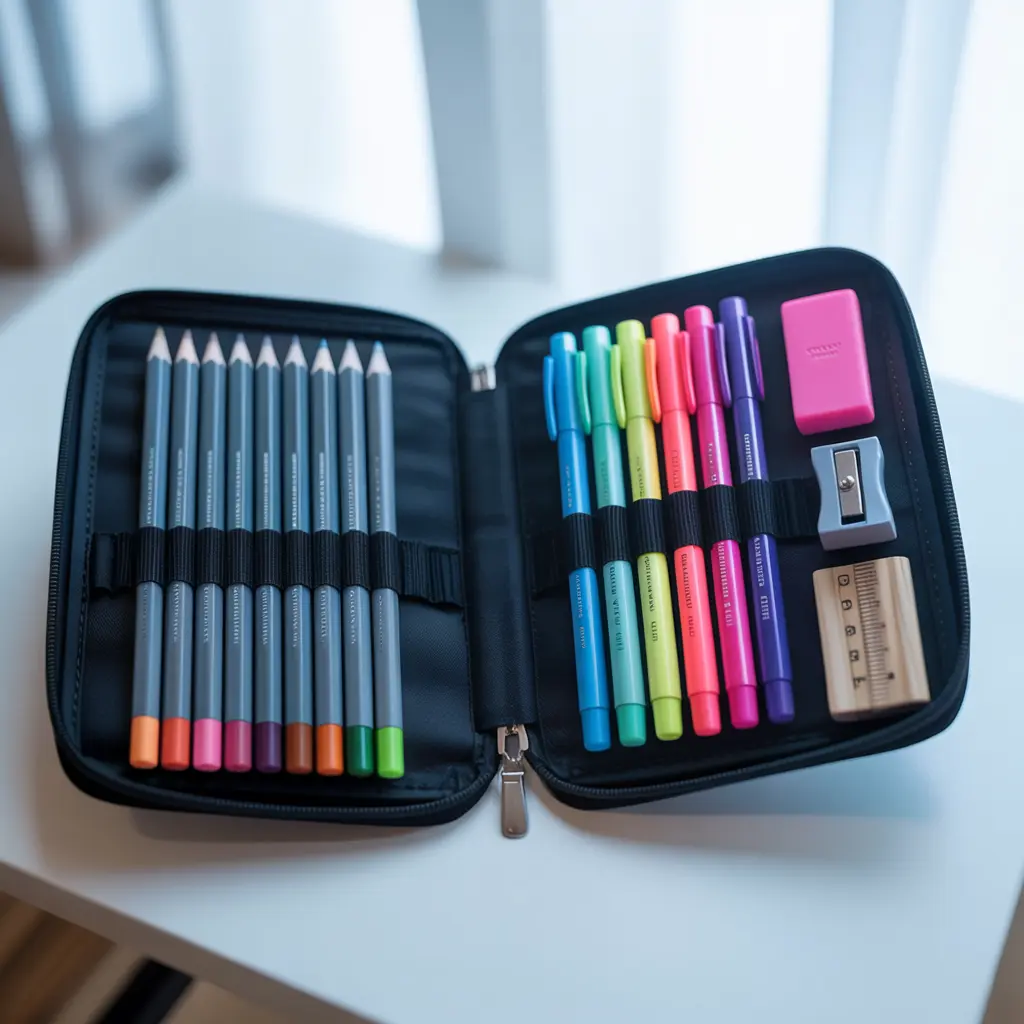
A quality pencil case only helps if organized effectively.
Sort by Frequency of Use
Place daily-use items (main pencil, favorite pen, primary highlighter) in the most accessible position. Specialty items go deeper in the case or in secondary compartments.
Benefits:
- Faster access to needed supplies
- Reduced fumbling during class
- Less wear on less-used items
Implement Color Coding
Assign highlighter colors to specific subjects or tasks. Keep them in the same position in your pencil case every time.
Example: Yellow for main points, green for definitions, blue for examples, pink for questions. Always storing them in the same order (left to right or top to bottom) creates muscle memory for quick access.
Regular Purging
Every two weeks, remove broken pencils, dried-out pens, unusable erasers, and random items that have accumulated.
Professional tip: Friday afternoons before weekend work well for pencil case cleanouts. You start each week with organized, functional supplies.
Use the Right Quantity
Elementary: 6-8 pencils, 2 erasers, 1 sharpener, 8-count crayons
Middle school: 10-12 pencils/pens, 3-4 highlighters, eraser, sharpener, small ruler
High school: 15-20 writing tools, 4-6 highlighters, geometry tools as needed
College: 5-8 essential writing tools, 1-2 highlighters, eraser
Carrying more creates clutter without adding value.
Position Intentionally
Longest items: Place at the bottom of the case
Sharpeners and erasers: In separate small compartment if available
Frequently used: Near zipper opening
Fragile items: Protected in center or in cases with elastic loops
How Long Should a Pencil Case Last
Expected lifespan varies by construction quality, material, and use intensity.
Durability Expectations by Price Point
Budget cases ($3-7):
Elementary use: 4-8 months
Middle/high school use: 3-6 months
College use: 6-12 months
Mid-range cases ($8-15):
Elementary use: 1 school year
Middle/high school use: 1 full school year
College use: 1-2 years
Premium cases ($16-30+):
Elementary use: 1-2 years (often outgrow before wearing out)
Middle/high school use: 2-4 years
College use: 3-5+ years
Signs It’s Time to Replace
Zipper failure: If the zipper catches consistently, won’t close fully, or has missing teeth, replacement time has come.
Material breakdown: Fabric wearing thin, corners tearing, or coating peeling indicates structural failure.
Persistent odors: Cases that smell musty or retain odors even after washing have absorbed too much contamination.
Size mismatch: If your current supplies don’t fit comfortably, you need different capacity.
Professional tip: Replace before complete failure. A zipper that’s starting to catch will soon fail completely, potentially at an inconvenient time. Replace proactively when you notice early wear signs.
Extending Pencil Case Life
Clean regularly: Wash fabric cases monthly. Wipe hard cases weekly.
Don’t overstuff: Stay within recommended capacity to prevent zipper strain and material stress.
Store properly: Don’t leave cases in hot cars or crush them at the bottom of bags.
Repair promptly: Small tears can be stitched. Addressing damage early prevents expansion.
Use as intended: Pencil cases aren’t lunch boxes, toy storage, or catch-all organizers. Using them for unintended purposes accelerates wear.
COMPARISON TABLES
Pencil Cases by Grade Level
| Grade Level | Recommended Size | Capacity Needed | Key Features | Price Range |
|---|---|---|---|---|
| Elementary (K-5) | 8″ x 4″ x 2″ | 8-15 pencils | Easy-open zipper, simple design, water-resistant | $5-12 |
| Middle School (6-8) | 9″ x 5″ x 2.5″ | 15-20 pencils + tools | 2+ compartments, durable zipper, expandable | $8-18 |
| High School (9-12) | 10″ x 5″ x 3″ | 20-30+ pencils | 3+ compartments, professional look, organization | $12-25 |
| College | 7-9″ x 4″ x 2″ | 10-15 essential items | Slim profile, professional style, quality materials | $15-30+ |
Materials Comparison
| Material | Durability (1-10) | Water Resistance | Washable | Weight | Best For | Price Range |
|---|---|---|---|---|---|---|
| 600D Polyester | 6 | High | Yes (machine) | Light | Budget/elementary | $5-10 |
| 900D Polyester | 8 | Very High | Yes (machine) | Light-Medium | All-purpose | $10-18 |
| Canvas | 7 | Medium | Yes (gentle) | Medium | Classic/durable | $8-20 |
| Silicone | 6 | Complete | Yes (wipe) | Light | Young students/spill-prone | $6-15 |
| Nylon | 5 | High | Yes (gentle) | Very Light | Minimal weight priority | $4-12 |
| Leather (genuine) | 10 | Low | No (wipe only) | Heavy | College/professional | $25-50+ |
| Faux-Leather | 7 | Medium | No (wipe only) | Medium | Professional look, lower budget | $12-25 |
Features Comparison
| Feature | Benefit | Best For | Cost Impact |
|---|---|---|---|
| Multiple Compartments | Better organization | Middle school+ | +$3-8 |
| Elastic Loops | Secures individual pencils | Art students, mechanical pencil users | +$2-5 |
| Mesh Pockets | Quick-view small items | High school+ | +$2-4 |
| Hard Shell | Maximum protection | Art supplies, expensive tools | +$5-12 |
| Expandable Design | Flexible capacity | Variable needs | +$4-8 |
| External Pockets | Quick access | High frequency items | +$1-3 |
| Standing Design | Desktop use | Long study sessions | +$3-6 |
| Tech Integration | Multi-purpose organization | College students | +$5-10 |
CHECKLISTS
Pencil Case Buying Checklist
Before Shopping:
- Count current supplies needing storage
- Measure current case (if replacing) to determine if size works
- Determine budget range
- Identify must-have features vs. nice-to-have
- Check backpack/bag dimensions for fit
- Read school supply list for upcoming year
While Shopping:
- Test zipper 10-15 times for smooth operation
- Check seam quality and stitching
- Verify water-resistance if needed
- Confirm dimensions fit your space
- Read care instructions (machine-washable preferred)
- Check reviews if buying online
- Verify return policy
After Purchase:
- Wash before first use (if fabric)
- Test with actual supplies to confirm fit
- Label with student name (for younger students)
- Photograph contents for reference
- Set calendar reminder for mid-year check/cleaning
- Keep receipt for warranty/returns
Pencil Case Organization Checklist
Daily Items (Keep These):
- 3-5 working pencils (sharpened)
- 2-3 working pens (tested)
- 1-2 highlighters (most-used colors)
- 1 eraser (good condition)
- 1 pencil sharpener (empty shavings regularly)
Remove These:
- Broken or stubby pencils too short to use
- Dried-out pens or markers
- Used-up erasers
- Random papers, wrappers, or trash
- Duplicate items beyond reasonable backups
- Toys or non-school items
Weekly Maintenance:
- Remove trash and debris
- Sharpen dull pencils
- Test all pens/markers
- Wipe interior if needed
- Check zipper function
Monthly Maintenance:
- Complete cleanout and reorganization
- Wash case (if fabric)
- Replace worn-out supplies
- Assess if case still meets needs
DECISION FRAMEWORKS
Decision Framework: Choosing Your Perfect Pencil Case
Step 1: Determine Your Category
Answer these questions:
- What grade level? (K-5, 6-8, 9-12, College)
- How many writing tools do you carry daily? (Count them)
- Do you have specialty supplies? (geometry tools, art supplies, etc.)
- What’s your budget? (Under $8, $8-15, $16+)
Step 2: Match to Recommended Type
If Elementary (K-5):
- 5-10 items → Simple zipper pouch, 8″ length, $5-10
- 10-15 items → Dual-compartment case, 8-9″ length, $8-12
- 15+ items or art supplies → Multi-compartment or expandable, 9″ length, $10-15
If Middle School (6-8):
- 10-15 items → Dual-compartment, 9″ length, $8-14
- 15-20 items → Triple-compartment, 9-10″ length, $12-18
- 20+ items or multiple classes → Expandable/modular, 10″ length, $15-20
If High School (9-12):
- Minimalist (10-15 items) → Professional pouch, 8-9″ length, $12-20
- Standard (15-25 items) → Multi-layer case, 10″ length, $15-25
- Maximum (25+ items) → Large capacity with organization, 11″ length, $20-30
If College:
- Digital-focus (5-10 items) → Slim professional case, 7-8″ length, $15-25
- Note-taker (10-15 items) → Compact organizer, 8″ length, $18-28
- Major-specific (varies) → Specialized case for field, varies, $20-40+
Step 3: Prioritize Features
Rank these by importance to you:
- Durability
- Organization (compartments)
- Appearance/style
- Capacity
- Water-resistance
- Weight
- Price
Choose the case that scores highest on your top 3 priorities.
Step 4: Quality Check
Before final purchase:
- Does the zipper operate smoothly?
- Are seams reinforced?
- Is the material appropriate for your use?
- Do real dimensions fit your space?
- Does it feel substantial and well-made?
If any answer is “no,” keep searching.
Framework: Budget vs. Quality Decision
Use this formula:
Expected Use Duration × Replacement Cost = Total Cost of Ownership
Example 1: Budget Case
- Purchase price: $5
- Expected life: 6 months
- Uses per school year: 2
- Annual cost: $10
- 4-year cost (middle + high school): $40
Example 2: Premium Case
- Purchase price: $20
- Expected life: 4 years
- Uses per school year: 1
- Annual cost: $5
- 4-year cost: $20
Decision rule: If you expect to use the same case for 2+ years, premium typically provides better value. If replacing annually anyway (due to changing needs or style preferences), budget makes more sense.
FREQUENTLY ASKED QUESTIONS
1. What size pencil case do I need for school?
The right size depends on your grade level and supply quantity. Elementary students (K-5) need cases around 8 inches long holding 8-15 pencils. Middle school students (6-8) should look for 9-10 inch cases with capacity for 15-20 pencils plus tools. High school students (9-12) benefit from 10-11 inch cases holding 20-30+ items. College students often prefer compact 7-9 inch cases for essential supplies only. Measure your current supplies laid end-to-end, then add 2-3 inches for comfortable fit without overpacking.
2. How much should I spend on a pencil case?
Budget $5-10 for elementary students, $8-15 for middle school, $12-25 for high school, and $15-30 for college. Quality mid-range cases ($10-15) typically offer the best value, lasting a full school year with proper care. Budget cases under $7 often require replacement mid-year, potentially costing more overall. Premium cases above $20 make sense for college students or high schoolers who’ll use the same case for multiple years. The sweet spot for durability without overspending is $10-15 for most students.
3. Are hard or soft pencil cases better?
Soft cases work better for most students because they fit more easily into backpacks, weigh less, and cost less while providing adequate protection. Hard cases excel for students carrying expensive art supplies, fragile specialty pencils, or mechanical pencils prone to tip damage. Hard cases also benefit students who cram backpacks tightly, as the rigid structure prevents crushing. Choose hard cases if protecting valuable or breakable supplies; choose soft cases for everyday school use with standard writing tools. Soft cases with reinforced construction offer a middle ground.
4. How do I make my pencil case last longer?
Wash fabric cases monthly to prevent buildup that breaks down materials. Don’t overstuff beyond recommended capacity, which strains zippers and seams. Empty shavings from sharpeners weekly to prevent pencil dust from spreading. Store cases properly instead of crushing them at the bottom of bags. Remove broken pencils and dried-out pens immediately rather than letting them clutter the case. Address small tears with stitching before they expand. Choose water-resistant materials to prevent moisture damage. Following these practices typically extends pencil case life by 50-100%.
5. What’s the most durable pencil case material?
Genuine leather lasts longest (5-10+ years), but costs significantly more and requires special care. For practical school use, 900D polyester or quality canvas provides the best durability at reasonable prices, typically lasting 2-4 years with proper care. Look for denier ratings of 600D or higher for polyester—the higher the number, the more durable the fabric. YKK zippers significantly impact longevity regardless of material. Avoid thin nylon and budget polyester for daily school use, as these materials typically wear out within one school year.
6. Can I wash my pencil case?
Most polyester and canvas pencil cases are machine-washable on cold, gentle cycle with air drying. Always check the care label first. Silicone cases wipe clean with a damp cloth and shouldn’t go in washing machines. Leather and faux-leather cases require only occasional wiping with a slightly damp cloth—never submerge or machine wash these. Nylon cases hand-wash best to prevent damage. Wash fabric cases monthly to remove pencil dust, eraser crumbs, and accumulated grime that can break down materials over time.
7. How many pencils should fit in a pencil case?
Elementary students need space for 8-12 pencils plus basic tools. Middle school students should have room for 15-20 writing instruments plus highlighters and accessories. High school students benefit from capacity for 20-30+ items including multiple pen colors, highlighters, and tools. College students typically carry only 8-12 essential items. Choose a case that holds your actual daily supplies plus 20% extra capacity for special projects or backups. Cases that are too large encourage overpacking and disorganization.
8. What features should I look for in a student pencil case?
Prioritize a quality zipper above all else—zippers cause 70-80% of pencil case failures. Look for water-resistant materials to protect supplies from backpack spills. Choose appropriate capacity matching your grade level and needs. Elementary students need simple designs with easy-open closures. Middle and high school students benefit from multiple compartments for organization. Reinforced corners and quality stitching extend lifespan. Machine-washable materials simplify maintenance. Avoid excessive bulk that wastes backpack space. Professional appearance matters more for older students.
9. When should I replace my pencil case?
Replace when the zipper fails repeatedly, won’t close fully, or has missing teeth—zipper problems rarely get better. Replace if material develops tears, worn-through corners, or coating peeling. Replace when your supply needs outgrow current capacity or the case no longer fits in your bag. Replace if odors persist after washing or cleaning. Replace budget cases after 6-8 months of heavy use even if still functional, as materials degrade. For growing students, expect to replace or upgrade every 1-2 years as needs change, even with quality cases.
10. What’s the difference between cheap and expensive pencil cases?
Expensive pencil cases typically feature YKK or other quality zippers that last years instead of months. Premium materials (900D+ polyester, genuine leather, quality canvas) resist wear significantly better than budget fabrics. Construction includes reinforced corners, double stitching, and quality control reducing defects. Higher-end cases offer better organization features, more thoughtful design, and professional appearance. Budget cases work fine for elementary students with simple needs and frequent replacement cycles. The price difference matters most for students expecting multi-year use from the same case.







Leave a Reply