


High school presents unique academic challenges that middle school didn’t prepare you for. Classes move faster, teachers expect more independent learning, and your grades suddenly matter for college applications. If you’re searching for study tips for high school students that actually work, you’ve found the right guide.
This article shares proven techniques used by successful students and backed by learning science. You’ll discover specific methods to improve your grades quickly, manage your time better, and study more efficiently. Whether you’re struggling in one subject or want to boost your entire GPA, these strategies will help you get better results without spending every waking hour studying.
Let’s explore the study habits that separate straight-A students from those who work hard but don’t see results.
Why Traditional Study Methods Don’t Work
Most students use study techniques that feel productive but don’t actually help learning. These common approaches waste time:
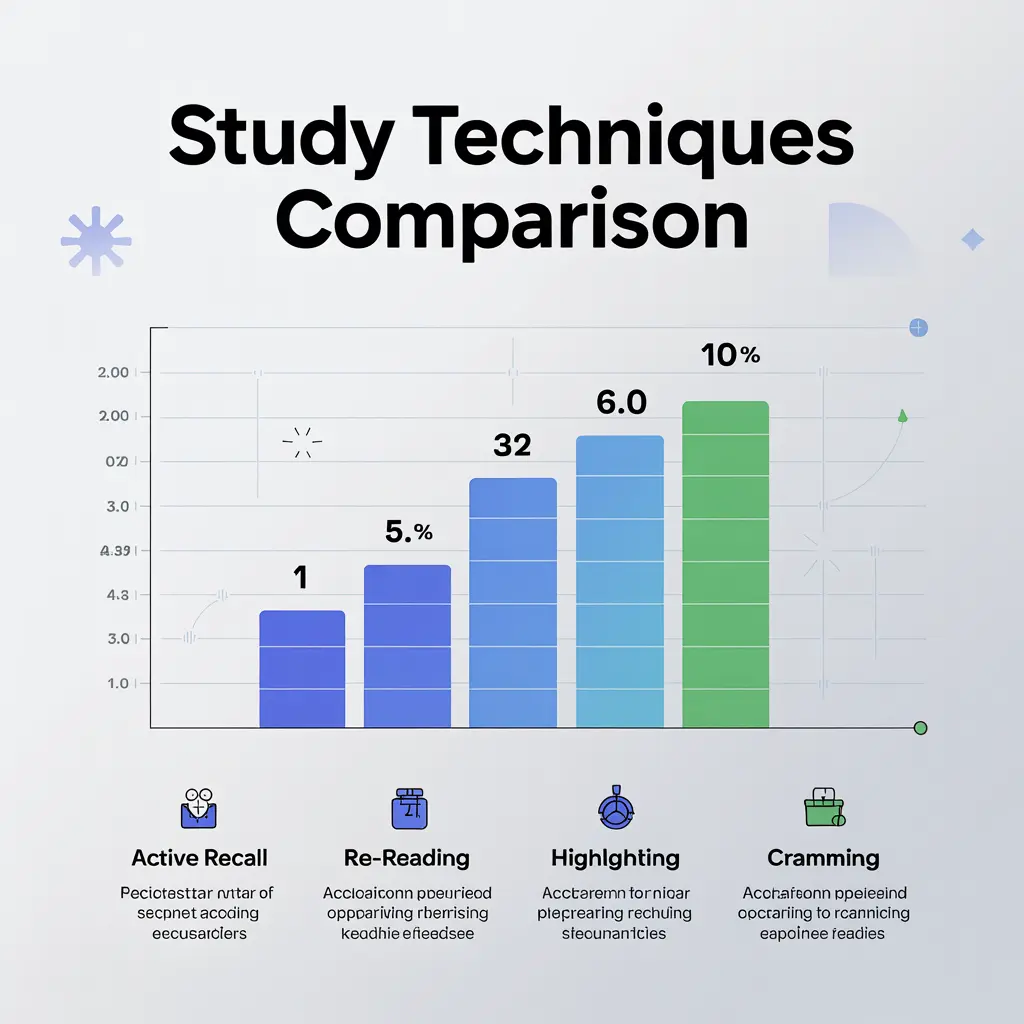
Re-reading textbooks and notes creates false confidence. Your brain recognizes familiar information and tricks you into thinking you know it. Recognition isn’t the same as recall, which is what tests require.
Highlighting everything important makes your textbook colorful but doesn’t improve memory. Passive marking doesn’t engage your brain deeply enough for real learning.
Cramming the night before might help you pass tomorrow’s test, but you’ll forget 80% within two weeks. This creates a cycle where you constantly relearn material instead of building on previous knowledge.
Studying without a plan leads to wasted time on easy topics while neglecting difficult concepts that need attention.
Multitasking during homework splits your focus and doubles the time needed to complete assignments. Research shows it takes 23 minutes to refocus after checking your phone.
The good news? Small changes to your study approach create significant improvements fast.
The Science Behind Effective Studying
Understanding how your brain learns helps you study smarter.
Spaced repetition works better than massed practice. Reviewing information over multiple sessions creates stronger memory pathways than studying everything once. Your brain consolidates learning during sleep between study sessions.
Active recall strengthens neural connections. Testing yourself forces your brain to retrieve information, which builds stronger memories than passive review. The harder you work to remember something, the better it sticks.
The testing effect proves that taking practice tests improves performance more than additional study time. Each retrieval attempt makes future recall easier.
Interleaving different topics during study sessions improves long-term retention compared to blocking (studying one subject completely before moving to the next). Mixing subjects forces your brain to discriminate between concepts and strengthens learning.
Elaborative interrogation means asking “why” and “how” about concepts. Connecting new information to existing knowledge creates multiple retrieval pathways.
These principles form the foundation of effective study techniques.

17 Proven Study Tips for High School Students
Time Management Strategies
1. Use the 2-Week Rule for Test Preparation
Begin reviewing material two weeks before major tests. Create a study calendar that breaks content into daily chunks. This approach reduces stress and improves retention through spaced repetition.
Example: For a chemistry test on 20 chapters, review 1-2 chapters daily starting 14 days early, with review sessions in the final three days.
Common mistake: Waiting until you “feel like” studying. Motivation follows action, not the other way around.
Professional tip: Schedule study sessions at the same time daily to build automatic habits.
2. Apply the Pomodoro Technique
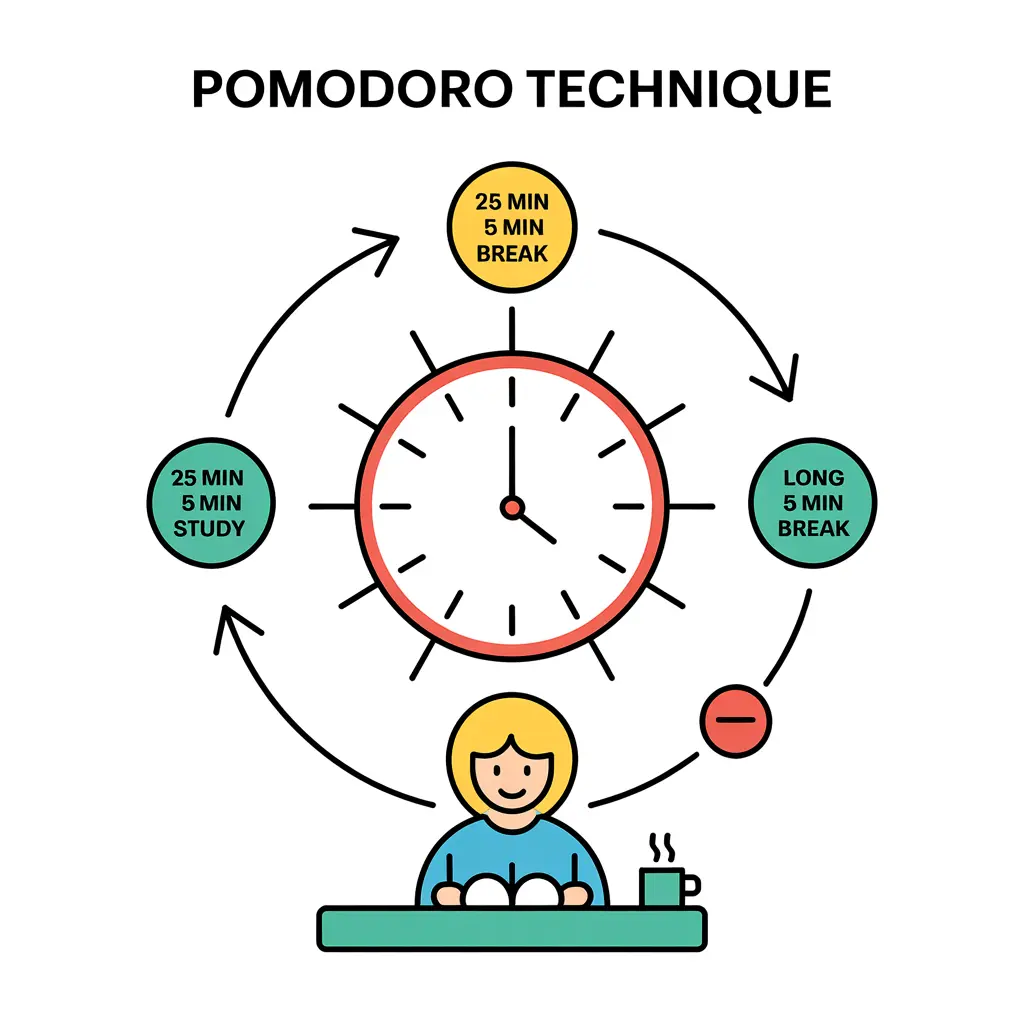
Study in focused 25-minute sessions followed by 5-minute breaks. After four sessions, take a longer 15-30 minute break. This method maintains concentration and prevents burnout.
Benefits:
- Reduces mental fatigue
- Creates urgency that improves focus
- Provides natural stopping points
- Makes large tasks feel manageable
Limitations: Some complex problems need longer than 25 minutes for deep work. Adjust timing to 45-50 minute sessions for subjects like math.
Action step: Download a Pomodoro timer app and complete one 25-minute session today.
3. Create Time Blocks for Different Subjects
Assign specific times to specific subjects. Your brain performs better when it knows what to expect.
Sample schedule:
- 3:30-4:15 PM: Math homework
- 4:15-4:30 PM: Break
- 4:30-5:15 PM: History reading
- 5:15-5:30 PM: Break
- 5:30-6:00 PM: Science review
Professional tip: Schedule difficult subjects when your energy is highest (usually right after school or in the morning).
Note-Taking Methods That Work
4. Master the Cornell Note-Taking System
Divide your paper into three sections: notes (right), cues (left), and summary (bottom).
During class:
- Take notes in the large right section
- Leave the left column blank
After class:
- Write questions or keywords in the left column
- Summarize the page in 2-3 sentences at the bottom
This system builds active recall into your notes.
Example: For a history lesson on the Civil War, notes go on the right, questions like “What caused the war?” go on the left, and a brief summary connects key points at the bottom.
5. Use the Outline Method for Structured Content
Create hierarchical notes with main topics, subtopics, and supporting details. This works well for subjects with clear organization like biology or literature.
6. Try Concept Mapping for Connections
Draw visual diagrams connecting related ideas. This technique helps you see relationships between concepts and works excellently for subjects like chemistry, psychology, and history.
Benefits:
- Reveals knowledge gaps
- Shows how concepts relate
- Engages visual learning
- Creates memorable study guides
Active Learning Techniques
7. Teach Concepts to Someone Else
The Feynman Technique requires you to explain concepts in simple terms. Teaching forces you to identify gaps in your understanding.
Steps:
- Choose a concept
- Explain it aloud as if teaching a younger student
- Identify confusing parts
- Review those areas
- Simplify your explanation further
Common mistake: Convincing yourself you understand something because it makes sense when reading. True understanding means explaining it without notes.
8. Use Active Recall Instead of Re-reading
Close your notes and write everything you remember. Check your notes only after attempting complete recall. This process feels harder than reviewing but produces better results.
Action step: After reading a textbook section, close the book and write a summary from memory. Compare with the text and note what you missed.
9. Create Practice Tests
Turn your notes into questions before the actual test. Practice answering without looking at notes. This method directly prepares you for test conditions.
Tools:
- Flashcard apps
- Study group quizzes
- Old tests from teachers
- Self-generated questions
Professional tip: Exchange practice questions with classmates to get fresh perspectives.
Memory and Retention Strategies
10. Apply Spaced Repetition Schedules
Review new information using expanding intervals:
- Day 1: Learn material
- Day 2: First review
- Day 4: Second review
- Day 7: Third review
- Day 14: Fourth review
- Day 30: Fifth review
This schedule matches how your brain naturally forgets and remembers information.
11. Use Mnemonic Devices for Lists and Sequences
Create acronyms, rhymes, or stories to remember information.
Examples:
- PEMDAS for math order of operations (Parentheses, Exponents, Multiplication, Division, Addition, Subtraction)
- ROY G. BIV for color spectrum (Red, Orange, Yellow, Green, Blue, Indigo, Violet)
Limitations: Works best for memorization, not for understanding complex concepts.
12. Study Before Sleep
Review the most important information within an hour of bedtime. Your brain consolidates memories during sleep, making pre-sleep study particularly effective.
Professional tip: Keep flashcards on your nightstand for final review before sleeping.
Focus and Concentration Tips
13. Eliminate Digital Distractions
Your phone is your biggest study enemy. Each notification breaks focus and requires time to regain concentration.
Solutions:
- Put phone in another room during study sessions
- Use app blockers (Freedom, Forest, Cold Turkey)
- Turn off all notifications
- Use “Do Not Disturb” mode
- Tell friends when you’re unavailable
14. Create a Dedicated Study Space
Your brain associates locations with activities. Study in the same place consistently to trigger focus automatically.
Ideal study environment:
- Good lighting (natural light preferred)
- Comfortable temperature
- Minimal noise (or consistent white noise)
- Organized desk
- All materials within reach
- No entertainment devices visible
Common mistake: Studying in bed makes your brain associate your bed with work instead of sleep, harming both study quality and sleep quality.
15. Use Background Music Strategically
Some students focus better with music; others need silence. Experiment to find your preference.
If using music:
- Choose instrumental tracks (lyrics compete for attention)
- Maintain consistent volume
- Use familiar music (new songs distract)
- Consider classical, lo-fi, or ambient genres
16. Take Strategic Breaks
Breaks aren’t laziness—they’re necessary for sustained concentration. Use breaks to:
- Move your body (walk, stretch)
- Hydrate
- Eat healthy snacks
- Rest your eyes
- Change your environment briefly
Avoid during breaks:
- Social media (it’s hard to stop)
- Video games
- Starting new tasks
17. Prioritize Sleep and Health
Sleep is when learning actually happens. Your brain transfers information from short-term to long-term memory during deep sleep.
Requirements for high school students:
- 8-10 hours of sleep nightly
- Consistent sleep schedule
- Regular exercise (30 minutes daily)
- Healthy meals (breakfast especially important)
- Adequate hydration (water, not energy drinks)
Professional tip: Track your sleep for two weeks and note how different amounts affect your focus and test performance.
Subject-Specific Study Strategies
Different subjects require different approaches.
Math and Science
Key principle: You learn math and science by doing, not reading.
Effective strategies:
- Complete every practice problem – You can’t learn math by watching someone else solve problems
- Understand the “why” behind formulas – Don’t just memorize; know when and why to use each formula
- Review mistakes immediately – Each error reveals a gap in understanding
- Create formula sheets – The act of writing formulas aids memory
- Form study groups for problem-solving – Explaining your approach clarifies thinking
Common mistake: Reading through examples without attempting problems yourself.
Action steps:
- Try each problem before checking the solution
- If stuck after 10 minutes, review one similar example
- Attempt the problem again without looking
- Explain your solution process aloud
English and Literature
Key principle: Analysis improves through discussion and writing.
Effective strategies:
- Read actively with annotations – Note themes, symbols, and questions in margins
- Create character maps – Track relationships and development
- Write practice essays – The only way to improve writing is to write
- Discuss interpretations with others – Multiple perspectives deepen understanding
- Connect literature to modern contexts – This makes themes memorable and relevant
Professional tip: Read summaries after finishing sections to confirm understanding, but never as a replacement for reading.
History and Social Studies
Key principle: History is about understanding connections, not memorizing dates.
Effective strategies:
- Create timelines – Visualize how events relate chronologically
- Use cause-and-effect chains – Connect events to their causes and consequences
- Make comparison charts – Contrast different time periods, leaders, or movements
- Connect to current events – Understanding historical patterns helps with retention
- Focus on “why” and “how” – Don’t just know what happened; understand why it matters
Action step: After each chapter, write three cause-and-effect relationships in your own words.
Foreign Languages
Key principle: Languages require daily practice and active use.
Effective strategies:
- Practice daily (even just 15 minutes) – Consistency beats long irregular sessions
- Use spaced repetition apps – Tools like Anki or Quizlet optimize vocabulary review
- Think in the target language – Narrate daily activities mentally
- Watch shows with subtitles – Immersion builds comprehension naturally
- Practice speaking aloud – Reading silently doesn’t develop pronunciation
- Use flashcards for vocabulary – But include example sentences, not just isolated words
Common mistake: Only studying before tests instead of maintaining daily practice.
Creating Your Perfect Study Schedule
A realistic schedule prevents last-minute panic and distributes work evenly.
Step 1: Audit Your Time
Track how you spend time for one week. Include:
- Class hours
- Extracurricular activities
- Job hours
- Sleep
- Meals
- Transportation
- Free time
Step 2: Identify Available Study Blocks
Find consistent time slots for daily studying. Best times:
- Right after school (before information fades)
- Early morning (for morning people)
- After dinner (once settled at home)
Step 3: Assign Subjects to Time Blocks
Match difficult subjects to your peak energy times. Schedule easier review during lower-energy periods.
Step 4: Build in Flexibility
Life happens. Create a schedule that allows for unexpected events without derailing everything.
Include:
- Buffer time between activities
- Catch-up sessions on weekends
- Light days after big tests
- Adjustment room for group projects
Step 5: Review and Adjust Weekly
Every Sunday, plan the coming week. Adjust based on:
- Upcoming tests
- Project deadlines
- Extracurricular events
- Previous week’s results
Sample Daily Schedule (Flexible Template):
3:30-4:00 PM: Snack, organize materials, review planner
4:00-4:45 PM: Hardest subject homework
4:45-5:00 PM: Break
5:00-5:45 PM: Second subject
5:45-6:00 PM: Break
6:00-7:00 PM: Dinner
7:00-7:45 PM: Remaining homework
7:45-8:00 PM: Next-day preparation
8:00-9:30 PM: Free time
9:30-10:00 PM: Review flashcards, pack bag, prepare for bed
10:00 PM: Bedtime routine
10:30 PM: Sleep
Technology Tools for Modern Students
Smart tool use enhances studying without becoming a distraction.
Time Management Apps:
- Forest – Gamifies focus by growing virtual trees during study sessions
- Google Calendar – Visualizes your schedule and sends reminders
- myHomework – Tracks assignments and deadlines
Note-Taking Tools:
- Notion – Organizes notes with tags and links
- OneNote – Syncs across devices for access anywhere
- Evernote – Captures web articles and creates searchable notes
Flashcard Apps:
- Quizlet – Offers pre-made card sets and study modes
- Anki – Uses spaced repetition algorithms
- Brainscape – Adaptive learning based on confidence levels
Focus Tools:
- Freedom – Blocks distracting websites across devices
- Cold Turkey – Strict blocking without override options
- Pomodoro Timer apps – Structured focus sessions
Subject-Specific Tools:
- Khan Academy – Free lessons in most subjects
- Wolfram Alpha – Math and science problem solver (use for checking, not cheating)
- Grammarly – Writing improvement suggestions
- Duolingo – Daily language practice
Professional tip: Start with one or two tools. Too many apps become another distraction.
Avoiding Common Study Mistakes
Even motivated students make these errors:
Mistake 1: Studying Without Testing Understanding
Reading notes feels productive but doesn’t reveal what you don’t know. Always test yourself.
Mistake 2: Highlighting Instead of Summarizing
Active processing (writing summaries) beats passive marking.
Mistake 3: Studying Easy Material
We gravitate toward topics we understand. Force yourself to spend more time on difficult concepts.
Mistake 4: Not Asking Questions
Teachers want to help, but they can’t read your mind. Ask specific questions during office hours.
Mistake 5: Group Study Without Individual Preparation
Study groups work when everyone comes prepared. Social time masquerading as studying wastes everyone’s time.
Mistake 6: Ignoring Sleep for Study Time
Staying up past midnight to study creates diminishing returns. Sleep improves memory more than extra study hours.
Mistake 7: Waiting Until Motivation Strikes
Motivation is unreliable. Successful students use discipline and systems, not feelings.
Mistake 8: Not Tracking What Works
Monitor which techniques improve your grades. Double down on what works; eliminate what doesn’t.
How to Prepare for Different Types of Tests
Multiple Choice Tests:
- Create practice questions from notes
- Eliminate obviously wrong answers first
- Watch for “all of the above” and “none of the above”
- Don’t change answers unless you’re certain (first instincts are usually correct)
- Cover answers and answer the question before looking at options
Essay Tests:
- Create outlines for likely essay questions
- Practice writing thesis statements
- Memorize 2-3 specific examples for each major topic
- Structure: introduction with thesis, body paragraphs with evidence, conclusion
- Budget time: spend 10% planning, 80% writing, 10% reviewing
Math and Science Tests:
- Complete all practice problems, especially challenging ones
- Redo problems you got wrong until you understand the process
- Create a formula sheet (even if you can’t use it on the test)
- Show all work to earn partial credit
- Check answers by plugging them back into equations
Standardized Tests (SAT, ACT):
- Take full practice tests under real conditions
- Review score reports to identify weak areas
- Learn test-taking strategies specific to each section
- Build testing stamina through timed practice
- Focus on improving your weakest scores first
Open-Book Tests:
- Don’t assume these are easier (they’re often harder)
- Create a detailed table of contents for notes
- Use tabs to mark important sections
- Practice finding information quickly
- Understand concepts deeply; you won’t have time to learn during the test
Balancing School, Activities, and Life
High achievers manage multiple commitments successfully.
Priority Management:
Create tiers:
- Tier 1: Non-negotiables (classes, sleep, health)
- Tier 2: Important commitments (homework, key activities)
- Tier 3: Valuable but flexible (social time, hobbies)
- Tier 4: Optional activities
During busy periods, protect Tier 1, maintain Tier 2, reduce Tier 3, and eliminate Tier 4.
Learning to Say No:
You can’t do everything well. Choose activities that:
- Align with your goals
- Genuinely interest you
- Provide growth opportunities
Decline activities that:
- Only look good on applications
- Create excessive stress
- Prevent adequate sleep
- Harm academic performance
Preventing Burnout:
Warning signs:
- Persistent exhaustion
- Declining grades despite effort
- Loss of interest in activities you usually enjoy
- Irritability and mood changes
- Physical symptoms (headaches, stomach problems)
Prevention strategies:
- Schedule genuine rest time
- Maintain one non-academic hobby
- Spend time with supportive friends
- Exercise regularly
- Talk to trusted adults when overwhelmed
Communication with Teachers:
Teachers appreciate students who:
- Communicate challenges early
- Ask specific questions
- Show genuine effort
- Request help before it’s too late
- Accept feedback gracefully
When and How to Get Help
Struggling doesn’t mean failure. Successful students seek help strategically.
When to Ask for Help:
- Concepts remain confusing after two independent study attempts
- Grades drop in a specific subject
- You consistently spend excessive time on homework
- Test scores don’t reflect study effort
- Anxiety prevents you from performing well
Where to Find Help:
Teachers:
- Attend office hours
- Ask specific questions
- Request practice materials
- Discuss grade improvement plans
School Resources:
- Tutoring centers
- Writing labs
- Academic counselors
- Study skills workshops
Peer Resources:
- Study groups (with serious students)
- Peer tutoring programs
- Classmate collaboration on difficult concepts
Outside Resources:
- Private tutors for persistent struggles
- Online courses (Khan Academy, Coursera)
- Community college classes during summer
- Test prep services for standardized tests
Professional tip: Get help early. Waiting until you’re failing makes recovery much harder.
How to Make the Most of Tutoring:
Before sessions:
- Attempt problems independently
- Identify specific confusion points
- Prepare questions
- Bring relevant materials
During sessions:
- Take notes
- Ask “why” questions
- Practice explaining concepts back
- Request additional practice problems
After sessions:
- Review notes immediately
- Complete assigned practice
- Apply techniques independently
- Track improvement
COMPARISON TABLES
Study Techniques Effectiveness Comparison
| Technique | Effectiveness Rating | Time Investment | Best For | Difficulty Level |
|---|---|---|---|---|
| Active Recall | Very High | Medium | All subjects | Medium |
| Spaced Repetition | Very High | High (spread over time) | Memorization-heavy content | Medium |
| Practice Testing | Very High | Medium | All subjects | Low |
| Cornell Notes | High | Medium | Lecture-based classes | Low |
| Pomodoro Technique | High | Low (improves existing study) | Time management | Low |
| Feynman Technique | Very High | High | Complex concepts | High |
| Highlighting/Re-reading | Low | Low | None (ineffective) | Low |
| Cramming | Very Low | High | Emergency only | Low |
Study Environment Options
| Location | Pros | Cons | Best For |
|---|---|---|---|
| Home Desk | Consistent, comfortable, all materials accessible | Distractions from family/devices | Daily homework |
| Library | Quiet, study-focused atmosphere, minimal distractions | Limited hours, travel time required | Long study sessions |
| Coffee Shop | Background noise can aid focus for some, casual environment | Can be loud, requires purchase, internet temptation | Reading and review |
| Study Hall | Designated time, peer accountability | Varies by school quality, potential distractions | Structured study time |
| Bedroom | Privacy, comfortable | Strong association with sleep/relaxation, many distractions | Quick review only (not recommended for main studying) |
Time Management Methods
| Method | Structure | Best For | Key Benefit |
|---|---|---|---|
| Time Blocking | Assign specific subjects to scheduled times | Students with predictable schedules | Creates routine and consistency |
| Pomodoro Technique | 25-minute focus sessions with 5-minute breaks | Maintaining concentration | Prevents burnout and mental fatigue |
| 2-Week Test Prep | Begin studying 14 days before major exams | Test preparation | Reduces stress, enables spaced repetition |
| Daily Review | 15-30 minutes reviewing day’s material | Retention and reducing study time later | Prevents knowledge decay |
| Weekly Planning | Sunday review and upcoming week organization | Overall time management | Provides big-picture view and preparation |
CHECKLISTS
Daily Study Success Checklist
Before School:
- Got 8+ hours of sleep
- Ate a healthy breakfast
- Reviewed today’s schedule
- Packed all necessary materials
- Completed morning review (10 minutes)
During School:
- Took notes actively in all classes
- Asked questions when confused
- Recorded all assignments with due dates
- Participated in class discussions
- Used free periods productively
After School:
- Reviewed notes from today’s classes
- Completed highest-priority homework first
- Studied in focused 25-50 minute sessions
- Took regular breaks
- Used active recall techniques
- Prepared materials for tomorrow
- Reviewed flashcards for 15 minutes
- Put phone away during study time
- Organized study space
- Updated planner with new assignments
Before Bed:
- Reviewed most important concepts
- Packed bag for tomorrow
- Planned tomorrow’s priorities
- Started bedtime routine on time
- Avoided screens 30 minutes before sleep
Test Preparation Checklist (2 Weeks Before)
Weeks Before Test:
- Created study schedule breaking content into daily chunks
- Gathered all notes, textbooks, and materials
- Identified weak areas needing extra attention
- Created or obtained study guides
- Scheduled study group sessions
- Asked teacher about test format and focus areas
10-14 Days Before:
- Began daily review of material
- Created practice questions
- Made flashcards for key concepts
- Summarized each chapter/unit
- Identified concepts needing teacher clarification
5-9 Days Before:
- Completed first full practice test
- Reviewed and understood all mistakes
- Sought help on confusing concepts
- Created concept maps connecting ideas
- Taught material to study partner
2-4 Days Before:
- Completed second practice test
- Reviewed weak areas intensively
- Created one-page summary sheets
- Practiced with flashcards
- Got adequate sleep each night
Day Before:
- Light review only (no new learning)
- Organized materials for test day
- Visualized successful test-taking
- Avoided cramming
- Went to bed early (8+ hours sleep)
- Prepared healthy breakfast
Test Day:
- Ate nutritious breakfast
- Arrived early to settle in
- Brought necessary materials
- Stayed calm and confident
- Read all directions carefully
Weekly Organization Checklist
Every Sunday:
- Reviewed upcoming week’s schedule
- Identified major deadlines and tests
- Planned study priorities for each day
- Organized study materials
- Cleaned study space
- Reviewed previous week’s performance
- Adjusted strategies based on results
- Created specific goals for the week
- Prepared materials for Monday
Monthly Review:
- Analyzed grade trends in each subject
- Identified which study techniques worked best
- Evaluated time management effectiveness
- Adjusted long-term goals
- Celebrated improvements
- Set new monthly objectives
DECISION FRAMEWORKS
“Should I Join This Study Group?” Decision Framework
Evaluate YES if:
- Members are serious about learning (not just socializing)
- Everyone comes prepared individually
- The group tackles difficult concepts collaboratively
- Sessions have clear agendas and time limits
- You leave understanding more than when you arrived
- Members explain concepts in different ways
- Group size is 3-5 students (optimal for participation)
Evaluate NO if:
- Sessions turn into social hangouts
- You’re doing all the explaining (tutor instead)
- The group enables procrastination
- Members expect others to do the work
- Gossip or distractions dominate
- No one comes prepared
- You can study more effectively alone
“Is This Study Technique Working?” Evaluation Framework
Track for 2-3 Weeks:
After implementing a new technique, assess:
- Grade Impact: Did scores improve in that subject?
- Efficiency: Did you complete work in less time?
- Retention: Can you recall information days later?
- Stress Level: Do you feel more or less stressed?
- Sustainability: Can you maintain this long-term?
Decision Matrix:
- 3+ YES answers: Keep using this technique
- 2 YES answers: Modify and reassess
- 0-1 YES answers: Abandon and try different approach
Common Adjustments:
- Change timing (morning vs. evening study)
- Adjust session length (shorter or longer)
- Modify environment (location change)
- Combine with complementary techniques
- Increase or decrease frequency
“Do I Need Outside Help?” Decision Tree
Answer these questions:
- Have you attempted to learn independently? (YES/NO)
- Have you used available resources (textbook, notes, online tutorials)? (YES/NO)
- Have you asked the teacher for clarification? (YES/NO)
- Has your grade declined despite effort? (YES/NO)
- Are you spending 2+ hours on homework in one subject nightly? (YES/NO)
- Do you feel anxious or overwhelmed about this subject? (YES/NO)
Scoring:
- 1-2 YES: Try independent strategies first
- 3-4 YES: Seek teacher help and use school resources
- 5-6 YES: Consider tutoring or additional support
Types of Help Needed:
- Content confusion: Subject tutoring
- Time management issues: Academic coaching
- Test anxiety: Counseling + test strategies coaching
- Writing struggles: Writing center support
- Consistent low performance: Comprehensive assessment for learning differences
FAQs
How many hours should high school students study per day?
High school students should study 1.5 to 2.5 hours daily for homework and review, plus additional time during test weeks. The exact amount varies by course difficulty and individual pace. Students taking AP or honors classes may need 3-4 hours daily. Quality matters more than quantity—focused studying for 90 minutes produces better results than distracted studying for 3 hours. Distribute study time across the week rather than cramming on weekends. If you consistently need more than 4 hours nightly, evaluate your efficiency and consider asking teachers for time management strategies.
What is the most effective study method for high school students?
Active recall combined with spaced repetition ranks as the most effective study method according to learning science research. This means testing yourself on material repeatedly over time rather than passively re-reading notes. Close your notes and write everything you remember, then check for accuracy. Use flashcards, practice tests, and self-quizzing. Review material the same day you learn it, then again after 2 days, 7 days, and 14 days. This approach creates stronger neural pathways than cramming or highlighting. Combine active recall with other techniques like the Feynman Technique (teaching concepts to others) for maximum effectiveness.
How can I study better if I have ADHD or concentration difficulties?
Students with ADHD benefit from shorter, more frequent study sessions with clear structure. Use the Pomodoro Technique with 15-20 minute focus periods instead of standard 25 minutes. Eliminate all distractions before starting—put your phone in another room and use website blockers. Study in the same place daily to create automatic focus triggers. Break large assignments into smaller tasks with immediate rewards after completion. Consider background music or white noise if silence feels uncomfortable. Move between tasks when concentration fades rather than forcing focus. Exercise before studying to improve concentration. Work with a school counselor to access accommodations like extended time or quiet testing environments.
Should I study with music or in silence?
This depends on personal preference and task type. Research shows instrumental music can improve focus for some students, while lyrics compete for attention with reading and writing tasks. Classical, lo-fi hip-hop, or ambient music works best if you prefer sound. For memorization or complex problem-solving, silence often produces better results. Experiment with both and track your performance. If using music, keep volume moderate and choose familiar songs that won’t distract you. White noise or nature sounds offer middle ground between music and silence. Never use music to cover deeper focus problems—if you can’t concentrate without music, address the underlying distractions first.
How do I stop procrastinating on homework and studying?
Procrastination often stems from tasks feeling overwhelming or unclear. Break large assignments into specific 15-minute actions. Instead of “study for history test,” try “read and summarize pages 45-50.” Start with the easiest part to build momentum—you don’t have to begin with the hardest task. Use the 2-minute rule: if something takes less than 2 minutes, do it immediately. Remove decision-making by studying at the same time daily. Eliminate access to distractions before starting. Set a timer for just 10 minutes of work—often starting is the hardest part. Address phone addiction specifically by using app blockers or keeping devices in another room. Reward yourself after completing tasks, not before.
What should I eat and drink while studying for better focus?
Foods that stabilize blood sugar improve concentration better than sugary snacks that cause energy crashes. Choose complex carbohydrates like whole grain crackers, oatmeal, or fruit with nuts. Protein-rich snacks like cheese, Greek yogurt, or hard-boiled eggs sustain energy longer. Blueberries, dark chocolate (in moderation), and foods rich in omega-3 fatty acids support brain function. Stay hydrated with water—even mild dehydration impairs concentration. Avoid energy drinks that create jittery focus followed by crashes. Limit caffeine to one serving of coffee or tea if desired, preferably earlier in the day. Eat regular meals rather than studying hungry, which divides attention between hunger and homework.
How important is sleep for improving grades?
Sleep is essential for memory consolidation and academic performance. During sleep, your brain transfers information from short-term to long-term memory—this means you actually forget material when sleep-deprived. Students who get 8-10 hours of sleep consistently score higher than sleep-deprived peers, even when the latter study more hours. One night of adequate sleep before a test improves performance more than an extra hour of late-night studying. Sleep deprivation impairs concentration, problem-solving, and emotional regulation. Maintain consistent sleep and wake times, even on weekends. If choosing between studying another hour or sleeping, choose sleep. Create a bedtime routine that starts 30-60 minutes before target sleep time.
How do I prepare for multiple tests in the same week?
Start preparation at least two weeks early when possible. Create a study calendar allocating specific days to each subject, prioritizing based on test difficulty and your current performance. Study the most challenging subject when your energy is highest. Use active recall and practice testing for all subjects rather than passive reading. Alternate subjects during study sessions (interleaving) to prevent mental fatigue from one topic. Focus on the most important concepts rather than trying to review everything. Schedule specific times for each subject and stick to them—don’t let one test monopolize all study time. Build in buffer days for unexpected challenges. Maintain sleep and exercise despite time pressure—cutting these harms performance more than gaining study hours helps.
What are the best apps for high school students to improve studying?
For time management, Forest gamifies focus by growing trees during distraction-free sessions, while Google Calendar helps visualize your schedule. For flashcards and memorization, Quizlet offers pre-made study sets and various study modes, while Anki uses scientifically-optimized spaced repetition. For organization, Notion creates interconnected notes and task lists, while myHomework tracks assignments across classes. For blocking distractions, Freedom blocks websites and apps across all devices, while Cold Turkey provides strict blocking without override options. For subject help, Khan Academy offers free video lessons in most subjects, while Wolfram Alpha helps check math and science work. Start with 2-3 apps maximum to avoid adding complexity and distraction.
How can parents help high school students improve study habits without being controlling?
Parents help most by creating supportive structures rather than managing every detail. Provide a quiet, organized study space with necessary supplies. Establish consistent routines around homework time, meals, and bedtime. Show interest by asking specific questions about what they’re learning, not just about grades. Help students break down large projects when asked but let them drive the process. Model good time management and learning behaviors yourself. Avoid doing work for students or hovering during homework. Celebrate effort and improvement, not just perfect grades. Connect students with appropriate resources (tutors, counselors) when struggles persist. Maintain open communication with teachers. Respect increasing independence as students prove responsibility. Focus conversations on learning and growth rather than punishment for imperfect grades.








Leave a Reply