
Understanding Back to School Budget Reality
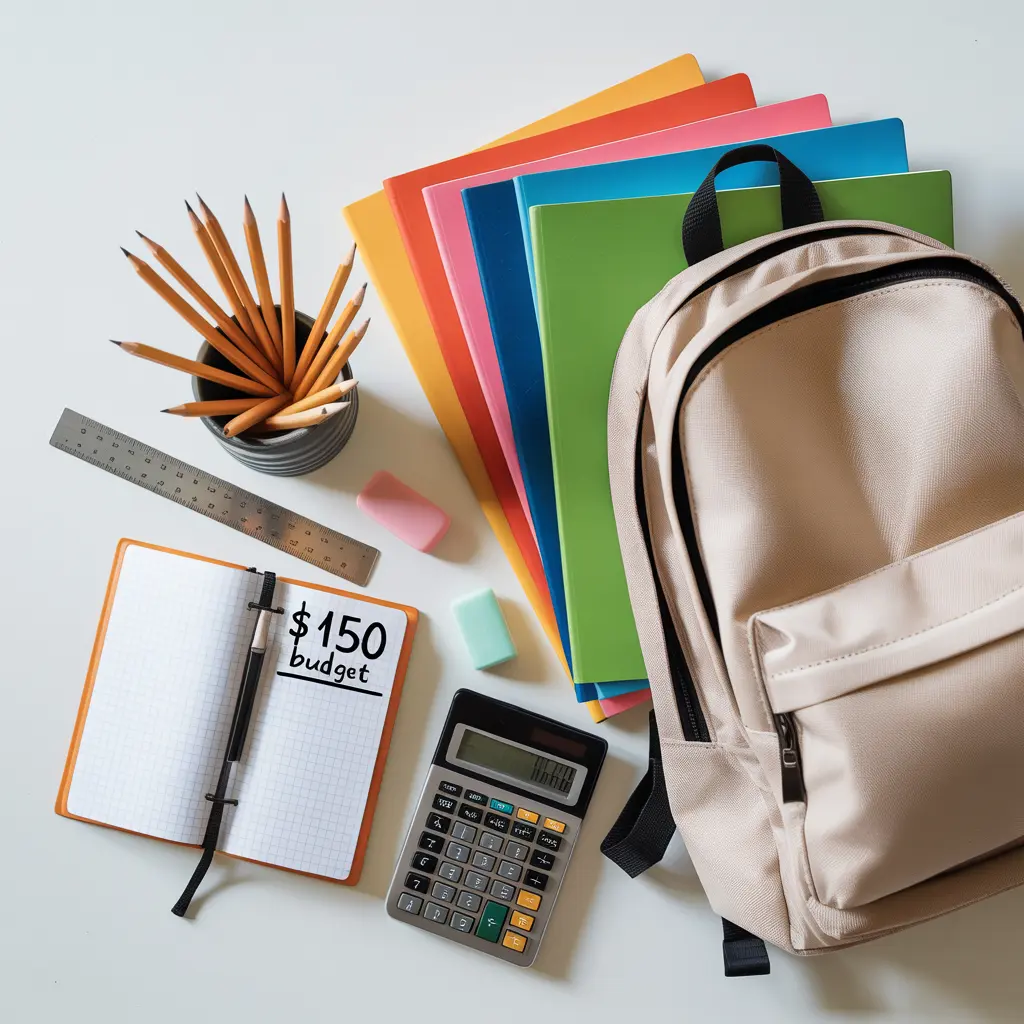
The average family spends $500–$600 per child on back to school shopping list on a budget preparations each year. This figure shocks many parents who remember when a few notebooks and pencils sufficed.
Today’s reality includes technology requirements, specific brand requests from teachers, and social pressures that didn’t exist a generation ago. Schools increasingly expect families to provide tissue boxes, hand sanitizer, and classroom supplies beyond individual student needs.
The good news: You can cut these costs by 40–60% without your child feeling deprived or unprepared.
Understanding where money disappears helps you protect it. Most budget overruns happen in three areas: impulse purchases of trendy items, buying too early at full price, and purchasing poor-quality items that need replacement mid-year.
This guide provides a realistic back to school shopping list on a budget that addresses actual needs while protecting your financial goals.

The Strategic Shopping Timeline
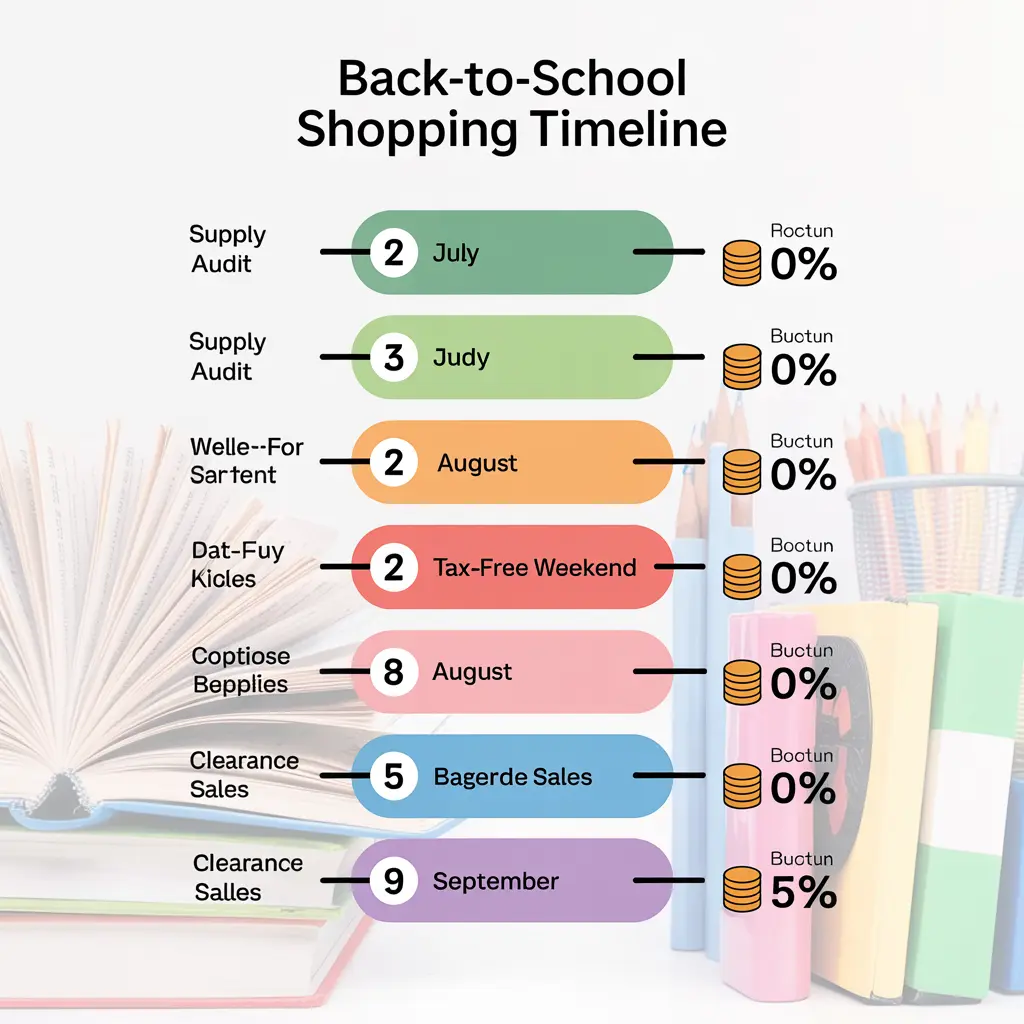
Timing determines whether you pay full price or clearance rates for identical items.
Early July (6–8 weeks before school)
Start with the supply audit at home. Check last year’s backpack condition, count unused notebooks, and test markers and crayons. Many families discover they already own 30% of needed supplies.
Purchase only items you know every teacher requires: basic notebooks, folders, pencils, and pens. Prices remain moderate, and selection stays broad.
Mid-July (Tax-Free Weekend in participating states)
Focus on big-ticket items during sales tax holidays. Backpacks, calculators, clothing, and technology purchases save 6–10% in tax-free states.
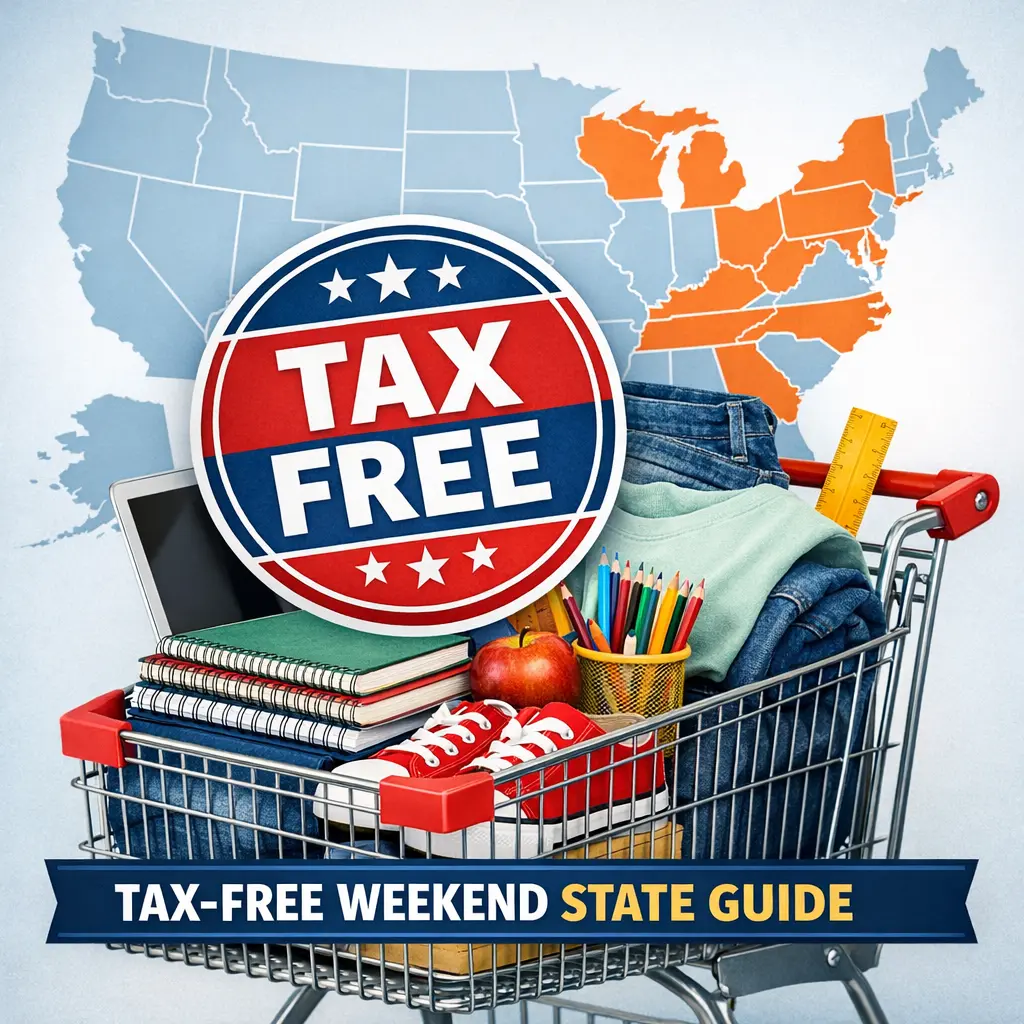
Twenty-one states offer back-to-school sales tax holidays, typically lasting 3–7 days. Check your state’s specific dates and qualifying item categories.
Late July to Early August (4–5 weeks before school)
Hold off on most purchases. Retailers raise prices during peak shopping season when desperate parents rush to complete lists.
Use this time to compare prices across stores, sign up for retailer emails offering coupons, and download cashback apps.
Mid-August (2–3 weeks before school)
Teachers publish actual supply lists. Now you know specifics rather than guessing. Purchase teacher-required items only.
Clothing prices begin dropping as retailers make room for fall inventory, but selection remains strong.
Late August to Early September (first week of school)
Buy remaining optional items and specialized supplies. Prices fall 20–40% as retailers clear inventory.
Wait until after the first week to purchase gym clothes, art smocks, or subject-specific supplies—teachers often provide modified lists after meeting students.
Late September to October (clearance period)
Stock up for next year. Notebooks drop to 10–25 cents, folders to 15–20 cents, and crayons to 50 cents. Purchase grade-neutral supplies in bulk and store for next year’s 70% savings.
Essential vs. Optional Supplies
Not all supply list items carry equal importance. This creates your budget leverage.
Always Essential (80% of budget)
- Writing instruments (pencils, pens, erasers)
- Paper products (notebooks, loose-leaf paper)
- Organization tools (folders, 1–2 binders)
- One quality backpack
- Basic math tools (ruler, calculator if grade-appropriate)
- Required reading books
- Minimum clothing (3–5 mix-and-match outfits)
Often Essential (verify with teacher)
- Specific calculator models (especially high school)
- Art supplies beyond basics
- Science materials (graph paper, lab notebook)
- Technology accessories (laptop case, headphones)
- Physical education clothes
Usually Optional (20% of budget)
- Decorative supplies (designed folders, character backpacks)
- Premium brands when generic exists
- Backup items (second backpack, extra supplies)
- Trend items (specific pen styles, designer labels)
- Organizational accessories (locker decorations, desk organizers)
Classroom donation items (budget separately if possible)
- Tissues
- Hand sanitizer
- Disinfecting wipes
- Extra supplies for classroom use
- Shared art materials
Focus your primary budget on essential categories. Optional items can wait for clearance sales or be earned through children’s extra chores.
Many teacher lists include ideal quantities rather than minimum requirements. Three dozen pencils might be listed, but starting with one dozen proves sufficient with a plan to replenish if needed.
Grade-Specific Shopping Lists
Supply needs change dramatically by grade level. Buying appropriately prevents waste.
Elementary School (Kindergarten–5th Grade)
Kindergarten to 2nd Grade
Budget target: $75–$125
Core supplies:
- 24 count crayons (1 box)
- 10 count washable markers (1 box)
- 12 count colored pencils (1 box)
- 24 #2 pencils (sharpened)
- 4 large erasers
- 2 glue sticks
- 1 pair safety scissors
- 4 pocket folders (different colors)
- 2 wide-ruled notebooks
- 1 box tissues (classroom donation)
- 1 backpack (no wheels—stairs are difficult)
- 2–3 complete outfits
- 1 pair sneakers
Avoid at this level: Mechanical pencils (lost easily), expensive folders (damaged quickly), multiple backpacks (unnecessary).
3rd to 5th Grade
Budget target: $100–$150
Core supplies:
- 48 #2 pencils
- 1 pencil box or pouch
- 12 count colored pencils
- 8–10 pocket folders
- 4–5 wide-ruled notebooks (3-subject works well)
- 1 three-ring binder (1.5 inch)
- Loose-leaf paper (200 sheets)
- 4 glue sticks
- 1 pair scissors
- 12 count markers
- Highlighters (2–3 colors)
- 1 ruler (metric and standard)
- 1 quality backpack
- 3–5 school outfits
- Sneakers for PE
Money-saving tip: Third grade marks the transition to multi-subject notebooks. One 5-subject notebook costs less than five single-subject notebooks and reduces backpack weight.
Middle School (6th–8th Grade)
Budget target: $125–$200
Core supplies:
- 3–4 one-inch binders (by subject)
- 500 sheets loose-leaf paper (college or wide-ruled)
- Binder dividers (1 set per subject)
- 48 pencils or mechanical pencil with lead refills
- 6–8 pens (blue or black)
- Colored pens (for notes—optional but helpful)
- Highlighters (4 colors)
- 1 backpack with laptop sleeve
- Scientific calculator (keep receipt—specific models often required)
- USB drive or cloud storage access
- Headphones (for computer lab)
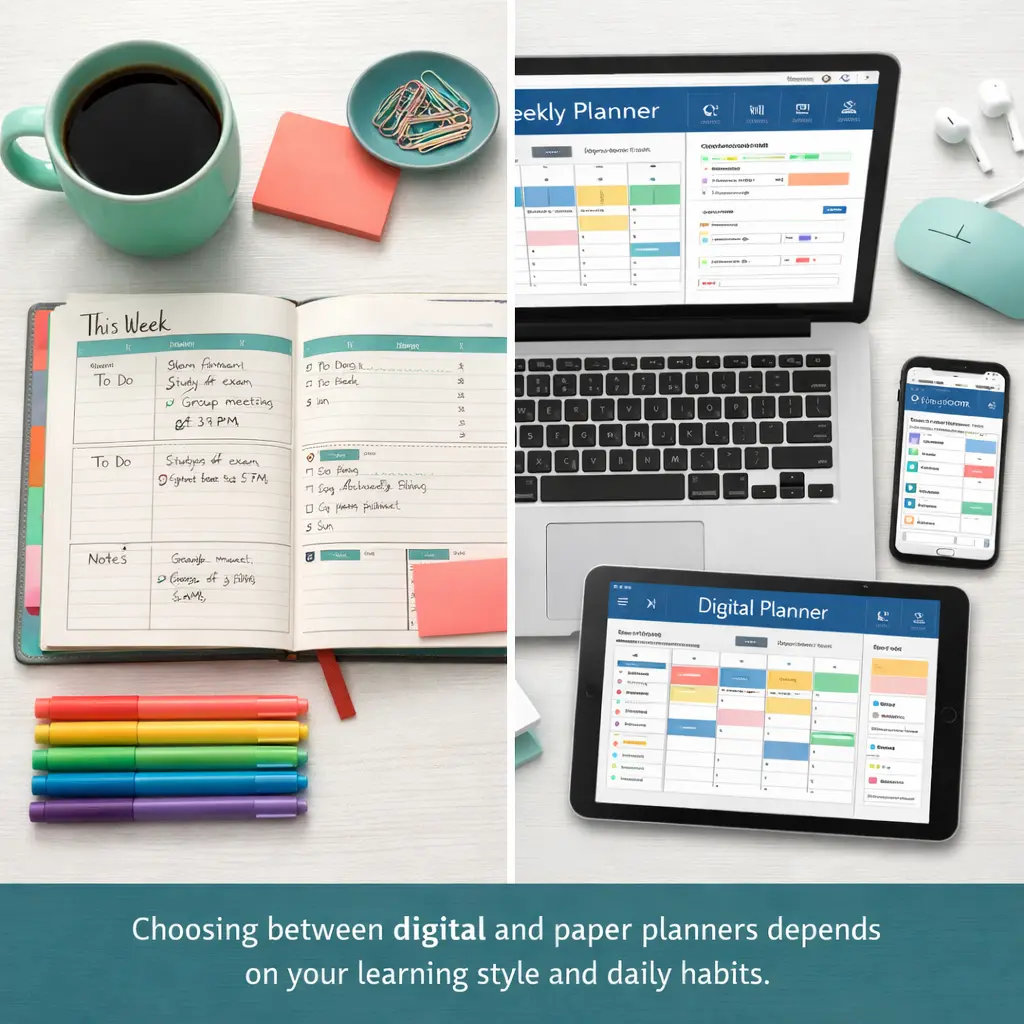
- 1 assignment planner
- 5–7 school outfits
- Gym clothes (2 sets)
- Combination lock (if lockers provided)
Avoid: Expensive brand-name binders (generic works identically), designer backpacks (trends change quickly), excessive notebooks (loose-leaf paper in binders costs less).
High School (9th–12th Grade)
Budget target: $150–$300
Core supplies:
- 5 one-inch binders or 1 expandable binder system
- 500–1000 sheets loose-leaf paper
- Multiple divider sets
- Mechanical pencils with refills (12+ pencils or 3 mechanical with lead)
- 12 pens (black, blue, red)
- Highlighters (multicolor pack)
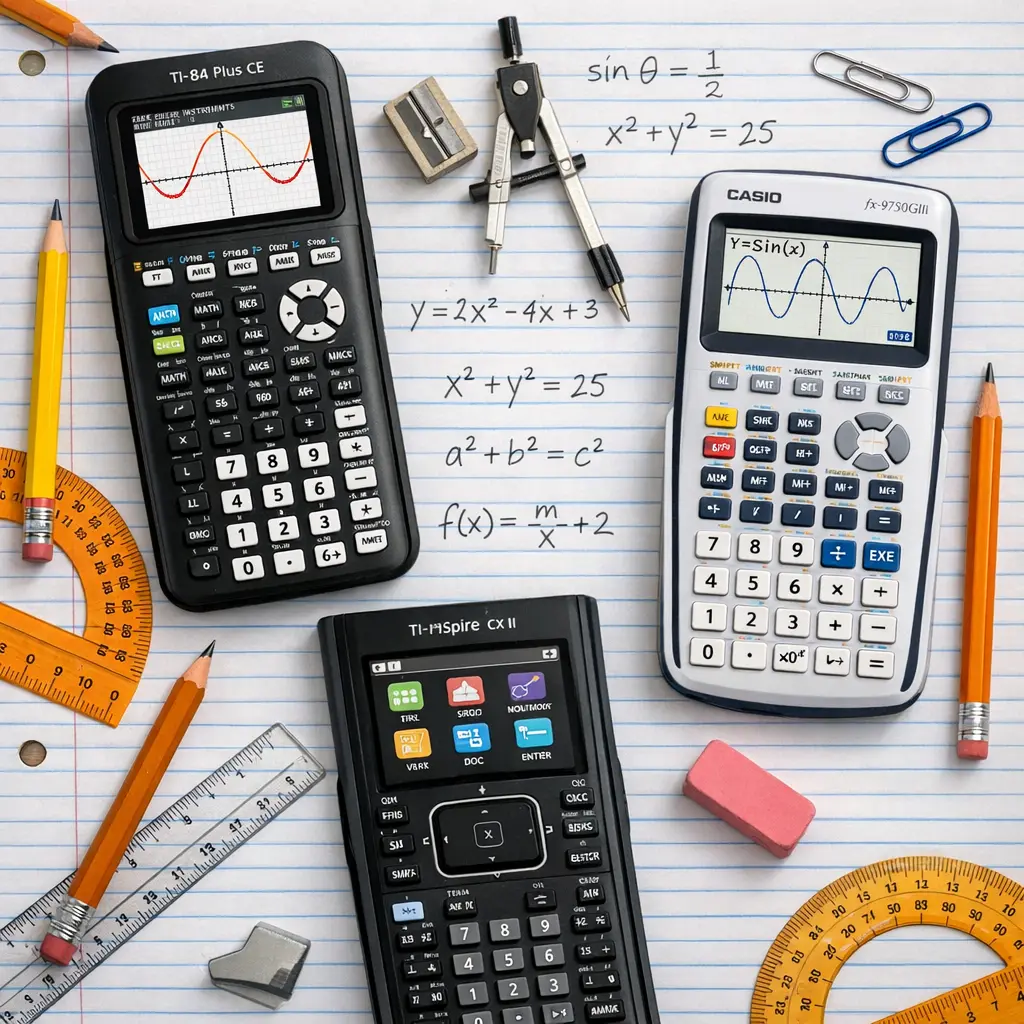
- Graphing calculator (Texas Instruments TI-84 or approved equivalent—often $90–$120)
- 1 durable backpack with padded laptop compartment
- Laptop or tablet (if required—check school loaner programs first)
- Earbuds or headphones
- 2 USB drives or cloud storage subscription
- Subject-specific materials (check syllabi first week)
- 7–10 school outfits
- 2–3 sets gym clothes
- Scientific calculator (backup for when graphing calculator is forgotten)
Budget saver: High school students can share one graphing calculator between siblings in different grades. They’re rarely used for homework at the same time.
Quality matters: High school backpacks face 40+ pounds of books and laptops. Invest in reinforced stitching and padded straps to avoid mid-year replacement.
Where to Find the Best Deals
Location dramatically affects price for identical items.
Dollar Stores
Best for: Basic supplies (pencils, erasers, folders, glue, rulers, crayons)
Average savings: 50–70% vs. office supply stores
Caution: Avoid electronics, backpacks, and scissors (quality issues)
Example pricing: Notebooks (3 for $1), pencils (10 for $1), folders (4 for $1), glue sticks (2 for $1)
Warehouse Clubs (Costco, Sam’s Club, BJ’s)
Best for: Bulk supplies for multiple children or multi-year stock
Average savings: 30–50% vs. regular retail
Membership cost: $50–60 annually (worth it for families with 2+ children)
Example: 30-pack pencils ($4), 10-pack glue sticks ($5), 24-pack crayons sold in 4-packs ($8)
Share a membership with relatives or neighbors if you don’t shop there regularly for other items.
Office Supply Stores (Staples, Office Depot)
Best for: Loss-leader deals (1-cent notebooks, 25-cent folders during promotions)
Average savings: 60–80% on select items during weekly deals
Caution: Regular prices run high—only buy sale items
Sign up for email alerts. These stores rotate different supplies at extreme discounts each week from July through September.
Big-Box Retailers (Walmart, Target)
Best for: One-stop shopping with moderate prices across categories
Average savings: 20–40% vs. specialty retailers
Price matching: Both stores match competitor prices with proof
Online Retailers (Amazon)
Best for: Specific items, bulk purchases, subscription savings
Average savings: Variable—compare carefully
Prime membership: Free shipping offsets costs for 15+ item orders
Use price-tracking browser extensions to identify actual deals vs. inflated “list prices.”
Thrift Stores and Consignment Shops
Best for: Clothing, backpacks (gently used), lunchboxes
Average savings: 70–90% vs. new retail
Success rate: Higher in affluent neighborhoods where items see less wear
Inspect backpacks carefully for zipper function, strap integrity, and bottom reinforcement.
School Supply Swaps
Best for: Specialty items, specific brands, grade-specific materials
Average savings: Free (trade only)
Organization: Parent groups, neighborhood social media, school PTAs
Teacher Supply Closets
Best for: Families experiencing financial hardship
Cost: Free
Access: Ask school counselor or principal—most schools maintain supplies funded by donations
Retailer Clearance Sections
Best for: End-of-season shopping for next year
Average savings: 70–90% off original prices
Timing: Late September through October
The Supply Audit: What You Already Own
Start every back to school shopping list on a budget with inventory, not purchases.
Week 1: Gather Existing Supplies
Collect items from:
- Last year’s backpack
- Desk drawers
- Kitchen junk drawer
- Car console
- Coat pockets
- Under beds
- Sibling hand-me-downs
Sort into categories: writing tools, paper products, art supplies, electronics, clothing.
Week 2: Test Functionality
- Pens and markers: Test each one—dried markers go directly to trash
- Pencils: Sharpen and count—anything shorter than 3 inches gets recycled
- Crayons: Consolidate broken pieces into one box for home use
- Folders and binders: Check for tears—minor damage works fine
- Backpacks: Test zippers, inspect seams, verify strap attachments
- Calculators: Replace batteries and test all functions
- Clothing: Try on everything—kids grow fast
Week 3: Create Your Needs List
Subtract owned items from teacher lists. Your shopping list should include only what you actually need to buy.
Most families discover they need to purchase 50–70% of listed items rather than 100%.
Reuse Strategy by Item
Reusable for multiple years:
- Scissors (metal, not plastic)
- Rulers
- Binders (if not heavily worn)
- Calculators
- Backpacks (if quality construction)
- Lunchboxes
- Gym shoes (if they still fit)
Usually single-year use:
- Notebooks (unless significant unused pages remain)
- Folders (high wear items)
- Pencils (used up)
- Markers and crayons (deplete or dry out)
- Erasers (used or hardened)
Generic vs. Brand Name: When It Matters
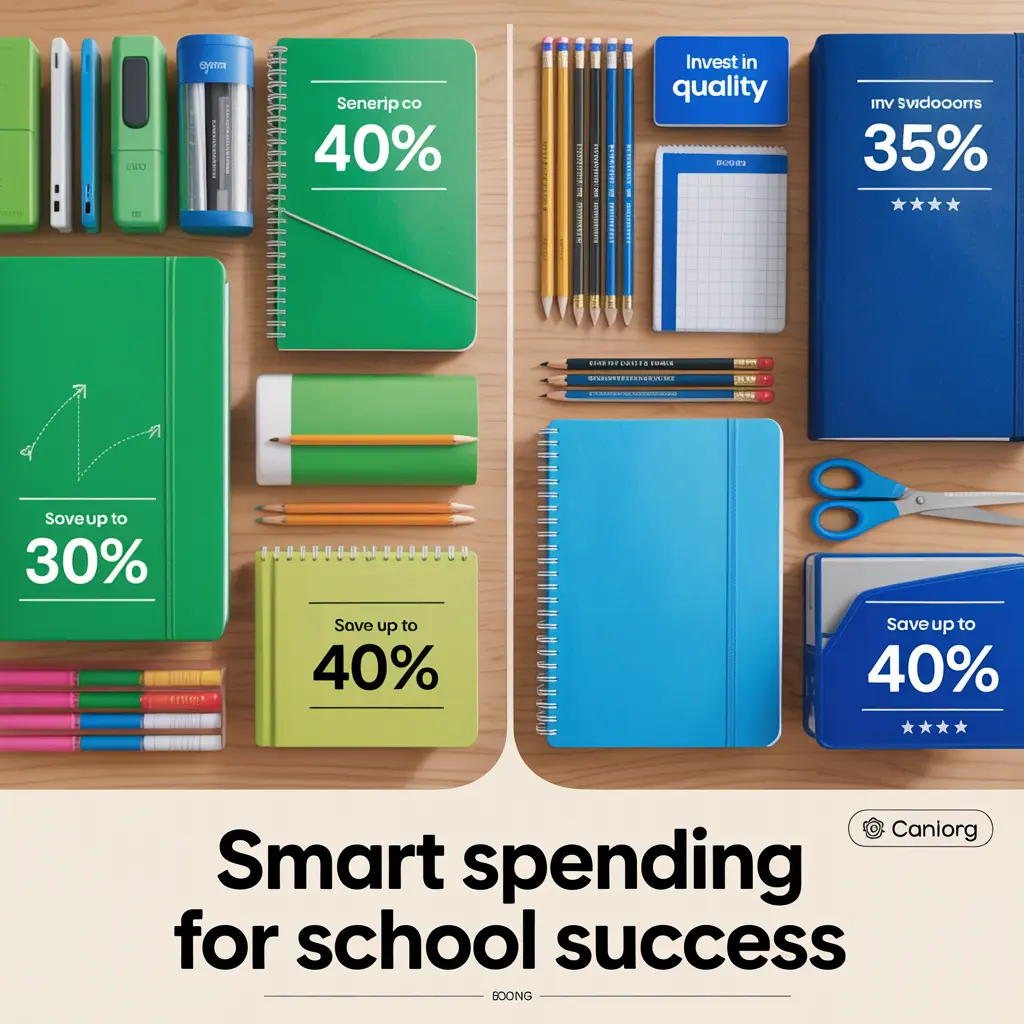
Store-brand supplies perform identically to name brands in most categories.
Buy Generic—No Quality Difference
Notebooks and paper: Store brands use the same paper mills as name brands. A 25-cent generic notebook functions identically to a $2 branded version.
Folders: Plastic or cardboard folders are commodity items. Color matters more than brand.
Pencils: #2 pencils meet standardized specifications regardless of brand. Dixon Ticonderoga and store brands both contain graphite cores and wood casings.
Loose-leaf paper: Wide-ruled or college-ruled paper is interchangeable across brands.
Glue sticks: Elmer’s and generic brands use similar formulations. Both stick paper adequately.
Crayons: Crayola and store brands both use wax and pigment. Younger children (K–2) may prefer Crayola for smoother application; older students notice no difference.
Erasers: Pink erasers erase regardless of brand name printed on the side.
Consider Brand Names—Quality Differences Exist
Markers: Crayola washable markers genuinely wash from skin and clothing better than many generic versions. Worth the $1–2 premium for elementary students.
Backpacks: JanSport, L.L.Bean, and Lands’ End offer lifetime warranties and reinforced construction. A $40 quality backpack lasting 4–6 years costs less than three $20 generic bags lasting two years each.
Scissors: Fiskar scissors maintain sharpness longer than generic scissors. Metal beats plastic for multi-year use.
Graphing calculators: Texas Instruments dominates because teachers design lessons around TI button layouts. Generic equivalents confuse students during timed tests.
Binders: Heavy-duty binders with metal rings outlast budget versions with plastic mechanisms that break mid-year.
Colored pencils: Significant quality variations exist. Mid-range brands like Crayola perform adequately; ultra-cheap versions break constantly and frustrate students.
The Brand Decision Framework
Ask four questions:
- Will this item experience heavy daily use? (Yes = consider quality brand)
- Does it need to last multiple years? (Yes = invest in durability)
- Will poor performance frustrate my child’s learning? (Yes = choose reliability)
- Is it consumable and replaced annually anyway? (Yes = buy cheapest option)
Dollar-Specific Examples
Scenario 1: Elementary school folders
- Name brand: $1.50 each × 8 folders = $12
- Generic: $0.25 each × 8 folders = $2
- Savings: $10
- Quality difference: None meaningful
- Verdict: Buy generic
Scenario 2: High school backpack
- Quality brand (JanSport): $45 with lifetime warranty
- Generic brand: $20 with no warranty
- Expected lifespan: Quality = 4–6 years; Generic = 1–2 years
- Cost over 6 years: Quality = $45; Generic = $60–120 (replacements)
- Verdict: Buy quality brand
Bulk Buying Strategy for Multiple Children
Families with two or more students save 25–40% buying in bulk.
Warehouse Club Strategy
Annual membership costs $50–60 but pays for itself with one shopping trip for multiple children.
Per-child cost comparison (3 children):
Individual retail shopping:
- Child 1: $125
- Child 2: $140
- Child 3: $115
- Total: $380
Bulk warehouse shopping:
- Shared supplies (pencils, paper, folders, etc.): $80
- Individual items (backpacks, specific tools): $150
- Total: $230
- Savings: $150 (39%)
Best Bulk Purchases
Pencils: 144-count boxes ($8–12) vs. 24-count ($3–4 each child)
Paper: 2,500-sheet cases ($18–22) vs. 500-sheet packs ($5–6 each child)
Folders: 50-packs ($8–10) vs. 10-packs ($5–7 each child)
Glue sticks: 30-packs ($10–12) vs. 4-packs ($3–4 each child)
Crayons: Box of 24 individual 24-packs ($15–18) vs. single boxes ($2–3 each child)
Shared Supply System
Create a home supply station with bulk purchases. Children withdraw items as needed rather than each maintaining separate stashes.
This prevents the “I lost my pencils” replacement cycle that drains budgets mid-year.
Storage Solutions
- Clear plastic bins (label by supply type)
- Divided drawer organizers
- Over-door shoe organizers (pockets hold supplies)
- Rolling carts (easy access for kids)
Proper storage prevents the “I can’t find it so I need new supplies” expense.
Group Buying with Other Families
Share warehouse membership costs and bulk purchases with neighbors or relatives.
Four families splitting a 500-count pencil box, 2,500-sheet paper case, and 50-folder pack reduces individual costs to retail prices without membership fees.
Tax-Free Weekend Optimization
Twenty-one states offer sales tax holidays, creating 6–10% automatic savings.
2024 Tax-Free States (typical timing)
- Alabama: July (specific weekend varies)
- Arkansas: First weekend in August
- Connecticut: August (one week)
- Florida: Late July to early August (two weeks)
- Iowa: First weekend of August
- Maryland: August (one week)
- Mississippi: Last weekend of July
- Missouri: First weekend of August
- New Mexico: First weekend of August
- Ohio: First weekend of August
- Oklahoma: First weekend of August
- South Carolina: First weekend of August
- Tennessee: Last weekend of July
- Texas: August (one weekend)
- Virginia: First weekend of August
Item Restrictions by State
Most states limit tax exemptions to:
- Clothing under $75–100 per item
- School supplies under $20–50 per item
- Computers and electronics under $750–1,500
Graphing calculators ($90–120) qualify in most participating states.
Backpacks typically qualify as clothing accessories.
Maximizing Savings
Focus tax-free purchases on:
- Highest-taxed items (electronics, calculators)
- Most expensive items (backpacks, clothing)
- Items already in stock at preferred retailers
In states with 9–10% sales tax, a $500 shopping trip saves $45–50.
What Not to Buy Tax-Free Weekend
Basic supplies (pencils, folders, paper) because:
- Prices often inflate before tax-free weekends
- Savings of 7% on a $0.25 folder = $0.02
- Better deals exist at dollar stores year-round
Buy big-ticket items tax-free, buy consumables on clearance later.
Online Shopping During Tax-Free Weekend
Most states extend tax exemptions to online purchases from retailers with in-state presence during tax-free periods.
Verify retailer participation before ordering. Cart should show $0.00 sales tax at checkout.
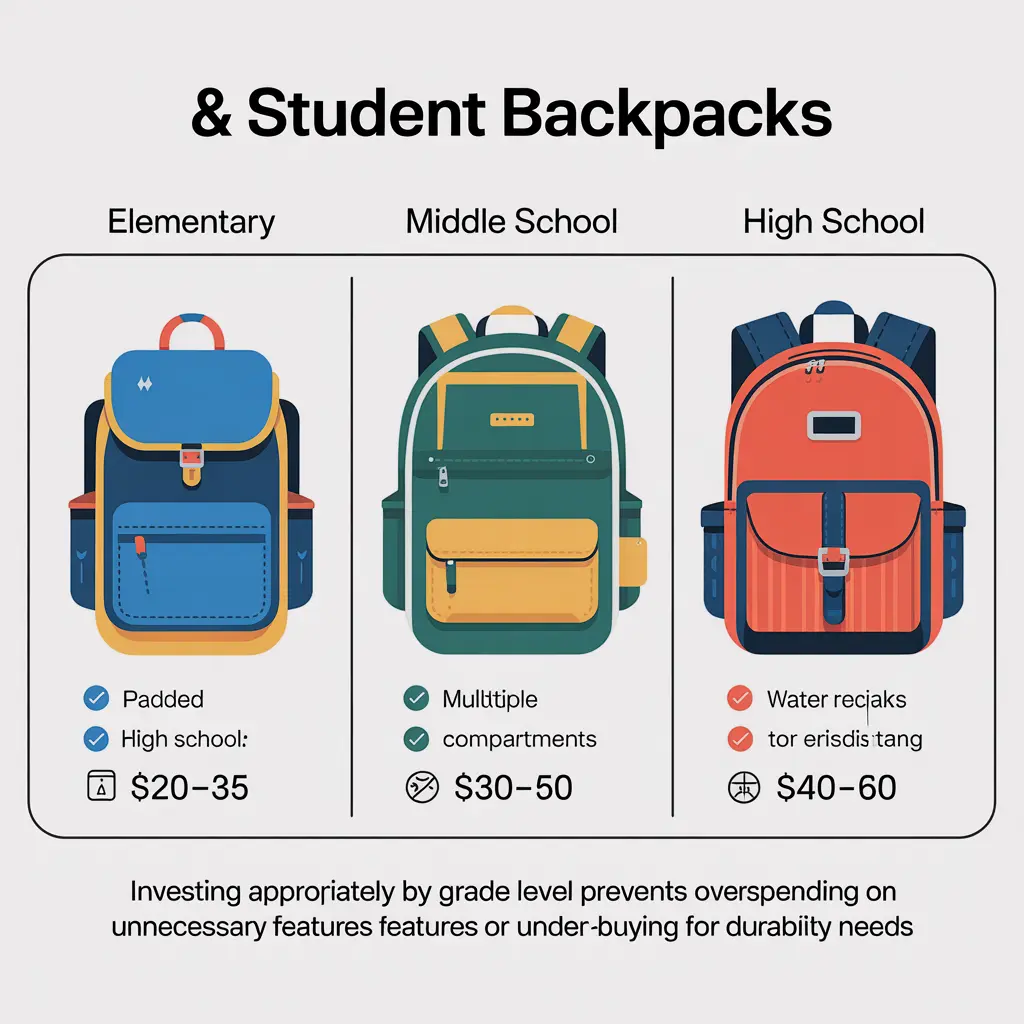
Budget-Friendly Backpack Selection
Backpacks range from $10 to $100+. Smart selection prevents replacement costs.
Quality Indicators (Any Price Point)
Examine these features:
Straps: Padded, adjustable, reinforced stitching at attachment points
Bottom: Reinforced or plastic-protected (not just single-layer fabric)
Zippers: Metal teeth, double-pull design, no snags when testing
Seams: Double-stitched, reinforced corners
Weight distribution: Multiple compartments preventing “bottom sag”
Elementary School (K–5)
Budget: $20–35
Weight capacity needed: 10–15 pounds
Features required: Two compartments minimum, one external pocket, padded back panel
Avoid: Wheels (stairs are difficult, wheels break), single-strap designs (uneven weight distribution), character themes (outgrown quickly)
Recommended approach: Mid-range brand ($25–30) in solid color or simple pattern lasts 2–3 years across changing interests.
Middle School (6–8)
Budget: $30–50
Weight capacity needed: 20–30 pounds
Features required: Laptop/tablet sleeve, water bottle pocket, multiple compartments, ergonomic straps
Critical feature: Padded laptop compartment. Replacing a dropped laptop ($200–500) costs more than buying a protective backpack.
High School (9–12)
Budget: $40–60
Weight capacity needed: 30–40 pounds
Features required: Dedicated padded laptop compartment, reinforced bottom, chest or waist strap (weight distribution), water-resistant material
Investment consideration: Brands with lifetime warranties (JanSport, L.L.Bean, Lands’ End) cost $45–55 but offer free replacements for manufacturer defects. A four-year high school backpack averaging $11.25/year beats annual $25 replacements.
When to Buy Used
Thrift store backpacks work well if:
- Zippers function smoothly through complete open/close cycle
- No tears in seams or fabric
- Straps securely attached with no fraying
- Bottom shows no holes or extreme wear
- Washable (machine or hand)
Wash thoroughly before use. Average thrift price: $3–8 for brands selling new at $30–60.
When Used Doesn’t Work
Avoid used backpacks with:
- Stuck or broken zippers (irreparable)
- Detached or fraying straps (safety issue)
- Holes in bottom (books fall out)
- Persistent odors (mold or mildew indicates water damage)
- Broken plastic clips or buckles
Extending Backpack Life
Three habits add 1–2 years of use:
- Empty daily: Prevents bottom sag from constant weight
- Spot clean weekly: Address stains before they set permanently
- Air dry when wet: Prevents mold in damp compartments
School Clothing on a Budget
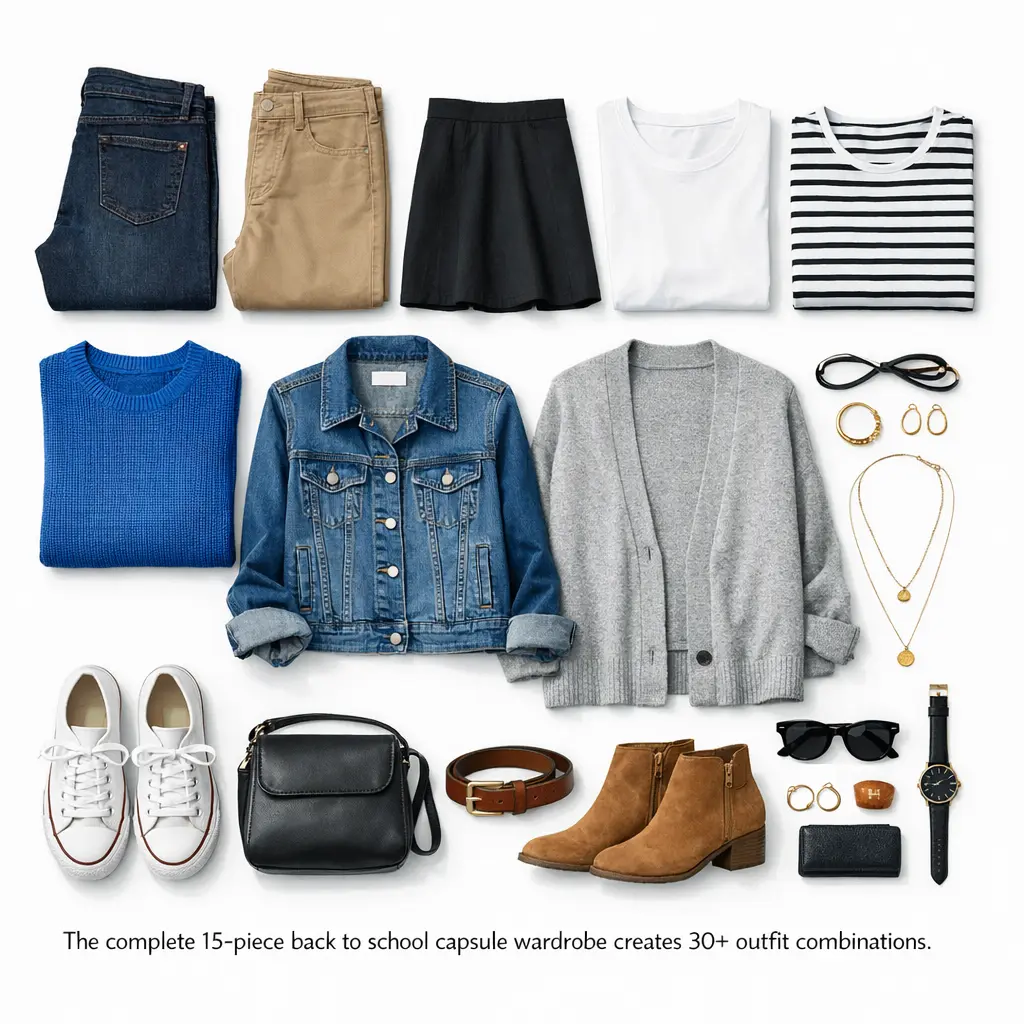
Clothing often consumes 40–50% of back-to-school budgets. Strategic selection reduces costs without sacrificing appearance.
The Capsule Wardrobe Approach
Five mix-and-match outfits create fifteen combinations:
Elementary school:
- 3 pairs pants/shorts (neutral colors: navy, khaki, black)
- 5 tops (mix of solid and simple patterns)
- 1 hoodie or cardigan
- 2 pairs shoes (sneakers for PE, casual for regular wear)
Cost estimate: $75–120 depending on sourcing
Middle school:
- 4 pairs pants/jeans (2 neutral, 2 denim)
- 6–7 tops (mix of solid tees and casual shirts)
- 1–2 layering pieces (hoodie, cardigan, light jacket)
- 2 pairs shoes
- Gym clothes (2 sets)
Cost estimate: $125–175
High school:
- 5 pairs pants/jeans
- 8–10 tops (variety for social aspects)
- 2–3 layering pieces
- 2–3 pairs shoes
- Gym clothes (2 sets)
Cost estimate: $175–250
Where to Buy Budget Clothing
Thrift stores: $2–8 per item; inspect carefully for stains, tears, broken zippers
Consignment shops: $5–15 per item; better quality control than thrift
Clearance racks: 50–75% off retail; shop end of previous season
Discount retailers (Ross, TJ Maxx, Burlington): 30–60% off department store prices
Online secondhand (Poshmark, ThredUp, Mercari): Similar to local thrift prices with shipping costs
Timing for Clothing Purchases
Late August provides optimal balance of selection and price reductions. Retailers begin discounting summer inventory but haven’t fully transitioned to fall stock.
Early September brings deeper discounts (30–50% off) but reduced size selection.
Quality Assessment
Examine these points:
Seams: Straight stitching, no loose threads
Fabric: No pilling, fading, or thinning
Zippers and buttons: Functional with no missing pieces
Stains: Underarm, collar, and knee areas (hardest to clean)
Fit: Room for growth without current sloppiness
The Growth Factor
Children grow 2–3 inches annually on average. Buying slightly large (but not oversized) extends wear through the school year.
Pants with adjustable waists accommodate growth spurts.
Avoid buying next year’s clothing this year—children’s growth patterns are unpredictable.
Peer Pressure Management
Brand-name pressure increases in middle and high school. Two strategies help:
- One statement piece: Allow one trendy or brand-name item (popular sneakers, specific jacket) while keeping other items generic. This satisfies social needs for significantly less than full brand-name wardrobes.
- Logo focus: Many peers notice logos more than actual quality. A $12 thrifted brand-name shirt achieves the same social result as a $35 retail purchase.
School Uniform Families
Uniform requirements reduce decision fatigue but don’t always reduce costs.
Budget approach:
- Buy minimum required sets (2–3)
- Wash mid-week to extend use
- Buy slightly large for growth room
- Check school swap groups (families often offload outgrown uniforms free)
- Purchase from uniform-specific retailers during summer sales (20–30% off)
Technology Needs Without Breaking the Bank
Technology requirements strain budgets, especially for multiple students.
Required vs. Recommended
Many school lists label items “recommended” or “helpful” rather than “required.” These distinctions matter.
Required items: School cannot provide alternative; student faces academic disadvantage without them
Recommended items: School suggests ownership but provides access (computer labs, library checkout)
Always verify with teachers before purchasing recommended technology.
Calculator Strategy
Scientific calculators ($10–15): Required starting in middle school for basic algebra
Graphing calculators ($90–140): Required in high school for advanced math
Budget approaches:
- Sibling sharing: Graphing calculators are rarely used simultaneously for homework
- School loaner programs: Many high schools maintain calculator checkout systems
- Used calculators: TI-84 models remain relevant for 10+ years; buy used from graduating students
- Retailer return policies: Some families buy new, use for the year, and return before policy expires (ethically questionable but legal)
Computer and Tablet Needs
Many schools now issue devices, eliminating family purchase requirements. Verify before buying.
If purchase is necessary:
Chromebooks ($200–300): Sufficient for most K–12 assignments
Tablets ($150–400): Work for elementary and middle school
Laptops ($400–700): Necessary for high school students with intensive assignments
Used options: Refurbished devices from manufacturer or retailer programs offer warranties at 30–50% discounts
Financing considerations: Interest-free financing through retailers costs the same as cash over 6–12 months if paid before interest begins
Headphones and Earbuds
Schools increasingly require personal audio devices for computer lab work.
Budget option: $8–15 wired headphones (less loss risk than wireless)
Quality option: $25–40 brands with 1-year warranty
Avoid ultra-cheap $3 earbuds—they break within weeks, requiring multiple replacements.
USB Drives vs. Cloud Storage
USB drives: $5–10 for 16–32GB; risk of loss; physical damage possible
Cloud storage: Free (Google Drive, OneDrive) with school email; requires internet access
Most students benefit from both: Cloud for primary storage, USB as backup.
Charging Cables
Schools rarely provide charging accommodations. Students with tablets or laptops need reliable cables.
Budget tip: Buy 2–3 pack of cables ($12–18) rather than single premium cable ($20–30). Multiple backups prevent “forgot my charger” crisis.
Community Resources and Assistance Programs
Free and low-cost resources exist for families experiencing financial hardship.
School-Based Programs
Most schools maintain supply closets funded by donations, PTA budgets, and district allocations.
Access method: Contact school counselor, social worker, or principal directly. Requests remain confidential.
Typical supplies available: Notebooks, pencils, folders, backpacks, some clothing items
Nonprofit Organizations
National programs:
- Kids in Need Foundation: Partners with local organizations to distribute supplies
- Operation Backpack: Provides backpacks filled with grade-appropriate supplies
- Salvation Army: Offers back-to-school assistance in most communities
- Local churches: Many run supply drives and distribution events
Search “[your city] free school supplies” for area-specific programs.
Corporate Giving Programs
Retailers including Staples, Office Depot, and Target run teacher and student assistance programs.
Staples Foundation: Provides supplies to schools serving low-income communities
Target’s Take Charge of Education: Funds school purchases
Community Supply Swaps
Parent-organized events where families exchange outgrown uniforms, gently used backpacks, and excess supplies.
Find through: School Facebook groups, neighborhood apps (Nextdoor), PTA communications
Library Resources
Public libraries offer:
- Free internet access (reduces home technology requirements)
- Book checkout (reduces textbook costs)
- Homework help programs
- Computer use for assignments
- Printing services (some libraries offer free or reduced-cost printing for students)
Buy Nothing Groups
Hyperlocal Facebook groups where members give items they no longer need.
Active groups frequently offer school supplies, clothing, and backpacks during summer months.
Employer Assistance
Some employers offer:
- Back-to-school bonus or allowance
- Supply distribution events for employee families
- Scholarship programs covering school expenses
Check with HR department about available benefits.
Common Budget-Busting Mistakes
Avoiding these errors protects hundreds of dollars.
Mistake 1: Shopping Too Early
June and early July shopping seems proactive but costs more. Retailers price at full markup before competition begins.
Exception: If using tax-free weekend for big-ticket items, early shopping works.
Mistake 2: Buying Complete Lists Immediately
Teacher lists often include entire year’s supplies. Many items aren’t needed until later months or specific units.
Better approach: Buy first-month essentials; purchase specialized items when teachers confirm need.
Mistake 3: Bringing Children for Every Shopping Trip
Kids increase impulse purchases by 30–40% according to retail studies. Every character folder, trendy pen, and unnecessary gadget gets requested.
Strategy: Inventory and compare prices solo; make final purchases with children only for items requiring their input (clothing, backpack).
Mistake 4: Assuming Name Brands Perform Better
Generic supplies work identically in most categories. Brand loyalty without performance difference wastes money.
Test approach: Buy one generic item. If it performs adequately, switch remaining purchases to generic.
Mistake 5: Replacing Items Still at Home
Families waste $50–100 annually replacing supplies they already own but can’t locate.
Prevention: Complete supply audit before shopping.
Mistake 6: Ignoring Bulk Pricing
Buying individual notebooks at $2 each when 10-packs cost $5 means paying $20 instead of $5 for the same product.
Apply bulk thinking to consumables used throughout the year.
Mistake 7: Prioritizing Trends Over Function
Trendy backpacks, designer folders, and character supplies cost 2–3× more than functional equivalents.
These trends change rapidly. Last year’s popular character becomes this year’s embarrassment.
Budget allocation: 90% functional, 10% trend (if budget allows).
Mistake 8: Skipping Price Comparisons
The same 24-pack of pencils costs:
- Specialty store: $5.99
- Office supply store (regular price): $3.99
- Office supply store (sale): $0.99
- Dollar store: $1.00
- Warehouse club: $4.00 for 48-pack ($2.00 for equivalent 24)
Five minutes of comparison shopping saves $5 per item across dozens of items.
Mistake 9: Buying Poor Quality for High-Use Items
A $12 backpack lasting three months requires $48 in replacements across a school year.
A $35 quality backpack lasting the full year costs less and avoids mid-year shopping trips.
Invest in durability for: Backpacks, scissors, binders, calculators
Save on consumables: Pencils, paper, folders, erasers
Mistake 10: Forgetting September Clearance
Retailers slash prices 50–75% after school starts to clear inventory.
Non-urgent items (extra supplies, replacement clothing, backup backpack) cost a fraction when purchased in September vs. August.
How to Handle Peer Pressure and Trends
Social dynamics create spending pressure. Managing this protects budgets and teaches valuable lessons.
The Brand Name Conversation
Age-appropriate explanations:
Elementary: “Different families make different choices about spending. Our family chooses [budget priority—saving for vacation, college fund, etc.]. Your supplies work just as well.”
Middle school: “Brand names cost more for the same function. We’re choosing to spend money on [meaningful priority] instead of logos.”
High school: “Our budget is $[amount]. You can choose how to allocate it—more items in generic brands or fewer items in premium brands.”
The Compromise Strategy
Allow one visible brand-name or trendy item that matters most to your child:
- Popular sneakers (but previous year’s model at discount)
- Specific backpack style
- Particular notebook design for their favorite subject
This validates their social awareness while maintaining overall budget discipline.
Quality Over Quantity Teaching Moment
Demonstrate: One well-made item beats three cheap versions
Example: Show how a quality pen writes smoothly for months while cheap pens skip and break within weeks.
This builds appreciation for value over volume.
The Earnings Option
For discretionary upgrades beyond budget:
“Our budget covers functional supplies. If you want the premium brand, you can earn the difference through [extra chores, lawn mowing, etc.].”
This teaches real-world resource allocation.
Reframing Success
Emphasize non-material aspects:
- Academic achievement
- Friendship quality
- Personal interests and skills
- Character development
Children with strong self-worth based on intrinsic factors feel less pressure around supply brands.
Money-Saving Shopping Habits
Small behavioral changes create significant savings.
Habit 1: List Shopping Only
Create specific list before entering any store. Buy only listed items.
Impulse purchases add 20–35% to total costs.
Habit 2: Cash Envelope Method
Withdraw total budget in cash. When envelope empties, shopping ends.
Physical cash creates psychological spending awareness that credit cards lack.
Habit 3: Price Book Maintenance
Track prices of frequently purchased items across stores.
Example price book:
- 24-pack pencils: Dollar Store $1, Target $2.50, Office Depot $0.99 (sale)
- Folders: Dollar Store $0.25, Walmart $0.50, Staples $0.15 (sale)
Refer to price book before shopping to identify genuine deals.
Habit 4: Coupon Stacking
Combine manufacturer coupons + store coupons + cashback apps + sale prices for maximum savings.
Example stack:
- Binder regular price: $5.00
- Store sale: $3.00
- Manufacturer coupon: -$1.00
- Store coupon: -$0.50
- Cashback app: -$0.25
- Final price: $1.25 (75% savings)
Habit 5: Cashback App Usage
Download and use:
- Ibotta (grocery and retail purchases)
- Rakuten (online shopping)
- Fetch Rewards (receipt scanning)
These apps return 1–5% of purchases as cash. On $400 school shopping, that’s $4–20 back.
Habit 6: Browser Extension Price Tracking
Install Honey, Capital One Shopping, or similar extensions. These automatically:
- Apply coupon codes at checkout
- Compare prices across retailers
- Track price history
- Alert when items drop in price
Habit 7: Strategic Store Matching
Buy each item category where it’s cheapest:
- Basic supplies: Dollar stores
- Bulk consumables: Warehouse clubs
- Loss-leader deals: Office supply stores
- Clothing: Thrift or discount retailers
- Technology: Manufacturer refurbished programs
Habit 8: Off-Season Purchasing
Buy next year’s supplies this September when clearance hits 70–90% off.
Storage requirement: One plastic bin per child
Savings: $75–150 per child annually
Reusable Supplies: Multi-Year Investment Strategy
Strategic purchases reduce annual back-to-school costs by 30–40%.
Multi-Year Supplies Worth Investment
Calculators: Scientific and graphing models last 5–10+ years across multiple siblings
Cost: $12–120 depending on type
Annual savings if shared: $10–100
Quality backpacks with warranties: 4–6 year lifespan
Cost: $40–60
Annual cost: $7–15 vs. $25+ for yearly replacements
Metal scissors: Maintain sharpness for years
Cost: $4–8
Lifespan: 5+ years vs. 1–2 years for plastic
3-ring binders (heavy-duty): Survive multiple years if properly maintained
Cost: $5–8 each
Lifespan: 2–4 years vs. 1 year for budget binders
Rulers and protractors (hard plastic or metal): Nearly indestructible
Cost: $2–4
Lifespan: School career
The Supply Bin System
Maintain a family supply bin with:
- 200+ pencils (purchased on clearance at $0.50 per 24-pack)
- 50+ folders (clearance at $0.15 each)
- 2,000+ sheets paper (clearance cases at $0.01 per sheet)
- 20+ glue sticks (clearance at $0.25 each)
- 100+ pens (clearance at $0.10 each)
Total investment: $50–75
Covers: 2–3 years for multiple children
Annual savings: $100–200
Maintenance for Longevity
Backpacks: Empty nightly, spot clean weekly, air dry when wet
Binders: Don’t overstuff (causes ring mechanism failure)
Calculators: Remove batteries during summer
Scissors: Wipe blades after use, store in protective sheath
Rulers: Store flat (prevents warping)
Hand-Me-Down Strategy
Items suitable for passing to younger siblings:
- Backpacks (if condition remains good)
- Calculators
- Scissors and rulers
- Lunchboxes
- Binders (if not decorated with older sibling’s name)
- Subject-specific materials (graph paper, protractors, compasses)
Items not suitable:
- Clothing (unless younger sibling specifically wants it—forced hand-me-downs create resentment)
- Personalized notebooks or folders
- Heavily worn supplies
Creating Your Family Budget Plan
A written budget prevents overspending and emotional decisions.
Step 1: Determine Available Funds
Calculate realistic budget based on:
- Current available cash
- Upcoming paychecks before school starts
- Savings allocated to back-to-school
- Expected assistance (tax credits, employer bonuses, family gifts)
Step 2: Allocate by Category
Recommended allocation (adjust based on actual needs):
Supplies: 40% of budget
Clothing: 35% of budget
Backpack/lunchbox: 15% of budget
Technology: 10% of budget
Example $200 budget:
- Supplies: $80
- Clothing: $70
- Backpack: $30
- Technology: $20
Step 3: Prioritize by Necessity
Tier 1—Must Have (70% of budget):
- Teacher-required supplies
- Minimum functional clothing
- One backpack
- Required calculators
Tier 2—Should Have (20% of budget):
- Backup supplies
- Additional clothing for variety
- Quality upgrades for frequently used items
Tier 3—Nice to Have (10% of budget):
- Trend items
- Organizational accessories
- Premium brands
If budget runs short, cut Tier 3 entirely and reduce Tier 2.
Step 4: Track Spending in Real Time
Use notebook or phone app to record each purchase:
- Item
- Store
- Amount
- Running total
- Remaining budget
This prevents “I didn’t realize I spent that much” scenarios.
Step 5: Build in Buffer
Plan to spend 90% of budget. Reserve 10% for:
- Unexpected requirements announced after school starts
- Replacement of lost or broken items
- Opportunities (clearance finds)
Budget Templates
Single Child Budget ($150 total)
- Supplies: $60
- Clothing: $50
- Backpack: $25
- Technology: $15
Two Children Budget ($250 total)
- Shared supplies (bulk): $50
- Individual supplies: $40
- Clothing (both children): $100
- Backpacks: $40
- Technology: $20
Three+ Children Budget ($400 total)
- Shared bulk supplies: $80
- Individual supplies: $60
- Clothing (all children): $180
- Backpacks and lunchboxes: $60
- Technology and calculators: $20
Emergency Supply Solutions
Mid-year needs arise. Budget-friendly solutions exist.
The Forgotten Item
Child announces day-before: “I need [specific item] for tomorrow’s project.”
Solutions:
- Check family supply bin first
- Borrow from neighbor or friend
- Purchase single item from dollar store
- Creative substitution (use what you have differently)
The Lost Backpack/Supplies
Replacement without budget destruction:
Backpack: Thrift store ($3–8) or borrow from school’s lost and found unclaimed items
Supplies: Draw from family supply bin or request from teacher’s classroom reserve
The Growth Spurt
Child outgrows clothing mid-year:
- Clothing swaps with friends’ families
- Thrift stores
- Hand-me-downs from neighbors or relatives
- Buy only absolute necessities (one pair pants, two shirts) until end-of-season clearance
The Broken Calculator
Before replacing ($90–120 for graphing calculator):
- Check if under warranty
- Borrow from school (many maintain checkout systems)
- Share with sibling
- Ask teacher about classroom calculators for homework
Building Emergency Supply Fund
Set aside $5–10 monthly in envelope labeled “School Emergency Fund.”
By mid-year, this covers forgotten projects, lost items, and unexpected needs without budget crisis.
COMPARISON TABLES
Store Price Comparison: Common Supplies
| Item | Dollar Store | Walmart | Target | Office Supply Store (Sale) | Warehouse Club (Bulk) |
|---|---|---|---|---|---|
| 24-pack #2 Pencils | $1.00 | $2.50 | $2.75 | $0.99 | $4.00 (48-pack) |
| Single-Subject Notebook | $0.33 | $1.00 | $1.25 | $0.17 | N/A |
| 2-Pocket Folder | $0.25 | $0.50 | $0.65 | $0.15 | $8.00 (50-pack) |
| Glue Stick | $0.50 | $1.25 | $1.40 | $0.25 | $10.00 (30-pack) |
| 24-Count Crayons | $1.00 | $1.50 | $1.75 | $0.50 | $15.00 (24-box pack) |
| Safety Scissors | $1.00 | $2.50 | $3.00 | $1.50 | N/A |
| Backpack (basic) | $10.00 | $15.00 | $20.00 | $25.00 | $18.00 |
Money-Saving Takeaway: Dollar stores beat competitors by 50–75% on basic consumables. Warehouse clubs win for families buying for multiple children. Office supply stores offer best prices only during loss-leader sales.
Generic vs. Brand Name Cost Analysis
| Category | Generic Brand | Name Brand | Price Difference | Performance Difference |
|---|---|---|---|---|
| #2 Pencils (24-pack) | $1.00 | $4.50 | $3.50 (350%) | None—both meet #2 standard |
| Notebook (1-subject) | $0.50 | $2.00 | $1.50 (300%) | None—same paper quality |
| Folders | $0.25 | $1.50 | $1.25 (500%) | None—identical function |
| Crayons (24-count) | $1.00 | $2.50 | $1.50 (150%) | Slight—name brand smoother for K-2 |
| Washable Markers | $2.00 | $4.50 | $2.50 (125%) | Moderate—name brand washes better |
| Glue Sticks | $0.50 | $1.75 | $1.25 (250%) | None—similar adhesive strength |
| Backpack | $15.00 | $45.00 | $30.00 (200%) | Significant—quality brands last 3× longer |
| Scissors | $1.00 | $4.00 | $3.00 (300%) | Significant—name brand stays sharper |
Money-Saving Takeaway: Buy generic for consumable supplies (paper, pencils, folders). Invest in quality brands for durability items (backpacks, scissors) that last multiple years.
Shopping Timeline Cost Impact
| Purchase Timing | Typical Discount | Best Item Categories | Total Savings on $300 Budget |
|---|---|---|---|
| June (Pre-season) | 0% (full price) | None—avoid | $0 |
| Early July | 10–15% | Generic supplies | $30–45 |
| Tax-Free Weekend | 6–10% (tax only) | Electronics, calculators, backpacks | $18–30 |
| Late July | 0–5% (peak pricing) | Avoid if possible | $0–15 |
| Mid-August | 15–25% | Clothing, remaining supplies | $45–75 |
| Late August | 25–40% | Non-essentials | $75–120 |
| September (post-start) | 50–75% | Next year’s stock, extras | $150–225 |
Money-Saving Takeaway: Split shopping across July (tax-free big items), mid-August (essentials at moderate discount), and September (deep clearance for next year) for maximum savings.
CHECKLISTS
Pre-Shopping Preparation Checklist
- Complete home supply audit (check backpacks, drawers, car)
- Test all pens, markers, and calculators for functionality
- Review teacher supply lists (if available) or previous year’s lists
- Set total budget based on available funds
- Allocate budget by category (supplies, clothing, backpack, technology)
- Create specific shopping list with quantities
- Sign up for store emails and download cashback apps
- Check sales tax holiday dates for your state
- Identify which stores carry needed items at best prices
- Arrange childcare for initial shopping trips (avoid impulse purchases)
- Gather coupons and check for price-matching policies
- Plan shopping timeline based on best deal periods
Essential Supplies Checklist (Elementary K-5)
- Pencils (#2, at least 24–48 depending on grade)
- Erasers (4 large)
- Crayons (24-count box)
- Markers (washable, 8–10 count)
- Colored pencils (12-count)
- Scissors (safety or standard based on age)
- Glue sticks (4–6)
- Folders (4–8, different colors)
- Notebooks (2–4, wide-ruled)
- Pencil box or pouch
- Backpack
- Lunch box (if not eating school lunch)
- Water bottle
- Hand sanitizer (classroom donation)
- Tissues (classroom donation)
- Gym shoes
- 3–5 complete outfits
Essential Supplies Checklist (Middle School 6-8)
- Pencils or mechanical pencils with refills (48+)
- Pens (12+ black/blue)
- Highlighters (3–4 colors)
- 3–4 one-inch binders
- Loose-leaf paper (500 sheets)
- Binder dividers (1 set per subject)
- Folders (6–8)
- Scientific calculator
- USB drive or cloud storage access
- Headphones
- Backpack with laptop sleeve
- Assignment planner
- 5–7 school outfits
- 2 sets gym clothes
- Combination lock (if applicable)
Essential Supplies Checklist (High School 9-12)
- Mechanical pencils with lead refills or 48+ wooden pencils
- Pens (12+ in multiple colors)
- Highlighters (multicolor pack)
- 5 one-inch binders or expandable binder system
- Loose-leaf paper (1,000 sheets)
- Multiple divider sets
- Graphing calculator (TI-84 or approved equivalent)
- Laptop or tablet (if required—check school loaner programs first)
- Headphones or earbuds
- USB drives (2) or cloud storage
- Backpack with padded laptop compartment
- Subject-specific materials (verify first week)
- 7–10 school outfits
- 2–3 sets gym clothes
Budget Shopping Strategy Checklist
- Inventory existing supplies before buying anything
- Separate essential items from optional items
- Focus 80% of budget on teacher-required supplies
- Buy basic consumables at dollar stores
- Purchase big-ticket items during tax-free weekend
- Wait for September clearance for non-essential items
- Choose generic brands for paper, folders, and pencils
- Invest in quality brands for backpacks and scissors
- Use cashback apps for all purchases
- Stack coupons when possible (manufacturer + store + sale)
- Compare bulk pricing for families with multiple children
- Check thrift stores for clothing and gently used backpacks
- Track spending in real-time to stay within budget
- Reserve 10% of budget for unexpected needs
- Buy clearance supplies in September for next year
Quality Assessment Checklist (Backpacks)
- Padded, adjustable shoulder straps
- Reinforced stitching at all strap attachment points
- Reinforced or plastic-protected bottom panel
- Metal zipper teeth (not plastic)
- Double-pull zipper design
- Zippers operate smoothly without snagging
- Double-stitched seams throughout
- Reinforced corner construction
- Multiple compartments for weight distribution
- Padded back panel
- Water bottle pocket (external mesh)
- Laptop/tablet sleeve with padding (middle/high school)
- Chest or waist strap for heavy loads (optional but helpful for high school)
- Water-resistant material (check label)
- Warranty information (keep receipt)
DECISION FRAMEWORKS
Should I Buy This Item? Decision Tree
START: Child requests/list includes item
→ Question 1: Is this item on the teacher’s required list?
- YES → Proceed to Question 2
- NO → Proceed to Question 4
→ Question 2: Do we already own a functional version at home?
- YES → Use existing item; skip purchase
- NO → Proceed to Question 3
→ Question 3: Is generic/store brand available?
- YES → Buy generic version (save 40–70%)
- NO → Buy required brand, shop for best price
→ Question 4: Is this item truly needed for learning or required daily function?
- YES → Proceed to Question 5
- NO → Proceed to Question 6
→ Question 5: Does it fit within remaining budget?
- YES → Purchase at lowest available price
- NO → Delay purchase until clearance or request as gift
→ Question 6: Is this a “want” item (trendy, decorative, premium brand)?
- YES → Proceed to Question 7
- NO → Skip purchase
→ Question 7: After buying all essentials, is there budget remaining?
- YES → Allow one want item within remaining budget
- NO → Explain budget constraints; offer earning opportunity
Generic vs. Brand Name Decision Framework
For each supply item, answer these questions:
Question 1: Will this item experience daily use for entire school year?
- YES → Continue to Question 2
- NO → Buy generic (consumable or occasional-use items)
Question 2: Does this item have moving parts, mechanisms, or durability requirements?
- YES → Continue to Question 3
- NO → Buy generic (paper products, basic supplies)
Question 3: Do online reviews show significant quality differences between generic and brand versions?
- YES (brand clearly superior) → Continue to Question 4
- NO (similar performance) → Buy generic
Question 4: Will this item last multiple years, making cost-per-year favorable for quality brand?
- YES → Invest in brand name (backpacks, calculators, scissors)
- NO → Reconsider necessity or buy generic
Examples Applied:
Notebooks: Daily use? Yes. Moving parts? No. → Buy generic
Backpack: Daily use? Yes. Durability needs? Yes. Reviews show difference? Yes. Multi-year use? Yes. → Buy quality brand
Scissors: Daily use? Yes. Mechanism? Yes. Reviews show difference? Yes. Multi-year? Yes. → Buy quality brand
Folders: Daily use? Yes. Durability needs? Minimal. → Buy generic
Graphing calculator: Daily use? Yes. Multi-year? Yes. Reviews show difference? Moderate. → Buy required brand (compatibility matters)
When to Buy: Timing Decision Framework
For each item category:
Large purchases over $30 (backpacks, calculators, technology)
- Lives in tax-free state? → Buy during tax-free weekend
- Not in tax-free state? → Buy mid-August when sales begin
Basic consumables (pencils, paper, folders, glue)
- Needs for first week of school? → Buy early July at moderate prices
- Can wait? → Buy September clearance at 70–90% off for next year’s stock
Clothing
- Specific sizing needed (try-on required)? → Buy late August (selection + discounts)
- Basic items, flexible sizing? → Buy September clearance
Specialized items on teacher’s specific-brand list
- Item likely to be out of stock? → Buy immediately upon receiving list
- Common item with wide availability? → Wait for sales, compare prices
Optional/want items
- Essential for child’s confidence? → Allocate small portion of budget
- Pure preference? → Wait for clearance or skip entirely
Multi-Child Budget Allocation Framework
Total Budget: $[Amount]
Step 1: Identify shared supplies that can be purchased in bulk
- Pencils, paper, folders, glue, crayons
- Allocate 20–30% of budget to shared bulk purchases
Step 2: Calculate per-child budget for individual items
- Remaining budget ÷ number of children = per-child allocation
- Adjust for grade level needs (high school needs > elementary)
Step 3: Prioritize by urgency
- Oldest child (if entering new school): Higher allocation (first impressions matter)
- Youngest child: Can use older siblings’ hand-me-downs
- Middle children: Standard allocation
Step 4: Apply strategic sharing
- Calculators: One graphing calculator shared between two siblings
- Technology: Shared family tablet vs. individual devices
- Supplies: Central family supply station reduces duplicate purchases
Example: $300 budget, three children (grades 2, 6, 10)
Shared bulk supplies: $80 (27%)
- Pencils, paper, folders, glue, basic supplies
Individual allocations:
- 2nd grader: $60 (backpack, crayons, safety scissors, clothing)
- 6th grader: $80 (backpack, calculator, binder system, clothing)
- 10th grader: $80 (shared graphing calculator, laptop accessories, clothing)
Total: $300
FREQUENTLY ASKED QUESTIONS
1. How much should I budget for back-to-school shopping per child?
Budget $75–$150 for elementary students, $100–$200 for middle school students, and $150–$300 for high school students when shopping strategically. These ranges cover essential supplies, basic clothing, and one quality backpack. Families shopping during sales, buying generic brands, and using bulk purchasing for multiple children typically spend at the lower end of these ranges. Those purchasing name brands at peak season or including technology needs fall at the higher end. Adjust based on whether your school provides technology, requires uniforms, or maintains classroom supply closets that reduce individual student needs.
2. What time of year has the best back-to-school sales?
September offers the deepest discounts at 50–75% off, but selection narrows significantly. For optimal balance of price and selection, shop in three phases: early-to-mid July for basic supplies at moderate prices, late July during tax-free weekends for expensive items like backpacks and calculators in participating states, and late August for clothing and remaining essentials at 20–40% off. Reserve September clearance shopping for stocking up on next year’s supplies, particularly grade-neutral items like notebooks, pencils, folders, and paper that store easily.
3. Are expensive backpacks worth the cost?
Quality backpacks with reinforced construction and lifetime warranties cost $40–60 but typically last 4–6 years, averaging $7–15 annually. Budget backpacks at $15–25 usually last one school year, sometimes requiring mid-year replacement. For elementary students with lighter loads and gentler use, mid-range backpacks at $25–35 offer adequate durability. High school students carrying 30–40 pounds daily benefit most from premium brands with padded laptop compartments, ergonomic straps, and reinforced bottoms. The investment pays off through longevity, better weight distribution protecting growing backs, and avoiding repeated replacement costs.
4. How can I save money on school supplies with multiple children?
Bulk buying saves 25–40% for families with two or more students. Warehouse club memberships cost $50–60 annually but pay for themselves in one shopping trip through bulk pricing on pencils, paper, folders, and other consumables. Create a central family supply station where all children draw from shared bulk supplies rather than each maintaining individual collections. This prevents duplicate purchases and reduces losses. Share specialized items like graphing calculators between siblings in different grades who rarely need them simultaneously. Join or organize supply swaps with neighbors to exchange outgrown uniforms, gently used backpacks, and excess supplies.
5. Should I buy everything on the teacher’s supply list?
Teacher lists often include ideal quantities rather than minimum requirements and may list items needed throughout the year rather than immediately. Purchase core essentials for the first month, then wait for teachers to clarify actual needs during the first week of school. Some items listed as classroom donations (tissues, hand sanitizer) are technically optional, though schools appreciate contributions when families can afford them. Contact teachers directly if specific brands seem unnecessarily expensive—many accept generic equivalents despite list specifications. Buy specialized project materials only when assignments are announced rather than stocking up based on assumptions.
6. Where can I find free school supplies?
Contact your school counselor, social worker, or principal about supply closets maintained through donations and district funding—requests remain confidential. National organizations like Kids in Need Foundation and Operation Backpack partner with local groups to distribute supplies. The Salvation Army, local churches, and community nonprofits frequently run back-to-school assistance programs. Search “[your city] free school supplies” for area-specific resources. Join Buy Nothing Facebook groups where members give away items including school supplies. Some employers offer back-to-school allowances or supply distribution events for employee families. Public libraries provide free internet, computer access, and printing services that reduce home technology requirements.
7. Is it better to shop online or in stores for school supplies?
In-store shopping wins for basic supplies available at dollar stores where $1 items would incur $5–8 shipping online. Physical stores allow quality inspection of backpacks, clothing, and items where size, feel, or construction matter. Online shopping excels for bulk purchases where free shipping thresholds apply, specific items unavailable locally, and price comparison across multiple retailers. Use browser extensions like Honey or Capital One Shopping to automatically apply coupons and compare prices. Many retailers offer free in-store pickup for online orders, combining online price comparison with immediate possession and avoided shipping costs. Tax-free weekend exemptions typically apply to both in-store and online purchases from retailers with physical presence in your state.
8. How do I handle peer pressure for expensive brand-name supplies?
Allow one visible trend or brand item that matters most to your child (popular sneakers, specific backpack style, particular notebook design) while maintaining generic choices for remaining supplies. This validates their social awareness within budget constraints. Explain family spending priorities age-appropriately, focusing on values rather than limitations. For discretionary upgrades beyond budget, offer earning opportunities through extra chores or tasks, teaching resource allocation. Emphasize that quality and function matter more than logos—demonstrate how generic pencils write identically to premium brands. Build self-worth based on intrinsic factors like academic achievement, friendships, interests, and character rather than material possessions. Middle and high school students benefit from direct budget involvement, choosing whether to allocate funds toward more generic items or fewer premium ones.
9. What school supplies last multiple years and are worth buying quality versions?
Graphing calculators last 5–10+ years and often serve multiple siblings, making the $90–120 investment worthwhile versus repeated rentals. Quality backpacks with lifetime warranties from brands like JanSport, L.L.Bean, or Lands’ End last 4–6 years, costing less annually than replacing budget versions. Metal scissors maintain sharpness for years while plastic versions dull quickly. Heavy-duty 3-ring binders with metal rings survive 2–4 years while budget versions with plastic mechanisms break mid-year. Hard plastic or metal rulers and protractors prove nearly indestructible across entire school careers. Scientific calculators transition from middle school through high school. Invest in these multi-year items while buying generic consumables like pencils, paper, folders, erasers, and glue that deplete annually regardless of brand.
10. When should I start back-to-school shopping?
Begin with a home supply audit 6–8 weeks before school starts to identify what you already own and avoid duplicate purchases. Most families discover they possess 30–40% of needed supplies. Start purchasing basic supplies in early July when prices remain moderate and selection stays broad, but avoid buying specialized items before receiving actual teacher lists. Time big-ticket purchases (backpacks, calculators, technology) for tax-free weekends in participating states during late July. Wait until mid-August when teachers publish specific lists before buying required brands or specialized materials. Reserve clothing purchases for late August when prices drop but selection remains strong. Use September for clearance shopping to stock next year’s supplies at 70–90% discounts. Families who spread shopping across these strategic timing windows save 40–60% compared to one-time peak-season purchases.


Leave a Reply