

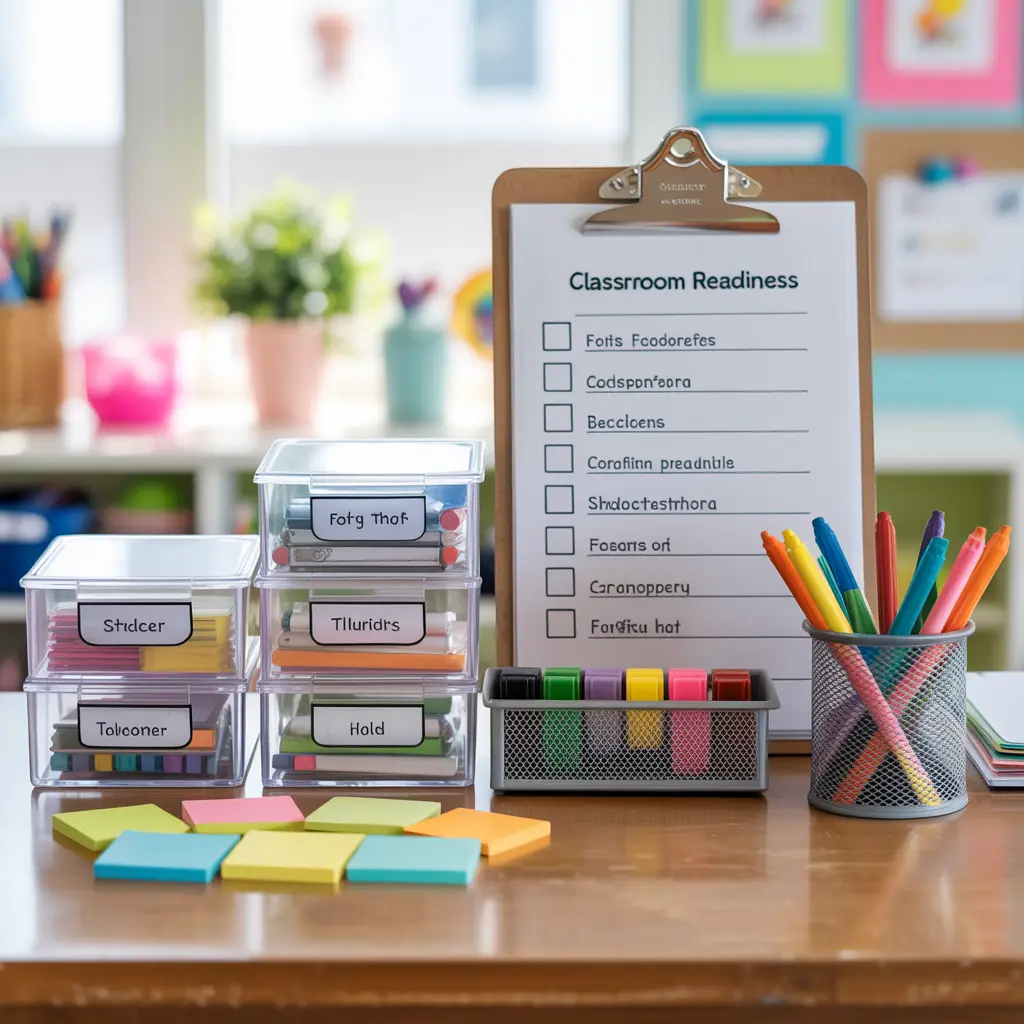
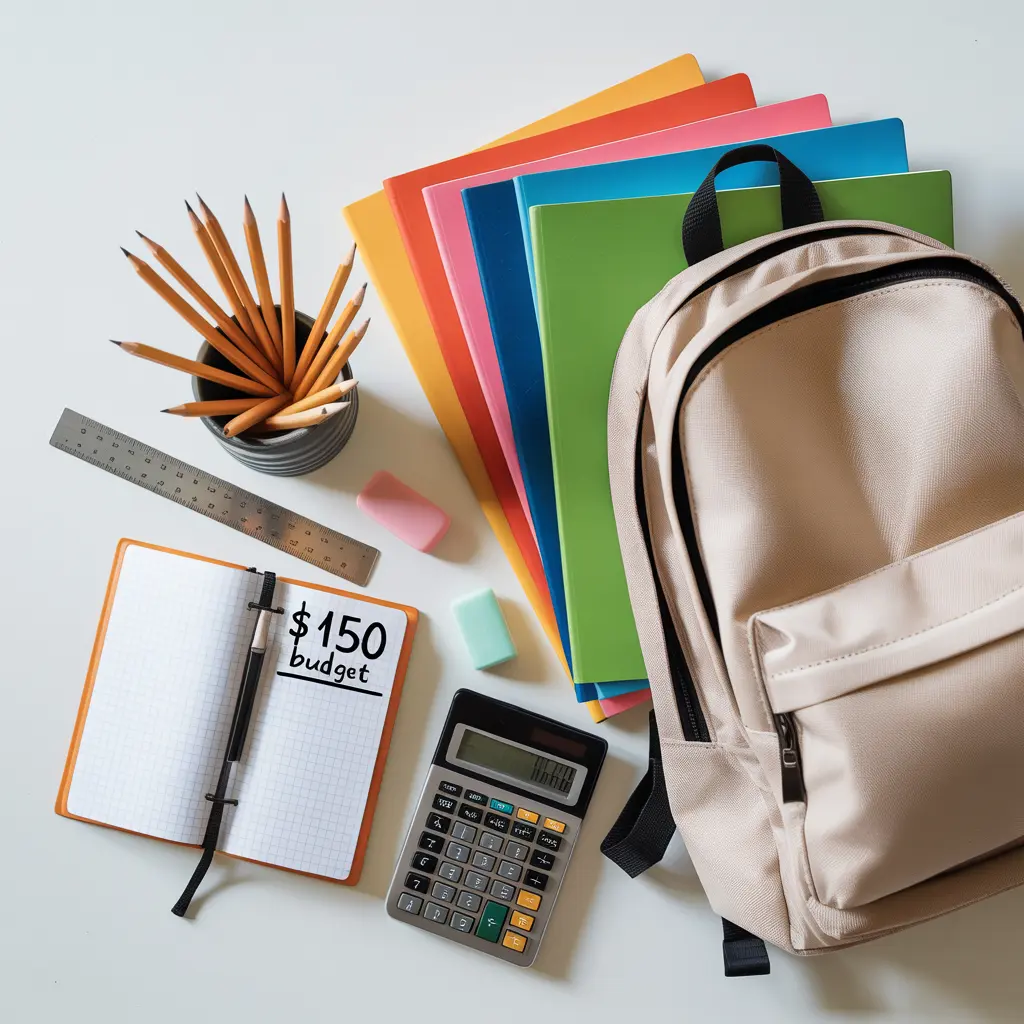
Setting up a classroom requires careful planning and strategic purchasing. Most teachers spend between $500 and $750 of personal funds annually on classroom supplies, making a comprehensive teacher supply list essential for budget management and effective classroom function. This checklist covers universal essentials, grade-specific needs, organization strategies, and funding sources to help both new and experienced educators create productive learning environments without financial strain.

Understanding Teacher Supply Needs
The supplies required for effective teaching extend far beyond what school districts typically provide. While schools generally supply core curriculum materials and furniture, teachers usually purchase supplementary items that enhance instruction, classroom management, and student engagement.
Why teachers buy their own supplies:
School budgets rarely cover specialized organizational tools, decorative materials that create welcoming environments, flexible seating options, hands-on learning materials, supplementary reading resources, and classroom management systems tailored to specific teaching styles.
Factors affecting your supply list:
Grade level significantly impacts needs—elementary teachers require more hands-on manipulatives and art supplies, while secondary teachers prioritize organizational systems and subject-specific materials. Class size determines quantity requirements. Teaching approach influences whether you need collaborative learning tools or individual work materials. Classroom layout affects storage and display needs. School-provided resources vary dramatically between districts, buildings, and even rooms.
Planning timeline:
Begin planning three months before your start date. Research school-provided items two months out. Purchase essential organizational items six weeks before classes begin. Buy consumables during back-to-school sales in July and August. Wait on decorative items until you see your physical classroom space.
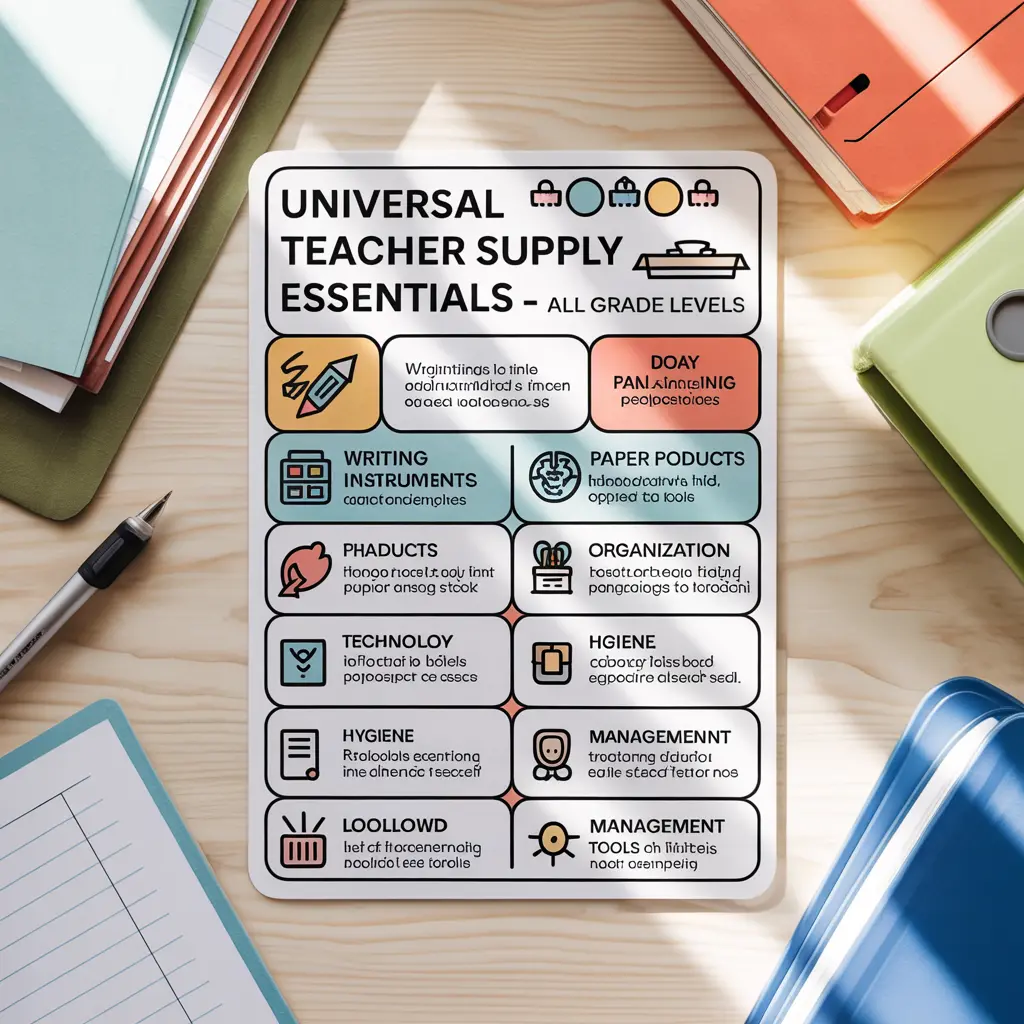
Universal Classroom Essentials (All Grade Levels)
These foundational supplies apply to nearly every teaching situation, regardless of grade level or subject area.
Writing Instruments
Pens (minimum 12-24): Keep a variety of colors for grading and feedback. Red, blue, and black are essential; green and purple help differentiate comments. Choose quick-drying ink to prevent smudging on student papers.
Pencils (minimum 24-48): Stock both for yourself and for students who forget supplies. Mechanical pencils reduce sharpening time. Traditional #2 pencils work best for standardized testing preparation.
Dry-Erase Markers (12-24): Essential for board work, with black and blue as primary colors. Purchase chisel-tip for visibility from classroom distances. Replace every 4-6 weeks during heavy use.
Permanent Markers (8-12): Necessary for labeling storage bins, creating reusable materials, and laminated resources. Sharpie brand offers consistent quality and variety of tip sizes.
Highlighters (6-12): Useful for grading, marking texts, and providing student feedback. Multiple colors allow coding systems for different comment types.
Colored Pencils/Crayons (elementary focus): Required for elementary grades; optional for secondary. Buy bulk packs rather than individual boxes for better value.
Professional tip: Buy writing instruments in bulk during back-to-school sales when prices drop 50-70%. Store backup supplies in sealed containers to prevent drying.
Paper Products
Printer Paper (2-4 reams minimum): Standard white copy paper for handouts, worksheets, and printed materials. Monitor sales for 1-cent-per-ream promotions.
Construction Paper (1-2 packs): Elementary teachers need multiple colors; secondary can start with basic assortments. Use for bulletin boards, projects, and interactive displays.
Sticky Notes (12-24 pads): Essential for annotations, quick reminders, student feedback, and classroom management. Various sizes serve different purposes—3×3 for student desks, 4×6 for planning.
Index Cards (3-5 packs): Valuable for flashcards, exit tickets, student response systems, and organizational labels. Both lined and unlined versions have distinct uses.
Chart Paper/Anchor Chart Paper (1-2 pads): Critical for elementary; useful for all levels. Create reusable reference materials, collaborative brainstorming, and visual learning supports.
Cardstock (1-2 packs): Sturdier than regular paper for reusable materials, classroom games, bulletin board letters, and student project backings.
Limitations: Paper products consume significant budget space. Prioritize printer paper and sticky notes; delay specialty papers until you assess actual usage patterns.
Organization and Storage
Binders (6-12): Separate binders for lesson plans, student data, curriculum resources, parent communication, and administrative paperwork maintain organization. 1.5-inch to 2-inch sizes offer optimal capacity.
File Folders (50-100): Manila and colored folders organize student work, unit materials, and administrative documents. Color-coding systems speed retrieval.
Storage Bins/Containers (8-15): Clear plastic containers allow visibility while protecting materials. Standardize sizes for efficient stacking. Label immediately to prevent confusion.
Desktop Organizer: Keeps frequently-used supplies accessible—pens, scissors, tape, stapler. Prevents desk clutter that wastes instructional time.
Magazine Files/Book Holders: Vertical storage for teacher manuals, curriculum guides, and reference materials. Saves desk and shelf space.
Drawer Organizers: Subdivide desk drawers for small items—paper clips, push pins, USB drives, batteries. Prevents “junk drawer” syndrome.
Label Maker or Labels: Essential for organization systems. Hand-written labels fade and peel; printed labels maintain professionalism and durability.
Common mistake: Buying storage before assessing space. Measure your classroom storage areas, shelving, and desk before purchasing to ensure proper fit.
Classroom Management Tools
Timer: Visual timers help students understand time expectations for activities, transitions, and independent work. Digital timers with projection capability work best for visibility.
Clipboard (2-3): Enables mobile observation and data collection during instruction. Attach frequently-used forms for efficiency.
Seating Chart Materials: Whether digital or physical, maintaining flexible seating charts supports classroom management and emergency preparedness.
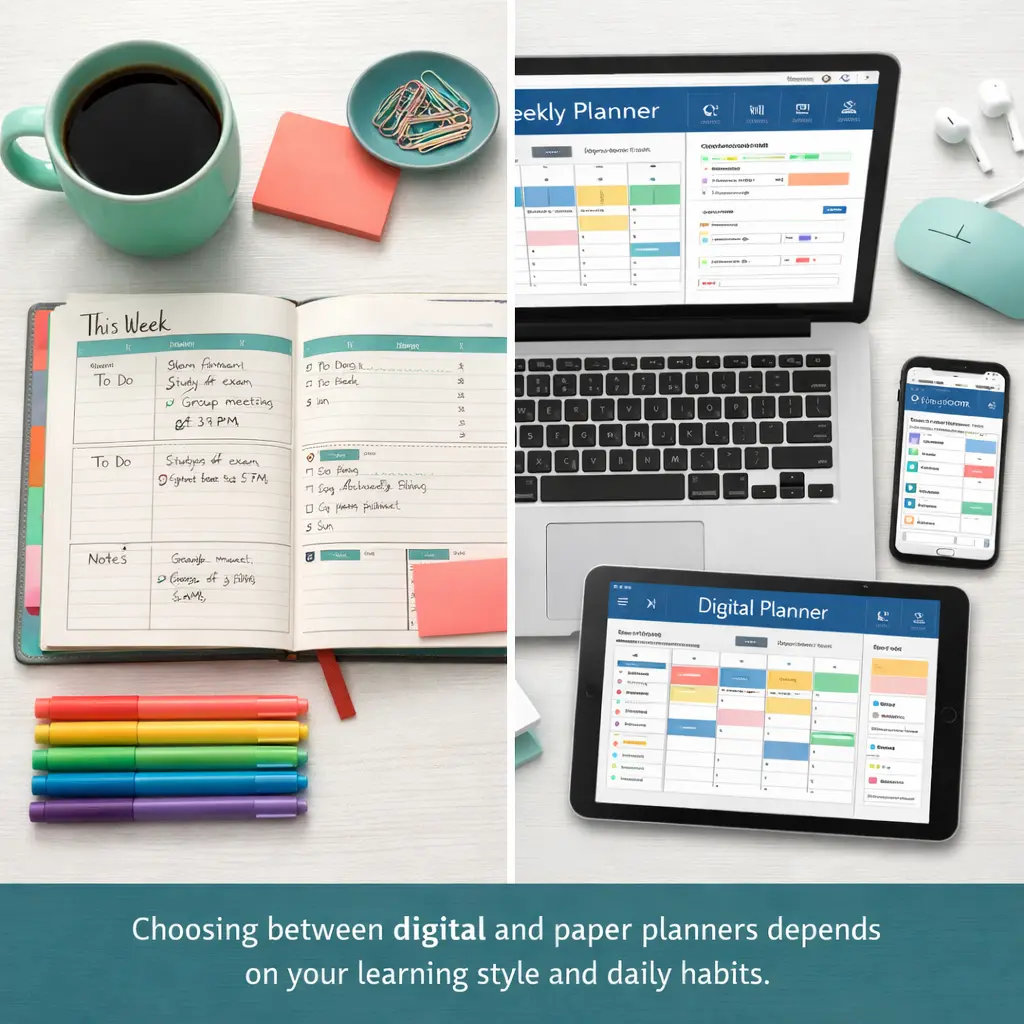
Gradebook/Planner: Paper backup for digital systems prevents data loss. Many teachers use both physical planners for weekly views and digital platforms for calculations.
Attendance Tracking System: Schools provide digital systems, but backup methods ensure accuracy during technical difficulties.
Behavior Management Supplies: Depending on your system—sticker charts, behavior cards, reward tokens, or point systems—purchase materials that align with your chosen approach.
Whistle or Attention Signal: Particularly important for physical education, recess supervision, or elementary classrooms. Prevents voice strain from repeated verbal redirections.
Example: A middle school teacher uses a color-coded clipboard system—blue for academic observations, green for behavior notes, yellow for parent contact needs. This visual system prevents missed follow-ups.
Technology and Equipment
Charging Cables (3-5): USB-C, Lightning, and micro-USB cables accommodate various devices students bring for approved activities. Keep extras because they disappear.
Extension Cords/Power Strips (2-4): Older buildings lack sufficient outlets for modern technology needs. Ensure surge protection for valuable equipment.
USB Flash Drives (2-3): Backup lesson materials, transport resources between home and school, and share files with students without internet dependency.
Headphone Splitters: Allow multiple students to share audio resources simultaneously for listening centers or partnership activities.
Webcam Cover: Protects privacy on school-issued devices during remote or hybrid instruction scenarios.
Document Camera (if not provided): Displays student work, demonstrates processes, and shares physical materials with entire class. Check if school provides before purchasing.
Batteries (AA, AAA): Classroom clocks, calculators, wireless mice, and educational manipulatives require regular battery replacement.
Professional tip: Create a “tech emergency kit” with extra cables, batteries, and adapters in a labeled container. During lessons, technical difficulties shouldn’t halt instruction while you search for replacements.
Hygiene and Safety Supplies
Tissues (12-24 boxes): Students use tissues constantly, especially during cold season. Elementary teachers need more; secondary still require adequate supply.
Hand Sanitizer (4-6 large bottles): Stations at classroom entry, near shared supplies, and at teacher desk promote health. Verify school policy on alcohol-based products.
Disinfecting Wipes (6-12 containers): Clean shared surfaces, desks, manipulatives, and technology between uses. Essential for health maintenance.
First Aid Kit: Band-aids, antibiotic ointment, disposable gloves, instant cold packs, and gauze address minor injuries. Follow school protocols for administration.
Personal Hygiene Emergency Kit: Feminine products, spare contact lens solution, pain reliever (for teacher use only), breath mints. Store privately in desk.
Trash Bags (1 box): Schools provide large bins but rarely stock bags. Purchase appropriate sizes for classroom receptacles.
Paper Towels (6-12 rolls): Spill cleanup, art projects, and hand drying supplement school-provided towels.
Limitations: Health supply needs continue year-round. Budget for restocking every 6-8 weeks rather than one-time purchase.
Display and Decoration Materials
Bulletin Board Supplies: Border trim, background paper, push pins, staples for posting student work, announcements, and learning references.
Tape Varieties: Masking tape, clear tape, double-sided tape, and painter’s tape serve different hanging and posting needs without wall damage.
Stapler and Staples: Heavy-duty staplers handle bulletin board materials and thick paper stacks. Desktop staplers organize daily paperwork.
Scissors (2-3 pairs): Adult scissors for teacher use, safety scissors if students share supplies. Sharp blades reduce frustration with classroom materials.
Velcro Strips or Command Hooks: Damage-free hanging solutions for posters, anchor charts, and organizational materials. Particularly important in schools restricting wall damage.
Name Tags/Desk Plates: Help learn student names quickly and maintain seating charts. Reusable options adjust for mid-year changes.
Calendar or Schedule Display: Visual reference for daily routines, special events, and countdown motivators.
Common mistake: Over-decorating before meeting students. Save 30-40% of wall space for student work and co-created materials that build community.
Grade-Level Specific Supplies
While universal supplies form the foundation, grade-level differences significantly impact additional needs.
Pre-K and Kindergarten
Hands-On Manipulatives: Counting bears, pattern blocks, linking cubes, and tactile letters support developmental learning.
Art Supplies: Crayons, washable markers, child-safe scissors, glue sticks, playdough, and finger paints enable creative expression and fine motor development.
Sensory Materials: Sand/water table supplies, textured objects, and exploration tools align with developmentally-appropriate practice.
Rest Time Supplies: Mats, blankets, or rest area materials if your program includes scheduled rest periods.
Manipulative Storage: Low shelves with picture labels enable student independence and cleanup routines.
Carpet Squares: Define personal space during circle time and whole-group instruction.
Storybooks: Classroom library with picture books at various reading levels supports literacy development and read-aloud instruction.
Example: An experienced kindergarten teacher budgets 40% of supply funds for consumable art materials that require monthly restocking, rather than one-time organizational purchases.
Elementary (Grades 1-5)
Math Manipulatives: Base-ten blocks, fraction pieces, geometric shapes, measurement tools (rulers, measuring cups), and multiplication charts support concrete learning.
Reading Materials: Classroom library with varied genres and reading levels, book bins for organization, and reading response journals.
Science Supplies: Magnifying glasses, simple measurement tools, observation journals, and materials for hands-on experiments.
Reward/Incentive System Supplies: Stickers, small prizes, certificates, or materials supporting your chosen motivation approach.
Flexible Seating Options: Stability balls, floor cushions, or standing desk converters accommodate different learning needs and energy levels.
Student Supply Backups: Extra pencils, erasers, glue sticks, and crayons for students who lack supplies. Prevents instructional delays.
Anchor Chart Materials: Large chart paper, quality markers, and storage system for reusable reference materials created with students.
Limitations: Elementary consumables deplete rapidly. Budget for quarterly restocking of pencils, crayons, glue sticks, and tissues rather than annual purchasing.
Middle School (Grades 6-8)
Organization Systems for Multiple Classes: Color-coded folders or binders per class period, filing systems handling 100+ students, and efficient paper return methods.
Subject-Specific Materials: Depends on content area—graphing calculators for math, novels for English, maps for social studies, safety equipment for science.
Student Accountability Tools: Assignment trackers, late work systems, and documentation methods for parent communication regarding 100+ students.
Technology Management: Charging stations for classroom devices, cable organization for multiple electronics, and digital resource access systems.
Independent Work Supplies: Reference materials students access independently, dictionary sets, thesauruses, and subject-specific tools.
Classroom Library (especially ELA): Young adult novels, graphic novels, magazines, and high-interest/low-level reading materials.
Professional tip: Middle school teachers should prioritize organizational systems over decorative materials. Managing 100+ students requires exceptional organization more than aesthetic appeal.
High School (Grades 9-12)
Subject-Specific Equipment: Depends entirely on content area—lab equipment for sciences, art supplies for arts, specialized calculators for advanced math.
College and Career Readiness Materials: Resume templates, college application resources, portfolio development tools, and professional communication examples.
Reduced Consumables: High school students typically provide their own basic supplies, reducing teacher burden for pencils, paper, and folders.
Classroom Library (content-specific): Reference materials, relevant magazines, subject-specific reading materials supporting curriculum standards.
Test Preparation Materials: Practice tests, study guides, and resources aligned with standardized assessments relevant to your content.
Presentation Supplies: Poster boards, markers, and materials for student presentations and projects.
Common mistake: Over-purchasing student supplies. High school students should provide their own basics—focus budget on instructional materials and subject-specific resources.
Budget-Conscious Supply Planning
Strategic planning stretches limited resources while maintaining classroom effectiveness.
Essential vs. Nice-to-Have Categories
Tier 1: Must Purchase Immediately
- Writing instruments for teacher use
- Basic paper products (printer paper, sticky notes)
- Organizational essentials (binders, folders)
- Classroom management basics (timer, clipboard)
- Hygiene supplies (tissues, hand sanitizer)
- Technology basics (charging cables, extension cords)
Tier 2: Purchase Within First Month
- Storage containers
- Display materials for bulletin boards
- Subject-specific instructional materials
- Student supply backups
- Additional organizational tools
Tier 3: Add as Budget Allows
- Decorative enhancements
- Flexible seating options
- Extensive classroom library additions
- Premium organizational systems
- Technology upgrades
Action steps:
- Total your available budget from all sources
- Allocate 60% to Tier 1 essentials
- Reserve 30% for Tier 2 within-month needs
- Save 10% for unexpected mid-year requirements
- Reassess quarterly based on actual usage
Funding Sources and Grants
DonorsChoose: Free platform where teachers post project requests and community donors fund them. Most effective for specific projects rather than general supplies. Success increases with clear explanations, student impact stories, and reasonable budgets.
Local Education Foundation: Many communities have education foundations providing mini-grants to teachers. Applications typically due in spring or early summer.
Parent-Teacher Organizations: PTO/PTA groups often fund classroom supply requests. Submit formal proposals with itemized budgets and educational justifications.
Community Partnerships: Local businesses may donate supplies or funds in exchange for recognition. Office supply stores, copy centers, and bookstores frequently support educators.
Crowdfunding: Platforms beyond DonorsChoose include AdoptAClassroom and ClassWish. Social media appeals to personal networks can supplement formal campaigns.
Tax Deductions: Educator Expense Deduction allows qualified educators to deduct up to $300 (check current IRS limits) of unreimbursed classroom expenses. Maintain receipts and documentation.
Warehouse Stores: Membership at Costco, Sam’s Club, or BJ’s provides bulk pricing. Share membership costs with colleagues and coordinate group purchases.
Professional tip: Apply for grants in spring for fall implementation. Grant cycles typically run January-April, with funds distributed over summer for fall use.
Budget Reality Check
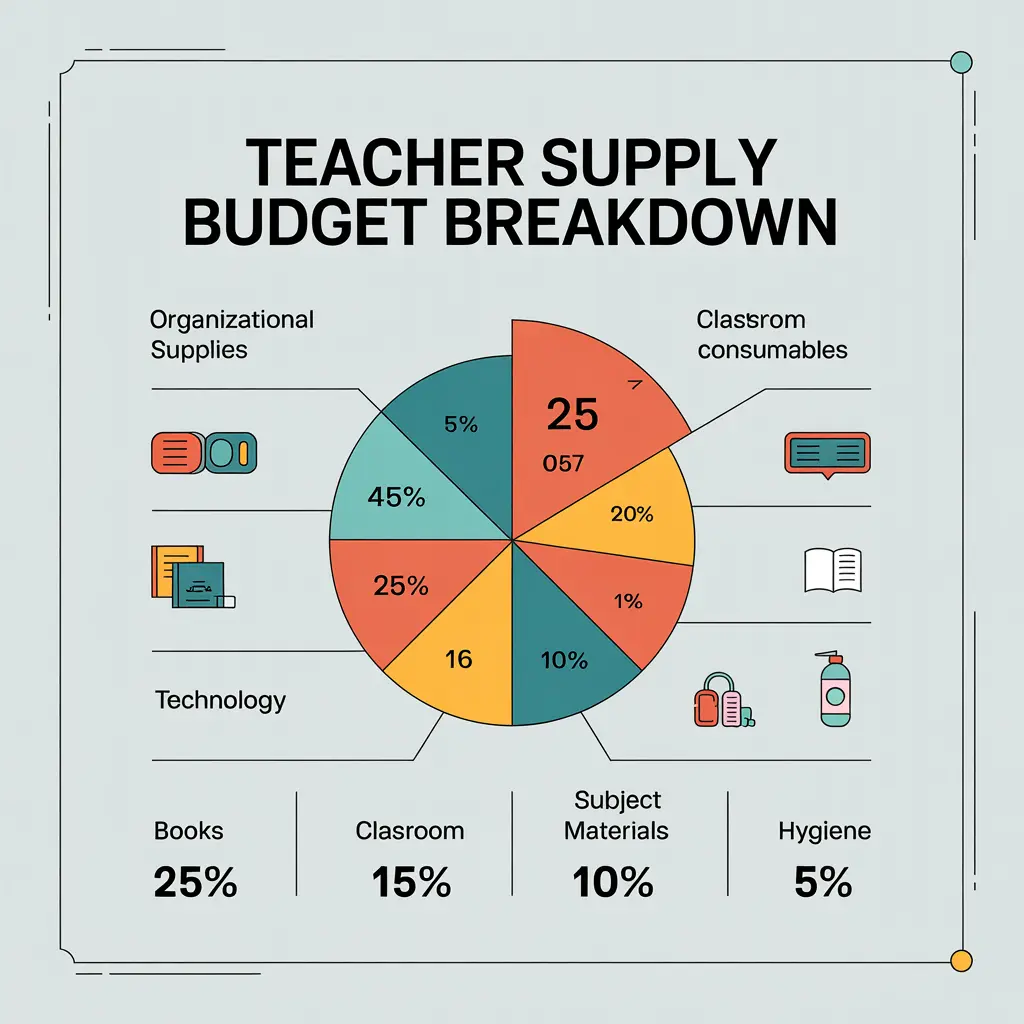
Average teacher spending by category based on educator surveys:
- Organizational supplies: 25% of budget
- Classroom décor and display: 15%
- Student consumables (pencils, tissues): 20%
- Technology and equipment: 15%
- Books and reading materials: 10%
- Subject-specific materials: 10%
- Hygiene and cleaning supplies: 5%
Understanding these proportions helps allocate limited funds strategically rather than impulse purchasing.
Organization Systems That Work
Effective organization prevents waste, saves instructional time, and maintains sanity.
Storage Solutions
Clear Containers with Labels: Visibility prevents duplicate purchases and speeds location. Label contents, quantity, and designated location for efficient restocking.
Vertical Storage Maximization: Use wall space with shelving units, hanging organizers, and over-door storage. Floor space should remain accessible for student movement.
Student-Accessible vs. Teacher-Controlled: Clearly distinguish which supplies students access independently versus teacher-managed resources. Separate storage prevents depletion of limited supplies.
Supply Stations: Create dedicated areas for specific purposes—writing station, art supplies corner, technology charging hub. Reduces clutter on primary work surfaces.
Seasonal Rotation: Store off-season items (holiday decorations, specific unit materials) separately. Rotate into active classroom space as curriculum progresses.
Mobile Storage: Rolling carts enable flexible classroom arrangement and transport supplies to student areas rather than student traffic to supply area.
Example: A fourth-grade teacher uses a three-tier rolling cart—top tier holds daily essentials (pens, sticky notes, stapler), middle tier contains current unit materials, bottom tier stores next unit’s supplies for quick transition.
Inventory Management
Supply Check-In Protocol: Monthly inventory prevents emergency shortages. Use simple spreadsheet or app to track consumption rates.
Restocking Schedule:
- Weekly: Tissues, hand sanitizer, pencils
- Bi-weekly: Paper products, dry-erase markers
- Monthly: Organizational supplies, student backups
- Quarterly: Specialty items, subject-specific materials
- Annually: Storage containers, furniture
Consumption Tracking: Note which items deplete faster than anticipated. Adjust future purchasing based on actual use rather than estimated needs.
Donation Management: Track parent donations separately from purchased supplies. Send thank-you notes and ensure donated items supplement rather than replace your core supplies.
Professional tip: Take photos of organized storage areas at year start. When systems deteriorate mid-year, photos show the target organization to restore.
Student Access Guidelines
Self-Service Supplies: Items students access freely—tissues, pencils, erasers. Teach procedures immediately to prevent waste and establish norms.
Requested Supplies: Materials students request from teacher—special paper, art supplies, specific books. Prevents hoarding and ensures equitable distribution.
Teacher-Controlled Supplies: Expensive or limited items—laminating film, premium markers, technology equipment. Maintain personal control to extend lifespan.
Check-Out Systems: For borrowed items (books, scissors, calculators), use simple sign-out sheets or library pockets. Accountability reduces losses.
Replacement Expectations: Clarify which items students replace if lost or damaged. Communicate policies clearly to prevent misunderstandings.
Common mistake: Making all supplies student-accessible. Open access to glue sticks, markers, and tape results in waste and rapid depletion. Control distribution of consumables.
Where to Buy Teacher Supplies
Strategic shopping stretches budgets significantly.
Retailer Comparison
Amazon: Convenience and variety, especially with Prime membership. Subscribe & Save options reduce consumable costs 5-15%. Compare unit prices carefully—bulk isn’t always cheaper.
Dollar Stores: Excellent for consumables like tissues, hand sanitizer, storage bins, and basic organizational supplies. Quality varies; avoid for items requiring durability.
Office Supply Stores (Staples, Office Depot): Teacher rewards programs provide quarterly bonuses. Back-to-school penny deals on select items. Recycling programs offer store credit for ink cartridges.
Warehouse Clubs (Costco, Sam’s Club): Best pricing on bulk paper products, storage containers, and snacks for classroom rewards. Share membership with colleagues to justify cost.
Teacher Supply Stores (Lakeshore Learning, Really Good Stuff): Specialized educational materials with quality assurance. Higher prices justified for durable manipulatives and teaching tools. Watch for clearance sales.
Discount Retailers (Target, Walmart): Back-to-school sales rival other retailers. Cartwheel/Circle apps provide additional discounts. Stock varies by location.
Thrift Stores and Garage Sales: Books, baskets, containers, and furniture at fraction of retail cost. Summer garage sales yield moving teachers selling supplies.
Professional tip: Stack savings by combining store sales, retailer rewards programs, credit card cash-back, and coupon apps simultaneously. A $20 item can cost $8-10 with strategic stacking.
Sale Timing Strategies
Best Times to Buy:
July-August: Back-to-school sales offer year’s best pricing on basics—notebooks, pencils, folders, crayons. Stock up on consumables for entire year.
December-January: Post-holiday clearance on organizational supplies, containers, and decorative items. Winter-themed items at 70-90% off for future use.
May-June: End-of-year clearance as retailers make room for summer inventory. Outdoor supplies and storage solutions discounted heavily.
Weekly Loss Leaders: Thursday-Saturday weekly promotions at office supply stores. Sign up for email alerts to catch rotating doorbusters.
Teacher Appreciation Week (early May): Many retailers offer educator-specific discounts 10-25% off. Bring teacher ID for verification.
Action steps for sale shopping:
- Create master supply list in spring
- Monitor sale flyers June-August
- Purchase non-perishables in bulk during peak sales
- Stock consumables to last full academic year
- Buy next year’s supplies during current year’s sales
Common Supply Mistakes to Avoid
Learning from others prevents costly errors.
Mistake 1: Over-purchasing trendy items
Flexible seating, elaborate organizational systems, and Pinterest-perfect décor drain budgets quickly. Prioritize functional essentials over aesthetic trends.
Mistake 2: Buying before seeing your space
Classroom size, existing furniture, storage capacity, and layout dramatically affect needs. Wait to purchase storage until you measure actual space.
Mistake 3: Assuming school provides basics
Verify exactly what your school supplies before purchasing. Some districts provide extensive materials; others offer minimal support. Ask veteran teachers for honest assessment.
Mistake 4: Neglecting restocking budget
Initial setup costs differ from ongoing consumable replacement. Reserve 20-30% of budget for mid-year restocking of tissues, markers, paper, and cleaning supplies.
Mistake 5: Purchasing low-quality basics
Cheap staplers jam, budget scissors don’t cut, and dollar-store markers dry immediately. Invest in quality for frequently-used tools; economize on true consumables.
Mistake 6: Ignoring free resources
School libraries, district resource centers, and community organizations offer free materials. Explore available resources before purchasing duplicates.
Mistake 7: Buying everything on student supply lists
Student supply lists indicate what students should bring. Don’t purchase these items unless students consistently lack them in your specific context.
Professional tip: Join teacher social media groups for your grade level. Ask what items they regret purchasing and what they wish they’d bought sooner. Real-world experience trumps theoretical lists.
Restocking and Maintenance Schedule
Proactive restocking prevents mid-lesson emergencies.
Monthly Checks (beginning of month)
- Tissue box count
- Hand sanitizer levels
- Dry-erase marker functionality
- Copy paper supply
- Pencil availability
- Trash bag stock
Quarterly Review (September, December, March, June)
- Student consumable supplies (crayons, glue sticks, scissors)
- Organizational system effectiveness
- Storage capacity vs. current materials
- Classroom library condition and interest levels
- Technology functionality (charging cables, batteries)
- Hygiene supply adequacy
Semester Deep Clean (January and June)
- Purge broken or unused materials
- Reorganize storage systems
- Clean manipulatives and shared tools
- Update labels as needed
- Inventory for summer ordering
- Repair or replace damaged furniture/equipment
Seasonal Restocking Schedule
September-October: Replenish consumables after initial month’s heavy use. Students settle into routines, revealing actual consumption patterns.
November-December: Stock up on tissues and hand sanitizer before cold/flu season peak. Purchase holiday materials during post-season clearance.
January-February: Assess organizational systems and make adjustments. First semester revealed what works; refine systems rather than maintaining ineffective approaches.
March-April: Plan for end-of-year projects and activities. Purchase materials during spring sales for culminating activities.
May-June: Inventory remaining supplies, note faster-than-expected consumption, and create summer purchasing list based on year’s experience.
Example: A third-grade teacher sets phone reminders for the 1st and 15th of each month. First reminder prompts tissue/sanitizer check; fifteenth reminder triggers dry-erase marker and paper stock review. Consistent schedule prevents emergency runs to stores during planning periods.
Parent Communication About Supplies
Clear communication prevents misunderstandings while building support.
Back-to-School Supply Lists
Distinguish between student personal supplies and classroom donation requests. Personal supplies remain individual student property; donations become communal classroom resources.
Sample communication structure:
“Required personal supplies: [list items students keep in desks/backpacks]
Optional classroom donations: [list communal supplies appreciated but not required]
No student will be denied materials due to inability to provide supplies.”
Throughout-Year Needs
Methods for communicating ongoing needs:
- Monthly newsletters with “current needs” section
- Amazon wish list link in email signature
- Specific requests tied to upcoming units (“We’re studying ecosystems next month and could use empty containers for terrarium building”)
- Appreciation notices when donations arrive
Tone considerations: Express gratitude for any contributions while reassuring families that all students receive necessary materials regardless of family donations. Avoid language that shames non-contributing families.
Donation Management
Organization system: Track who donated what to ensure equitable recognition and appropriate thank-yous. Simple spreadsheet prevents overlooked contributions.
Thank-you protocols: Personal notes for significant donations, public recognition in newsletters for all contributions, student-created thank-you cards for community partners.
Limitations to communicate: Some families cannot contribute financially but might offer time, expertise, or material donations from home. Provide various support options beyond monetary spending.
Professional tip: Create free classroom wish list on Amazon or Target registries. Include items at various price points ($5-50). Share link in newsletters and at parent conferences. Families appreciate specific guidance over general requests.
COMPARISON TABLES
Supply Budget Allocation by Grade Level
| Category | Pre-K/K | Elementary (1-5) | Middle (6-8) | High School (9-12) |
|---|---|---|---|---|
| Consumables (pencils, crayons, tissues) | 30% | 25% | 15% | 10% |
| Organization & Storage | 15% | 20% | 30% | 25% |
| Instructional Materials | 25% | 20% | 20% | 30% |
| Classroom Library | 10% | 15% | 10% | 15% |
| Technology & Equipment | 5% | 10% | 15% | 15% |
| Décor & Display | 15% | 10% | 10% | 5% |
Retailer Comparison for Common Supplies
| Item | Amazon | Dollar Store | Office Supply Store | Warehouse Club | Teacher Store |
|---|---|---|---|---|---|
| Dry-erase markers (12-pack) | $10-12 | $5-6 (lower quality) | $8-10 (with rewards) | $12-15 (bulk 24+) | $15-18 |
| Copy paper (ream) | $7-9 | N/A | $5-6 (sale) | $25-30 (10-pack) | $8-10 |
| Storage bins (clear) | $12-15 | $3-5 | $8-12 | $15-20 (set of 4) | $10-15 |
| Tissues (12-box case) | $18-22 | $12-15 | $15-20 | $15-18 | N/A |
| Sticky notes (12-pad pack) | $8-12 | $3-4 (smaller size) | $6-8 (sale) | $10-12 | $12-15 |
Supply Longevity and Replacement Schedule
| Supply Item | Expected Lifespan | Restocking Frequency | Budget-Friendly Alternative |
|---|---|---|---|
| Dry-erase markers | 4-6 weeks heavy use | Monthly-Bi-weekly | Refillable markers, whiteboard pens |
| Pencils | Varies by student use | Bi-weekly | Accept dull pencils for non-testing work |
| Tissues | 2-3 weeks per box | Weekly (cold season) | Request parent donations, encourage personal packs |
| Hand sanitizer | 4-6 weeks | Monthly | Bulk refill bottles vs. individual pumps |
| Copy paper | 2-4 weeks per ream | Monthly | Digital assignments, two-sided printing |
| Storage containers | 3-5 years | As needed | Repurpose boxes, ask families for donations |
| Binders | 2-3 years | Annually | Digital organization systems |
CHECKLISTS
New Teacher First-Purchase Checklist
Before School Year Starts:
□ Measure classroom storage, desk, and wall space
□ Verify what school provides (ask administration and veteran teachers)
□ Establish total budget from all sources
□ Create prioritized purchasing list
Tier 1 Essentials (Purchase First):
□ Pens (24 count, multiple colors)
□ Pencils (48 count)
□ Dry-erase markers (24 count)
□ Printer paper (4 reams)
□ Sticky notes (24 pads, various sizes)
□ Binders (6-10 for organization)
□ File folders (100 count)
□ Storage bins (10-12 clear containers)
□ Timer
□ Clipboard (2-3)
□ Tissues (12 boxes)
□ Hand sanitizer (6 bottles)
□ Disinfecting wipes (6 containers)
□ First aid kit basics
□ Stapler and staples
□ Tape (masking, clear, double-sided)
□ Scissors (2-3 pairs)
Tier 2 Within-Month Needs:
□ Additional organizational supplies based on space
□ Bulletin board materials
□ Name tags/desk plates
□ Grade-specific manipulatives
□ Classroom library starter books
□ Extension cords/power strips
□ USB drives
□ Subject-specific instructional materials
Tier 3 Add As Budget Allows:
□ Decorative enhancements
□ Flexible seating options
□ Expanded classroom library
□ Premium organizational tools
□ Specialty technology
Monthly Restocking Checklist
Week 1 of Month:
□ Count tissue boxes, reorder if below 4
□ Check hand sanitizer levels
□ Test dry-erase markers, discard dried ones
□ Verify copy paper supply (minimum 2 reams)
□ Count available pencils for student use
□ Check trash bag supply
Week 2 of Month:
□ Assess student consumable supplies (crayons, glue, scissors)
□ Review organizational system effectiveness
□ Clean shared manipulatives and tools
□ Check technology functionality (cables, batteries)
Week 3 of Month:
□ Inventory specialty supplies for upcoming units
□ Review and update classroom library
□ Assess display and bulletin board materials
□ Check furniture and equipment for needed repairs
Week 4 of Month:
□ Place orders for depleted supplies
□ Update budget tracking
□ Organize receipts for tax documentation
□ Review donation needs for next month’s newsletter
End-of-Year Inventory Checklist
Storage and Organization:
□ Photograph current organization systems before dismantling
□ Label stored items with contents and grade level
□ Purge broken, damaged, or unused materials
□ Clean all storage containers
□ Create “first week back” box with immediate-need items
Supply Assessment:
□ Inventory remaining consumables
□ Note items that depleted faster than expected
□ Identify organizational systems that worked/failed
□ List needed repairs or replacements
□ Update master supply list for next year
Planning for Next Year:
□ Create summer purchasing list based on year’s experience
□ Submit any grant applications for fall
□ Research new organizational solutions for problem areas
□ Monitor summer sales for advance purchasing
□ Update budget based on actual spending patterns
DECISION FRAMEWORKS
“Should I Buy This?” Decision Framework
Ask these questions before purchasing:
Question 1: Is this a school-provided item?
- YES → Don’t purchase; request through proper channels
- NO → Continue to Question 2
Question 2: Will this directly support daily instruction or management?
- YES → Continue to Question 3
- NO → Delay purchase; add to “nice-to-have” list
Question 3: Can I afford this within my current budget tier?
- YES → Continue to Question 4
- NO → Research funding sources or save for future budget period
Question 4: Do I have physical space to store this effectively?
- YES → Continue to Question 5
- NO → Delay until space becomes available or reorganized
Question 5: Is this the best value for my limited budget?
- Compare prices across retailers
- Consider quality vs. longevity for frequent-use items
- Calculate per-use cost rather than initial price
- YES → Purchase
- NO → Research alternatives
Budget Tier Decision Matrix
Use this framework to categorize each supply item:
Tier 1 (Must Have Immediately): Cannot start school year without this item. Directly impacts ability to teach lessons, manage classroom, or maintain student safety.
Tier 2 (Need Within First Month): Can start year without this but will significantly improve effectiveness. Should purchase with first paycheck or identified funding.
Tier 3 (Nice to Have): Enhances environment or instruction but alternatives exist. Purchase only after Tiers 1-2 complete and budget remains.
Reassess Regularly: Items move between tiers based on teaching reality vs. planning assumptions. Flexibility prevents frustration.
Quality vs. Economy Decision Guide
Invest in Quality (Higher Initial Cost, Lower Long-Term Cost):
- Items used multiple times daily (stapler, scissors, timer)
- Safety-related supplies (first aid, sanitizer)
- Technology with 3+ year lifespan (document camera, charging equipment)
- Organizational furniture and storage
- Teaching manipulatives used annually
Choose Economy Option (Lower Initial Cost, Acceptable for Purpose):
- True consumables (tissues, paper towels, trash bags)
- Decorative items changed annually
- Trial items for new organizational systems
- Seasonal or one-time project materials
- Backup supplies for student use
Research Required (Compare Carefully):
- Paper products (sometimes bulk isn’t cheaper per sheet)
- Storage containers (cheap versions crack; expensive versions overkill)
- Writing instruments (quality varies dramatically by brand)
- Cleaning supplies (concentrate vs. ready-to-use cost analysis)
FAQs
1. How much should teachers expect to spend on classroom supplies?
Most teachers spend between $500 and $750 annually on classroom supplies from personal funds, though some spend significantly more. First-year teachers typically spend $800-1,200 setting up classrooms initially. Spending varies by grade level—elementary teachers generally spend more than secondary teachers due to greater needs for consumables and hands-on materials. Subject area also affects costs, with art, science, and special education teachers facing higher supply expenses. The Educator Expense Deduction allows qualified teachers to deduct up to $300 of unreimbursed expenses on federal taxes, though this doesn’t eliminate the financial burden. Strategic shopping during sales, utilizing grants and donations, and prioritizing essential items over decorative materials helps control costs.
2. What supplies do schools typically provide vs. what teachers buy?
Schools generally provide core curriculum materials, textbooks, furniture, basic technology, and standard office supplies like copy paper for the main office copier. However, schools rarely supply supplementary instructional materials, classroom organizational systems, cleaning and hygiene products beyond janitorial service, decorative materials, flexible seating options, or classroom libraries beyond media center access. The exact division varies dramatically between well-funded and under-resourced districts. Before purchasing, new teachers should request an itemized list of school-provided supplies from administration, ask veteran teachers for honest assessment of actual vs. advertised provisions, tour the classroom to see existing resources, and verify technology access and functionality. Assumptions about school provisions lead to either unnecessary purchases or critical gaps in classroom resources.
3. When is the best time to buy teacher supplies?
The best purchasing period is July through August during back-to-school sales when retailers offer steep discounts on basics like pencils, notebooks, folders, crayons, and organizational supplies. Many items sell at or below cost as loss leaders to attract customers. Secondary optimal times include post-holiday clearance in December and January with 70-90% discounts on storage containers and organizational items, end-of-year sales in May and June as retailers clear inventory, and Teacher Appreciation Week in early May when many stores offer educator-specific discounts of 10-25%. Weekly loss leaders at office supply stores rotate throughout the year, providing opportunities on specific items. Teachers should create master supply lists in spring, monitor sale flyers over summer, purchase non-perishables in bulk during peak sales, and buy next year’s supplies during the current year’s clearance events rather than paying full price.
4. How can teachers get classroom supplies for free or at reduced cost?
Multiple funding sources exist beyond personal spending. DonorsChoose is a free platform where teachers post specific project requests and community members fund them; success rates increase with clear explanations and reasonable budgets. Local education foundations provide mini-grants, typically $100-500, through simple application processes. Parent-Teacher Organizations often fund classroom requests when teachers submit formal proposals. Community business partnerships can provide supplies or funds in exchange for recognition. Crowdfunding through platforms like AdoptAClassroom supplements formal grant applications. Many teachers also ask families for donations of specific needed items, utilize school district resource centers that provide free materials, attend community give-back events and teacher supply drives, and shop thrift stores and garage sales for books and organizational supplies. Tax deductions through the Educator Expense Deduction recover some costs during tax season but require maintaining detailed receipts.
5. What are the most essential supplies for first-year teachers?
New teachers should prioritize organizational and management tools over decorative items. Critical supplies include writing instruments (pens, pencils, dry-erase markers) for both teacher and student use, paper products (printer paper, sticky notes) for daily instruction, storage containers and filing systems to establish organization immediately, classroom management tools (timer, clipboard) for effective instruction, basic technology accessories (charging cables, extension cords) for device-dependent teaching, hygiene supplies (tissues, hand sanitizer, first aid kit) for health and safety, and minimal bulletin board materials for required displays. Grade-level specific additions include manipulatives for elementary, subject-specific materials for secondary, and student supply backups for contexts where families cannot provide materials. First-year teachers should resist the urge to create Pinterest-perfect classrooms immediately, instead focusing 70% of budget on functional essentials and only 30% on aesthetic enhancements after assessing actual teaching needs.
6. How do supply needs differ between elementary and secondary classrooms?
Elementary classrooms require extensive consumable supplies like crayons, markers, glue sticks, and construction paper for hands-on learning activities. Elementary teachers need more classroom management tools, hands-on manipulatives for concrete learning, robust classroom libraries, student supply backups since younger students frequently forget materials, and art supplies integrated into regular instruction. Secondary classrooms prioritize organizational systems for managing 100+ students across multiple class periods, subject-specific instructional materials rather than general consumables, reduced student supply purchases since older students provide their own basics, technology integration tools, and content-area resources like novels, lab equipment, or historical documents. Elementary teachers typically spend more on supplies overall but focus on consumables, while secondary teachers spend less total but more on specialized instructional materials. The fundamental difference is elementary emphasis on hands-on exploration versus secondary focus on content-specific learning tools.
7. Should teachers buy items from student supply lists for their classrooms?
No. Student supply lists indicate materials students should bring for personal use. Teachers should not purchase these items unless students in their specific context consistently lack basic supplies despite family requests. The distinction between student supplies and teacher classroom supplies is important—student supplies belong to individual students for personal use, while teacher supplies create the classroom learning environment and instructional tools. If students regularly arrive without required materials, teachers should first communicate with administration about support systems, work with counselors to identify students needing assistance, request parent donations for communal classroom supplies, and apply for grants or funds specifically for student materials. Some contexts require teacher-provided student supplies, but this should be strategic response to demonstrated need rather than assumption, and such purchases qualify for different funding streams than general classroom setup.
8. How should teachers organize classroom supplies for efficiency?
Effective organization distinguishes student-accessible supplies from teacher-controlled materials, uses clear labeled containers for visibility and quick identification, establishes vertical storage maximizing wall space while keeping floor areas clear, creates dedicated supply stations for specific purposes reducing clutter on work surfaces, and implements check-out systems for borrowed items ensuring accountability. Teachers should organize by frequency of use—daily-use items in most accessible locations, weekly items in secondary storage, and occasional-use materials in deeper storage. Color-coding systems speed retrieval for different subjects or purposes. Mobile storage like rolling carts brings supplies to students rather than creating traffic to fixed locations. Organization should happen before purchasing to prevent overbuying items that won’t fit available space. Successful systems include taking photos of organized areas to restore when systems deteriorate, monthly inventory preventing emergency shortages, and clear student training on accessing allowed materials independently to reduce constant teacher interruption.
9. What supplies do teachers need to restock most frequently?
Consumable supplies require regular restocking throughout the school year. Tissues need weekly replacement during cold and flu season, less frequently otherwise. Dry-erase markers last 4-6 weeks with heavy use requiring monthly evaluation and replacement. Hand sanitizer depletes every 4-6 weeks depending on class size and promotion of use. Copy paper typically requires monthly restocking with one ream lasting 2-4 weeks. Pencils for student use need bi-weekly replenishment in elementary settings, less in secondary. Disinfecting wipes require monthly replacement for regular surface cleaning. Sticky notes last 1-2 months depending on instructional use. Teachers should budget 20-30% of total supply funds for ongoing restocking rather than allocating everything to initial setup. Monitoring consumption patterns during the first month reveals actual depletion rates for specific contexts, allowing adjustment of restocking schedules and budget allocations. Bulk purchasing during sales for entire year’s consumption of true consumables provides both cost savings and reduced shopping frequency.
10. Are there supplies teachers regret buying or wish they had purchased sooner?
Common regretted purchases include excessive decorative items that collect dust rather than enhance learning, trendy organizational systems that don’t fit actual workflow, cheap versions of frequently-used tools that break immediately requiring replacement, subject-specific materials before understanding curriculum requirements, and flexible seating options without adequate classroom management systems in place. Teachers consistently wish they had invested sooner in quality staplers and hole punches that withstand heavy use, adequate storage containers before accumulating materials, effective classroom management tools like visual timers, comprehensive first aid and hygiene supplies before student need arose, and functional organizational systems over aesthetic appearance. The pattern is clear—experienced teachers prioritize function over form, quality over quantity for frequent-use items, and systematic organization over decorative appeal. New teachers should resist Pinterest-inspired impulse purchases, instead asking veteran teachers in their specific context what proved essential versus wasteful, and starting with minimal supplies while assessing actual needs through teaching experience.
Tags: teacher supply list, classroom essentials checklist, teacher supplies for classroom, new teacher supply list, elementary teacher supplies, classroom supplies checklist, back to school teacher supplies, first year teacher supplies, what supplies do teachers need, teacher classroom essentials, supplies for teachers, classroom supply list PDF, teacher shopping list, classroom organization, teacher desk supplies, student supplies, classroom management tools, learning materials, educational resources, classroom furniture, storage solutions, bulletin boards, anchor charts, teacher supply list for first year teachers, elementary classroom supply list for teachers, what classroom supplies do teachers pay for, how to organize teacher supplies, where to buy teacher supplies cheap, what supplies do teachers need for their classroom, how much do teachers spend on classroom supplies, what should be on a teacher supply list, do teachers buy their own supplies, what are essential classroom supplies



Leave a Reply