

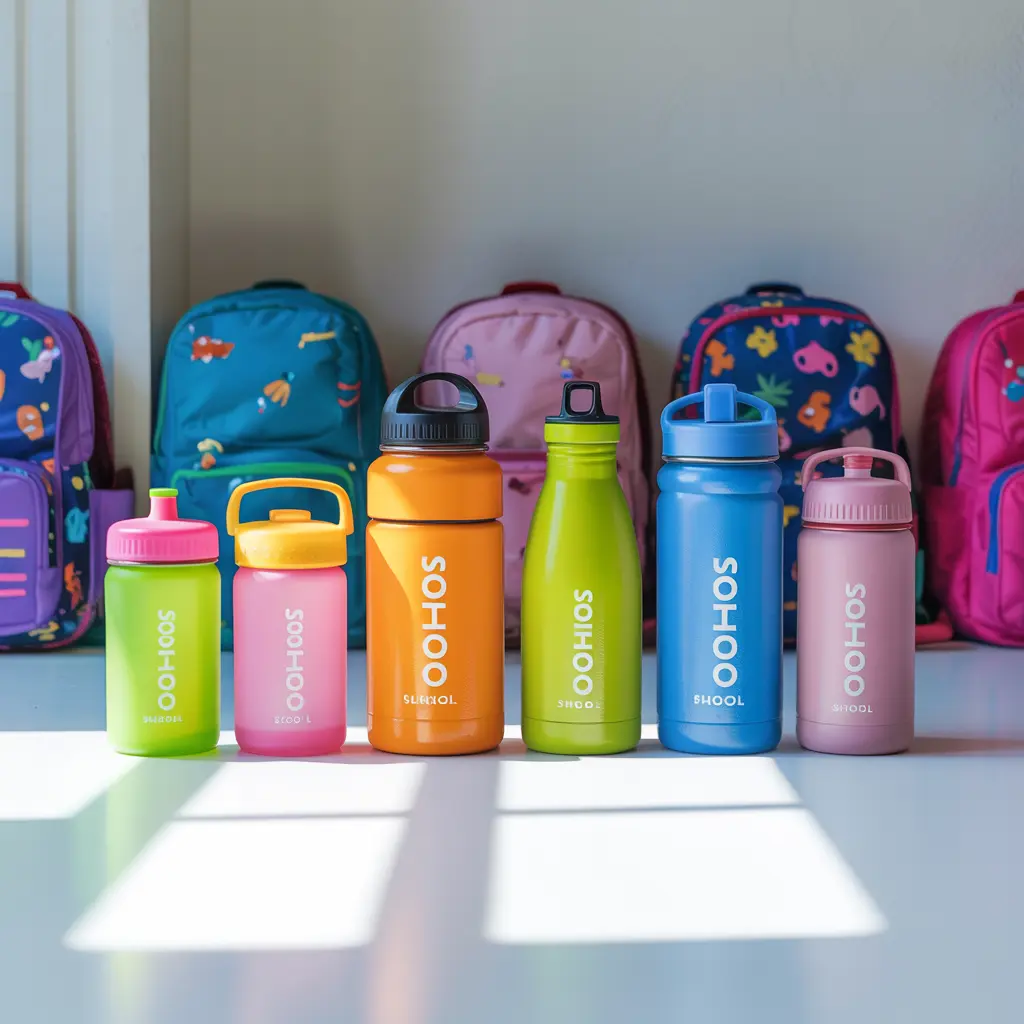
No parent wants to dig through a backpack and find soggy notebooks, wet homework, or a drenched tablet. Yet water bottle leaks rank among the top frustrations during the school year. The good news: truly leak-proof, durable water bottles exist that can survive months in a student’s backpack without causing disasters.
This guide shares the best water bottles for school based on real-world durability, genuine leak-proof performance, and practical features parents and students actually need. You’ll find specific recommendations for every age group, clear comparisons of materials and lid types, and honest advice about what works in daily school use.
Whether your child is starting kindergarten or navigating high school hallways, the right water bottle encourages hydration, survives rough handling, and eliminates the dreaded “soaked backpack” experience.
What Makes a Water Bottle Good for School?
School water bottles face unique challenges. They’re stuffed into crowded backpacks, dropped on concrete, forgotten in hot cars, and expected to stay leak-free while bouncing around all day.
A good school water bottle delivers these essentials:
Leak-proof lid system – Not just “spill-resistant” marketing claims, but actual sealing technology with silicone gaskets and secure closure mechanisms. The lid must stay shut even when compressed by textbooks.
Drop-resistant construction – Students drop bottles regularly. Durable bottles use thick stainless steel, reinforced Tritan plastic, or protective silicone sleeves to survive falls from desk height onto hard floors.
Easy to clean – Wide-mouth openings allow hand-washing with a bottle brush. Bottles with too many small parts grow mold in crevices parents can’t reach.
Appropriate capacity – Too small means constant refills; too large adds unnecessary weight to already-heavy backpacks.
Convenient drinking mechanism – Kids won’t use bottles that frustrate them. One-handed operation, easy-open lids, and comfortable mouthpieces encourage regular use.
Safe materials – BPA-free plastics or food-grade stainless steel that don’t leach chemicals or affect taste.
Backpack-friendly design – Slim enough to fit standard bottle pockets, with carrying loops or handles for easy transport.
Top Features to Look for in School Water Bottles
Lid Types and Leak Prevention
Screw-top lids provide the most reliable seal but require two hands and more time to open. Best for younger children with adult supervision or students who prioritize zero leaks over quick access.
Autoseal technology (like Contigo’s mechanism) automatically seals between sips. Students press a button to drink, and the valve closes immediately when released. Excellent for middle school students who need one-handed operation.
Flip-top with lock combines quick access with security. A locking mechanism prevents accidental opening, while the flip design allows drinking without unscrewing. Popular with high schoolers.
Straw-based systems (like Owala’s FreeSip) offer easy sipping but need high-quality seals around the straw to prevent leaks. Check reviews specifically mentioning backpack storage.
Material Comparison
Stainless steel benefits:
- Keeps drinks cold 8-24 hours with vacuum insulation
- Survives drops without cracking
- Lasts multiple school years
- Doesn’t retain flavors or odors
- More environmentally sustainable
Stainless steel drawbacks:
- Heavier (adds 0.5-1 lb to backpack)
- More expensive ($25-45)
- Can dent (though still functions)
- Not microwave-safe (rarely matters)
Tritan plastic benefits:
- Lightweight (ideal for younger kids)
- Less expensive ($10-25)
- Transparent (kids see how much remains)
- Won’t dent
- Dishwasher safe
Tritan plastic drawbacks:
- Can crack if dropped repeatedly
- Less insulation (drinks warm faster)
- May retain odors over time
- Typically needs replacement every 1-2 years
Insulation Performance
Single-wall bottles (plastic or non-insulated metal) offer no temperature control. Water reaches room temperature within 2-3 hours.
Double-wall vacuum insulation keeps drinks cold for 8-12 hours in typical school environments. Premium bottles (Hydro Flask, YETI) maintain temperature up to 24 hours.
For students who pack bottles in the morning and drink throughout the day, insulation prevents lukewarm water that discourages hydration.
Size and Weight Considerations
12-16oz bottles: Best for elementary students (ages 5-8) who refill at lunch and have smaller backpacks. Empty weight: 0.3-0.6 lbs.
18-24oz bottles: Ideal for upper elementary and middle school (ages 9-13). Balances capacity with manageable weight. Empty weight: 0.5-0.8 lbs.
24-32oz bottles: High school and athletic students who need all-day hydration without constant refills. Empty weight: 0.7-1.2 lbs.
Remember that water weighs approximately 1 lb per 16oz. A full 32oz bottle adds 2+ pounds to a backpack.
Cleaning Features
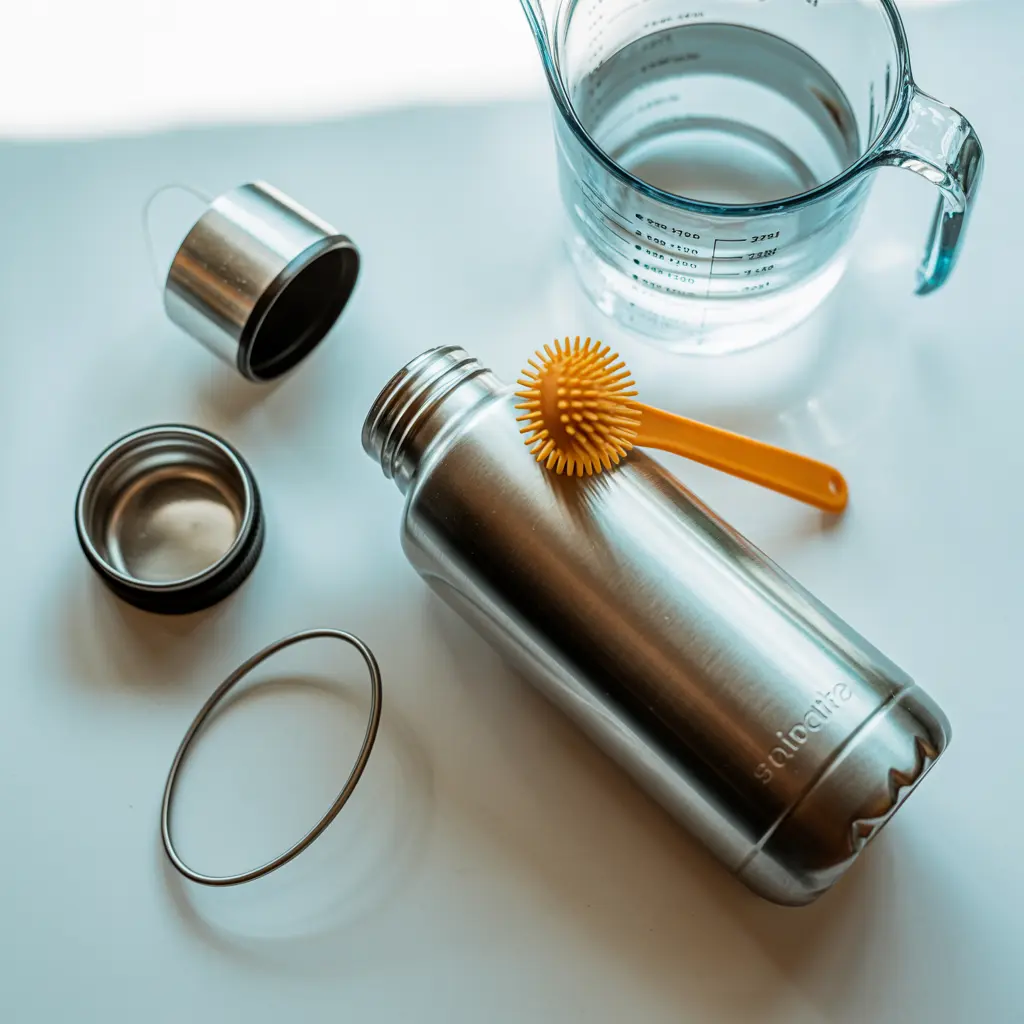
Wide-mouth openings (2.5 inches or larger) allow hand access for scrubbing. Narrow-mouth bottles require specialized brushes and make thorough cleaning difficult.
Dishwasher-safe components simplify maintenance, but check carefully—many bottles have dishwasher-safe bodies but hand-wash-only lids.
Fewer parts mean fewer places for mold growth. Simple designs with one gasket are easier to maintain than complex valve systems with multiple small pieces.
Best Water Bottles for School (Elementary Ages 5-10)
Elementary students need bottles they can operate independently, that fit smaller hands, and that won’t add excessive weight to developing backs.
Top Pick: Simple Modern Kids Summit (14oz)
This stainless steel bottle balances durability with manageable size for young students. The leak-proof flip lid has a simple locking mechanism kids master quickly, and the narrow profile fits most lunch boxes.
Key features:
- Vacuum insulated (keeps drinks cold through lunch)
- Protective silicone boot prevents dents
- Wide mouth for easy cleaning
- Carrying loop attached to lid
- Multiple color options kids love
- Price: $18-22
Best for: Ages 6-9 who need reliable leak protection and moderate capacity.
Limitation: Slightly heavier than plastic options (0.6 lbs empty).
Runner-Up: Contigo Kids Autospout (14oz)
This BPA-free plastic bottle features Contigo’s reliable autoseal technology in a kid-friendly package. The spout pops up with a button push and seals automatically—no need for kids to remember to close it.
Key features:
- One-handed operation
- Dishwasher safe (top rack)
- Spill-proof spout cover
- Integrated carrying handle
- Lightweight (0.3 lbs)
- Price: $12-15
Best for: Ages 5-8 who are still developing fine motor coordination.
Limitation: Plastic construction less durable for rough play; replace every 1-2 years.
Budget Option: Thermos FUNtainer (12oz)
An economical choice that still delivers leak-proof performance and decent insulation. The straw design appeals to younger children transitioning from sippy cups.
Key features:
- Vacuum insulated stainless steel
- Pop-up straw with push-button
- Hygienic spout cover
- Compact size for small backpacks
- Fun character designs
- Price: $13-17
Best for: Ages 5-7, especially kids who prefer straws to wide-mouth drinking.
Limitation: Straw components require thorough cleaning to prevent mold.
Best Water Bottles for Middle School (Ages 11-13)
Middle schoolers carry heavier backpacks, move between classes quickly, and want bottles that look more mature while delivering serious leak-proof reliability.
Top Pick: Owala FreeSip (24oz)
This bottle has become a middle school favorite for good reason. The dual-drink lid lets students sip through a built-in straw or tilt to chug—versatility that appeals to this age group.
Key features:
- Patented FreeSip spout (straw or open drink)
- Leak-proof locking mechanism
- Wide mouth for ice cubes
- Protective lid cover keeps spout clean
- Carrying loop
- Trendy colors
- Price: $28-32
Best for: Ages 11-14 who want functionality with style.
Limitation: Straw components need regular cleaning (dishwasher-safe parts).
Runner-Up: Hydro Flask Wide Mouth (20oz)
A classic choice with proven durability. The simple design has few failure points, and the lifetime warranty provides long-term value.
Key features:
- TempShield insulation (cold 24 hours)
- Powder-coated finish resists scratches
- Multiple lid options available
- BPA-free materials
- Lifetime warranty
- Price: $30-35
Best for: Students who prioritize maximum durability and temperature retention.
Limitation: Heavier than competitors (0.8 lbs empty); basic design less trendy.
Budget Option: Takeya Actives (22oz)
Excellent value with performance approaching premium bottles. The spout lid provides leak-free convenience at a lower price point.
Key features:
- Double-wall insulation
- Leak-proof spout lid
- Insulated spout prevents condensation
- Wide mouth for cleaning
- Carrying handle
- Price: $18-24
Best for: Families wanting good performance without premium pricing.
Limitation: Insulation performance slightly less than top brands (cold 8-12 hours vs. 24).
Best Water Bottles for High School (Ages 14-18)
High school students prioritize larger capacities for all-day hydration, especially athletes, and want bottles that match their personal style.
Top Pick: Hydro Flask Wide Mouth (32oz)
The gold standard for high school students. This size provides all-day capacity without refills, while the proven insulation keeps water ice-cold through sports practice.
Key features:
- 32oz capacity suits active teens
- TempShield keeps drinks cold 24 hours
- Durable powder-coat finish
- Multiple lid options (flex cap, straw lid, wide mouth)
- Lifetime warranty
- Price: $40-45
Best for: Athletes and students who want maximum capacity and durability.
Limitation: Weight when full (2+ lbs) significant for smaller students.
Runner-Up: YETI Rambler (26oz)
Premium construction with cult following among teens. The kitchen-grade stainless steel survives extreme abuse, making it ideal for rough handling.
Key features:
- 18/8 stainless steel (extra thick)
- Double-wall vacuum insulation
- DuraCoat finish won’t peel
- Dishwasher safe
- Variety of lid styles
- Price: $35-40
Best for: Students who want the most durable bottle available and plan to keep it for years.
Limitation: Higher price point; heavier construction.
Budget Option: Simple Modern Summit (32oz)
Offers similar features to premium brands at nearly half the price. Excellent for students who may lose or forget bottles.
Key features:
- Vacuum insulated (cold 12+ hours)
- Leak-proof flip lid
- Cupholder-friendly base
- Wide mouth for ice
- BPA-free materials
- Price: $22-27
Best for: Budget-conscious families or students who frequently misplace bottles.
Limitation: Insulation and durability don’t quite match premium brands but still very good.
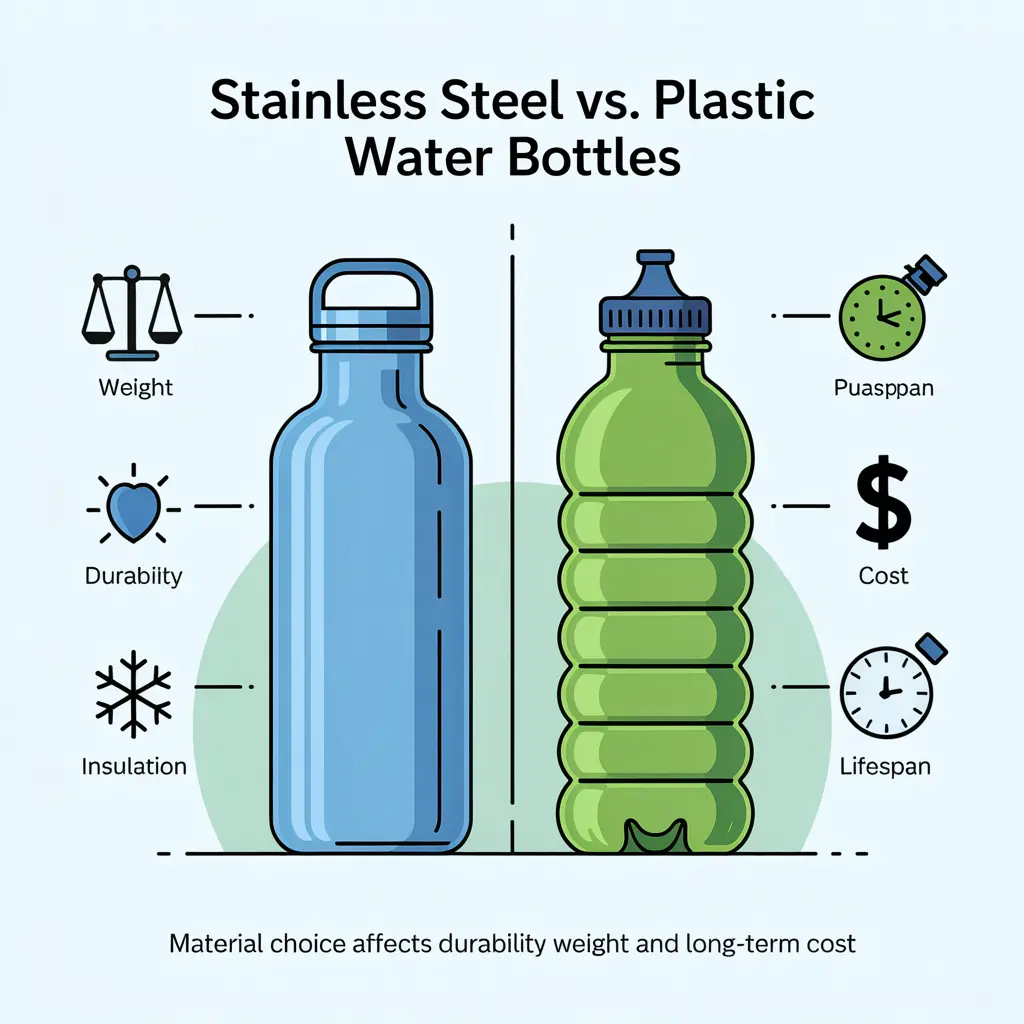
Stainless Steel vs. Plastic: Which is Better?
The material choice affects cost, weight, durability, and performance. Here’s how to decide:
Choose stainless steel if:
- Your child is rough on belongings (drops items frequently)
- You want multi-year durability
- Temperature retention matters (drinks stay cold all day)
- You prefer environmentally sustainable options
- Budget allows $25-45 investment
Choose Tritan plastic if:
- Weight is a major concern (younger children, heavy backpacks)
- Budget is limited ($10-20 range)
- Your child prefers seeing remaining water level
- The bottle will be replaced annually anyway
Hybrid approach: Start younger children (K-2) with lightweight plastic, then transition to stainless steel in upper elementary when they can handle the weight and better care for belongings.
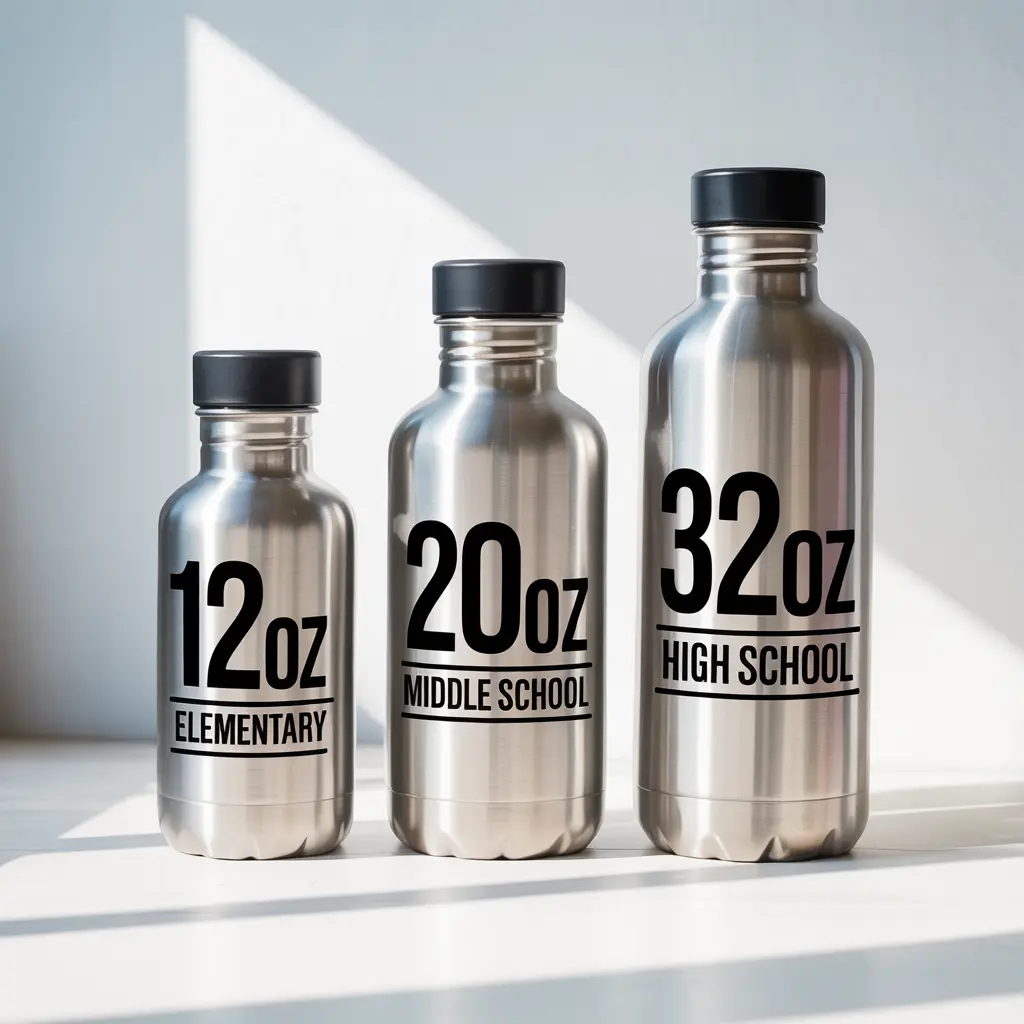
How to Choose the Right Size
Matching bottle capacity to your child’s age, activity level, and school schedule prevents both dehydration and unnecessary backpack weight.
12-16oz bottles:
- Elementary students (K-3)
- Short school days with easy water fountain access
- Students who reliably refill at lunch
- Lighter backpack loads
18-24oz bottles:
- Upper elementary (4-6)
- Middle school students
- Standard school days (6-7 hours)
- Moderate physical activity
- Balanced capacity and weight
24-32oz bottles:
- High school students
- Athletes with after-school practice
- Limited refill opportunities
- All-day capacity needs
- Students willing to carry extra weight
Activity adjustments: Add 8-12oz capacity for students in sports, living in hot climates, or with limited access to refill stations.
Leak-Proof Technology Explained
“Leak-proof” appears on many bottles, but the technology behind that claim varies significantly.
Seal Mechanisms That Actually Work
Silicone gaskets: The foundation of leak-proof design. High-quality silicone creates compression seals that prevent water from escaping even under pressure. Look for bottles with thick, replaceable gaskets.
Autoseal valves: Spring-loaded mechanisms that close automatically when not actively pressed. These eliminate human error (forgetting to close the lid) and create consistent seals.
Threaded closures: Traditional screw-tops with silicone gasket rings. When properly tightened, they provide excellent seals. The weakness is user error—kids not screwing lids tight enough.
Locking mechanisms: Physical locks that prevent lids from opening accidentally. Essential for flip-top or straw bottles that could pop open under backpack pressure.
Red Flags for Leak-Prone Bottles
- “Spill-resistant” instead of “leak-proof” (marketing distinction matters)
- Reviews mentioning leaks in specific positions (upside-down, on side)
- Complex valve systems with many small parts (more failure points)
- Cheap gaskets that harden or crack quickly
- No locking mechanism on flip or straw lids
Testing Leak-Proof Claims
Before trusting a bottle in a backpack:
- Fill completely and seal
- Turn upside-down over a sink for 30 seconds
- Shake vigorously
- Place on its side for 10 minutes
- Check for any moisture around lid or seams
True leak-proof bottles pass all tests with zero water escape.
Cleaning and Maintenance Tips
Proper maintenance prevents mold growth, extends bottle life, and ensures safe drinking.
Daily Cleaning Routine
Basic wash: Empty completely, rinse with warm water, wash interior with bottle brush and dish soap, rinse thoroughly, air dry upside-down with lid off.
Lid attention: Disassemble all removable parts (gaskets, straws, valves), wash separately with warm soapy water, use small brush for crevices.
Drying importance: Never store bottles with lids closed while damp. Moisture trapped inside promotes mold and bacteria growth.
Weekly Deep Clean
Once weekly (more for milk, juice, or smoothies):
- Soak all parts in warm water with white vinegar (1:1 ratio) for 30 minutes
- Or use baking soda paste (3 parts baking soda, 1 part water) to scrub interior
- Clean all gaskets, threads, and valve components
- Rinse thoroughly to remove cleaning solution
- Air dry completely
Dishwasher Guidelines
Many bottles claim “dishwasher safe,” but specifics matter:
Top rack only: High heat from bottom rack can warp plastics and damage some powder coatings.
Separate lids from bottles: Prevents small parts from falling to bottom.
Check manufacturer guidelines: Some bottles are dishwasher-safe but lids require hand-washing.
Skip dishwasher for insulated bottles occasionally: Hand-washing extends powder coat life and prevents potential vacuum seal degradation.
Gasket Replacement
Silicone gaskets wear out over time. Signs you need replacement:
- Visible cracks or tears
- Gasket feels hard or brittle
- Leaking despite proper lid closure
- Persistent odors that cleaning doesn’t remove
Most manufacturers sell replacement gaskets ($3-8). Replacing gaskets extends bottle life significantly.
Odor and Stain Removal
For persistent odors: Fill with warm water and 2 tablespoons baking soda, let sit overnight, rinse thoroughly.
For stains: Make paste from baking soda and water, apply to stained areas, let sit 15 minutes, scrub with bottle brush.
For mold: Soak in white vinegar or hydrogen peroxide solution (1:1 with water) for 1 hour, scrub thoroughly, rinse well.
Common Mistakes When Buying School Water Bottles
Mistake 1: Prioritizing Design Over Function
Cute characters and trendy colors attract kids, but leak-prone lids and poor durability cause frustration. Choose function first, then find appealing colors within quality brands.
Fix: Involve kids in color selection among pre-approved functional bottles.
Mistake 2: Wrong Size for Age/Needs
A 40oz bottle is too heavy for a second-grader; a 12oz bottle won’t sustain a high school athlete through practice.
Fix: Calculate actual hydration needs based on hours away from home and activity level.
Mistake 3: Ignoring Cleaning Difficulty
Bottles with narrow openings and complex valve systems become breeding grounds for mold that parents can’t fully clean.
Fix: Prioritize wide-mouth bottles and simple lid designs unless you’re committed to daily deep cleaning.
Mistake 4: Assuming All “Leak-Proof” Claims Are Equal
Marketing terms don’t equal performance. “Spill-resistant” means reduced leaking, not eliminated.
Fix: Read reviews specifically mentioning backpack storage and look for phrases like “100% leak-proof” with testing proof.
Mistake 5: Buying Cheapest Option Available
$5-8 bottles from discount stores rarely last a full school year and often leak from the start, requiring replacement purchases that cost more long-term.
Fix: Invest $15-30 in quality bottles with warranties and proven durability.
Mistake 6: Not Testing Before School Starts
Discovering leaks or difficult operation on the first day of school creates morning stress.
Fix: Buy bottles 1-2 weeks early and conduct leak tests. Have your child practice opening/closing independently.
Mistake 7: Forgetting Backpack Compatibility
Tall, wide, or oddly-shaped bottles don’t fit standard backpack pockets, ending up loose inside where they cause more problems.
Fix: Measure backpack bottle pocket dimensions before purchasing (typical pockets fit bottles 2.75-3.5 inches in diameter, up to 10 inches tall).
How to Prevent Leaks in Backpacks
Even with leak-proof bottles, proper packing prevents disasters.
Always verify lid closure: Before zipping the backpack, check that lids are completely tightened or locked. Make this part of your child’s routine.
Store upright in external pocket: Side pockets designed for bottles provide best positioning and prevent pressure from books.
If stored inside backpack: Place in a separate waterproof pouch or gallon freezer bag as backup protection.
Avoid overfilling: Leave 1/2 inch of space at the top. Completely full bottles under pressure can force water past even good seals.
Loosen slightly for air travel or altitude changes: Air pressure changes can cause sealed bottles to leak or explode. Loosen lids slightly when changing elevation significantly.
Regular gasket checks: Inspect silicone seals monthly for wear, cracks, or debris that could prevent proper sealing.
Lock flip-tops and straws: Always engage locking mechanisms. Unlocked lids can pop open under backpack pressure.
Remove from hot cars: Heat causes liquid expansion and pressure buildup that can force leaks.
When to Replace Your Child’s Water Bottle
Clear Replacement Signals
Immediate replacement needed:
- Visible cracks in bottle body or lid
- Broken locking mechanisms or lid hinges
- Persistent leaking despite new gaskets
- Mold in unreachable areas
- Strong odors that cleaning doesn’t eliminate
- Damaged insulation (warm spots on insulated bottles)
Plan replacement soon:
- Fading or peeling finish (aesthetic but indicates wear)
- Difficult operation (stiff mechanisms, hard-to-open lids)
- Lost or damaged parts (specific straws, gaskets)
- Significant denting affecting function
Expected Lifespan by Material
Quality stainless steel: 3-5+ years with proper care; some last through entire K-12 education with occasional gasket replacement.
Tritan plastic: 1-2 years of daily school use before showing significant wear, odor retention, or minor cracks.
Silicone components: Replace gaskets, straws, and seals annually or when showing wear.
Safety-Based Replacement
Replace immediately if:
- BPA-free plastic bottles develop cracks (can leach chemicals)
- Rust appears inside stainless steel (indicates compromised coating)
- Mold growth can’t be completely eliminated
- Bottle was used for beverages other than water and can’t be fully cleaned
Budget-Friendly Options Under $20
Quality water bottles don’t require $40 investments. These options deliver leak-proof reliability and reasonable durability at accessible prices.
Contigo Autoseal Chill (24oz) – $15-18
Stainless steel with autoseal technology at a budget price. Vacuum insulated for cold drinks all day.
Pros: Proven autoseal reliability, good insulation, dishwasher-safe lid
Cons: Less durable finish than premium brands, shorter warranty
Thermos Stainless Steel (16oz) – $13-16
Simple, reliable, and economical. No fancy features but delivers core functionality.
Pros: Excellent insulation for price, durable construction, compact size
Cons: Basic design, limited color options
Simple Modern Classic (18oz) – $16-20
Entry-level option from reputable brand. Good balance of features and affordability.
Pros: Vacuum insulated, leak-proof lid, modern colors, lifetime warranty
Cons: Insulation duration less than premium models
Reduce Coldee (14oz) – $12-15
Budget-friendly insulated bottle popular for elementary ages.
Pros: Cute designs, good cold retention, narrow design fits small hands
Cons: Some reports of finish peeling after heavy use
Zak Designs Summit (16oz) – $10-14
Simplest reliable option. Basic but functional for budget-conscious families.
Pros: Very affordable, BPA-free, available at most retailers
Cons: Minimal insulation, plastic construction less durable
Premium Options Worth the Investment
Sometimes higher prices deliver genuinely superior performance and longevity that justify the cost.
Hydro Flask Wide Mouth with Flex Straw ($40-48)
The versatile straw lid transforms the classic Hydro Flask into an easy-drinking solution for all ages.
Why it’s worth it: Lifetime warranty, exceptional insulation (24+ hours), powder coat that resists scratching, replaceable parts extend life indefinitely.
Best for: Families wanting one bottle that lasts elementary through high school.
YETI Rambler Jr. (12oz) – $25-30
Overbuilt for younger children in the best way. This bottle survives extraordinary abuse.
Why it’s worth it: Kitchen-grade stainless steel construction, dishwasher safe, no-sweat design, YETI’s durability reputation.
Best for: Rough-and-tumble elementary students who destroy typical bottles.
Klean Kanteen Insulated TKWide (20oz) – $30-35
Premium materials with environmental commitment. Climate Lock insulation rivals any competitor.
Why it’s worth it: Certified B Corporation, plastic-free throughout, chip-resistant Klean Coat, wide mouth for ice.
Best for: Environmentally-conscious families wanting sustainable quality.
Owala FreeSip Insulated (32oz) – $38-42
Premium version of the popular FreeSip with enhanced insulation for high school athletes.
Why it’s worth it: Patented dual-drink design kids love, 24-hour cold retention, double-wall stainless steel, protective lid cover.
Best for: Active high schoolers who want functionality and style.
Comparison Tables
Elementary School Bottles (Ages 5-10)
| Bottle | Capacity | Material | Insulated | Leak-Proof Rating | Weight | Price | Best For |
|---|---|---|---|---|---|---|---|
| Simple Modern Kids Summit | 14oz | Stainless Steel | Yes | 9/10 | 0.6 lbs | $18-22 | All-around best for ages 6-9 |
| Contigo Kids Autospout | 14oz | Tritan Plastic | No | 9/10 | 0.3 lbs | $12-15 | Lightweight, easy operation |
| Thermos FUNtainer | 12oz | Stainless Steel | Yes | 8/10 | 0.5 lbs | $13-17 | Straw lovers, budget pick |
| YETI Rambler Jr. | 12oz | Stainless Steel | Yes | 10/10 | 0.6 lbs | $25-30 | Maximum durability |
| Reduce Coldee | 14oz | Stainless Steel | Yes | 7/10 | 0.5 lbs | $12-15 | Budget-friendly option |
Middle School Bottles (Ages 11-13)
| Bottle | Capacity | Material | Insulated | Leak-Proof Rating | Weight | Price | Best For |
|---|---|---|---|---|---|---|---|
| Owala FreeSip | 24oz | Stainless Steel | Yes | 9/10 | 0.8 lbs | $28-32 | Trendy, dual-drink design |
| Hydro Flask Wide Mouth | 20oz | Stainless Steel | Yes | 10/10 | 0.8 lbs | $30-35 | Maximum durability |
| Takeya Actives | 22oz | Stainless Steel | Yes | 8/10 | 0.7 lbs | $18-24 | Value performance |
| Contigo Autoseal Chill | 24oz | Stainless Steel | Yes | 9/10 | 0.8 lbs | $15-18 | Budget autoseal |
| Simple Modern Summit | 24oz | Stainless Steel | Yes | 8/10 | 0.7 lbs | $20-25 | Affordable quality |
High School Bottles (Ages 14-18)
| Bottle | Capacity | Material | Insulated | Leak-Proof Rating | Weight | Price | Best For |
|---|---|---|---|---|---|---|---|
| Hydro Flask Wide Mouth | 32oz | Stainless Steel | Yes | 10/10 | 1.1 lbs | $40-45 | Gold standard |
| YETI Rambler | 26oz | Stainless Steel | Yes | 10/10 | 1.0 lbs | $35-40 | Premium durability |
| Simple Modern Summit | 32oz | Stainless Steel | Yes | 8/10 | 1.0 lbs | $22-27 | Budget-friendly capacity |
| Owala FreeSip | 32oz | Stainless Steel | Yes | 9/10 | 1.1 lbs | $38-42 | Athletes who want style |
| Klean Kanteen TKWide | 20oz | Stainless Steel | Yes | 9/10 | 0.9 lbs | $30-35 | Eco-conscious choice |
Material & Feature Comparison
| Feature | Stainless Steel | Tritan Plastic | Glass (Not Recommended for School) |
|---|---|---|---|
| Durability | Excellent (survives drops, lasts years) | Good (cracks eventually) | Poor (breaks easily) |
| Weight | Heavy (0.6-1.2 lbs) | Light (0.3-0.6 lbs) | Heavy |
| Insulation | Excellent with double-wall | Poor to none | Poor |
| Safety | BPA-free, no leaching | BPA-free if Tritan | Inert, but breakage risk |
| Dishwasher Safe | Usually (check coating) | Yes | Yes |
| Price Range | $20-50 | $10-25 | $15-30 |
| Lifespan | 3-5+ years | 1-2 years | Fragile for school use |
| Best For | Long-term investment, insulation needs | Young kids, weight concerns | Not recommended for school |
13) Checklists
Pre-Purchase Checklist
□ Measured backpack bottle pocket dimensions
□ Determined appropriate capacity for child’s age
□ Set realistic budget ($15-45 range)
□ Verified “leak-proof” (not just “spill-resistant”) claims
□ Read reviews mentioning backpack use specifically
□ Checked warranty coverage
□ Confirmed BPA-free materials
□ Assessed cleaning difficulty (wide mouth preferred)
□ Verified dishwasher-safe components
□ Considered weight (especially for younger children)
□ Involved child in color/design selection among functional options
Daily Use Checklist (Teach Your Child)
□ Empty and rinse bottle after school
□ Wash with soap and bottle brush
□ Disassemble lid parts for cleaning
□ Air dry completely overnight with lid off
□ Check gasket condition weekly
□ Verify lid tightness before putting in backpack
□ Engage any locking mechanisms
□ Store upright in backpack pocket
□ Avoid overfilling (leave 1/2 inch space)
□ Bring bottle to/from school daily (don’t leave in hot car)
Monthly Maintenance Checklist
□ Deep clean with vinegar or baking soda solution
□ Inspect silicone gaskets for cracks or wear
□ Check locking mechanisms function smoothly
□ Test leak-proof seal (upside-down test)
□ Clean exterior and remove any buildup
□ Inspect for dents or damage affecting function
□ Replace any worn gaskets or parts
□ Verify bottle still fits in backpack comfortably
□ Assess if current size still meets child’s needs
Replacement Decision Checklist
Consider replacing if bottle has:
□ Visible cracks in body or lid
□ Broken locking mechanism
□ Persistent leaks despite new gasket
□ Unreachable mold growth
□ Odors that cleaning can’t remove
□ Damaged insulation (warm spots)
□ Rust inside stainless steel
□ Significant denting affecting function
□ Lost essential parts (brand-specific straws, lids)
□ Outgrown capacity needs
14) Decision Frameworks
Framework 1: Choose by Primary Concern
If your top priority is ZERO LEAKS:
- Choose: Hydro Flask or YETI with screw-top lid
- Why: Simplest sealing mechanism with fewest failure points
- Trade-off: Slower access, two-handed operation
If your top priority is WEIGHT:
- Choose: Contigo Autospout (plastic) or Simple Modern (smallest steel size)
- Why: Lightest options that still deliver reliability
- Trade-off: Less durability (plastic) or smaller capacity
If your top priority is DURABILITY:
- Choose: YETI Rambler or Hydro Flask
- Why: Thickest materials, best warranties, proven longevity
- Trade-off: Higher cost, more weight
If your top priority is BUDGET:
- Choose: Contigo Autoseal Chill or Thermos stainless
- Why: Best performance-to-price ratio under $20
- Trade-off: Shorter lifespan than premium options
If your top priority is EASY CLEANING:
- Choose: Wide-mouth bottles (Hydro Flask, Klean Kanteen) with simple screw lids
- Why: Hand access to interior, minimal small parts
- Trade-off: Less convenient drinking, slower access
Framework 2: Age-Based Selection Path
Kindergarten – 2nd Grade:
- Prioritize lightweight (plastic or small stainless)
- Simple one-handed operation (autospout or flip-straw)
- 12-14oz capacity
- Fun colors/characters they’ll actually use
- Budget-friendly (likely to lose or forget)
Recommendation: Contigo Kids Autospout or Thermos FUNtainer
3rd – 5th Grade:
- Transition to durable materials (stainless steel)
- 14-18oz capacity
- Easy cleaning (developing independence)
- More mature designs
- Balance of durability and cost
Recommendation: Simple Modern Kids Summit or Owala FreeSip (smaller size)
6th – 8th Grade:
- Trend-aware designs
- 20-24oz capacity
- One-handed convenience
- Serious leak-proof technology
- Worth moderate investment
Recommendation: Owala FreeSip or Hydro Flask with straw lid
9th – 12th Grade:
- Maximum capacity (24-32oz)
- Premium insulation for sports
- Long-term durability
- Personal style expression
- Investment piece
Recommendation: Hydro Flask 32oz or YETI Rambler
Framework 3: Material Decision Tree
Start here: What’s your child’s typical usage pattern?
Heavy use (sports, all-day, rough handling):
→ Stainless steel required
→ Is budget flexible ($30-45)?
→→ YES: Hydro Flask or YETI
→→ NO: Simple Modern or Takeya
Moderate use (school day only, careful handling):
→ Either material works
→ Is weight a major concern?
→→ YES: Tritan plastic (Contigo, CamelBak)
→→ NO: Budget stainless (Thermos, Simple Modern)
Light use (short days, frequent refills):
→ Tritan plastic suitable
→ Does child care about cold drinks?
→→ YES: Small insulated stainless
→→ NO: Plastic saves money and weight
15) FAQs (10)
1. What size water bottle should I buy for my child’s grade level?
Elementary students (K-3) do well with 12-16oz bottles that provide adequate hydration through lunch without adding excessive weight. Upper elementary and middle school students (grades 4-8) benefit from 18-24oz capacity to last through longer days with fewer refills. High school students typically need 24-32oz bottles, especially athletes who require all-day hydration through after-school activities. Consider your child’s specific schedule: shorter days allow smaller bottles, while limited refill access requires larger capacity.
2. Are expensive water bottles really worth it for kids who lose things?
This depends on your child’s track record. For students who frequently lose items, starting with a quality $18-25 mid-range bottle (Simple Modern, Takeya) provides good durability without major financial loss. If they consistently bring it home for a semester, upgrade to a premium option. However, even budget-conscious families find that one $35 Hydro Flask lasting three years costs less than replacing $12 bottles annually. Some parents buy two bottles—a quality one for school and a budget backup for field trips and outings.
3. How can I tell if a water bottle is truly leak-proof before buying?
Look for specific language: “100% leak-proof” or “guaranteed leak-proof” rather than vague terms like “spill-resistant.” Read customer reviews filtering for mentions of “backpack,” “upside down,” and “leak”—negative reviews usually describe leak scenarios clearly. Check for physical features: silicone gaskets, locking mechanisms on flip-tops, autoseal technology, or secure screw-tops. Before trusting the bottle in a backpack with electronics, test at home: fill completely, seal, turn upside-down over a sink for 30 seconds, shake vigorously, and check for any moisture escape.
4. Stainless steel or plastic—which material is better for school?
Stainless steel wins for durability, insulation, and longevity. It survives drops, keeps drinks cold all day, and lasts multiple years, making it more economical long-term despite higher upfront cost ($20-45). Choose stainless for students rough on belongings or those needing temperature retention. BPA-free Tritan plastic excels for weight-sensitive situations—younger children with heavy backpacks or students prioritizing lightweight loads. Plastic bottles ($10-20) work well when replaced annually as part of back-to-school shopping. Most families transition from plastic in early elementary to stainless by upper elementary.
5. How do I prevent mold in my child’s water bottle?
Daily washing prevents most mold growth: empty completely, wash with warm soapy water and a bottle brush, disassemble all lid parts, and most critically, air dry completely with the lid off overnight. Never store bottles with lids sealed while damp. Weekly deep cleaning with white vinegar (1:1 with water, soak 30 minutes) or baking soda paste eliminates developing issues. Wide-mouth bottles and simple lid designs clean more thoroughly than narrow openings or complex valve systems. If your child drinks only water (no juice, milk, or smoothies), mold risk decreases significantly.
6. Can water bottles go in the dishwasher?
Many bottles claim dishwasher safety, but specifics matter. Most stainless steel bottles tolerate dishwasher cleaning on the top rack only—bottom rack heat can damage powder coatings and potentially affect vacuum seals. Plastic bottles generally handle dishwashers well (top rack), but check manufacturer guidelines since some lids require hand washing even when bottles are dishwasher-safe. Silicone gaskets, straws, and complex valve parts often need hand washing to prevent degradation. For longest bottle life, hand washing remains the safest method, reserving dishwasher use for convenience cleaning once or twice weekly.
7. Why does my child’s water bottle smell bad even after washing?
Persistent odors indicate bacteria or mold growth in areas you can’t reach—usually in lid mechanisms, around gaskets, or under straws. Disassemble all lid components and inspect carefully; you may find residue in valve systems or around seals. Soak all parts in white vinegar overnight, scrub thoroughly with small brushes, and rinse completely. If odor persists, gaskets may need replacement ($3-8 from most manufacturers). Prevention: switch to wide-mouth bottles with simpler lids, wash daily, dry completely before closing, and use only for water rather than sugary drinks that accelerate bacterial growth.
8. What features matter most for preventing backpack leaks?
The lid closure mechanism determines leak prevention success. Autoseal technology (automatically closes after drinking) eliminates human error and provides excellent leak protection. Screw-top lids with silicone gaskets offer reliable seals when properly tightened. Flip-tops and straw lids need locking mechanisms that prevent accidental opening under pressure. Beyond lid type, thick silicone gaskets in good condition create necessary compression seals. Teach children to verify closure before packing: twist screw-tops tightly, engage all locks on flip-tops, and ensure autoseal buttons aren’t stuck. Proper positioning (upright in external pocket) reduces pressure on seals.
9. When should I replace the gasket vs. the entire bottle?
Replace gaskets when they show cracks, tears, or hardening, or when leaking occurs despite proper closure—typically annually with daily use. Most brands sell replacement gaskets for $3-8, extending bottle life significantly. However, replace the entire bottle if you see cracks in the body, broken locking mechanisms, damaged insulation (warm spots on double-wall bottles), rust inside stainless steel, or persistent mold in unreachable areas. For plastic bottles, any visible cracks require full replacement since damaged plastic can leach chemicals. Quality stainless steel bottles with good warranties often only need gasket replacements for 3-5+ years.
10. Do insulated bottles really keep drinks cold through a whole school day?
Quality double-wall vacuum insulated bottles keep water ice-cold for 8-24 hours depending on brand and conditions. A bottle filled with cold water and ice at 7 AM remains cold through 3 PM dismissal and often through after-school activities. Premium brands (Hydro Flask, YETI, Klean Kanteen) maintain temperature closer to 24 hours. Budget insulated options (Thermos, Simple Modern, Takeya) typically deliver 8-12 hours of cold retention—still covering full school days. Single-wall bottles or plastic bottles offer no insulation; water reaches room temperature within 2-3 hours. For students who prefer cold water, insulation encourages better hydration throughout the day.




Leave a Reply